


Building Blocks
Cette section contient des produits fondamentaux pour la synthèse de composés organiques et biologiques. Building blocks sont les matériaux de départ essentiels utilisés pour construire des molécules complexes à travers diverses réactions chimiques. Ils jouent un rôle crucial dans la découverte de médicaments, la science des matériaux et la recherche chimique. Chez CymitQuimica, nous offrons une gamme diversifiée de building blocks de haute qualité pour soutenir vos recherches innovantes et projets industriels, en vous assurant de disposer des composants essentiels pour une synthèse réussie.
Sous-catégories appartenant à la catégorie "Building Blocks"
- Acides boroniques et dérivés de l'acide boronique(5.778 produits)
- Building Blocks Chiraux(1.242 produits)
- Building Blocks Hydrocarbonés(6.098 produits)
- Building Blocks organiques(61.069 produits)
197521 produits trouvés pour "Building Blocks"
Trier par
Degré de pureté (%)
0
100
|
0
|
50
|
90
|
95
|
100
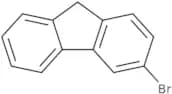
3-Bromo-9H-fluorene
CAS :<p>3-Bromo-9H-fluorene is a chemical compound that is used as an intermediate in the synthesis of other chemicals. The acylation reaction of 3-bromo-9H-fluorene with an alkyl halide, such as ethyl bromide, results in the formation of an ester. This reaction can be done in either aqueous or organic solvents and requires hydrochloric acid as a catalyst. The optimal reaction temperature is between 0°C and 20°C, while the optimal pH is between 1 and 2. The redox potentials of 3-bromo-9H-fluorene are +0.77 V for the one electron reduction and -1.33 V for the two electron reduction. This compound has been shown to be toxic to bacteria, plants, and animals due to its ability to cause oxidative stress. Control experiments confirm that 3-bromo-9H-flu</p>Formule :C13H9BrDegré de pureté :Min. 95%Masse moléculaire :245.11 g/mol2,2-Dimethyl-3,4-dihydro-2H-1-benzopyran-6-carboxylic acid
CAS :<p>Versatile small molecule scaffold</p>Formule :C12H14O3Degré de pureté :Min. 95%Masse moléculaire :206.24 g/mol1-(4-Methoxyphenyl)-2-methylpropan-1-one
CAS :<p>1-(4-Methoxyphenyl)-2-methylpropan-1-one is an organic compound with the chemical formula CH3COCH(OCH2CH3). It is a colorless liquid that is soluble in water, ether, and most organic solvents. It has a boiling point of 154 °C at 1 atm and its density is 0.921 g/mL at 25 °C. This compound can be used as an alkylating agent for aromatic compounds, acyl halides, carbonyls, and other reactive groups. The reaction mechanism for this compound begins with a nucleophilic attack on the electrophilic carbon atom by the oxygen atom of the methoxy group to form an acetal intermediate. The intermediate then undergoes hydrolysis to form a new c–h bond and a methyl ether product.</p>Formule :C11H14O2Degré de pureté :Min. 95%Masse moléculaire :178.23 g/mol1-(4-Methoxyphenyl)-2,2-dimethylpropan-1-one
CAS :1-(4-Methoxyphenyl)-2,2-dimethylpropan-1-one is a bioorganic compound with the formula CHClO. It is an aromatic ketone that is used in organic synthesis. The compound is prepared by acylation of 4-methoxybenzaldehyde with chloroacetyl chloride in the presence of aluminum chloride as a catalyst. The reaction is catalyzed by light and proceeds quantitatively at room temperature, affording 1-(4-methoxyphenyl)-2,2-dimethylpropan-1-one in nearly quantitative yield. Friedel–Crafts acylation can be used to synthesize derivatives of this compound, such as benzoyl derivatives. The reaction takes place at room temperature under mild conditions and typically gives products in high yields. The reaction time for Friedel–Crafts acylation depends on the reactivity of the substrate but typically ranges from one to several hours,Formule :C12H16O2Degré de pureté :Min. 95%Masse moléculaire :192.25 g/mol2',2,2-trimethylpropiophenone
CAS :<p>Versatile small molecule scaffold</p>Formule :C12H16ODegré de pureté :Min. 95%Masse moléculaire :176.26 g/mol[1-(aminomethyl)cyclohexyl]methanol
CAS :<p>Versatile small molecule scaffold</p>Formule :C8H17NODegré de pureté :Min. 95%Masse moléculaire :143.23 g/mol2-pyridylethylmercaptan
CAS :<p>2-pyridylethylmercaptan is a heterocyclic compound that is used as an adsorbent for the preparation of samples for surface-enhanced Raman spectroscopy. It is also used in cancer research to study the effects of acidic conditions on cancer cells. 2-pyridylethylmercaptan has been shown to be effective in the treatment of myeloma, leukemia, and breast cancer when administered orally. It binds to thiol groups on proteins and forms a covalent bond with sulfur atoms. The formation of this covalent bond leads to the protonation of 2-pyridylethylmercaptan and results in a change in its chemical properties. This covalent bond with sulfur atoms also inhibits the growth of bacteria by interfering with their ability to synthesize proteins.</p>Formule :C7H9NSDegré de pureté :Min. 95%Masse moléculaire :139.22 g/mol3-Oxo-N-(2-phenylethyl)butanamide
CAS :<p>Versatile small molecule scaffold</p>Formule :C12H15NO2Degré de pureté :Min. 95%Masse moléculaire :205.25 g/mol2-(Sulphanylmethyl)pyridine
CAS :<p>2-(Sulphanylmethyl)pyridine is a stabilizer that can be used in fatty acids. It is a reversible covalent bond that can stabilize the sample by reacting with the phosphorothioates of nucleic acids and other nucleophiles, such as sulphydryl groups. 2-(Sulphanylmethyl)pyridine reacts with glycerides to form reaction products, which may be used as additives for oils or fats. This product has been shown to have potential for use in X-ray crystallography studies of phosphorothioates. 2-(Sulphanylmethyl)pyridine stabilizes metal ions and can be used orally as acetyl derivatives.</p>Formule :C6H7NSDegré de pureté :Min. 95%Masse moléculaire :125.19 g/mol4-[Bis(2-chloroethyl)amino]benzamide
CAS :<p>Versatile small molecule scaffold</p>Formule :C11H14Cl2N2ODegré de pureté :Min. 95%Masse moléculaire :261.14 g/mol4-Cyclopropylbutan-2-one
CAS :Versatile small molecule scaffoldFormule :C7H12ODegré de pureté :Min. 95%Masse moléculaire :112.17 g/mol1-(3-Phenylisoxazol-5yl)ethanone
CAS :<p>Versatile small molecule scaffold</p>Formule :C11H9NO2Degré de pureté :Min. 95%Masse moléculaire :187.2 g/mol4-(2-Methylbutan-2-yl)aniline
CAS :Versatile small molecule scaffoldFormule :C11H17NDegré de pureté :Min. 95%Masse moléculaire :163.26 g/mol(3-Methylbutyl)benzene
CAS :<p>(3-Methylbutyl)benzene is a chemical that undergoes alkylation in the presence of an acid. It is an aromatic hydrocarbon that has been shown to be able to react with a number of other chemicals. (3-Methylbutyl)benzene has been used as a catalyst in the synthesis of peptide hormones and solid catalysts for chemical reactions. This product also has the ability to emit light when heated, which makes it useful for research purposes.</p>Formule :C11H16Degré de pureté :Min. 95%Masse moléculaire :148.25 g/moltert-Amylbenzene
CAS :<p>tert-Amylbenzene is an organic solvent that is a colorless liquid. This compound has been shown to react with hydrochloric acid in the presence of a chloride salt to form three isomers: ortho-, meta-, and para-tert-amylbenzene. The chemical reaction proceeds through Friedel-Crafts alkylation, which consists of two steps. In the first step, tert-amylbenzene reacts with hydrogen chloride to produce chlorides and tert-amylbenzenes. In the second step, these tert-amylbenzenes react with the chloride salt to produce the desired products.</p>Formule :C11H16Degré de pureté :Min. 95%Masse moléculaire :148.25 g/mol2²,4²-Dimethylacetanilide
CAS :<p>2,4-DMA is an organic amide that has been used as a solvent and chemical intermediate. It has been shown to be tumorigenic in animals and may also have carcinogenic properties. 2,4-DMA is metabolized to form peroxides which can damage cells by causing lipid peroxidation and DNA strand breakage. It is also an irritant to the skin, eyes, and respiratory tract. The oral LD50 of 2,4-DMA in rats is greater than 1 g/kg body weight.</p>Formule :C10H13NODegré de pureté :Min. 95%Masse moléculaire :163.22 g/molN-(3,5-Dimethylphenyl)acetamide
CAS :<p>N-(3,5-Dimethylphenyl)acetamide is a reactive agent that has been shown to cause cancer in mammalian cells and bladder tissue. It is genotoxic and can cause mutations in DNA and chromosomes. N-(3,5-Dimethylphenyl)acetamide is also an hallucinogenic drug that acts as a serotonin antagonist. This compound has been shown to inhibit protein synthesis in cell culture.</p>Formule :C10H13NODegré de pureté :Min. 95%Masse moléculaire :163.22 g/mol1-(Chloromethyl)-4-isopropylbenzene
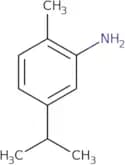
CAS :<p>1-(Chloromethyl)-4-isopropylbenzene is an oxidising agent that is used to produce polyurethanes. It has been shown to be a potent inhibitor of thrombin receptor, which may make it useful in the treatment of infectious diseases. 1-(Chloromethyl)-4-isopropylbenzene can also be used as a catalyst for polymerisation reactions and helps to increase the molecular weight of polymers. This compound is not considered hazardous to the environment, although it may cause skin irritation.</p>Formule :C10H13ClDegré de pureté :Min. 95%Masse moléculaire :168.66 g/mol2-Methyl-5-isopropylaniline
CAS :<p>2-Methyl-5-isopropylaniline is a chemical that has been shown to have an antiproliferative effect, inducing cell apoptosis. It has also been shown to inhibit the growth of tumor cells by inducing cell death in human fibroblasts and colorectal carcinoma cells. The mechanism of action appears to be due to 2-methyl-5-isopropylaniline binding to DNA. This binding inhibits the synthesis of RNA and protein, inhibiting cancer cell proliferation. 2-Methyl-5-isopropylaniline has also been shown to induce DNA strand breaks and inhibit the repair process, which leads to rapid cellular death.</p>Formule :C10H15NDegré de pureté :Min. 95%Masse moléculaire :149.24 g/mol3-(Pyridin-2-yl)propanal
CAS :<p>3-(Pyridin-2-yl)propanal is a heteroaromatic compound that undergoes photolysis to produce oxetane. It has been identified as a sensitizer, which means it can cause the skin to react to UV light. 3-(Pyridin-2-yl)propanal is also an alkyne, meaning it reacts with nucleophiles such as acetonitrile to form adducts. 3-(Pyridin-2-yl)propanal is produced by irradiation of pyridine and is used in the synthesis of oxetanes.</p>Formule :C8H9NODegré de pureté :Min. 95%Masse moléculaire :135.16 g/mol3-Bromoprop-2-yn-1-ol
CAS :<p>3-Bromoprop-2-yn-1-ol is a useful intermediate in the synthesis of allylamine, which is used in the production of pharmaceuticals. It can be prepared by the stereoselective, organometallic, asymmetric synthesis of propargylamine and bromination of 3-bromopropene. The cross coupling reaction between propargylamine and allylamine with hypophosphorous acid and phenyl groups as well as polymerization are also possible methods to synthesize 3-bromoprop-2-yn-1-ol. The optical properties of this chemical make it suitable for use as an ultraviolet absorber in plastics or dyes. 3-Bromopropane has been shown to be a monomer that polymerizes under acidic conditions to form polymers with significant commercial value. It has been used in the production of polypropylene, polyethylene, and polystyrene.</p>Formule :C3H3BrODegré de pureté :Min. 95%Masse moléculaire :134.96 g/mol2,2-Bithiophene-5-carboxylic acid
CAS :<p>2,2-Bithiophene-5-carboxylic acid is an organic compound that has a carboxylate group. It is used as a monomer in the preparation of polymers and plastics. It absorbs light in the visible region and fluoresces with a blue color when irradiated with ultraviolet light. The nature of this compound's absorption spectrum changes depending on whether it is in the solid or liquid state. 2,2-Bithiophene-5-carboxylic acid has been shown to have significant anti-inflammatory activity. This may be due to its ability to inhibit cyclooxygenase enzymes, which are responsible for producing prostaglandins from arachidonic acid.</p>Formule :C9H6O2S2Degré de pureté :Min. 95%Masse moléculaire :210.27 g/mol1-Benzothiophene-5-carbonitrile
CAS :<p>1-Benzothiophene-5-carbonitrile is a heterocyclic compound that is formed by condensation of ethyl azidoacetate with indole under catalysis. It can be used in the synthesis of heterocycles. The yield of 1-benzothiophene-5-carbonitrile is about 56%.</p>Formule :C9H5NSDegré de pureté :Min. 95%Masse moléculaire :159.21 g/mol4-Bromo-2-methylbut-3-yn-2-ol
CAS :<p>Versatile small molecule scaffold</p>Formule :C5H7BrODegré de pureté :Min. 95%Masse moléculaire :163.01 g/mol3-(Benzyloxy)-2,2-dimethylcyclobutan-1-one
CAS :Versatile small molecule scaffoldFormule :C13H16O2Degré de pureté :Min. 95%Masse moléculaire :204.26 g/mol2,2-Dimethyl-3-(2-methylpropoxy)cyclobutan-1-one
CAS :Versatile small molecule scaffoldFormule :C10H18O2Degré de pureté :Min. 95%Masse moléculaire :170.25 g/mol3-Methoxy-2,2-dimethylcyclobutan-1-one
CAS :Versatile small molecule scaffoldFormule :C7H12O2Degré de pureté :Min. 95%Masse moléculaire :128.17 g/mol{Bicyclo[2.2.1]heptan-1-yl}methanol
CAS :<p>Versatile small molecule scaffold</p>Formule :C8H14ODegré de pureté :Min. 95%Masse moléculaire :126.2 g/mol2-Bromo-1,4-naphthoquinone
CAS :<p>2-Bromo-1,4-naphthoquinone is an organic compound with a hydroxyl group. In vitro studies have shown that it has minimal toxicity and redox potentials similar to those of water. 2-Bromo-1,4-naphthoquinone has been found to be reactive and nucleophilic in biological studies. It is also anticancer active when used in tissue culture and has been shown to inhibit the growth of cancer cells by interfering with cellular metabolism. The mechanism of action includes reactions with amines at the C2 position of the naphthoquinone ring, which leads to a release of bromine radicals that react with DNA and other cell components.</p>Formule :C10H5BrO2Degré de pureté :Min. 95%Masse moléculaire :237.05 g/molN-[Furan-2-yl(phenyl)methylidene]hydroxylamine
CAS :<p>Versatile small molecule scaffold</p>Formule :C11H9NO2Degré de pureté :Min. 95%Masse moléculaire :187.19 g/mol6-Chloro-2-(4-fluorophenyl)imidazo[1,2-a]pyridine
CAS :6-Chloro-2-(4-fluorophenyl)imidazo[1,2-a]pyridine (6CFI) is a potent inhibitor of the enzyme acetylcholinesterase. 6CFI has been shown to have a long duration of action and to be potent in inhibiting acetylcholinesterase at concentrations of 10 μM or less. The inhibition is reversible and it does not show any irreversible effects on the enzyme. It has also been shown to be more potent than other inhibitors such as neostigmine, edrophonium, and physostigmine. 6CFI inhibits the hydrolysis of acetylcholine by acetylcholinesterase, which leads to accumulation of this neurotransmitter in synapses and increased levels of stimulation.Formule :C13H8ClFN2Degré de pureté :Min. 95%Masse moléculaire :246.67 g/mol4-Fluorophenyl 4-fluorobenzoate
CAS :<p>Versatile small molecule scaffold</p>Formule :C13H8F2O2Degré de pureté :Min. 95%Masse moléculaire :234.2 g/mol2-((5-Fluoropyridin-2-yl)oxy)acetic acid
CAS :<p>Versatile small molecule scaffold</p>Formule :C7H6FNO3Degré de pureté :Min. 95%Masse moléculaire :171.13 g/mol2-(2-Aminoethyl)-6-methoxyphenol
CAS :Produit contrôlé<p>Versatile small molecule scaffold</p>Formule :C9H13NO2Degré de pureté :Min. 95%Masse moléculaire :167.2 g/mol3-Hydroxy-2-[(propan-2-yl)amino]propanoic acid
CAS :Versatile small molecule scaffoldFormule :C6H13NO3Degré de pureté :Min. 95%Masse moléculaire :147.17 g/mol1-Phenyl-1H-1,2,3-triazol-4-amine
CAS :<p>Versatile small molecule scaffold</p>Formule :C8H8N4Degré de pureté :Min. 95%Masse moléculaire :160.18 g/mol1-{4-[2-(Dimethylamino)ethoxy]phenyl}ethan-1-one
CAS :Produit contrôlé1-{4-[2-(Dimethylamino)ethoxy]phenyl}ethan-1-one is a small molecule that can be used as an inhibitor of the antibody. It binds to the peptide and blocks the interaction between the antibody and its receptor, preventing cellular activation by inhibiting the binding of ligands to their receptors. This product is used as a research tool in cell biology, pharmacology, or protein interactions.Formule :C12H17NO2Degré de pureté :Min. 95%Masse moléculaire :207.27 g/moltrans-Ethyl 4-aminocyclohexanecarboxylate hydrochloride
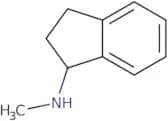
CAS :<p>Versatile small molecule scaffold</p>Formule :C9H18ClNO2Degré de pureté :Min. 95%Masse moléculaire :207.7 g/molN-2,3-Dihydro-1H-inden-1-yl-N-methylamine
CAS :Produit contrôléVersatile small molecule scaffoldFormule :C10H13NDegré de pureté :Min. 95%Masse moléculaire :147.22 g/mol2-Phenylpropylene Oxide
CAS :<p>2-Phenylpropylene Oxide is a chemical compound that belongs to the epoxide group. It is an activated monomer, which means it has a hydroxyl group. 2-Phenylpropylene Oxide is used in cationic polymerization reactions as well as alpha-methyl styrene, which produces polymers with high molecular weights and excellent mechanical properties. The reaction mechanism of 2-phenylpropylene oxide is oxidation of the phenyl ring to produce free radicals that react with the double bond of the epoxide ring to form an epoxy group. This process results in a mixture of products that depend on the rate and extent of the reaction. Health effects have not been fully evaluated.</p>Formule :C9H10ODegré de pureté :Min. 95%Masse moléculaire :134.18 g/mol2-(2-Bromoethyl)naphthalene
CAS :<p>2-(2-Bromoethyl)naphthalene is a tetrahydropyridin that has an aromatic ring containing two bromine atoms. This compound is used as a reagent to make other compounds in organic synthesis. Hydrobromic acid and hydrobromic acid react with 2-(2-bromoethyl)naphthalene to produce hydrogen bromide and 2-bromoethylbenzene, respectively.</p>Formule :C12H11BrDegré de pureté :Min. 95%Masse moléculaire :235.11 g/mol[2-(2-Methoxyphenoxy)ethyl](methyl)amine hydrochloride
CAS :<p>Versatile small molecule scaffold</p>Formule :C10H16ClNO2Degré de pureté :Min. 95%Masse moléculaire :217.69 g/molEthyl 2-(2-aminoacetamido)-4-methylpentanoate hydrochloride
CAS :Versatile small molecule scaffoldFormule :C10H21ClN2O3Degré de pureté :Min. 95%Masse moléculaire :252.7 g/molMethyl[3-(10H-phenothiazin-10-yl)propyl]amine
CAS :<p>Methyl[3-(10H-phenothiazin-10-yl)propyl]amine is a reuptake inhibitor that is classified as a psychotherapeutic drug. It inhibits the reuptake of noradrenaline and dopamine, and has been shown to modulate serotonin release. Methyl[3-(10H-phenothiazin-10-yl)propyl]amine is an enantiomer of methyl[2-(10H-phenothiazin-10-yl)ethyl]amine, which inhibits the reuptake of dopamine. Methyl[3-(10H-phenothiazin-10-yl)propyl]amine is also a geometric isomer of methyl[2-(5H-phenothiazin-5-yl)ethyl]amine, which inhibits the reuptake of serotonin. The polymorphs of methyl[3-(10H-phenothiazin 10 yl)propyl]amine are active</p>Formule :C16H18N2SDegré de pureté :Min. 95%Masse moléculaire :270.4 g/molMethyl[3-(phenylamino)propyl]amine
CAS :Versatile small molecule scaffoldFormule :C10H16N2Degré de pureté :Min. 95%Masse moléculaire :164.25 g/mol3,5-Dimethoxypyridazine
CAS :<p>Versatile small molecule scaffold</p>Formule :C6H8N2O2Degré de pureté :Min. 95%Masse moléculaire :140.14 g/mol6-Chloro-3,4-dimethoxypyridazine
CAS :<p>Versatile small molecule scaffold</p>Formule :C6H7ClN2O2Degré de pureté :Min. 95%Masse moléculaire :174.58 g/mol4-Pentenal
CAS :<p>4-Pentenal is an anticancer agent that has been shown to inhibit kinases in human cancer cells. It is a protein analog of oseltamivir, which is commonly used to treat influenza. 4-Pentenal induces apoptosis in cancer cells and has been found in the urine of Chinese patients with tumors. This compound inhibits the activity of several kinases, including protein kinase C (PKC), which plays a key role in cell growth and proliferation. Inhibiting PKC activity leads to decreased tumor growth and increased apoptosis in cancer cells. 4-Pentenal may be a promising candidate for developing new anticancer drugs that target kinases involved in tumor growth and progression.</p>Formule :C5H8ODegré de pureté :Min. 95%Masse moléculaire :84.12 g/mol3-Iodo-1,2,4,5-tetramethylbenzene
CAS :<p>3-Iodo-1,2,4,5-tetramethylbenzene is an organic compound that is a salt of a chlorinating agent and an organic solvent. It can be used as a chlorinating agent in the production of chloropropane. 3-Iodo-1,2,4,5-tetramethylbenzene is reactive and has been used in the synthesis of methylbenzenes. It can also be used for the synthesis of sodium trifluoroacetate with chlorine gas. 3-Iodo-1,2,4,5-tetramethylbenzene is soluble in water and has been shown to exhibit nature activity towards chlorine atom to form chloride. The molecular orbitals are electron orbitals that surround the nucleus of an atom and can be easily visualized in 3D space when they are plotted on a graph with energy increasing from left to right.<br>3-Iodo-1,2,</p>Formule :C10H13IDegré de pureté :Min. 95%Masse moléculaire :260.12 g/mol2-Methyl-N-(propan-2-yl)aniline
CAS :<p>Versatile small molecule scaffold</p>Formule :C10H15NDegré de pureté :Min. 95%Masse moléculaire :149.23 g/mol


![[1-(aminomethyl)cyclohexyl]methanol](/_next/image/?url=https%3A%2Fstatic.cymitquimica.com%2Fproducts%2F3D%2Fthumb-webp%2FCAA04157.webp&w=3840&q=75)


![4-[Bis(2-chloroethyl)amino]benzamide](/_next/image/?url=https%3A%2Fstatic.cymitquimica.com%2Fproducts%2F3D%2Fthumb-webp%2FCAA04542.webp&w=3840&q=75)




![{Bicyclo[2.2.1]heptan-1-yl}methanol](/_next/image/?url=https%3A%2Fstatic.cymitquimica.com%2Fproducts%2F3D%2Fthumb-webp%2FCAA06402.webp&w=3840&q=75)

![N-[Furan-2-yl(phenyl)methylidene]hydroxylamine](/_next/image/?url=https%3A%2Fstatic.cymitquimica.com%2Fproducts%2F3D%2Fthumb-webp%2FCAA06752.webp&w=3840&q=75)
![6-Chloro-2-(4-fluorophenyl)imidazo[1,2-a]pyridine](/_next/image/?url=https%3A%2Fstatic.cymitquimica.com%2Fproducts%2F3D%2Fthumb-webp%2FCAA06947.webp&w=3840&q=75)


![3-Hydroxy-2-[(propan-2-yl)amino]propanoic acid](/_next/image/?url=https%3A%2Fstatic.cymitquimica.com%2Fproducts%2F3D%2Fthumb-webp%2FCAA07651.webp&w=3840&q=75)

![1-{4-[2-(Dimethylamino)ethoxy]phenyl}ethan-1-one](/_next/image/?url=https%3A%2Fstatic.cymitquimica.com%2Fproducts%2F3D%2Fthumb-webp%2FCAA07949.webp&w=3840&q=75)



amine hydrochloride](/_next/image/?url=https%3A%2Fstatic.cymitquimica.com%2Fproducts%2F3D%2Fthumb-webp%2FCAA08735.webp&w=3840&q=75)

![Methyl[3-(10H-phenothiazin-10-yl)propyl]amine](/_next/image/?url=https%3A%2Fstatic.cymitquimica.com%2Fproducts%2F3D%2Fthumb-webp%2FCAA09520.webp&w=3840&q=75)
![Methyl[3-(phenylamino)propyl]amine](/_next/image/?url=https%3A%2Fstatic.cymitquimica.com%2Fproducts%2F3D%2Fthumb-webp%2FCAA09573.webp&w=3840&q=75)


