


Building Blocks
Cette section contient des produits fondamentaux pour la synthèse de composés organiques et biologiques. Building blocks sont les matériaux de départ essentiels utilisés pour construire des molécules complexes à travers diverses réactions chimiques. Ils jouent un rôle crucial dans la découverte de médicaments, la science des matériaux et la recherche chimique. Chez CymitQuimica, nous offrons une gamme diversifiée de building blocks de haute qualité pour soutenir vos recherches innovantes et projets industriels, en vous assurant de disposer des composants essentiels pour une synthèse réussie.
Sous-catégories appartenant à la catégorie "Building Blocks"
- Acides boroniques et dérivés de l'acide boronique(5.778 produits)
- Building Blocks Chiraux(1.242 produits)
- Building Blocks Hydrocarbonés(6.098 produits)
- Building Blocks organiques(61.059 produits)
199580 produits trouvés pour "Building Blocks"
Trier par
Degré de pureté (%)
0
100
|
0
|
50
|
90
|
95
|
100
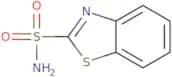
1,3-Benzothiazole-2-sulfonamide
CAS :<p>1,3-Benzothiazole-2-sulfonamide is a synthetic inhibitor that has been shown to inhibit proteolytic activity. It also inhibits the expression of aromatic hydrocarbons and nitro compounds by reacting with hydroxyl groups. This drug is metabolized by the liver. 1,3-Benzothiazole-2-sulfonamide has been shown to have prognostic value in human serum, chloride and carbonic acid levels in patients with head injuries. It is also known to be a functional group that can be found in pharmacological agents such as nitro compounds.</p>Formule :C7H6N2O2S2Degré de pureté :Min. 95%Masse moléculaire :214.3 g/mol3-{1-[(tert-Butoxy)carbonyl]azetidin-2-yl}propanoic acid
CAS :<p>Versatile small molecule scaffold</p>Formule :C11H19NO4Degré de pureté :Min. 95%Masse moléculaire :229.3 g/mol4-[(Trifluoromethyl)sulphonyl]phenol
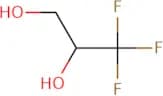
CAS :<p>4-[(Trifluoromethyl)sulphonyl]phenol is a hydrogen peroxide-releasing molecule that has been shown to be a strong electron donor. It is used as a catalyst in organic synthesis and can also act as a photochromic agent. 4-[(Trifluoromethyl)sulphonyl]phenol has the ability to form radicals with electron-deficient molecules such as carboxylic acids, alcohols, and amines. This process is called nitrating and can lead to reduction reactions with indoline or other aromatic compounds. 4-[(Trifluoromethyl)sulphonyl]phenol can also reduce hydrogen peroxide by transferring electrons from its phenolic hydroxyl group to the peroxide molecule, which leads to the formation of water and oxygen gas.</p>Formule :C7H5F3O3SDegré de pureté :Min. 95%Masse moléculaire :226.17 g/mol3,3,3-Trifluoropropane-1,2-diol
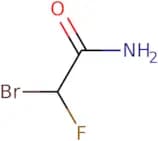
CAS :<p>3,3,3-Trifluoropropane-1,2-diol is a model compound that is synthesized from the reaction of phosphorus pentachloride and ethanolamine in the presence of irradiation. The product is an alcohol with three hydroxyl groups, which can be used for different reactions. 3,3,3-Trifluoropropane-1,2-diol has an active hydrogen bond that can form a hydrogen bond with an amino acid or phosphate group in a protein. It also has a trifluoromethyl group that can react with other compounds and cause them to be more toxic than they would otherwise be. 3,3,3-Trifluoropropane-1,2-diol has been shown to react with glutamic acid in model studies to form a cyclic amine.</p>Formule :C3H5F3O2Degré de pureté :Min. 95%Masse moléculaire :130.07 g/molBromofluoroacetamide
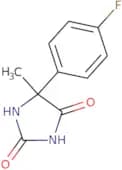
CAS :<p>Bromofluoroacetamide is a halopyridine chemical compound that is used as an antibacterial agent. It has been shown to inhibit the growth of bacteria, such as Gram-positive and Gram-negative bacteria, by binding to their cell membranes and dissociating into bromide ions. This drug also has anticancer properties, which may be due to its ability to interfere with the cell cycle and DNA synthesis. Bromofluoroacetamide has two isomers: 2-bromo-N-2,2-difluoroacetamidobenzene (DFAA) and 2,4-dibromoacetanilide (DABA). DFAA is more potent than DABA against Gram-positive bacteria.</p>Formule :C2H3BrFNODegré de pureté :Min. 95%Masse moléculaire :155.95 g/mol5-(4-Fluorophenyl)-5-methylimidazolidine-2,4-dione
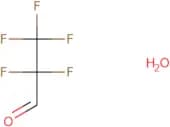
CAS :<p>5-(4-Fluorophenyl)-5-methylimidazolidine-2,4-dione is a hydantoin derivative. It has an acceptor group and a coplanar benzene ring with two carbonyl chains. The dihedral angle between the two carbonyl groups is about 180 degrees, and the hydrogen bonds are formed between the carbonyl groups and the hydrogen atoms of the benzene ring. This compound has one hydroxyl group and can be classified as an alpha type.</p>Formule :C10H9FN2O2Degré de pureté :Min. 95%Masse moléculaire :208.19 g/mol2,2,3,3,3-Pentafluoropropane-1,1-diol
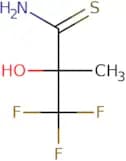
CAS :<p>Versatile small molecule scaffold</p>Formule :C3H3F5O2Degré de pureté :Min. 95%Masse moléculaire :166.05 g/mol3,3,3-Trifluoro-2-hydroxy-2-methylpropanethioamide
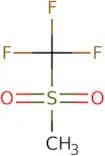
CAS :Versatile small molecule scaffoldFormule :C4H6F3NOSDegré de pureté :Min. 95%Masse moléculaire :173.16 g/molTrifluoro(methanesulfonyl)methane
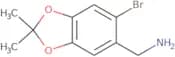
CAS :<p>Trifluoro(methanesulfonyl)methane is an organic solvent that can be used as a nucleophilic agent in reactions with metal ions to form metal trifluoromethanesulfonates. This compound is an additive for gasoline and other petroleum products, and it has been shown to have a high efficiency in the removal of nitrogen dioxide from the atmosphere. Trifluoro(methanesulfonyl)methane hydrolyzes in water and reacts with acid catalysts. It is also used in the production of phosphazenes, carbonyls, and electrolytes. In addition, this compound has functional groups that are reactive towards c1-6 alkyl group additions.</p>Formule :C2H3F3O2SDegré de pureté :Min. 97%Masse moléculaire :148.11 g/mol(6-Bromo-2,2-dimethyl-1,3-dioxaindan-5-yl)methanamine
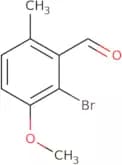
CAS :<p>Versatile small molecule scaffold</p>Formule :C10H12BrNO2Degré de pureté :Min. 95%Masse moléculaire :258.11 g/mol2-Bromo-3-methoxy-6-methylbenzaldehyde
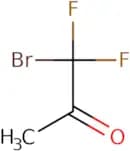
CAS :Versatile small molecule scaffoldFormule :C9H9BrO2Degré de pureté :Min. 95%Masse moléculaire :229.07 g/mol1-Bromo-1,1-difluoropropan-2-one
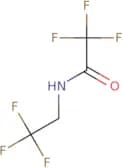
CAS :<p>Versatile small molecule scaffold</p>Formule :C3H3BrF2ODegré de pureté :Min. 95%Couleur et forme :Clear LiquidMasse moléculaire :172.96 g/mol2,2,2-Trifluoro-N-(2,2,2-trifluoroethyl)acetamide
CAS :Versatile small molecule scaffoldFormule :C4H3F6NODegré de pureté :Min. 95%Masse moléculaire :195.06 g/mol5-(Difluoromethyl)pyridine-3-sulfonyl chloride
CAS :<p>Versatile small molecule scaffold</p>Formule :C6H4ClF2NO2SDegré de pureté :Min. 95%Masse moléculaire :227.62 g/molEthyl 3,3-difluoroprop-2-enoate
CAS :<p>Versatile small molecule scaffold</p>Formule :C5H6F2O2Degré de pureté :Min. 95%Masse moléculaire :136.1 g/molN-(3,3,3-Trifluoropropyl)aniline
CAS :<p>Versatile small molecule scaffold</p>Formule :C9H10F3NDegré de pureté :Min. 95%Masse moléculaire :189.18 g/mol2-[(3-Fluorophenyl)amino]ethan-1-ol
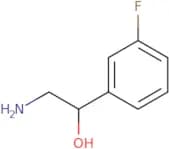
CAS :<p>Versatile small molecule scaffold</p>Formule :C8H10FNODegré de pureté :Min. 95%Masse moléculaire :155.17 g/mol2-Amino-1-(3-fluorophenyl)ethanol
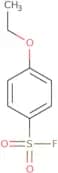
CAS :<p>Versatile small molecule scaffold</p>Formule :C8H10FNODegré de pureté :Min. 95%Masse moléculaire :155.17 g/mol4-Ethoxybenzene-1-sulfonyl fluoride
CAS :<p>Versatile small molecule scaffold</p>Formule :C8H9FO3SDegré de pureté :Min. 95%Masse moléculaire :204.22 g/molN-(2-Fluoro-4-sulfamoylphenyl)acetamide
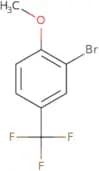
CAS :<p>Versatile small molecule scaffold</p>Formule :C8H9FN2O3SDegré de pureté :Min. 95%Masse moléculaire :232.23 g/mol2-Bromo-1-methoxy-4-(trifluoromethyl)benzene
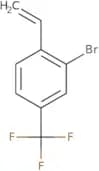
CAS :<p>Versatile small molecule scaffold</p>Formule :C8H6BrF3ODegré de pureté :Min. 95%Masse moléculaire :255.03 g/mol2-Bromo-1-ethenyl-4-(trifluoromethyl)benzene
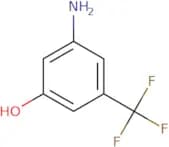
CAS :Versatile small molecule scaffoldFormule :C9H6BrF3Degré de pureté :Min. 95%Masse moléculaire :251.04 g/mol3-Amino-5-(trifluoromethyl)phenol
CAS :<p>Versatile small molecule scaffold</p>Formule :C7H6F3NODegré de pureté :Min. 95%Masse moléculaire :177.12 g/mol3-Acetamido-4-fluorobenzoic acid
CAS :<p>3-Acetamido-4-fluorobenzoic acid is a nicotinic acetylcholine receptor agonist. It has been shown to modulate the activity of nicotinic acetylcholine receptors in animals, and may be effective against cancer and infectious diseases. 3-Acetamido-4-fluorobenzoic acid has been shown to increase insulin sensitivity in mice with type 2 diabetes by increasing the production of glucose transporter 1 (GLP1) in the pancreas. 3-Acetamido-4-fluorobenzoic acid also binds to the polymer film that surrounds the insulin granule, which prevents the release of insulin into the blood stream. This drug can be used for pharmaceutical dosage as well as for treating metabolic disorders such as insulin resistance.</p>Formule :C9H8FNO3Degré de pureté :Min. 95%Masse moléculaire :197.16 g/mol3-(4-Fluorophenyl)-2-methoxypropanoic acid
CAS :<p>Versatile small molecule scaffold</p>Formule :C10H11FO3Degré de pureté :Min. 95%Masse moléculaire :198.19 g/mol5H,7H,8H-Pyrano[4,3-b]pyridine-2-carbonitrile
CAS :<p>Versatile small molecule scaffold</p>Formule :C9H8N2ODegré de pureté :Min. 95%Masse moléculaire :160.2 g/mol6-Methyl-5,6,7,8-tetrahydroquinoline-2-carboxylic acid
CAS :<p>Versatile small molecule scaffold</p>Formule :C11H13NO2Degré de pureté :Min. 95%Masse moléculaire :191.2 g/mol3,3-Dimethyloxane-4-carboxylic acid
CAS :<p>Versatile small molecule scaffold</p>Formule :C8H14O3Degré de pureté :Min. 95%Masse moléculaire :158.19 g/mol2-(4-Fluorophenyl)-2H,4H,5H,7H-pyrano[3,4-c]pyrazol-3-ol
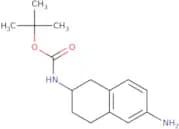
CAS :<p>Versatile small molecule scaffold</p>Formule :C12H11FN2O2Degré de pureté :Min. 95%Masse moléculaire :234.23 g/moltert-Butyl N-(6-amino-1,2,3,4-tetrahydronaphthalen-2-yl)carbamate
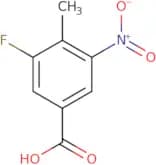
CAS :Produit contrôlé<p>Versatile small molecule scaffold</p>Formule :C15H22N2O2Degré de pureté :Min. 95%Masse moléculaire :262.35 g/mol3-Fluoro-4-methyl-5-nitrobenzoic acid
CAS :<p>Versatile small molecule scaffold</p>Formule :C8H6FNO4Degré de pureté :Min. 95%Masse moléculaire :199.14 g/mol4-Ethoxy-3-fluoroaniline
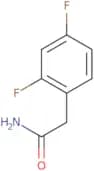
CAS :<p>4-Ethoxy-3-fluoroaniline is a kinase inhibitor that inhibits the activity of protein kinases. It is an analog of 4-ethoxy-3-fluorophenylalanine and has shown in vivo activity. 4-Ethoxy-3-fluoroaniline binds to the ATP binding site at the N terminus of the enzyme, which prevents ATP from binding and thus inhibits its function. The compound can be used as a starting material for more potent inhibitors of protein kinases.</p>Formule :C8H10FNODegré de pureté :Min. 95%Masse moléculaire :155.17 g/mol2-(2,4-Difluorophenyl)acetamide
CAS :<p>Versatile small molecule scaffold</p>Formule :C8H7F2NODegré de pureté :Min. 95%Masse moléculaire :171.14 g/mol2-Fluoro-4,5-dimethoxyaniline
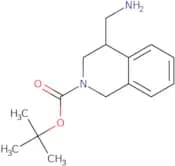
CAS :<p>Versatile small molecule scaffold</p>Formule :C8H10FNO2Degré de pureté :Min. 95%Masse moléculaire :171.17 g/moltert-Butyl 4-(aminomethyl)-1,2,3,4-tetrahydroisoquinoline-2-carboxylate
CAS :<p>Versatile small molecule scaffold</p>Formule :C15H22N2O2Degré de pureté :Min. 95%Masse moléculaire :262.35 g/mol5-[(4-Fluorophenyl)methyl]-4-methyl-1,3-thiazol-2-amine
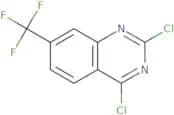
CAS :Versatile small molecule scaffoldFormule :C11H11FN2SDegré de pureté :Min. 95%Masse moléculaire :222.28 g/mol2,4-dichloro-7-(trifluoromethyl)quinazoline
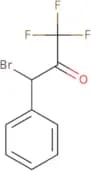
CAS :Versatile small molecule scaffoldFormule :C9H3Cl2F3N2Degré de pureté :Min. 95%Masse moléculaire :267.03 g/mol3-Bromo-1,1,1-trifluoro-3-phenylpropan-2-one
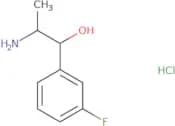
CAS :<p>Versatile small molecule scaffold</p>Formule :C9H6BrF3ODegré de pureté :Min. 95%Masse moléculaire :267.04 g/mol2-Amino-1-(3-fluorophenyl)propan-1-ol hydrochloride
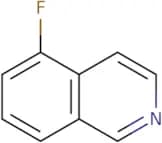
CAS :Produit contrôlé<p>Versatile small molecule scaffold</p>Formule :C9H13ClFNODegré de pureté :Min. 95%Masse moléculaire :205.66 g/mol5-Fluoro-isoquinoline
CAS :<p>Versatile small molecule scaffold</p>Formule :C9H6FNDegré de pureté :Min. 95%Masse moléculaire :147.15 g/mol2-Fluoro-4-hydroxy-5-nitrobenzaldehyde
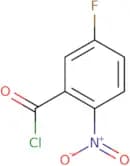
CAS :<p>Versatile small molecule scaffold</p>Formule :C7H4FNO4Degré de pureté :Min. 95%Masse moléculaire :185.11 g/mol5-Fluoro-2-nitrobenzoyl chloride
CAS :<p>5-Fluoro-2-nitrobenzoyl chloride is a conformationally locked macrocyclic compound that has been synthesized by solid phase synthesis. It is found in two conformational states and can be made to switch between these two states by applying a force to the molecule. This conformation can be controlled by changing the side chain of 5-fluoro-2-nitrobenzoyl chloride, which can be done experimentally. The conformational behavior of this macrocycle was studied using molecular dynamics simulations and it was found that there are four possible conformations for the molecule. The conformations with different side chains were found to have different energies, which could be used as a measure of their relative stability.</p>Formule :C7H3ClFNO3Degré de pureté :Min. 95%Masse moléculaire :203.55 g/molN,N-Diethyl-3-aminophenol
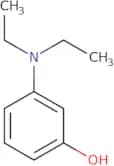
CAS :<p>N,N-Diethyl-3-aminophenol is a fluorescent probe that is used for the detection of nucleophilic substitutions. This nucleophile can react with electron-rich aromatic compounds to form stable covalent adducts. The reaction mechanism of this probe is not yet well understood, but it may involve a substitution reaction between the hydroxyl group and an electron-deficient aromatic compound to form a phenolate ester. N,N-Diethyl-3-aminophenol has been shown to exhibit high stability in organic solvents and can be used as a crosslinking agent for biomolecules. It also exhibits fluorescence properties that make it useful for the detection of chloride ions in solution.</p>Formule :C10H15NODegré de pureté :Min. 95%Masse moléculaire :165.24 g/molN,N-Diethyl-m-toluidine
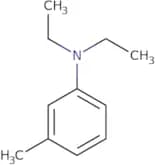
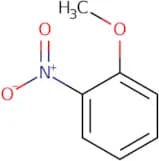
CAS :<p>N,N-Diethyl-m-toluidine is a chemical that is used as an intermediate in the synthesis of other chemicals. It has been shown to have a dipole moment and can be used in the production of dyes, pharmaceuticals, and herbicides. N,N-Diethyl-m-toluidine has been shown to inhibit heterocyclic amines from reacting with p-hydroxyphenylacetic acid which may prevent carcinogenesis. This product also has a chloride ion that will react with hydrochloric acid to form a fatty acid. The optical properties of N,N-Diethyl-m-toluidine are bathochromic and butyric acid.</p>Formule :C11H17NDegré de pureté :Min. 95%Masse moléculaire :163.26 g/mol2-Nitroanisole
CAS :<p>2-Nitroanisole is a chemical that can be found in the bladder of humans and rats. It is a byproduct of nitrosation reactions that occur in the body. Nitrosation reactions are catalyzed by hydrochloric acid, which converts nitric oxide to nitrous acid and further converts it to 2-nitroanisole. 2-Nitroanisole has been shown to induce genotoxic effects in rats and mice. This compound also has carcinogenic potential, as evidenced by carcinogenesis studies on rats and mice. The mechanism of action may involve the formation of reactive oxygen species that cause DNA damage.</p>Formule :C7H7NO3Degré de pureté :Min. 95%Masse moléculaire :153.14 g/mol2-{[(Benzyloxy)carbonyl]amino}-2-methylpentanoic acid
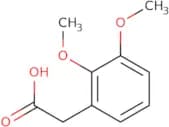
CAS :Versatile small molecule scaffoldFormule :C14H19NO4Degré de pureté :Min. 95%Masse moléculaire :265.3 g/mol2,3-Dimethoxyphenylacetic acid
CAS :<p>2,3-Dimethoxyphenylacetic acid is an amino acid derivative that is used as a precursor for the synthesis of drugs. It is a natural product that can be found in plants and animals. This compound has been synthesized by introducing a halide to the olefination of naphthoic acid with 2-methoxybenzaldehyde. The synthetic route has been modified to produce 2,3-dimethoxyphenylacetic acid from phenylacetic acid in order to avoid inefficiencies such as photochemical decomposition.</p>Formule :C10H12O4Degré de pureté :Min. 95%Masse moléculaire :196.2 g/mol2-{[(tert-Butoxy)carbonyl]amino}-2-methylpentanoic acid
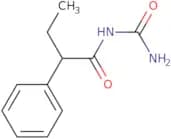
CAS :<p>Versatile small molecule scaffold</p>Formule :C11H21NO4Degré de pureté :Min. 95%Masse moléculaire :231.29 g/mol(2-Phenylbutanoyl)urea
CAS :<p>2-Phenylbutanoyl)urea is an enzyme inducer that belongs to the group of acidic compounds. It has been shown to be a potent inducer of drug metabolism enzymes, such as cytochrome P450 enzymes and uridine 5'-diphospho-glucuronosyltransferases. 2-Phenylbutanoyl)urea has also been shown to have a significant effect on the pharmacokinetics of drugs that are substrates for these enzymes. This compound is insoluble in water and soluble in organic solvents, like acetone. 2-Phenylbutanoyl)urea is soluble in organic solvents, like acetone, and insoluble in water. 2-Phenylbutanoyl)urea is used as a model system for studying enzyme induction by acidic compounds.</p>Formule :C11H14N2O2Degré de pureté :Min. 95%Masse moléculaire :206.24 g/mol(1-Cyclopropylethyl)[(2,4-dimethoxyphenyl)methyl]amine
CAS :<p>Versatile small molecule scaffold</p>Formule :C14H21NO2Degré de pureté :Min. 95%Masse moléculaire :235.32 g/mol

![3-{1-[(tert-Butoxy)carbonyl]azetidin-2-yl}propanoic acid](/_next/image/?url=https%3A%2Fstatic.cymitquimica.com%2Fproducts%2F3D%2Fthumb-webp%2FFWC08264.webp&w=3840&q=75)
![4-[(Trifluoromethyl)sulphonyl]phenol](/_next/image/?url=https%3A%2Fstatic.cymitquimica.com%2Fproducts%2F3D%2Fthumb-webp%2FAAA43284.webp&w=3840&q=75)


![2-[(3-Fluorophenyl)amino]ethan-1-ol](/_next/image/?url=https%3A%2Fstatic.cymitquimica.com%2Fproducts%2F3D%2Fthumb-webp%2FAAA40495.webp&w=3840&q=75)



![5H,7H,8H-Pyrano[4,3-b]pyridine-2-carbonitrile](/_next/image/?url=https%3A%2Fstatic.cymitquimica.com%2Fproducts%2F3D%2Fthumb-webp%2FFWC02595.webp&w=3840&q=75)

![2-(4-Fluorophenyl)-2H,4H,5H,7H-pyrano[3,4-c]pyrazol-3-ol](/_next/image/?url=https%3A%2Fstatic.cymitquimica.com%2Fproducts%2F3D%2Fthumb-webp%2FFWC01420.webp&w=3840&q=75)


![5-[(4-Fluorophenyl)methyl]-4-methyl-1,3-thiazol-2-amine](/_next/image/?url=https%3A%2Fstatic.cymitquimica.com%2Fproducts%2F3D%2Fthumb-webp%2FFWB99870.webp&w=3840&q=75)

![2-{[(Benzyloxy)carbonyl]amino}-2-methylpentanoic acid](/_next/image/?url=https%3A%2Fstatic.cymitquimica.com%2Fproducts%2F3D%2Fthumb-webp%2FFWB99106.webp&w=3840&q=75)
![2-{[(tert-Butoxy)carbonyl]amino}-2-methylpentanoic acid](/_next/image/?url=https%3A%2Fstatic.cymitquimica.com%2Fproducts%2F3D%2Fthumb-webp%2FFWB99096.webp&w=3840&q=75)
![(1-Cyclopropylethyl)[(2,4-dimethoxyphenyl)methyl]amine](/_next/image/?url=https%3A%2Fstatic.cymitquimica.com%2Fproducts%2F3D%2Fthumb-webp%2FFWB98821.webp&w=3840&q=75)