Building Blocks
Cette section contient des produits fondamentaux pour la synthèse de composés organiques et biologiques. Building blocks sont les matériaux de départ essentiels utilisés pour construire des molécules complexes à travers diverses réactions chimiques. Ils jouent un rôle crucial dans la découverte de médicaments, la science des matériaux et la recherche chimique. Chez CymitQuimica, nous offrons une gamme diversifiée de building blocks de haute qualité pour soutenir vos recherches innovantes et projets industriels, en vous assurant de disposer des composants essentiels pour une synthèse réussie.
Sous-catégories appartenant à la catégorie "Building Blocks"
- Acides boroniques et dérivés de l'acide boronique(5.778 produits)
- Building Blocks Chiraux(1.242 produits)
- Building Blocks Hydrocarbonés(6.098 produits)
- Building Blocks organiques(61.059 produits)
199580 produits trouvés pour "Building Blocks"
Trier par
Degré de pureté (%)
0
100
|
0
|
50
|
90
|
95
|
100
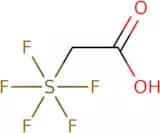
2-(Pentafluoro-sulfanyl)acetic acid
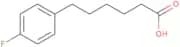
CAS :<p>Versatile small molecule scaffold</p>Formule :C2H3F5O2SDegré de pureté :Min. 95%Masse moléculaire :186.1 g/mol6-(4-Fluorophenyl)hexanoic acid
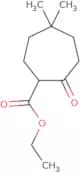
CAS :Versatile small molecule scaffoldFormule :C12H15FO2Degré de pureté :Min. 95%Masse moléculaire :210.24 g/molEthyl 5,5-dimethyl-2-oxocycloheptane-1-carboxylate
CAS :Versatile small molecule scaffoldFormule :C12H20O3Degré de pureté :Min. 95%Masse moléculaire :212.28 g/mol9-Bromo-1-nonene
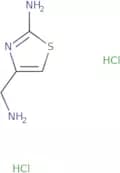
CAS :<p>9-Bromo-1-nonene is a hydroxy group, halide, and solute. It has been shown to undergo reductive elimination with cyclodehydration to form 9-bromononane. 9-Bromo-1-nonene has also been used as an actuator in phase liquid chromatography (also called high performance liquid chromatography). It is stereoselective and exhibits inhibitory activities against anomala, glycosidases, and magnetic particles. This compound is also soluble in diethyl ether.</p>Formule :C9H17BrDegré de pureté :Min. 95%Masse moléculaire :205.14 g/mol4-(Aminomethyl)-1,3-thiazol-2-amine dihydrochloride
CAS :Versatile small molecule scaffoldFormule :C4H9Cl2N3SDegré de pureté :Min. 95%Masse moléculaire :202.11 g/mol4-(2-Aminoethyl)-1,3-thiazol-2-amine dihydrochloride
CAS :<p>Versatile small molecule scaffold</p>Formule :C5H11Cl2N3SDegré de pureté :Min. 95%Masse moléculaire :216.13 g/mol5-Carbamoyl-2-methoxybenzoic acid
CAS :<p>Versatile small molecule scaffold</p>Formule :C9H9NO4Degré de pureté :Min. 95%Masse moléculaire :195.17 g/mol1,4-Diaminobutane-2,3-diol dihydrochloride
CAS :<p>Versatile small molecule scaffold</p>Formule :C4H13ClN2O2Degré de pureté :Min. 95%Masse moléculaire :156.61 g/mol2-Cyclopropylethylamine hydrochloride
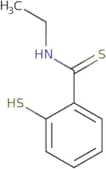
CAS :<p>Versatile small molecule scaffold</p>Formule :C5H12ClNDegré de pureté :Min. 95%Masse moléculaire :121.61 g/molN-Ethyl-2-sulfanylbenzene-1-carbothioamide
CAS :<p>Versatile small molecule scaffold</p>Formule :C9H11NS2Degré de pureté :Min. 95%Masse moléculaire :197.3 g/mol1-((Benzyloxy)carbonyl)-2-methylpiperidine-2-carboxylic acid
CAS :<p>Versatile small molecule scaffold</p>Formule :C15H19NO4Degré de pureté :Min. 95%Masse moléculaire :277.31 g/mol7-benzyl-3-thia-7-azabicyclo[3.3.1]nonan-9-one
CAS :7-benzyl-3-thia-7-azabicyclo[3.3.1]nonan-9-one (7BAN) is a compound that has been shown to have antiarrhythmic effects in animal models. The conformational stability of 7BAN has been determined by single crystal x-ray diffraction data, and the conformers have been determined by conformational analysis. The conformation of this drug is stabilized by the benzyl group and the azabicyclo group, which are responsible for its antiarrhythmic activity.Formule :C14H17NOSDegré de pureté :Min. 95%Masse moléculaire :247.36 g/mol3-(Ethylsulfanyl)benzonitrile
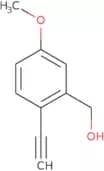
CAS :Versatile small molecule scaffoldFormule :C9H9NSDegré de pureté :Min. 95%Masse moléculaire :163.24 g/mol(2-Ethynyl-5-methoxyphenyl)methanol
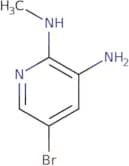
CAS :<p>Versatile small molecule scaffold</p>Formule :C10H10O2Degré de pureté :Min. 95%Masse moléculaire :162.19 g/mol5-Bromo-2-N-methylpyridine-2,3-diamine
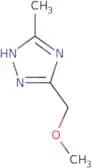
CAS :Versatile small molecule scaffoldFormule :C6H8BrN3Degré de pureté :Min. 95%Masse moléculaire :202.05 g/mol5-(Methoxymethyl)-3-methyl-1H-1,2,4-triazole
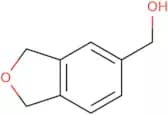
CAS :<p>Versatile small molecule scaffold</p>Formule :C5H9N3ODegré de pureté :Min. 95%Masse moléculaire :127.14 g/mol(1,3-dihydro-2-benzofuran-5-yl)methanol
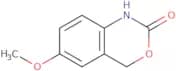
CAS :<p>Versatile small molecule scaffold</p>Formule :C9H10O2Degré de pureté :Min. 95%Masse moléculaire :150.18 g/mol6-Methoxy-2,4-dihydro-1H-3,1-benzoxazin-2-one
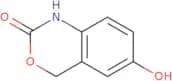
CAS :<p>Versatile small molecule scaffold</p>Formule :C9H9NO3Degré de pureté :Min. 95%Masse moléculaire :179.17 g/mol6-Hydroxy-2,4-dihydro-1H-3,1-benzoxazin-2-one
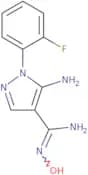
CAS :<p>Versatile small molecule scaffold</p>Formule :C8H7NO3Degré de pureté :Min. 95%Masse moléculaire :165.15 g/mol5-Amino-1-(2-fluorophenyl)-N'-hydroxy-1H-pyrazole-4-carboximidamide
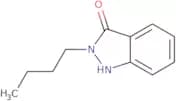
CAS :<p>Versatile small molecule scaffold</p>Formule :C10H10FN5ODegré de pureté :Min. 95%Masse moléculaire :235.22 g/mol2-Butyl-2,3-dihydro-1H-indazol-3-one
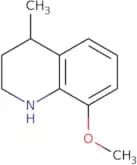
CAS :<p>Versatile small molecule scaffold</p>Formule :C11H14N2ODegré de pureté :Min. 95%Masse moléculaire :190.24 g/mol8-Methoxy-4-methyl-1,2,3,4-tetrahydroquinoline
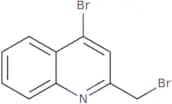
CAS :Versatile small molecule scaffoldFormule :C11H15NODegré de pureté :Min. 95%Masse moléculaire :177.24 g/mol4-Bromo-2-(bromomethyl)quinoline
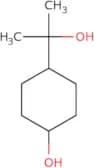
CAS :<p>Versatile small molecule scaffold</p>Formule :C10H7Br2NDegré de pureté :Min. 95%Masse moléculaire :300.98 g/mol4-(2-Hydroxypropan-2-yl)cyclohexan-1-ol
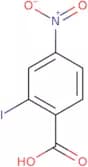
CAS :<p>Versatile small molecule scaffold</p>Formule :C9H18O2Degré de pureté :Min. 95%Masse moléculaire :158.24 g/mol2-iodo-4-nitrobenzoic acid
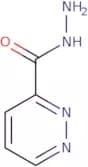
CAS :<p>2-Iodo-4-nitrobenzoic acid is a synthetic heterocyclic compound with the molecular formula C6H3INO2Cl. It has a picric pharmacophore, which is a structural motif that consists of a trifluoromethyl group and two nitro groups. 2-Iodo-4-nitrobenzoic acid is insoluble in water and hydrochloric acid. It can be synthesized by reacting diphenylmethane with sodium hydroxide solution and then adding hydrochloric acid to the resultant solution. The chemical structure of 2-iodo-4-nitrobenzoic acid appears as an orange crystalline solid in its pure form, but it has not been observed to have any biological activity. The chemical shifts for the methyl protons are between 1.5 and 4 ppm, and the chemical shifts for the hydrogen protons are between 2 and 4 ppm in its nmr spectra.</p>Formule :C7H4INO4Degré de pureté :Min. 95%Masse moléculaire :293 g/molPyridazine-3-carboxylic acid hydrazide
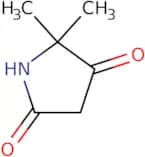
CAS :<p>Pyridazine-3-carboxylic acid hydrazide is a chemical compound that belongs to the class of heterocyclic compounds. It can be synthesized by reacting 3-hydrazinopyridine with pyridine in a process that involves elemental analysis and spectral analysis. This compound has been shown to react with metal ions and form a ligand complex. Pyridazine-3-carboxylic acid hydrazide also has electronic spectra when it reacts with acids and bases, which are related to its formation constants. The parameters of this chemical are given below:</p>Formule :C5H6N4ODegré de pureté :Min. 95%Masse moléculaire :138.13 g/mol5,5-Dimethyl-2,4-pyrrolidinedione
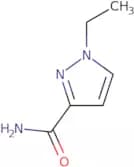
CAS :<p>5,5-Dimethyl-2,4-pyrrolidinedione is the common name for a photochemical reaction that produces the anion of a substituted pyrrole. The reaction starts with a ketone or an aldehyde and two molecules of formaldehyde. This reaction is usually carried out in the presence of light. The efficiency of this process depends on the substituents on the molecule. In some cases, n-substituted pyrroles are more efficient than n-acetylated or n-alkylated pyrroles. If all three substituents are hydrogens, then the reactivity diminishes. 5,5-Dimethyl-2,4-pyrrolidinedione has been used as a precursor to produce 1-(1H)indolium salts and other compounds with antiinflammatory properties by alkylation or methoxycarbonylation reactions.</p>Formule :C6H9NO2Degré de pureté :Min. 95%Masse moléculaire :127.14 g/mol1-Ethyl-1H-pyrazole-3-carboxamide
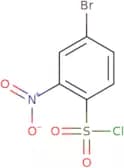
CAS :1-Ethyl-1H-pyrazole-3-carboxamide (1EPC) is a carbonic anhydrase inhibitor. It is used in the treatment of cancer, including lung carcinoma and breast carcinoma. 1EPC inhibits the growth of cancer cells by inhibiting the production of ATP in hypoxic regions of the tumor cell, thereby causing a dose-dependent cytotoxicity effect. This drug also has anticancer effects against fibroblast cells and carcinoma cells, as well as inhibiting the synthesis of DNA and RNA.Formule :C6H9N3ODegré de pureté :Min. 95%Masse moléculaire :139.16 g/mol4-Bromo-2-nitrobenzenesulphonyl chloride
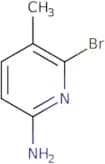
CAS :<p>Versatile small molecule scaffold</p>Formule :C6H3BrClNO4SDegré de pureté :Min. 95%Masse moléculaire :300.51 g/mol6-bromo-5-methylpyridin-2-amine
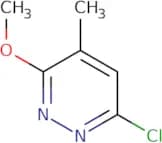
CAS :<p>6-Bromo-5-methylpyridin-2-amine is an imidazopyridine drug that has been shown to inhibit the growth of bacterial strains in vitro. It also binds to the electron density, which may be due to its heteroaromatic ring and ionization potential. 6BMPA is synthesized by reacting 2-chloro-6-bromopyridine with 5-methylpyridinium iodide. For the synthesis of a monomer, 6BMPA is reacted with a second molecule of 5-methylpyridinium iodide, yielding the imidazopyrazine as a product. Drug discovery for this compound has been shown to be promising in animal models.</p>Formule :C6H7BrN2Degré de pureté :Min. 95%Masse moléculaire :187 g/mol6-Chloro-3-Methoxy-4-methylpyridazine
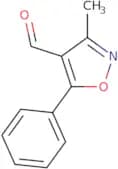
CAS :<p>6-Chloro-3-Methoxy-4-methylpyridazine is an alkoxide of hydrazine. It is a white crystalline solid that melts at 130 °C and has a mp of 138 °C. 6-Chloro-3-Methoxy-4-methylpyridazine is selective for the liver, and has been used in research to study hepatic diseases. It has also been used as an intermediate in the synthesis of other compounds. The 6-chloro group on the pyridine nitrogen atom reacts with phosphorus oxychloride to produce a monohydrate salt, which can be hydrolyzed by refluxing with water to form the oxychloride salt. The chloride atom on the methoxy group can be replaced by chlorine by heating with phosphorus and hydrazine monohydrate. This process is efficient because it produces only one chlorinated product instead of two chlorinated products that are produced when chlorine gas is added directly to</p>Formule :C6H7ClN2ODegré de pureté :Min. 95%Masse moléculaire :158.59 g/mol3-Methyl-5-phenyl-isoxazole-4-carbaldehyde
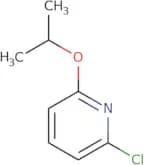
CAS :<p>Versatile small molecule scaffold</p>Formule :C11H9NO2Degré de pureté :Min. 95%Masse moléculaire :187.2 g/mol2-Chloro-6-isopropoxypyridine
CAS :<p>2-Chloro-6-isopropoxypyridine is a reactive organometallic compound that has the ability to form stable, structurally diverse, and often useful compounds. It can be used as an intermediate in the synthesis of substituted pyridines, furans, and other heterocycles. The synthesis of these compounds is usually achieved through cycloaddition reactions with suitably substituted arenes. 2-Chloro-6-isopropoxypyridine can be synthesized by the lithium chloride induced elimination reaction between chloroacetone and isopropyl alcohol at low temperatures. This method is regioselective, in that it gives a mixture of 2-chloro-6-isopropoxypyridine and its diastereoisomer.<br>2CIP produces a mixture of products with different substitution patterns because it undergoes a cycloaddition reaction with substituents on the aromatic ring. The lithiation</p>Formule :C8H10NOClDegré de pureté :Min. 95%Masse moléculaire :171.62 g/mol(2R)-2-{[(tert-Butoxy)carbonyl]amino}-3-cyclopropylpropanoic acid
CAS :<p>Versatile small molecule scaffold</p>Formule :C11H19NO4Degré de pureté :Min. 95%Masse moléculaire :229.27 g/mol2,5-diaza-bicyclo[2.2.1]heptane 2hcl
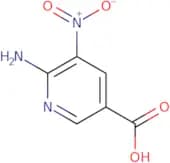
CAS :Versatile small molecule scaffoldFormule :C5H12Cl2N2Degré de pureté :Min. 95%Masse moléculaire :171.07 g/mol6-Amino-5-nitronicotinic acid
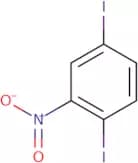
CAS :<p>Versatile small molecule scaffold</p>Formule :C6H5N3O4Degré de pureté :Min. 95%Masse moléculaire :183.12 g/mol1,4-Diiodo-2-nitrobenzene
CAS :<p>Versatile small molecule scaffold</p>Formule :C6H3I2NO2Degré de pureté :Min. 95%Masse moléculaire :374.9 g/mol7-Oxo-4H,7H-[1,2,4]triazolo[1,5-a]pyrimidine-6-carbonitrile
CAS :<p>Versatile small molecule scaffold</p>Formule :C6H3N5ODegré de pureté :Min. 95%Masse moléculaire :161.12 g/mol5-Acetamidothiophene-2-carboxylic acid
CAS :<p>Versatile small molecule scaffold</p>Formule :C7H7NO3SDegré de pureté :Min. 95%Masse moléculaire :185.2 g/molMethyl 2-amino-3-hydroxy-2-methylpropanoate hydrochloride
CAS :<p>Versatile small molecule scaffold</p>Formule :C5H12ClNO3Degré de pureté :Min. 95%Masse moléculaire :169.61 g/mol2-{[(tert-Butoxy)carbonyl]amino}-3-hydroxy-2-methylpropanoic acid
CAS :<p>Versatile small molecule scaffold</p>Formule :C9H17NO5Degré de pureté :Min. 95%Masse moléculaire :219.23 g/mol4-Chloro-1,3-thiazole-2-sulfonamide
CAS :<p>Versatile small molecule scaffold</p>Formule :C3H3ClN2O2S2Degré de pureté :Min. 95%Masse moléculaire :198.7 g/mol1,3-Thiazole-4-sulfonamide
CAS :<p>1,3-Thiazole-4-sulfonamide is an herbicide belonging to the thiazole derivatives. It has a variety of uses in agriculture, forestry, and urban services such as weed control. 1,3-Thiazole-4-sulfonamide inhibits plant growth by inhibiting photosynthesis in plants. This herbicide has been shown to be effective against annual grasses and broadleaf weeds.</p>Formule :C3H4N2O2S2Degré de pureté :Min. 95%Masse moléculaire :164.21 g/molMethyl 5-sulfamoyl-1,3-thiazole-4-carboxylate
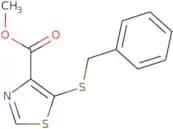
CAS :<p>Versatile small molecule scaffold</p>Formule :C5H6N2O4S2Degré de pureté :Min. 95%Masse moléculaire :222.2 g/molMethyl 5-(benzylsulfanyl)-1,3-thiazole-4-carboxylate
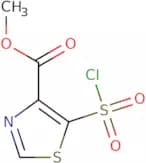
CAS :<p>Versatile small molecule scaffold</p>Formule :C12H11NO2S2Degré de pureté :Min. 95%Masse moléculaire :265.4 g/molMethyl 5-(chlorosulfonyl)-1,3-thiazole-4-carboxylate
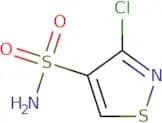
CAS :<p>Versatile small molecule scaffold</p>Formule :C5H4ClNO4S2Degré de pureté :Min. 95%Masse moléculaire :241.7 g/mol3-Chloro-1,2-thiazole-4-sulfonamide
CAS :<p>Versatile small molecule scaffold</p>Formule :C3H3ClN2O2S2Degré de pureté :Min. 95%Masse moléculaire :198.7 g/molMethyl 4-(chlorosulfonyl)-1,2-thiazole-3-carboxylate
CAS :<p>Versatile small molecule scaffold</p>Formule :C5H4ClNO4S2Degré de pureté :Min. 95%Masse moléculaire :241.7 g/mol4,6-dichloro-2-(pyridin-3-yl)pyrimidine
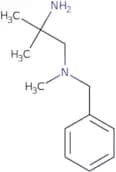
CAS :<p>Versatile small molecule scaffold</p>Formule :C9H5Cl2N3Degré de pureté :Min. 95%Masse moléculaire :226.1 g/mol(2-Amino-2-methylpropyl)(benzyl)methylamine
CAS :Versatile small molecule scaffoldFormule :C12H20N2Degré de pureté :Min. 95%Masse moléculaire :192.3 g/mol





![7-benzyl-3-thia-7-azabicyclo[3.3.1]nonan-9-one](/_next/image/?url=https%3A%2Fstatic.cymitquimica.com%2Fproducts%2F3D%2Fthumb-webp%2FPDA39804.webp&w=3840&q=75)

![(2R)-2-{[(tert-Butoxy)carbonyl]amino}-3-cyclopropylpropanoic acid](/_next/image/?url=https%3A%2Fstatic.cymitquimica.com%2Fproducts%2F3D%2Fthumb-webp%2FPDA48308.webp&w=3840&q=75)
![2,5-diaza-bicyclo[2.2.1]heptane 2hcl](/_next/image/?url=https%3A%2Fstatic.cymitquimica.com%2Fproducts%2F3D%2Fthumb-webp%2FPDA48738.webp&w=3840&q=75)
![7-Oxo-4H,7H-[1,2,4]triazolo[1,5-a]pyrimidine-6-carbonitrile](/_next/image/?url=https%3A%2Fstatic.cymitquimica.com%2Fproducts%2F3D%2Fthumb-webp%2FPDA48867.webp&w=3840&q=75)


![2-{[(tert-Butoxy)carbonyl]amino}-3-hydroxy-2-methylpropanoic acid](/_next/image/?url=https%3A%2Fstatic.cymitquimica.com%2Fproducts%2F3D%2Fthumb-webp%2FPDA50039.webp&w=3840&q=75)