Building Blocks
Cette section contient des produits fondamentaux pour la synthèse de composés organiques et biologiques. Building blocks sont les matériaux de départ essentiels utilisés pour construire des molécules complexes à travers diverses réactions chimiques. Ils jouent un rôle crucial dans la découverte de médicaments, la science des matériaux et la recherche chimique. Chez CymitQuimica, nous offrons une gamme diversifiée de building blocks de haute qualité pour soutenir vos recherches innovantes et projets industriels, en vous assurant de disposer des composants essentiels pour une synthèse réussie.
Sous-catégories appartenant à la catégorie "Building Blocks"
- Acides boroniques et dérivés de l'acide boronique(5.778 produits)
- Building Blocks Chiraux(1.243 produits)
- Building Blocks Hydrocarbonés(6.097 produits)
- Building Blocks organiques(61.052 produits)
201390 produits trouvés pour "Building Blocks"
Trier par
Degré de pureté (%)
0
100
|
0
|
50
|
90
|
95
|
100
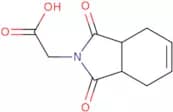
2-(1,3-Dioxo-2,3,3a,4,7,7a-hexahydro-1H-isoindol-2-yl)acetic acid
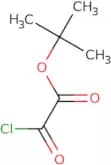
CAS :<p>Versatile small molecule scaffold</p>Formule :C10H11NO4Degré de pureté :Min. 95%Masse moléculaire :209.2 g/moltert-Butyl 2-Chloro-2-oxoacetate
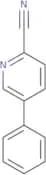
CAS :<p>Tert-butyl 2-chloro-2-oxoacetate is a substrate analogue that has been shown to inhibit the activity of aminopeptidase (AP) and esterase (EST). These enzymes are important for the degradation of peptides in the urine. Tert-butyl 2-chloro-2-oxoacetate has also been shown to have antibacterial properties against uropathogenic E. coli. This analog interacts with substrate proteins, inhibiting their function, which leads to an increase in the concentration of substrates and an inhibition of bacterial growth. Tert-butyl 2-chloro-2-oxoacetate is an amide that can be used as a biomolecular probe for conformational studies and as an inhibitor for AP and EST.</p>Formule :C6H9O3ClDegré de pureté :Min. 95%Masse moléculaire :164.58 g/mol5-phenylpyridine-2-carbonitrile
CAS :<p>5-Phenylpyridine-2-carbonitrile is a synthetic compound. It emits light when subjected to an electric field, and it can be used in intermolecular quantum efficiency measurements. 5-Phenylpyridine-2-carbonitrile has been shown to have a quantum efficiency of 0.72% in benzonitrile and picolinonitrile diodes at room temperature, which is lower than the quantum efficiency of phosphorescent materials such as ZnS:CuCl (0.87%). This may be due to the low energy required for the triplet state to emit light.</p>Formule :C12H8N2Degré de pureté :Min. 95%Masse moléculaire :180.21 g/mol6-Phenylpyridine-2-carbonitrile
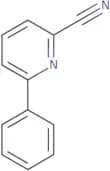
CAS :<p>6-Phenylpyridine-2-carbonitrile is a nitrogenous organic compound that has been used as a ligand to bind metal ions. It is also an efficient aminating agent. 6-Phenylpyridine-2-carbonitrile binds to bidentate ligands such as imidazole, which leads to the formation of amides and nitriles. This product has been used in the synthesis of biomolecules with nitrogen, such as urea.</p>Formule :C12H8N2Degré de pureté :Min. 95%Masse moléculaire :180.2 g/mol6-Phenylnicotinonitrile
CAS :<p>6-Phenylnicotinonitrile is a reactive moiety that is generated from the reaction of an aryl halide and boronic acid. The 6-phenyl group can be used to form new carbon-carbon bonds in the synthesis of heteroaromatic compounds. This compound can also be recycled after use by reacting it with a boronic acid, which creates another reactive moiety. This recycling process has been shown to increase the efficiency of this chemical reaction.</p>Formule :C12H8N2Degré de pureté :Min. 95%Masse moléculaire :180.21 g/mol2-(4-Chlorophenyl)butanenitrile
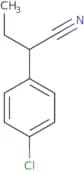
CAS :Versatile small molecule scaffoldFormule :C10H10ClNDegré de pureté :Min. 95%Masse moléculaire :179.64 g/mol1-[4-Methyl-2-(pyridin-3-yl)-1,3-thiazol-5-yl]ethan-1-one hydrochloride
CAS :<p>Versatile small molecule scaffold</p>Formule :C11H11ClN2OSDegré de pureté :Min. 95%Masse moléculaire :254.74 g/mol3-(4-Methyl-1,3-thiazol-2-yl)pyridine
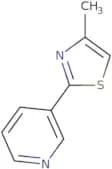
CAS :<p>Versatile small molecule scaffold</p>Formule :C9H8N2SDegré de pureté :Min. 95%Masse moléculaire :176.24 g/mol2-(Pyridin-3-yl)-1,3-thiazole-4-carboxylic acid
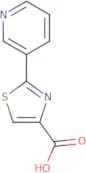
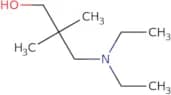
CAS :Versatile small molecule scaffoldFormule :C9H6N2O2SDegré de pureté :Min. 95%Masse moléculaire :206.22 g/mol3-(Diethylamino)-2,2-dimethyl-propan-1-ol
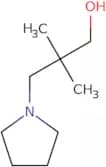
CAS :3-(Diethylamino)-2,2-dimethyl-propan-1-ol is a psychoactive substance that belongs to the group of phenethylamines. It is structurally related to the precursor molecule 2,5-dihydroxyphenethylamine (or dopamine). 3-(Diethylamino)-2,2-dimethyl-propan-1-ol has been shown to inhibit cytochrome P450 2C19 and metabolize into glucuronidated metabolites through CYP3A4 and other isoforms. This metabolite is excreted in human urine as a result of its metabolism by uridine diphosphate glucuronosyltransferase 1A1 (UGT1A1).Formule :C9H21NODegré de pureté :Min. 95%Couleur et forme :Clear LiquidMasse moléculaire :159.27 g/mol2,2-Dimethyl-3-(pyrrolidin-1-yl)propan-1-ol
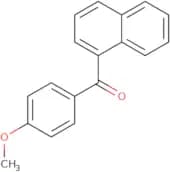
CAS :Versatile small molecule scaffoldFormule :C9H19NODegré de pureté :Min. 95%Masse moléculaire :157.25 g/mol(4-Methoxyphenyl)(naphthalen-1-yl)methanone
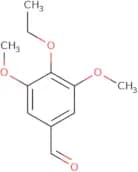
CAS :<p>Versatile small molecule scaffold</p>Formule :C18H14O2Degré de pureté :Min. 95%Masse moléculaire :262.3 g/mol4-Ethoxy-3,5-dimethoxybenzaldehyde
CAS :Versatile small molecule scaffoldFormule :C11H14O4Degré de pureté :Min. 95%Masse moléculaire :210.23 g/molMethyl N-(3-methylphenyl)carbamate
CAS :<p>Methyl N-(3-methylphenyl)carbamate is a methylating agent that can be used to modify the epigenome. It is an inhibitor of histone lysine demethylases, which are enzymes that remove methyl groups from the amino acid lysine on histones. Methyl N-(3-methylphenyl)carbamate can also inhibit DNA replication and actin filament formation. This drug has been shown to have a clastogenic effect in mammalian cells and is also an inhibitor of effector proteins.</p>Formule :C9H11NO2Degré de pureté :Min. 95%Masse moléculaire :165.19 g/mol1,2-Dimethylcyclohexan-1-amine
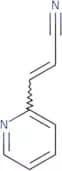
CAS :Versatile small molecule scaffoldFormule :C8H17NDegré de pureté :Min. 95%Masse moléculaire :127.23 g/mol(2E)-3-(Pyridin-2-yl)prop-2-enenitrile
CAS :<p>Versatile small molecule scaffold</p>Formule :C8H6N2Degré de pureté :Min. 95%Masse moléculaire :130.15 g/mol3-Methyl-4H-pyrido[1,2-a]pyrimidin-4-one
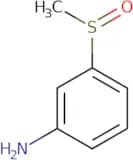
CAS :Versatile small molecule scaffoldFormule :C9H8N2ODegré de pureté :Min. 95%Masse moléculaire :160.17 g/mol3-Methanesulfinylaniline
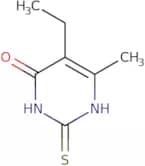
CAS :Versatile small molecule scaffoldFormule :C7H9NOSDegré de pureté :Min. 95%Masse moléculaire :155.22 g/mol5-Ethyl-6-methyl-2-thioxo-2,3-dihydropyrimidin-4(1H)-one
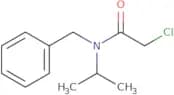
CAS :5-Ethyl-6-methyl-2-thioxo-2,3-dihydropyrimidin-4(1H)-one is a chemical compound containing an iodide group and a nitrogen atom. Iodides can be formed by the iodocyclization of ethyl acetoacetate with ethyl iodide. The resulting 5-ethyl-6-methylpyrimidinecarboxylic acid can be converted to the desired product by treatment with potassium hydroxide in ethanol.Formule :C7H10N2OSDegré de pureté :Min. 95%Masse moléculaire :170.23 g/molN-Benzyl-2-chloro-N-(propan-2-yl)acetamide
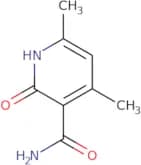
CAS :<p>Versatile small molecule scaffold</p>Formule :C12H16ClNODegré de pureté :Min. 95%Masse moléculaire :225.71 g/mol2-Hydroxy-4,6-dimethylnicotinamide
CAS :<p>Versatile small molecule scaffold</p>Formule :C8H10N2O2Degré de pureté :Min. 95%Masse moléculaire :166.18 g/mol4-(Mercaptomethyl)benzoic acid
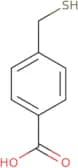
CAS :<p>4-(Mercaptomethyl)benzoic acid is a thiosemicarbazide derivative that has been used as a photosensitizer in photodynamic therapy. This compound has the ability to bind to selenide ions, which are electron acceptors, and is converted to its reactive form by light. 4-(Mercaptomethyl)benzoic acid may be used for the treatment of cancers that have been resistant to other treatments. The compound also shows potential for use in diagnosing or treating other conditions such as carboxylate ligand transfer reactions and cadmium toxicity. The diameter of this drug is around 2 nm.</p>Formule :C8H8O2SDegré de pureté :Min. 95%Masse moléculaire :168.21 g/molThiomorpholine-4-carbonyl Chloride 1,1-Dioxide
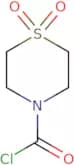
CAS :Versatile small molecule scaffoldFormule :C5H8ClNO3SDegré de pureté :Min. 95%Masse moléculaire :197.64 g/molN-Benzyl-2-chloro-9H-purin-6-amine
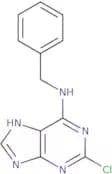
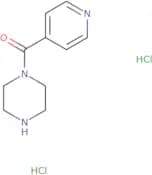
CAS :<p>Versatile small molecule scaffold</p>Formule :C12H10ClN5Degré de pureté :Min. 95%Masse moléculaire :259.69 g/mol1-(Pyridine-4-carbonyl)piperazine dihydrochloride
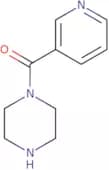
CAS :<p>Versatile small molecule scaffold</p>Formule :C10H15Cl2N3ODegré de pureté :Min. 95%Masse moléculaire :264.15 g/molPiperazin-1-yl-pyridin-3-yl-methanone dihydrochloride
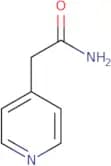
CAS :Versatile small molecule scaffoldFormule :C10H15Cl2N3ODegré de pureté :Min. 95%Masse moléculaire :264.15 g/mol2-pyridin-4-ylacetamide
CAS :2-pyridin-4-ylacetamide is a chiral inorganic compound that can be synthesized by reacting 4-hydroxypyridine with 2,2'-diaminodiethylamine. The crystal structure of this compound has been determined using x-ray diffraction techniques. The molecule adopts a conformation that is twisted about the central C=N bond, which is typical for pyridines. It also has a significant amide proton resonance, which causes it to have an intense conformational dependence on the temperature and solvent.Formule :C7H8N2ODegré de pureté :Min. 95%Masse moléculaire :136.15 g/mol2-[2,2,3,3-Tetrafluoro-1-(hydroxymethyl)cyclobutyl]ethan-1-ol
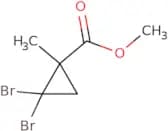
CAS :<p>Versatile small molecule scaffold</p>Formule :C7H10F4O2Degré de pureté :Min. 95%Masse moléculaire :202.15 g/molMethyl 2,2-dibromo-1-methylcyclopropane-1-carboxylate
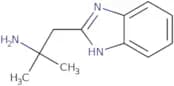
CAS :<p>Versatile small molecule scaffold</p>Formule :C6H8Br2O2Degré de pureté :Min. 95%Masse moléculaire :271.93 g/mol1-(1H-1,3-Benzodiazol-2-yl)-2-methylpropan-2-amine
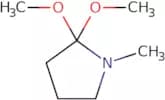
CAS :Versatile small molecule scaffoldFormule :C11H15N3Degré de pureté :Min. 95%Masse moléculaire :189.26 g/mol2,2-Dimethoxy-1-methylpyrrolidine
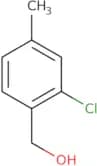
CAS :<p>Versatile small molecule scaffold</p>Formule :C7H15NO2Degré de pureté :Min. 95%Couleur et forme :Clear LiquidMasse moléculaire :145.2 g/mol(2-chloro-4-methylphenyl)methanol
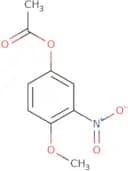
CAS :Versatile small molecule scaffoldFormule :C8H9OClDegré de pureté :Min. 95%Masse moléculaire :156.6 g/mol4-Methoxy-3-nitrophenyl acetate
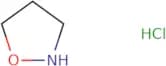
CAS :<p>Versatile small molecule scaffold</p>Formule :C9H9NO5Degré de pureté :Min. 95%Masse moléculaire :211.17 g/mol1,2-Oxazolidine hydrochloride
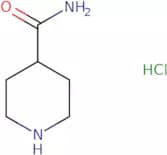
CAS :1,2-Oxazolidine hydrochloride (1,2-OH) is an organic compound that is used as a reagent in organic synthesis. It is a chloride salt of the squaramide 1,2-oxazolidine and it reacts with hydrochloric acid to form the corresponding isoxazolidine. This process can be used to regenerate the starting reagent from a reaction mixture. The reaction yield for this process is in excess of 90%. 1,2-OH has shown pain control effects in mice and rats through its ability to inhibit prostaglandin synthesis. It also binds to c1-c6 alkoxyamines and iminiums, which are important intermediates in drug synthesis.Formule :C3H8ClNODegré de pureté :Min. 95%Masse moléculaire :109.55 g/mol4-Piperidinecarboxamide hydrochloride
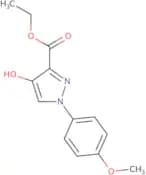
CAS :Versatile small molecule scaffoldFormule :C6H13ClN2ODegré de pureté :Min. 95%Masse moléculaire :164.64 g/molEthyl 4-hydroxy-1-(4-methoxyphenyl)-1H-pyrazole-3-carboxylate
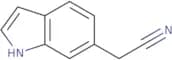
CAS :<p>Versatile small molecule scaffold</p>Formule :C13H14N2O4Degré de pureté :Min. 95%Masse moléculaire :262.26 g/mol2-(1H-Indol-6-yl)acetonitrile
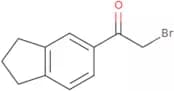
CAS :Versatile small molecule scaffoldFormule :C10H8N2Degré de pureté :Min. 95%Masse moléculaire :156.18 g/mol2-Bromo-1-(2,3-dihydro-1H-inden-5-yl)ethan-1-one
CAS :Versatile small molecule scaffoldFormule :C11H11BrODegré de pureté :Min. 95%Masse moléculaire :239.11 g/mol7,8-Dihydro-5H-cyclohepta[b]pyridine-5,9(6H)-dione
CAS :<p>Versatile small molecule scaffold</p>Formule :C10H9NO2Degré de pureté :Min. 95%Masse moléculaire :175.19 g/molEthyl 3-chloro-5H,6H,7H,8H-pyrido[4,3-c]pyridazine-6-carboxylate
CAS :Versatile small molecule scaffoldFormule :C10H12ClN3O2Degré de pureté :Min. 95%Masse moléculaire :241.67 g/molMethyl 3-chloro-5H,6H,7H,8H-pyrido[4,3-c]pyridazine-6-carboxylate
CAS :Versatile small molecule scaffoldFormule :C9H10ClN3O2Degré de pureté :Min. 95%Masse moléculaire :227.65 g/molEthyl 3-hydroxy-5H,6H,7H,8H-pyrido[4,3-c]pyridazine-6-carboxylate
CAS :<p>Versatile small molecule scaffold</p>Formule :C10H13N3O3Degré de pureté :Min. 95%Masse moléculaire :223.23 g/mol2H,3H,5H,6H,7H,8H-Pyrido[4,3-c]pyridazin-3-one hydrochloride
CAS :<p>Versatile small molecule scaffold</p>Formule :C7H10ClN3ODegré de pureté :Min. 95%Masse moléculaire :187.63 g/mol5H,6H,7H,8H-Pyrido[4,3-c]pyridazin-3-ol
CAS :Versatile small molecule scaffoldFormule :C7H9N3ODegré de pureté :Min. 95%Masse moléculaire :151.17 g/molMethyl 3-oxo-2H,3H,5H,6H,7H,8H-pyrido[4,3-c]pyridazine-6-carboxylate
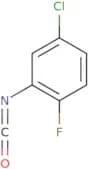
CAS :<p>Versatile small molecule scaffold</p>Formule :C9H11N3O3Degré de pureté :Min. 95%Masse moléculaire :209.2 g/mol4-Chloro-1-fluoro-2-isocyanatobenzene
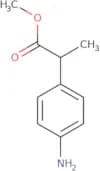
CAS :<p>Versatile small molecule scaffold</p>Formule :C7H3ClFNODegré de pureté :Min. 95%Masse moléculaire :171.55 g/molmethyl 2-(4-aminophenyl)propanoate
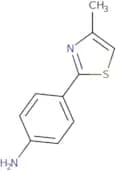
CAS :Methyl 2-(4-aminophenyl)propanoate is a fatty acid amide that is derived from the arachidonic acid. It has been shown to be a lead compound with non-competitive inhibition of anandamide hydrolase. Methyl 2-(4-aminophenyl)propanoate also inhibits other hydrolases, such as the N-acylphosphatidylethanolamine phospholipase D and the phospholipase A2. This drug has been shown to have several effects in tissues, including cannabinoid receptors, which may be due to its ability to inhibit endocannabinoid metabolism and hydrolysis. This drug has also been shown to have anti-inflammatory properties.Formule :C10H13NO2Degré de pureté :Min. 95%Masse moléculaire :179.2 g/mol4-(4-Methyl-1,3-thiazol-2-yl)aniline
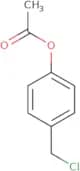
CAS :<p>Versatile small molecule scaffold</p>Formule :C10H10N2SDegré de pureté :Min. 95%Masse moléculaire :190.27 g/mol4-(Chloromethyl)phenyl acetate
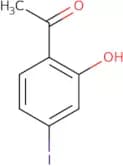
CAS :4-(Chloromethyl)phenyl acetate is a nitro compound that is capable of inhibiting bacterial translocation in wild-type mice. It has been shown to decrease the influx of chloride ions into cells by binding to the membrane, preventing the formation of ion channels. 4-(Chloromethyl)phenyl acetate can also reduce lipid hydroperoxides and potentiate the activity of estradiol. This drug may be used to treat women with symptoms such as acne or endometriosis. The effects on phenotype are unknown because this drug has not been tested on humans.Formule :C9H9ClO2Degré de pureté :Min. 95%Masse moléculaire :184.62 g/mol1-(2-Hydroxy-4-iodophenyl)ethan-1-one
CAS :<p>1-(2-Hydroxy-4-iodophenyl)ethan-1-one is a monomer that is used in the synthesis of polymers. It can be synthesized by irradiation of benzene with ultraviolet light. Yields are monitored by spectroscopies, such as elemental analysis, UV/visible spectroscopy, and IR spectroscopy. The reaction is carried out in organic solvents and yields 1-(2-hydroxy-4-iodophenyl)ethanone as an intermediate product. This compound can be polymerized using various methods to produce polymers with different properties. One method involves the use of benzene as a solvent and uv radiation for activation. 1-(2-Hydroxyphenyl)ethanone can also be polymerized using a metal catalyst (e.g., zinc). Theoretical models have been developed to predict the potential yields for this reaction.<br>END>></p>Formule :C8H7IO2Degré de pureté :Min. 95%Masse moléculaire :262.04 g/mol


![1-[4-Methyl-2-(pyridin-3-yl)-1,3-thiazol-5-yl]ethan-1-one hydrochloride](/_next/image/?url=https%3A%2Fstatic.cymitquimica.com%2Fproducts%2F3D%2Fthumb-webp%2FPBA06699.webp&w=3840&q=75)


![3-Methyl-4H-pyrido[1,2-a]pyrimidin-4-one](/_next/image/?url=https%3A%2Fstatic.cymitquimica.com%2Fproducts%2F3D%2Fthumb-webp%2FPBA08057.webp&w=3840&q=75)
![2-[2,2,3,3-Tetrafluoro-1-(hydroxymethyl)cyclobutyl]ethan-1-ol](/_next/image/?url=https%3A%2Fstatic.cymitquimica.com%2Fproducts%2F3D%2Fthumb-webp%2FPBA64537.webp&w=3840&q=75)
![7,8-Dihydro-5H-cyclohepta[b]pyridine-5,9(6H)-dione](/_next/image/?url=https%3A%2Fstatic.cymitquimica.com%2Fproducts%2F3D%2Fthumb-webp%2FPBA71340.webp&w=3840&q=75)
![Ethyl 3-chloro-5H,6H,7H,8H-pyrido[4,3-c]pyridazine-6-carboxylate](/_next/image/?url=https%3A%2Fstatic.cymitquimica.com%2Fproducts%2F3D%2Fthumb-webp%2FPBA71599.webp&w=3840&q=75)
![Methyl 3-chloro-5H,6H,7H,8H-pyrido[4,3-c]pyridazine-6-carboxylate](/_next/image/?url=https%3A%2Fstatic.cymitquimica.com%2Fproducts%2F3D%2Fthumb-webp%2FPBA71601.webp&w=3840&q=75)
![Ethyl 3-hydroxy-5H,6H,7H,8H-pyrido[4,3-c]pyridazine-6-carboxylate](/_next/image/?url=https%3A%2Fstatic.cymitquimica.com%2Fproducts%2F3D%2Fthumb-webp%2FPBA71648.webp&w=3840&q=75)
![2H,3H,5H,6H,7H,8H-Pyrido[4,3-c]pyridazin-3-one hydrochloride](/_next/image/?url=https%3A%2Fstatic.cymitquimica.com%2Fproducts%2F3D%2Fthumb-webp%2FPBA71649.webp&w=3840&q=75)
![5H,6H,7H,8H-Pyrido[4,3-c]pyridazin-3-ol](/_next/image/?url=https%3A%2Fstatic.cymitquimica.com%2Fproducts%2F3D%2Fthumb-webp%2FPBA71650.webp&w=3840&q=75)
![Methyl 3-oxo-2H,3H,5H,6H,7H,8H-pyrido[4,3-c]pyridazine-6-carboxylate](/_next/image/?url=https%3A%2Fstatic.cymitquimica.com%2Fproducts%2F3D%2Fthumb-webp%2FPBA71652.webp&w=3840&q=75)