Building Blocks
Sous-catégories appartenant à la catégorie "Building Blocks"
- Acides boroniques et dérivés de l'acide boronique(5.778 produits)
- Building Blocks Chiraux(1.243 produits)
- Building Blocks Hydrocarbonés(6.098 produits)
- Building Blocks organiques(61.042 produits)
204339 produits trouvés pour "Building Blocks"
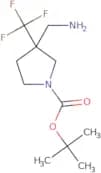
tert-butyl 3-(aminomethyl)-3-(trifluoromethyl)pyrrolidine-1-carboxylate
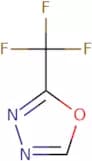
CAS :Versatile small molecule scaffoldFormule :C11H19F3N2O2Degré de pureté :Min. 95%Masse moléculaire :268.3 g/mol2-(Trifluoromethyl)-1,3,4-oxadiazole
CAS :Versatile small molecule scaffold
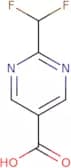
Formule :C3HF3N2ODegré de pureté :Min. 95%Masse moléculaire :138.05 g/mol2-(Difluoromethyl)pyrimidine-5-carboxylic acid
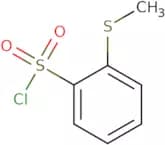
CAS :Versatile small molecule scaffoldFormule :C6H4F2N2O2Degré de pureté :Min. 95%Masse moléculaire :174.1 g/mol2-(Methylsulfanyl)benzene-1-sulfonyl chloride
CAS :Versatile small molecule scaffold
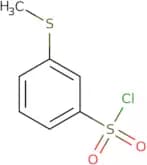
Formule :C7H7ClO2S2Degré de pureté :Min. 95%Masse moléculaire :222.7 g/mol3-(Methylsulfanyl)benzene-1-sulfonyl chloride
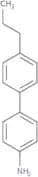
CAS :Versatile small molecule scaffoldFormule :C7H7ClO2S2Degré de pureté :Min. 95%Masse moléculaire :222.7 g/mol4-(4-Propylphenyl)aniline
CAS :Versatile small molecule scaffold
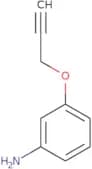
Formule :C15H17NDegré de pureté :Min. 95%Masse moléculaire :211.3 g/mol3-(Prop-2-yn-1-yloxy)aniline
CAS :Versatile small molecule scaffold
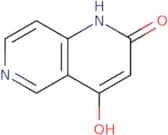
Formule :C9H9NODegré de pureté :Min. 95%Masse moléculaire :147.17 g/mol1,6-Naphthyridine-2,4-diol
CAS :1,6-Naphthyridine-2,4-diol is a trifluoromethyl carboxylic acid that is used in the synthesis of pharmaceuticals. The compound is a carboxylic acid type cation with an integer number of 2 and 4 carbon atoms. 1,6-Naphthyridine-2,4-diol is also known to produce symptoms such as sensitivity and prophylactically for allergy.
!-- More -->Formule :C8H6N2O2Degré de pureté :Min. 95%Masse moléculaire :162.15 g/mol4-Bromo-5-propyl-1H-pyrazole
CAS :Versatile small molecule scaffold
Formule :C6H9BrN2Degré de pureté :Min. 95%Masse moléculaire :189.05 g/mol3-Cyclohexyl-1H-pyrazole
CAS :Versatile small molecule scaffoldFormule :C9H14N2Degré de pureté :Min. 95%Masse moléculaire :150.22 g/mol4-Bromo-3,5-diethyl-1H-pyrazole
CAS :Versatile small molecule scaffold
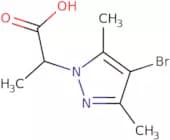
Formule :C7H11BrN2Degré de pureté :Min. 95%Masse moléculaire :203.08 g/mol2-(4-Bromo-3,5-dimethyl-1H-pyrazol-1-yl)propanoic acid
CAS :Versatile small molecule scaffoldFormule :C8H11BrN2O2Degré de pureté :Min. 95%Masse moléculaire :247.09 g/mol6-(2-Aminoethoxy)-1,2,3,4-tetrahydroquinolin-2-one hydrochloride
CAS :Versatile small molecule scaffoldFormule :C11H15ClN2O2Degré de pureté :Min. 95%Masse moléculaire :242.7 g/mol4-[(5-Chloropyridin-2-yl)oxy]phenol
CAS :Versatile small molecule scaffold
Formule :C11H8ClNO2Degré de pureté :Min. 95%Masse moléculaire :221.64 g/mol1-Methylindoline-5-carbaldehyde
CAS :1-Methylindoline-5-carbaldehyde is a chemical compound that has been used in cellular biology to study the effects of membrane potential on conformational changes. It has also been used to measure anilines, which are compounds with a dihedral angle between their two substituents. The molecule fluoresces and can be detected using microscope and analytical chemistry techniques such as monitoring. 1-Methylindoline-5-carbaldehyde has been shown to have photophysical properties, where it can emit light when excited by a photon. This chemical compound can also be used in conformational analysis, due to its ability to change shape in response to physical or chemical stimuli.Formule :C10H11NODegré de pureté :Min. 95%Masse moléculaire :161.2 g/molMethyl 4-amino-2-(methylthio)thiazole-5-carboxylate
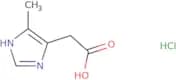
CAS :Versatile small molecule scaffoldFormule :C6H8N2O2S2Degré de pureté :Min. 95%Masse moléculaire :204.27 g/mol2-(5-Methyl-1H-imidazol-4-yl)acetic acid hydrochloride
CAS :Versatile small molecule scaffoldFormule :C6H9ClN2O2Degré de pureté :Min. 95%Masse moléculaire :176.6 g/mol2-(Benzylsulfanyl)propan-1-amine
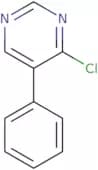
CAS :Versatile small molecule scaffoldFormule :C10H15NSDegré de pureté :Min. 95%Masse moléculaire :181.3 g/mol4-Chloro-5-phenylpyrimidine
CAS :4-Chloro-5-phenylpyrimidine is a copper(I) complex with the chemical formula [CuCl(PY)]. It is synthesized by reacting an equimolar mixture of 4-chloro-5-phenylpyrimidine and CuCl. The thermodynamic, kinetic, and stereochemical properties of this compound have been extensively studied. This compound belongs to the class of amidines and has been shown to interact with transition metals, such as copper. 4-Chloro-5-phenylpyrimidine can be used in organic synthesis reactions because it readily undergoes nucleophilic substitution reactions. The reaction between this compound and nucleophiles leads to the formation of stereoisomers that are chiral at the carbon atom in the pyrimidinone ring.
Formule :C10H7ClN2Degré de pureté :Min. 95%Masse moléculaire :190.63 g/mol3-Cyclopropyl-2-methylpropanoic acid
CAS :Versatile small molecule scaffoldFormule :C7H12O2Degré de pureté :Min. 95%Masse moléculaire :128.17 g/mol3-Cyclopropylbutanoic acid
CAS :3-Cyclopropylbutanoic acid is a natural substance that is extracted from the amanita mushroom. It has antibacterial and bactericidal effects, and can be used in the chemical synthesis of other chemicals. 3-Cyclopropylbutanoic acid's chemical synthesis method involves a four-step process: (i) converting cyclopropane to a mixture of cis and trans isomers, (ii) reacting the mixture with butanol in an esterification reaction, (iii) hydrolyzing the esterified product to produce butyric acid, and (iv) converting the butyric acid to 3-cyclopropylbutanoic acid by reacting it with phosphorus pentoxide.Formule :C7H12O2Degré de pureté :Min. 95%Masse moléculaire :128.17 g/mol5-(3,4-Dimethoxyphenyl)-1,3,4-oxadiazol-2-amine
CAS :Versatile small molecule scaffold
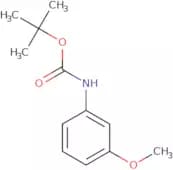
Formule :C10H11N3O3Degré de pureté :Min. 95%Masse moléculaire :221.21 g/molN-Boc-3-methoxyaniline
CAS :N-Boc-3-methoxyaniline is a chemical compound that belongs to the class of nitroreductase inhibitors. It has been shown to inhibit tumour growth by targeting the tumor microenvironment and inhibiting the production of reactive oxygen species. N-Boc-3-methoxyaniline also has anti-angiogenic properties, which may be due to its ability to suppress the production of nitric oxide. This agent can be used for monitoring and controlling cancer stem cells in vitro and in vivo. The fluorescent probes are suitable for imaging, measuring, and quantifying this type of cell.
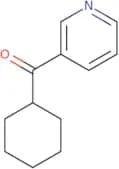
Formule :C12H17NO3Degré de pureté :Min. 95%Masse moléculaire :223.27 g/mol3-Cyclohexanecarbonylpyridine
CAS :3-Cyclohexanecarbonylpyridine is a triazole with a nitrogen atom in the ring. It has a pyridine and two substituents, one of which is positioned on the 3-position and the other on the 6-position. This compound has strong antifungal activity, as demonstrated by screening in vitro studies. 3-Cyclohexanecarbonylpyridine also had high activity against phytopathogenic fungi such as Fusarium oxysporum, Rhizoctonia solani, Botrytis cinerea, and Alternaria brassicae. The fungicidal activity of this compound may be due to its inhibitory effect on protein synthesis.
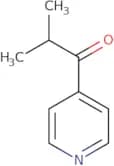
Formule :C12H15NODegré de pureté :Min. 95%Masse moléculaire :189.25 g/mol2-Methyl-1-(pyridin-4-yl)propan-1-one
CAS :Versatile small molecule scaffold
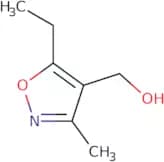
Formule :C9H11NODegré de pureté :Min. 95%Masse moléculaire :149.19 g/mol(5-Ethyl-3-methylisoxazol-4-yl)methanol
CAS :Versatile small molecule scaffold
Formule :C7H11NO2Degré de pureté :Min. 95%Masse moléculaire :141.17 g/mol(5-Ethyl-1,2-oxazol-3-yl)methanol
CAS :Versatile small molecule scaffoldFormule :C6H9NO2Degré de pureté :Min. 95%Masse moléculaire :127.14 g/mol4-Methylpentane-1-sulfonyl chloride
CAS :Versatile small molecule scaffold
Formule :C6H13ClO2SDegré de pureté :Min. 95%Masse moléculaire :184.69 g/molSodium but-3-ene-1-sulfonate
CAS :Versatile small molecule scaffold
Formule :C4H7NaO3SDegré de pureté :Min. 95%Masse moléculaire :158.15 g/mol1-(Benzenesulfonyl)-3-bromopropan-2-one
CAS :Versatile small molecule scaffoldFormule :C9H9BrO3SDegré de pureté :Min. 95%Masse moléculaire :277.14 g/mol5-(2,4-Dichlorophenyl)-1,3,4-oxadiazol-2-amine
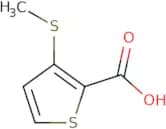
CAS :Versatile small molecule scaffoldFormule :C8H5Cl2N3ODegré de pureté :Min. 95%Masse moléculaire :230.05 g/mol3-(Methylsulfanyl)thiophene-2-carboxylic acid
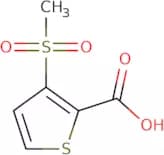
CAS :Versatile small molecule scaffoldFormule :C6H6O2S2Degré de pureté :Min. 95%Masse moléculaire :174.2 g/mol3-Methanesulfonylthiophene-2-carboxylic acid
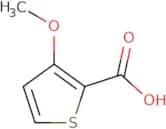
CAS :Versatile small molecule scaffoldFormule :C6H6O4S2Degré de pureté :Min. 95%Masse moléculaire :206.2 g/mol3-Methoxythiophene-2-carboxylic acid
CAS :3-Methoxythiophene-2-carboxylic acid is a monomer in the synthesis of polyamides. It is an n-terminal amino acid that is involved in the formation of peptide bonds. The methoxy group on this amino acid allows it to be selective for dna sequences, which are unsymmetrical and contain methoxy residues. 3-Methoxythiophene-2-carboxylic acid has been shown to selectively bind dna sequences with a chloro substituent at the 3' position and to have affinities for residue thiophene.Formule :C6H6O3SDegré de pureté :Min. 95%Masse moléculaire :158.18 g/mol5-Iodothiophene-2-carboxylic acid
CAS :Versatile small molecule scaffold
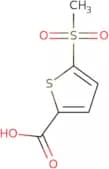
Formule :C5H3IO2SDegré de pureté :Min. 95%Masse moléculaire :254.05 g/mol5-(Methylsulfonyl)-2-thiophenecarboxylic acid
CAS :Versatile small molecule scaffoldFormule :C6H6O4S2Degré de pureté :Min. 95%Masse moléculaire :206.24 g/mol(Cyclooctylmethyl)(methyl)amine
CAS :Versatile small molecule scaffold
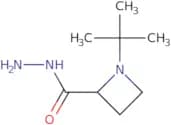
Formule :C10H21NDegré de pureté :Min. 95%Masse moléculaire :155.28 g/mol1-tert-Butylazetidine-2-carbohydrazide
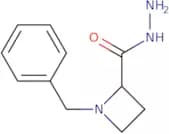
CAS :Versatile small molecule scaffoldFormule :C8H17N3ODegré de pureté :Min. 95%Masse moléculaire :171.24 g/mol1-Benzyl-2-azetidinecarbohydrazide
CAS :Versatile small molecule scaffold
Formule :C11H15N3ODegré de pureté :Min. 95%Masse moléculaire :205.26 g/molmethyl 4-(benzylamino)butanoate hydrochloride
CAS :Versatile small molecule scaffoldFormule :C12H18ClNO2Degré de pureté :Min. 95%Masse moléculaire :243.7 g/mol3-[(3,4-Dimethoxyphenyl)sulfanyl]propanoic acid
CAS :Versatile small molecule scaffoldFormule :C11H14O4SDegré de pureté :Min. 95%Masse moléculaire :242.29 g/molEthyl pyrrolidine-2-carboxylate
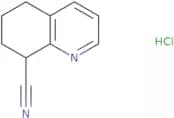
CAS :Ethyl pyrrolidine-2-carboxylate is a solid catalyst that is used in the industrial preparation of polyvinyl chloride and pharmaceutical drugs. It has shown anti-cancer properties and can be used to treat cancer. Ethyl pyrrolidine-2-carboxylate has also been shown to have an effect on the biological function of ns3 protease, an enzyme that is implicated in diabetes.Formule :C7H13NO2Degré de pureté :Min. 95%Masse moléculaire :143.18 g/mol5,6,7,8-Tetrahydroquinoline-8-carbonitrile hydrochloride
CAS :Versatile small molecule scaffoldFormule :C10H11ClN2Degré de pureté :Min. 95%Masse moléculaire :194.66 g/mol4(4-Aminophenyl)aminopyridine
CAS :Versatile small molecule scaffoldFormule :C11H11N3Degré de pureté :Min. 95%Masse moléculaire :185.22 g/molGabapentin Ethyl Ester Hydrochloride
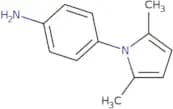
CAS :Produit contrôléVersatile small molecule scaffoldFormule :C11H21NO2Degré de pureté :Min. 95%Masse moléculaire :199.26 g/mol4-(2,5-Dimethyl-pyrrol-1-yl)-phenylamine
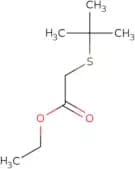
CAS :4-(2,5-Dimethyl-pyrrol-1-yl)-phenylamine is an organic compound that is used as a sensor for benzene. The sensitivity of the sensor can be increased by attaching substituents to the benzene ring. The frequency of the sensor can be measured by atomic force microscopy. The impedance of the sensor can be measured by long-term measurements on a resonant circuit, which also has linearity and hysteresis properties. This compound has high sensitivity and is a good candidate for use in sensors.Formule :C12H14N2Degré de pureté :Min. 95%Masse moléculaire :186.26 g/molEthyl 2-(tert-butylsulfanyl)acetate
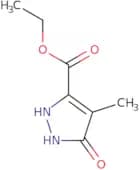
CAS :Versatile small molecule scaffoldFormule :C8H16O2SDegré de pureté :Min. 95%Masse moléculaire :176.28 g/molethyl 5-hydroxy-4-methyl-1H-pyrazole-3-carboxylate
CAS :Versatile small molecule scaffoldFormule :C7H10N2O3Degré de pureté :Min. 95%Masse moléculaire :170.16 g/mol2-Amino-3-methylhexanoic acid
CAS :2-Amino-3-methylhexanoic acid is a synthetic amino acid analog of the branched-chain amino acids leucine, isoleucine, and valine. It was originally developed as a treatment for thrombosis, but has been found to have antiviral properties. 2-Amino-3-methylhexanoic acid inhibits the action of enzymes that catalyze reactions in the synthesis of polypeptides, such as proteases (thrombin inhibitors) and peptidases. 2-Amino-3-methylhexanoic acid also inhibits viruses by preventing their replication. It does this by hydrogen bonding interactions with the viral capsid and preventing access to the RNA genome or protein coat. The chemical reaction between 2-amino hexanoic acid and an acid solution produces carbon dioxide gas.
Formule :C7H15NO2Degré de pureté :Min. 95%Masse moléculaire :145.2 g/mol6-Hydroxypyridazine-3-carboxamide
CAS :6-Hydroxypyridazine-3-carboxamide is a potential anti-cancer drug that belongs to the class of allosteric modulators. It is a small molecule inhibitor of metabotropic glutamate receptor 4 (mGluR4). 6-Hydroxypyridazine-3-carboxamide has been shown to inhibit the proliferation and migration of cancer cells in vitro. In vivo studies have demonstrated that this drug can inhibit tumor growth and metastasis, decrease inflammation, and prolong survival time in mice bearing human lung cancer xenografts. 6-Hydroxypyridazine-3-carboxamide also inhibits c1–c4 alkyl esterases, which are responsible for the metabolism of many drugs.Formule :C5H5N3O2Degré de pureté :Min. 95%Masse moléculaire :139.11 g/mol




![4-[(5-Chloropyridin-2-yl)oxy]phenol](/_next/image/?url=https%3A%2Fstatic.cymitquimica.com%2Fproducts%2F3D%2Fthumb-webp%2FKCA07501.webp&w=3840&q=75)










![3-[(3,4-Dimethoxyphenyl)sulfanyl]propanoic acid](/_next/image/?url=https%3A%2Fstatic.cymitquimica.com%2Fproducts%2F3D%2Fthumb-webp%2FKCA16956.webp&w=3840&q=75)