Building Blocks
Sous-catégories appartenant à la catégorie "Building Blocks"
- Acides boroniques et dérivés de l'acide boronique(5.778 produits)
- Building Blocks Chiraux(1.243 produits)
- Building Blocks Hydrocarbonés(6.099 produits)
- Building Blocks organiques(61.038 produits)
205376 produits trouvés pour "Building Blocks"
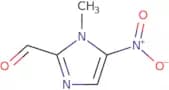
1-Methyl-5-nitro-1H-imidazole-2-carbaldehyde
CAS :1-Methyl-5-nitro-1H-imidazole-2-carbaldehyde (MNNCA) is a synthetic fatty acid that has been shown to have genotoxic potential. It is also used as a clinical drug and as a test compound. MNNCA has been found to inhibit the activity of the antioxidant system, which may lead to an increased risk of nitrosative stress and DNA damage. In vitro assays have demonstrated that MNNCA can cause genotoxic effects in cultured cells. Studies using diminazene, a crosslinking agent, have shown that MNNCA can be metabolized by cytochrome P450 enzymes and this metabolism may lead to pharmacokinetic properties such as protein binding or changes in protein expression.Formule :C5H5N3O3Degré de pureté :Min. 95%Masse moléculaire :155.11 g/molN-[(4-Chlorophenyl)methyl]aniline
CAS :Versatile small molecule scaffold
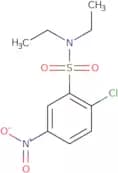
Formule :C13H12ClNDegré de pureté :Min. 95%Masse moléculaire :217.69 g/mol2-Chloro-N,N-diethyl-5-nitrobenzene-1-sulfonamide
CAS :Versatile small molecule scaffoldFormule :C10H13ClN2O4SDegré de pureté :Min. 95%Masse moléculaire :292.74 g/mol4H,5H,6H,7H,8H-Thieno[3,2-c]azepin-4-one
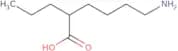
CAS :Versatile small molecule scaffoldFormule :C8H9NOSDegré de pureté :Min. 95%Masse moléculaire :167.23 g/mol6-Amino-2-propylhexanoic acid
CAS :Valproic acid is an organic compound with the formula (CHCO)COOH. It is a white crystalline solid that is insoluble in water and most organic solvents. Valproic acid has been used in medicine as an anticonvulsant, mood stabilizer, and bipolar disorder medication. Valproic acid is also used to treat hyperammonemia, although this use is limited by its side effects. To produce valproate semisodium, sodium carbonate and valproic acid are combined at high temperatures to form sodium valproate and carbon dioxide gas. The molecular weight of valproic acid ranges from 100-400 Da. The low molecular weight of this drug makes it suitable for oral absorption and rapid distribution throughout the body. This assay uses a chromatographic method for detection with fluorescence detection at excitation/emission wavelengths of 280/365 nm. The results show that 6-Amino-2-propylhexano
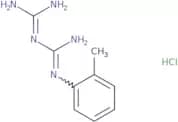
Formule :C9H19NO2Degré de pureté :Min. 95%Masse moléculaire :173.25 g/molo-Tolylbiguanide hydrochloride
CAS :o-Tolylbiguanide hydrochloride is a copper-containing antimicrobial agent that has been synthesised and used to treat Gram-negative bacteria. It is an anion, which means it can be reduced by agents such as formaldehyde and chloride. o-Tolylbiguanide hydrochloride binds to the anionic groups of the bacterial cell wall, which are found in proteins and lipids. This binding prevents the formation of a covalent bond between the copper ion and the bacterial cell wall, preventing further growth. The elimination of this compound in vivo is thought to be due to its organic ligands.
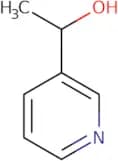
Formule :C9H14ClN5Degré de pureté :Min. 95%Masse moléculaire :227.69 g/mol3-(1-Hydroxyethyl)pyridine
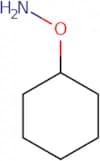
CAS :3-(1-Hydroxyethyl)pyridine is a levorotatory, white solid. It is used in animal studies to study the effects on the brain and other body systems. 3-(1-Hydroxyethyl)pyridine is synthesized by a three-step process that involves converting 3-acetylpyridine into 3-(2-hydroxyethyl)pyridine, which is then converted to 3-(1-hydroxyethyl)pyridine. This compound has been shown to be an adrenergic receptor agonist and may have some potential as a drug for treating Parkinson's disease. It also has acidic properties and substructures that are enantiopure, meaning they are composed of molecules with the same chirality.Formule :C7H9NODegré de pureté :Min. 95%Masse moléculaire :123.2 g/molo-Cyclohexylhydroxylamine
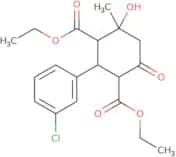
CAS :Versatile small molecule scaffoldFormule :C6H13NODegré de pureté :Min. 95%Masse moléculaire :115.17 g/mol1,3-Diethyl 2-(3-chlorophenyl)-4-hydroxy-4-methyl-6-oxocyclohexane-1,3-dicarboxylate
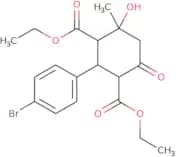
CAS :Versatile small molecule scaffoldFormule :C19H23ClO6Degré de pureté :Min. 95%Masse moléculaire :382.8 g/mol1,3-Diethyl 2-(4-bromophenyl)-4-hydroxy-4-methyl-6-oxocyclohexane-1,3-dicarboxylate
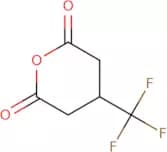
CAS :Versatile small molecule scaffoldFormule :C19H23BrO6Degré de pureté :Min. 95%Masse moléculaire :427.3 g/mol4-(Trifluoromethyl)oxane-2,6-dione
CAS :Versatile small molecule scaffold
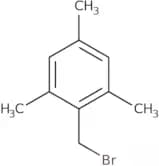
Formule :C6H5F3O3Degré de pureté :Min. 95%Masse moléculaire :182.1 g/mol2-Bromomethyl-1,3,5-trimethylbenzene
CAS :2-Bromomethyl-1,3,5-trimethylbenzene is a semivolatile organic compound with a bromophenol functional group. It has been shown to react with malic acid and pyridine ring to form two isomers. The reaction rate of this compound is higher at lower temperatures than at higher temperatures. It has been shown to be a ligand that binds metal ions and reacts with them electrochemically. 2-Bromomethyl-1,3,5-trimethylbenzene has also been used as an intermediate in the synthesis of trisaccharide ligands for coordination chemistry studies.
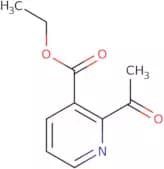
Formule :C10H13BrDegré de pureté :Min. 95%Masse moléculaire :213.11 g/mol2-acetyl-nicotinic acid ethyl ester
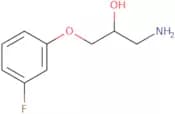
CAS :Versatile small molecule scaffoldFormule :C10H11NO3Degré de pureté :Min. 95%Masse moléculaire :193.2 g/mol1-Amino-3-(3-fluorophenoxy)propan-2-ol
CAS :Versatile small molecule scaffold
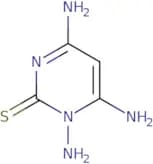
Formule :C9H12FNO2Degré de pureté :Min. 95%Masse moléculaire :185.2 g/mol1,4,6-Triamino-1,2-dihydropyrimidine-2-thione
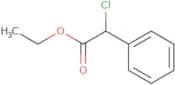
CAS :1,4,6-Triamino-1,2-dihydropyrimidine-2-thione is a chemical compound that is soluble in water and methanol. It has been shown to cleave bonds by the use of sodium hydroxide solution.Formule :C4H7N5SDegré de pureté :Min. 95%Masse moléculaire :157.2 g/molEthyl alpha-chlorophenylacetate
CAS :Ethyl alpha-chlorophenylacetate (ECA) is a synthetic molecule that has been shown to have anti-inflammatory and neurodegenerative properties. It is a benzimidazole derivative with a hydroxyl group on the ethyl alpha-chlorophenylacetate moiety. ECA has been shown to inhibit inflammatory responses in mice by targeting transcription factors, such as NF-κB and AP-1, which are involved in the regulation of immune responses. It also has an anti-inflammatory effect on malonic acid induced colitis in mice.
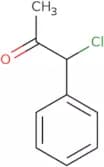
Formule :C10H11ClO2Degré de pureté :Min. 95%Masse moléculaire :198.65 g/mol1-Chloro-1-phenylpropan-2-one
CAS :1-Chloro-1-phenylpropan-2-one is an exploratory compound that has been deployed as a mechanistic probe to probe the radical mechanism of aldehydes. It has been shown that 1-chloro-1-phenylpropan-2-one can be used to generate fluorescent compounds and study the fluorescence, UV radiation, and radical mechanism of aldehydes. This molecule also has the ability to react with electron rich compounds such as aziridines to form chiral products. The substituent on this molecule will affect its biological activity.
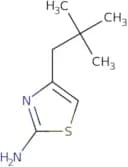
Formule :C9H9ClODegré de pureté :Min. 95%Masse moléculaire :168.62 g/mol4-(2,2-Dimethylpropyl)-1,3-thiazol-2-amine
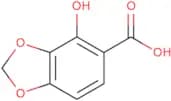
CAS :Versatile small molecule scaffoldFormule :C8H14N2SDegré de pureté :Min. 95%Masse moléculaire :170.28 g/mol4-Hydroxy-1,3-dioxaindane-5-carboxylic acid
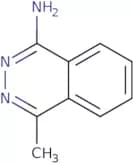
CAS :Versatile small molecule scaffoldFormule :C8H6O5Degré de pureté :Min. 95%Masse moléculaire :182.13 g/mol4-Methylphthalazin-1-amine
CAS :4-Methylphthalazin-1-amine is a heteroaromatic compound that can be synthesized by cyclization of phenacyl bromides and bromoacetates. It has been found in Australian plants and may have a role in the development of schizophrenia. 4-Methylphthalazin-1-amine is not soluble in water, but it can be dissolved in solvents such as acetone or ethanol. It is also insoluble in most organic solvents.
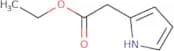
Formule :C9H9N3Degré de pureté :Min. 95%Masse moléculaire :159.19 g/molEthyl 2-(1H-pyrrol-2-yl)acetate
CAS :Versatile small molecule scaffold
Formule :C8H11NO2Degré de pureté :Min. 95%Masse moléculaire :153.18 g/mol1-Ethyl-1H-pyrrole-2-carboxylic acid
CAS :1-Ethyl-1H-pyrrole-2-carboxylic acid is a chemical compound that is used as an organic solvent. It is also known as ethyl formate, which is a colorless liquid with a sweet odor. This ester is used to produce esters and other compounds for use in the synthesis of polymers or dyes. It can be halogenated and may be used as an acid ester or acid anhydride. 1-Ethyl-1H-pyrrole-2-carboxylic acid has shown to have some antiinflammatory properties, but it can also cause severe eye irritation and skin sensitization.Formule :C7H9NO2Degré de pureté :Min. 95%Masse moléculaire :139.15 g/mol3-Oxa-9-azaspiro[5.5]undecane-8,10-dione
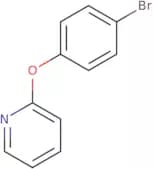
CAS :Versatile small molecule scaffoldFormule :C9H13NO3Degré de pureté :Min. 95%Masse moléculaire :183.2 g/mol2-(4-Bromophenoxy)pyridine
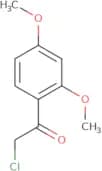
CAS :Versatile small molecule scaffoldFormule :C11H8BrNODegré de pureté :Min. 95%Masse moléculaire :250.09 g/mol2-Chloro-1-(2,4-dimethoxy-phenyl)-ethanone
CAS :Versatile small molecule scaffoldFormule :C10H11ClO3Degré de pureté :Min. 95%Masse moléculaire :214.65 g/mol4-aminopyrimidine-5-carboxamide
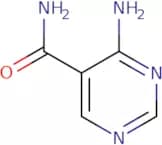
CAS :4-Aminopyrimidine-5-carboxamide is an amide that is synthesized from the reaction of eosinophil and amine. This compound inhibits transcription in a dose-dependent manner, with a high potency for iminium and amines, but not primary amines. 4-Aminopyrimidine-5-carboxamide is orally bioavailable and has shown to be effective in animal models. The compound has been optimized for oral administration and has shown to produce good yields. 4-Aminopyrimidine-5-carboxamide also possesses transcription factor inhibitory activity against interleukin, which may provide therapeutic benefit for inflammatory disorders.
Formule :C5H6N4ODegré de pureté :Min. 95%Masse moléculaire :138.13 g/mol5-Amino-1-ethyl-1H-pyrazole-4-carbonitrile
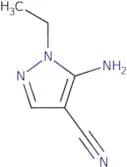
CAS :Versatile small molecule scaffold
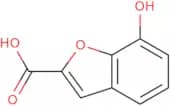
Formule :C6H8N4Degré de pureté :Min. 95%Masse moléculaire :136.15 g/mol7-Hydroxy-1-benzofuran-2-carboxylic acid
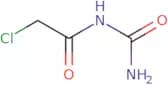
CAS :Versatile small molecule scaffoldFormule :C9H6O4Degré de pureté :Min. 95%Masse moléculaire :178.14 g/mol(2-Chloro-acetyl)-urea
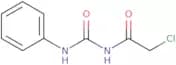
CAS :2-Chloro-acetyl)-urea is a disinfectant that has been shown to be active against bacterial spores. It reacts with sodium taurocholate to form mercuric chloride and triazine, which are the reaction products of the 2-chloro-acetyl)-urea. The molecular modeling study of 2-chloro-acetyl)-urea showed that this molecule has a hydrophobic region and can bind with water molecules through hydrogen bonding. This property allows it to act as a detergent composition in cleaning products. 2-Chloro-acetyl)-urea also has an ethyl diazoacetate group, which is used in biocides for its ability to penetrate cell membranes. 2-Chloro-acetyl)-urea is also used in molecular modeling studies as a substrate for s-adenosylhomocysteine hydrolase (SAHH) enzymes, which are involved in the synthesis of adFormule :C3H5ClN2O2Degré de pureté :Min. 95%Masse moléculaire :136.54 g/mol3-(2-Chloroacetyl)-1-phenylurea
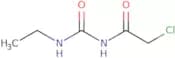
CAS :Versatile small molecule scaffoldFormule :C9H9ClN2O2Degré de pureté :Min. 95%Masse moléculaire :212.63 g/mol3-(2-Chloroacetyl)-1-ethylurea
CAS :Versatile small molecule scaffold
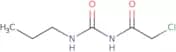
Formule :C5H9ClN2O2Degré de pureté :Min. 95%Masse moléculaire :164.59 g/mol3-(2-Chloroacetyl)-1-propylurea
CAS :Versatile small molecule scaffold
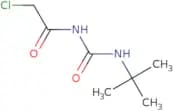
Formule :C6H11ClN2O2Degré de pureté :Min. 95%Masse moléculaire :178.62 g/mol1-tert-Butyl-3-(2-chloroacetyl)urea
CAS :Versatile small molecule scaffold
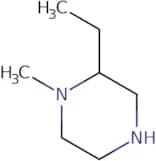
Formule :C7H13ClN2O2Degré de pureté :Min. 95%Masse moléculaire :192.64 g/mol2-Ethyl-1-methylpiperazine
CAS :Versatile small molecule scaffoldFormule :C7H16N2Degré de pureté :Min. 95%Masse moléculaire :128.22 g/mol1,4-Dioxaspiro[4.6]undecan-8-one
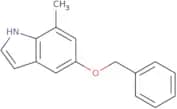
CAS :Versatile small molecule scaffoldFormule :C9H14O3Degré de pureté :Min. 95%Masse moléculaire :170.21 g/mol5-(Benzyloxy)-7-methyl-1H-indole
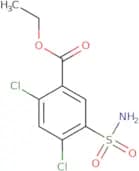
CAS :Versatile small molecule scaffoldFormule :C16H15NODegré de pureté :Min. 95%Masse moléculaire :237.3 g/molEthyl 2,4-dichloro-5-sulfamoylbenzoate
CAS :Versatile small molecule scaffold
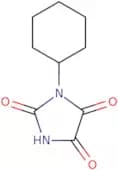
Formule :C9H9Cl2NO4SDegré de pureté :Min. 95%Masse moléculaire :298.14 g/mol1-Cyclohexylimidazolidine-2,4,5-trione
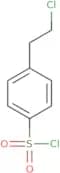
CAS :Versatile small molecule scaffoldFormule :C9H12N2O3Degré de pureté :Min. 95%Masse moléculaire :196.2 g/mol4-(2-Chloroethyl)benzene-1-sulfonyl chloride
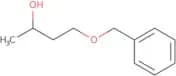
CAS :Versatile small molecule scaffoldFormule :C8H8Cl2O2SDegré de pureté :Min. 95%Masse moléculaire :239.12 g/mol4-(Benzyloxy)butan-2-ol
CAS :4-Benzyloxybutan-2-ol is an immobilization linker that is used to connect a molecule to a solid surface, such as glass. The carboxylate group of 4-benzyloxybutan-2-ol reacts with the hydroxyl groups on the glass surface and forms a covalent bond by reacting with the amine groups of the molecule. This linker can be used for immobilizing biomolecules or synthetic molecules in order to study their kinetics or other properties. It is also used for solid phase synthesis. 4-Benzyloxybutan-2-ol has been shown to be biocatalyzed by lipase and has been shown to have high reactivity at temperatures below 40°C. Techniques such as IR spectroscopy, NMR spectroscopy, and mass spectrometry are commonly used to characterize this compound.
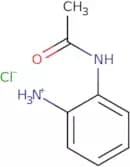
Formule :C11H16O2Degré de pureté :Min. 95%Masse moléculaire :180.24 g/mol2-Amino-N-phenylacetamide hydrochloride
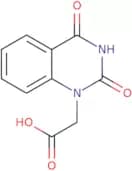
CAS :Versatile small molecule scaffoldFormule :C8H11ClN2ODegré de pureté :Min. 95%Masse moléculaire :186.64 g/mol2-(2,4-Dioxo-1,2,3,4-tetrahydroquinazolin-1-yl)acetic acid
CAS :Versatile small molecule scaffoldFormule :C10H8N2O4Degré de pureté :Min. 95%Masse moléculaire :220.18 g/mol3-Bromo-2-methylimidazo[1,2-a]pyridine
CAS :Versatile small molecule scaffold
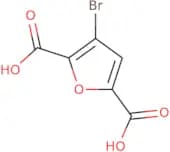
Formule :C8H7BrN2Degré de pureté :Min. 95%Masse moléculaire :211.06 g/mol3-Bromofuran-2,5-dicarboxylic acid
CAS :Versatile small molecule scaffoldFormule :C6H3BrO5Degré de pureté :Min. 95%Masse moléculaire :234.99 g/mol3-Methylrhodanine
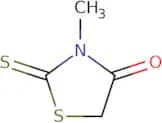
CAS :3-Methylrhodanine is a tetronic acid that has been shown to be an inhibitor of a number of enzyme systems. 3-Methylrhodanine has been demonstrated to have acute toxicities in animals and humans, and it is amide-sensitive. The biological properties of 3-methylrhodanine have been studied by examining the effects on enzymes involved in the metabolism of cholesterol, steroid hormones, and amino acids. 3-Methylrhodanine has also been used as a surface-enhanced raman probe for detecting hydrogen bonds in organic molecules. It has been shown to bind to carbonyl groups and form coordination complexes with metals such as copper and zinc. This compound also forms intramolecular hydrogen bonds between its two hydroxyl groups.Formule :C4H5NOS2Degré de pureté :Min. 95%Masse moléculaire :147.22 g/mol2,6-Dimethyl-4-nitropyridine N-oxide
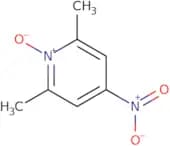
CAS :2,6-Dimethyl-4-nitropyridine N-oxide (DMNPO) is a functional group that has been extensively studied in organic chemistry. DMNPO is the hydrochloride salt of DMNPO. It is a crystalline solid with a molecular weight of 138.08 g/mol and melting point of about 190 °C. The molecule has a planar structure with two nitro groups on the same side of the ring and an oxygen atom in between them. The nitro groups are electron withdrawing groups, which cause DMNPO to have a negative charge at physiological pH values. The chemical formula for DMNPO is C5H8NO2ClO2 and it can be synthesized by reacting 2,6-dimethylpyridine with nitric acid in acetic acid solvent at room temperature.Formule :C7H8N2O3Degré de pureté :Min. 95%Masse moléculaire :168.15 g/mol2-Ethenylcyclohexan-1-ol
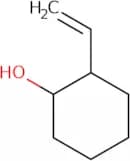
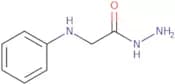
CAS :Versatile small molecule scaffoldFormule :C8H14ODegré de pureté :Min. 95%Masse moléculaire :126.2 g/mol2-(Phenylamino)acetohydrazide
CAS :2-(Phenylamino)acetohydrazide is a non-steroidal antibacterial agent that binds to the active site of bacterial ribosomes and inhibits protein synthesis. The molecule is stabilized by electron-withdrawing groups, which are favorable for binding to metal ions. 2-(Phenylamino)acetohydrazide has been shown to be effective against a wide range of bacteria, including E. coli, Pseudomonas aeruginosa, Candida neoformans, and Staphylococcus epidermidis. It also has a strong inhibitory effect on S. epidermidis and Escherichia coli.
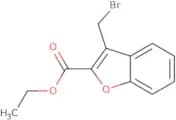
Formule :C8H11N3ODegré de pureté :Min. 95%Masse moléculaire :165.19 g/molEthyl 3-(bromomethyl)-1-benzofuran-2-carboxylate
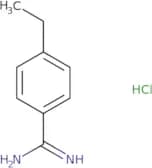
CAS :Ethyl 3-(bromomethyl)-1-benzofuran-2-carboxylate (BMC) is a potent anticancer agent that inhibits cancer cell growth by inhibiting the activity of regulatory proteins. BMC selectively interacts with the regulatory domain of these proteins, which causes them to become inactive and inhibits tumor growth. BMC also induces necroptosis, which is an alternative form of programmed cell death that can be induced by multiple stimuli. This process results in the release of proinflammatory cytokines such as IL-1β and IL-18, which may contribute to its anti-cancer effects. BMC has been shown to inhibit murine lung tumor growth in vivo and inhibit tumor growth in vitro.Formule :C12H11BrO3Degré de pureté :Min. 95%Masse moléculaire :283.12 g/mol4-Ethylbenzene-1-carboximidamide hydrochloride
CAS :Versatile small molecule scaffoldFormule :C9H13ClN2Degré de pureté :Min. 95%Masse moléculaire :184.66 g/mol

![N-[(4-Chlorophenyl)methyl]aniline](/_next/image/?url=https%3A%2Fstatic.cymitquimica.com%2Fproducts%2F3D%2Fthumb-webp%2FEAA75061.webp&w=3840&q=75)
![4H,5H,6H,7H,8H-Thieno[3,2-c]azepin-4-one](/_next/image/?url=https%3A%2Fstatic.cymitquimica.com%2Fproducts%2F3D%2Fthumb-webp%2FEAA75159.webp&w=3840&q=75)
![3-Oxa-9-azaspiro[5.5]undecane-8,10-dione](/_next/image/?url=https%3A%2Fstatic.cymitquimica.com%2Fproducts%2F3D%2Fthumb-webp%2FEAA78013.webp&w=3840&q=75)
![1,4-Dioxaspiro[4.6]undecan-8-one](/_next/image/?url=https%3A%2Fstatic.cymitquimica.com%2Fproducts%2F3D%2Fthumb-webp%2FEAA79237.webp&w=3840&q=75)
![3-Bromo-2-methylimidazo[1,2-a]pyridine](/_next/image/?url=https%3A%2Fstatic.cymitquimica.com%2Fproducts%2F3D%2Fthumb-webp%2FEAA80570.webp&w=3840&q=75)