Building Blocks
Sous-catégories appartenant à la catégorie "Building Blocks"
- Acides boroniques et dérivés de l'acide boronique(5.780 produits)
- Building Blocks Chiraux(1.239 produits)
- Building Blocks Hydrocarbonés(6.100 produits)
- Building Blocks organiques(61.005 produits)
205234 produits trouvés pour "Building Blocks"
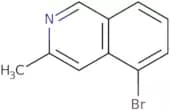
5-bromo-3-methylisoquinoline
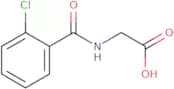
CAS :Versatile small molecule scaffoldFormule :C10H8NBrDegré de pureté :Min. 95%Masse moléculaire :222.08 g/mol2-Chlorohippuric acid
CAS :2-Chlorohippuric acid is a synthetic, non-natural molecule that has been shown to inhibit the growth of liver cells. This drug also has an analytical method for detecting the presence of 2-chlorohippuric acid in urine samples. The terminal half-life is about 30 minutes, and this drug also inhibits the synthesis of hippuric acid, which is a metabolite of benzoic acid. The acylation reaction enhances the elimination of 2-chlorohippuric acid from the body.Formule :C9H8ClNO3Degré de pureté :Min. 95%Masse moléculaire :213.62 g/mol4-Cyano-3-tetrahydrothiophenone
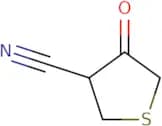
CAS :4-Cyano-3-tetrahydrothiophenone is a simple compound that can be synthesized in a variety of ways. It is not symmetrical, and has been shown to have biological properties. This compound has been used in the synthesis of other compounds with optical properties. 4-Cyano-3-tetrahydrothiophenone is also used as a precursor for the preparation of other compounds that are used as acceptors, such as diethyl ether and thioglycolate. Preparative methods for this compound involve the use of acrylonitrile and solar cells.Formule :C5H5NOSDegré de pureté :Min. 95%Masse moléculaire :127.16 g/mol3-(Naphthalen-2-yloxy)propanoic acid
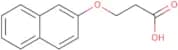
CAS :Versatile small molecule scaffoldFormule :C13H12O3Degré de pureté :Min. 95%Masse moléculaire :216.23 g/mol4-(Naphthalen-1-yloxy)butanoic acid
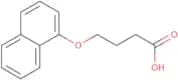
CAS :Produit contrôléVersatile small molecule scaffoldFormule :C14H14O3Degré de pureté :Min. 95%Masse moléculaire :230.26 g/mol2H,3H,4H,5H-Naphtho[1,2-b]oxepin-5-one
CAS :Naphtho[1,2-b]oxepin-5-one is a crystalline compound that is a derivative of naphthalene. It has an elemental composition of C10H8O and a molecular weight of 142.16 g/mol. Naphtho[1,2-b]oxepin-5-one is stabilized by hydrogen bonding interactions with the hydroxyl groups on the benzene rings and has been shown to have a crystallographic space group of P21/c. The molecule can be analyzed using x-ray diffraction studies, which will provide information about its atomic structure and topology. Computational analysis of the molecule reveals that it has non-covalent interactions at its surface that are due to van der Waals forces. Nature also plays an important role in determining the structural properties of this compound by providing an environment for it to exist in, such as water or air.Formule :C14H12O2Degré de pureté :Min. 95%Masse moléculaire :212.24 g/mol1-(5,6-Dimethyl-1-benzofuran-2-yl)ethan-1-one
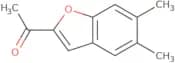
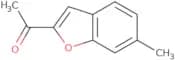
CAS :Versatile small molecule scaffoldFormule :C12H12O2Degré de pureté :Min. 95%Masse moléculaire :188.22 g/mol1-(6-Methyl-1-benzofuran-2-yl)ethan-1-one
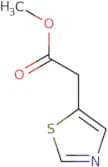
CAS :Versatile small molecule scaffoldFormule :C11H10O2Degré de pureté :Min. 95%Masse moléculaire :174.2 g/molMethyl 2-(1,3-thiazol-5-yl)acetate
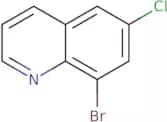
CAS :Versatile small molecule scaffoldFormule :C6H7NO2SDegré de pureté :Min. 95%Masse moléculaire :157.19 g/mol8-Bromo-6-chloroquinoline
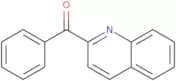
CAS :8-Bromo-6-chloroquinoline (8BCQ) is a fluorescent dye that emits blue light. It has photophysical properties such as its emission, absorption, and fluorescence. 8BCQ is an isomeric compound that can be used to study the relationship between emission and absorption spectra. It has been shown to be a good mediator of cross-coupling reactions in the synthesis of heterocycles. 8BCQ has a high yield as it can be synthesized by heating dioxane with potassium carbonate and palladium chloride under pressure.Formule :C9H5BrClNDegré de pureté :Min. 95%Masse moléculaire :242.5 g/mol2-Benzoylquinoline
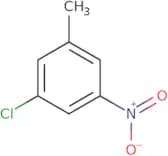
CAS :2-Benzoylquinoline is an antimicrobial agent that can be used as a corrosion inhibitor. It contains a nitro group, an inorganic acid, and an aliphatic hydrocarbon. The molecule has been shown to be effective against Gram-positive and Gram-negative bacteria, fungi, and yeast. 2-Benzoylquinoline is also an efficient method for the synthesis of β-unsaturated ketones.Formule :C16H11NODegré de pureté :Min. 95%Masse moléculaire :233.26 g/mol1-Chloro-3-methyl-5-nitrobenzene
CAS :1-Chloro-3-methyl-5-nitrobenzene is a reactant that is used to prepare the chlorination reaction of hydrochloric acid and sodium nitrite. It has been used in the preparation process for polysaccharides and amino acids. 1-Chloro-3-methyl-5-nitrobenzene is an organic compound that contains a carbamate group and a methylphenyl group. This molecule can be prepared by the chlorination of 1,1,1,2,2,3,4,4,5,5,-octachlorobenzene with potassium chloride or sodium chloride in the presence of hydrochloric acid and sodium nitrite. The nitrite reacts with the methylphenyl group to form an amide bond that then undergoes deamination to form ammonia.Formule :C7H6ClNO2Degré de pureté :Min. 95%Masse moléculaire :171.58 g/mol6-Iodobenzo[d]thiazol-2-amine
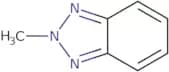
CAS :6-Iodobenzo[d]thiazol-2-amine is an antimicrobial agent that has been shown to have antimycobacterial activity against Mycobacterium tuberculosis. 6-Iodobenzo[d]thiazol-2-amine inhibits the synthesis of mycolic acid, which is a key component in the cell wall of the bacteria. It also has shown to be effective against other bacteria such as Staphylococcus aureus and Pseudomonas aeruginosa. The mechanism of action is not fully understood but may involve binding to bacterial DNA or RNA, inhibiting protein synthesis, or altering cellular membranes. This compound is used as a building block for drug development, where it can be conjugated with other molecules to form new compounds with different properties.Formule :C7H5IN2SDegré de pureté :Min. 95%Masse moléculaire :276.1 g/mol2-Methyl-2H-1,2,3-benzotriazole
CAS :2-Methyl-2H-1,2,3-benzotriazole is a denser form of 2-methyl-1,2,3-benzotriazole. It has been deuterated to facilitate magnetic resonance analysis and has been quantified in wastewater samples. The molecular weight of 2-methyl-2H-1,2,3-benzotriazole is higher than its methylated counterpart. The ionization potential of this molecule is lower than that of the methylated molecule. This difference in electron density between the two molecules can be attributed to the incorporation of deuterium atoms into the molecule's structure. 2-Methyl-2H-1,2,3-benzotriazole may be synthesized from desethylatrazine by hydrogenation. Density profiles were generated for both compounds and it was found that 2-methyl-2H -1,2,3 -benzot
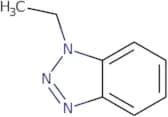
Formule :C7H7N3Degré de pureté :Min. 95%Masse moléculaire :133.15 g/mol1-Ethylbenzotriazole
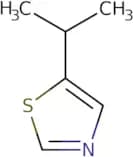
CAS :1-Ethylbenzotriazole is a biologically active compound that is used in organic synthesis. 1-Ethylbenzotriazole can be prepared through the reaction of benzotriazole and ethanol. This compound has been shown to yield high yields of imidazoles in aqueous ethanol solutions. It also has hypsochromic properties, which are changes in color when exposed to ultraviolet light or radiation. The conformational properties of 1-ethylbenzotriazole have been studied using photoelectron spectroscopy. These studies have revealed that the molecule has a conformation with an electronegativity parameter of 0.48 and an average potential energy of -0.8 eV for the benzene ring, as well as a high cyclic potential energy (-2.6 eV).Formule :C8H9N3Degré de pureté :Min. 95%Masse moléculaire :147.18 g/mol5-(Propan-2-yl)-1,3-thiazole
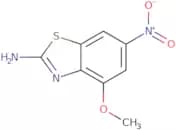
CAS :5-(Propan-2-yl)-1,3-thiazole is a bioactive compound that belongs to the class of antimicrobial agents. It has been shown to have a broad spectrum of activity against Gram-positive and Gram-negative bacteria. 5-(Propan-2-yl)-1,3-thiazole has been used as an active ingredient in biocides, making it effective against both aerobic and anaerobic organisms. This compound has been shown to denature proteins and inhibit their enzymatic activity. 5-(Propan-2-yl)-1,3-thiazole also inhibits protein synthesis by binding to ribosomes at the site of mRNA translation. The minimal inhibitory concentration for this compound is not yet known.Formule :C6H9NSDegré de pureté :Min. 95%Masse moléculaire :127.21 g/mol4-Methoxy-6-nitro-1,3-benzothiazol-2-amine
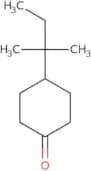
CAS :Versatile small molecule scaffoldFormule :C8H7N3O3SDegré de pureté :Min. 95%Masse moléculaire :225.23 g/mol4-(tert-Pentyl)cyclohexanone
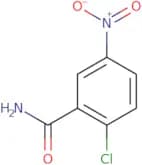
CAS :4-(tert-Pentyl)cyclohexanone is a cyclohexanone derivative that has been modified to have a tert-pentyl group. The compound has been shown to be effective in vitro against bacteria, yeast, and fungi. 4-(tert-Pentyl)cyclohexanone is used as a feedstock for the production of sugar alcohols and can be used as a feedstock for the production of detergent compositions. This compound also has photolabile properties that make it an ideal candidate for use in sterilization processes. 4-(tert-Pentyl)cyclohexanone is also soluble in liquid phase systems and can be removed by filtration methods. The chemical structure of this compound contains functional groups such as ethers and esters, which allow it to function well with other compounds in many different applications.Formule :C11H20ODegré de pureté :Min. 95%Masse moléculaire :168.28 g/mol2-Chloro-5-nitrobenzamide
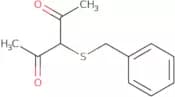
CAS :Versatile small molecule scaffoldFormule :C7H5ClN2O3Degré de pureté :Min. 95%Masse moléculaire :200.58 g/mol3-(Benzylsulfanyl)pentane-2,4-dione
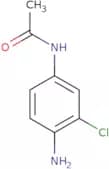
CAS :Versatile small molecule scaffoldFormule :C12H14O2SDegré de pureté :Min. 95%Masse moléculaire :222.31 g/molN-(4-Amino-3-chlorophenyl)acetamide
CAS :Versatile small molecule scaffold
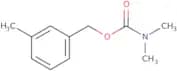
Formule :C8H9ClN2ODegré de pureté :Min. 95%Masse moléculaire :184.62 g/mol(3-Methylphenyl)methyl N,N-dimethylcarbamate
CAS :Versatile small molecule scaffold
Formule :C11H15NO2Degré de pureté :Min. 95%Masse moléculaire :193.24 g/mol6-Benzyl-6-azabicyclo[3.2.1]octan-3-one
CAS :Versatile small molecule scaffoldFormule :C14H17NODegré de pureté :Min. 95%Masse moléculaire :215.29 g/mol(1R,3S,5S)-6,6-Dimethylbicyclo[3.1.0]hexan-3-ol
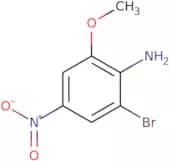
CAS :Versatile small molecule scaffoldFormule :C8H14ODegré de pureté :Min. 95%Masse moléculaire :126.2 g/mol2-bromo-6-methoxy-4-nitroaniline
CAS :Versatile small molecule scaffold
Formule :C7H7BrN2O3Degré de pureté :Min. 95%Masse moléculaire :247 g/molOctahydropyrrolo[1,2-a]piperazin-1-one
CAS :Versatile small molecule scaffoldFormule :C7H12N2ODegré de pureté :Min. 95%Masse moléculaire :140.18 g/molOctahydropyrrolo[1,2-a]piperazin-3-one
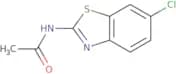
CAS :Versatile small molecule scaffoldFormule :C7H12N2ODegré de pureté :Min. 95%Masse moléculaire :140.18 g/molN-(6-Chloro-1,3-benzothiazol-2-yl)acetamide
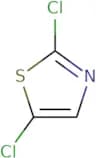
CAS :Versatile small molecule scaffoldFormule :C9H7ClN2OSDegré de pureté :Min. 95%Masse moléculaire :226.68 g/mol2,5-dichlorothiazole
CAS :2,5-Dichlorothiazole is a nitroaromatic compound with a six-membered ring. It is an anionic molecule that has been shown to be a good nucleophile in the presence of a transition metal. 2,5-Dichlorothiazole interacts with piperidine to form a 1:1 adduct. This reaction proceeds through the formation of an intermediate nitroso species, which undergoes nucleophilic attack by piperidine. The kinetic data for this reaction have been found to be dependent on the concentration of piperidine and temperature.Formule :C3HCl2NSDegré de pureté :Min. 95%Masse moléculaire :154.01 g/mol4-(2-Methylphenyl)-5-(pyridin-4-yl)-4H-1,2,4-triazole-3-thiol
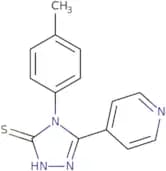
CAS :Versatile small molecule scaffoldFormule :C14H12N4SDegré de pureté :Min. 95%Masse moléculaire :268.34 g/mol4-(4-Methylphenyl)-5-(pyridin-4-yl)-4H-1,2,4-triazole-3-thiol
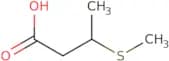
CAS :Versatile small molecule scaffoldFormule :C14H12N4SDegré de pureté :Min. 95%Masse moléculaire :268.34 g/mol3-(Methylsulfanyl)butanoic acid
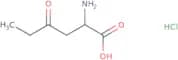
CAS :Versatile small molecule scaffoldFormule :C5H10O2SDegré de pureté :Min. 95%Masse moléculaire :134.2 g/mol2-Amino-4-oxohexanoic acid hydrochloride
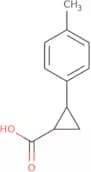
CAS :Versatile small molecule scaffoldFormule :C6H12ClNO3Degré de pureté :Min. 95%Masse moléculaire :181.62 g/molrac-(1R,2R)-2-(4-Methylphenyl)cyclopropane-1-carboxylic acid
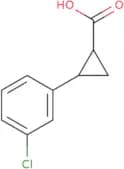
CAS :Versatile small molecule scaffoldFormule :C11H12O2Degré de pureté :Min. 95%Masse moléculaire :176.21 g/molrac-(1R,2R)-2-(3-Chlorophenyl)cyclopropane-1-carboxylic acid
CAS :Versatile small molecule scaffoldFormule :C10H9ClO2Degré de pureté :Min. 95%Masse moléculaire :196.63 g/molrac-(1R,2R)-2-(4-Nitrophenyl)cyclopropane-1-carboxylic acid
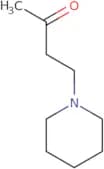
CAS :Versatile small molecule scaffoldFormule :C10H9NO4Degré de pureté :Min. 95%Masse moléculaire :207.18 g/mol4-(Piperidin-1-yl)butan-2-one
CAS :Versatile small molecule scaffold
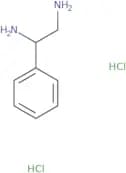
Formule :C9H17NODegré de pureté :Min. 95%Masse moléculaire :155.24 g/mol1-Phenylethane-1,2-diamine dihydrochloride
CAS :Versatile small molecule scaffoldFormule :C8H14Cl2N2Degré de pureté :Min. 95%Masse moléculaire :209.12 g/mol2-Propenoic acid, 3-(4-cyanophenyl)-, (E)-
CAS :2-Propenoic acid, 3-(4-cyanophenyl)-, (E)- is a fatty acid that is used in the production of biodiesel. This reaction is catalyzed by an acid methyl ester, which can be either reactive or unreactive. The product of this reaction - fatty acid methyl esters - has significant activity as an anion and has a high boiling point. It also has the potential to be used as a fuel in the future.
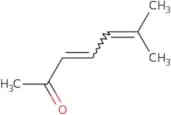
Formule :C10H7NO2Degré de pureté :Min. 95%Masse moléculaire :173.17 g/mol6-Methyl-3,5-heptadien-2-one
CAS :This product is a mixture of 6-methyl-3,5-heptadien-2-one and 2,6-dimethyloctane. It has a pleasant, fruity odor. It is used as an additive for perfumes and other products to improve the smell. This product can be found in foods such as meat, cheese, chocolate, and coffee. The minutiflora plant contains this compound. It is also present in propolis and chitosan nanoparticles (as an antioxidant). The maltol content of this product is about 95% with yields ranging from 10% to 50%.Formule :C8H12ODegré de pureté :Min. 95%Masse moléculaire :124.18 g/molBicyclo[3.1.0]hexane-6-carboxylic acid, somers
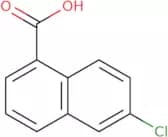
CAS :Bicyclo[3.1.0]hexane-6-carboxylic acid, somers is an organic compound that is a carboxylic acid derivative with a cyclopentane ring and six carboxyl groups. It is used in the synthesis of other compounds, such as hydroxyalkyl, tetrahydropyranyl, sulfur, carboxylic acid, alkylthio, c1-6 alkyl, cycloalkyl and efficient carboxylic. Bicyclo[3.1.0]hexane-6-carboxylic acid, somers can be synthesized from bicyclo[2.2.1]heptane-2-carboxylic acid by reaction with ethylene oxide and hydrogen sulfide in the presence of a catalytic amount of hydrochloric acid or pyridine hydrochloride.Formule :C7H10O2Degré de pureté :Min. 95%Masse moléculaire :126.15 g/mol6-Chloronaphthalene-1-carboxylic acid
CAS :6-Chloronaphthalene-1-carboxylic acid is a chlorinated aromatic compound with the chemical formula ClCH=CClO2H. The compound was first synthesized in 1887 by Friedel and Crafts reaction between aluminum chloride and 2-furoic acid. It is an intermediate in the production of chlorobenzene, which is used to make polychlorinated biphenyls (PCBs). 6-Chloronaphthalene-1-carboxylic acid can be prepared by nitration of benzene or toluene, followed by hydrolysis with hydrochloric acid. It also has applications as a herbicide.Formule :C11H7ClO2Degré de pureté :Min. 95%Masse moléculaire :206.62 g/moltert-Butyl 2-(4,5-dihydro-1H-imidazol-2-yl)pyrrolidine-1-carboxylate
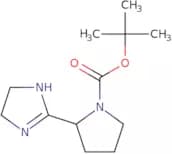
CAS :Versatile small molecule scaffold
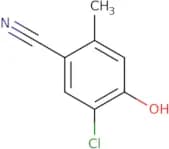
Formule :C12H21N3O2Degré de pureté :Min. 95%Masse moléculaire :239.31 g/mol5-Chloro-4-hydroxy-2-methylbenzonitrile
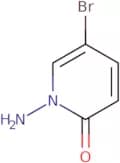
CAS :Versatile small molecule scaffoldFormule :C8H6ClNODegré de pureté :Min. 95%Masse moléculaire :167.59 g/mol1-Amino-5-bromo-1,2-dihydropyridin-2-one
CAS :Versatile small molecule scaffoldFormule :C5H5BrN2ODegré de pureté :Min. 95%Masse moléculaire :189.01 g/mol8-Oxo-7H,8H-imidazo[1,2-a]pyrazine-2-carboxylic acid
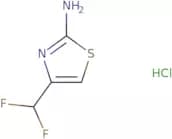
CAS :Versatile small molecule scaffoldFormule :C7H5N3O3Degré de pureté :Min. 95%Masse moléculaire :179.13 g/mol4-(Difluoromethyl)-1,3-thiazol-2-amine hydrochloride
CAS :Versatile small molecule scaffoldFormule :C4H5ClF2N2SDegré de pureté :Min. 95%Masse moléculaire :186.61 g/mol[(5,5-Dimethylpyrrolidin-3-yl)methyl]dimethylamine
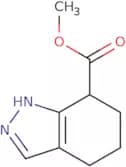
CAS :Versatile small molecule scaffoldFormule :C9H20N2Degré de pureté :Min. 95%Masse moléculaire :156.3 g/molMethyl 4,5,6,7-tetrahydro-1H-indazole-7-carboxylate
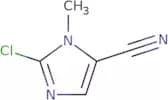
CAS :Versatile small molecule scaffoldFormule :C9H12N2O2Degré de pureté :Min. 95%Masse moléculaire :180.2 g/mol2-Chloro-1-methyl-1H-imidazole-5-carbonitrile
CAS :Versatile small molecule scaffoldFormule :C5H4ClN3Degré de pureté :Min. 95%Masse moléculaire :141.56 g/mol

![2H,3H,4H,5H-Naphtho[1,2-b]oxepin-5-one](/_next/image/?url=https%3A%2Fstatic.cymitquimica.com%2Fproducts%2F3D%2Fthumb-webp%2FRAA56358.webp&w=3840&q=75)
![6-Iodobenzo[d]thiazol-2-amine](/_next/image/?url=https%3A%2Fstatic.cymitquimica.com%2Fproducts%2F3D%2Fthumb-webp%2FRAA58258.webp&w=3840&q=75)
![6-Benzyl-6-azabicyclo[3.2.1]octan-3-one](/_next/image/?url=https%3A%2Fstatic.cymitquimica.com%2Fproducts%2F3D%2Fthumb-webp%2FRAA60747.webp&w=3840&q=75)
![(1R,3S,5S)-6,6-Dimethylbicyclo[3.1.0]hexan-3-ol](/_next/image/?url=https%3A%2Fstatic.cymitquimica.com%2Fproducts%2F3D%2Fthumb-webp%2FRAA61381.webp&w=3840&q=75)
![Octahydropyrrolo[1,2-a]piperazin-1-one](/_next/image/?url=https%3A%2Fstatic.cymitquimica.com%2Fproducts%2F3D%2Fthumb-webp%2FRAA62061.webp&w=3840&q=75)
![Octahydropyrrolo[1,2-a]piperazin-3-one](/_next/image/?url=https%3A%2Fstatic.cymitquimica.com%2Fproducts%2F3D%2Fthumb-webp%2FRAA62083.webp&w=3840&q=75)



![Bicyclo[3.1.0]hexane-6-carboxylic acid, somers](/_next/image/?url=https%3A%2Fstatic.cymitquimica.com%2Fproducts%2F3D%2Fthumb-webp%2FRAA65037.webp&w=3840&q=75)
![8-Oxo-7H,8H-imidazo[1,2-a]pyrazine-2-carboxylic acid](/_next/image/?url=https%3A%2Fstatic.cymitquimica.com%2Fproducts%2F3D%2Fthumb-webp%2FRAD20798.webp&w=3840&q=75)
![[(5,5-Dimethylpyrrolidin-3-yl)methyl]dimethylamine](/_next/image/?url=https%3A%2Fstatic.cymitquimica.com%2Fproducts%2F3D%2Fthumb-webp%2FRAD22550.webp&w=3840&q=75)