Building Blocks
Cette section contient des produits fondamentaux pour la synthèse de composés organiques et biologiques. Building blocks sont les matériaux de départ essentiels utilisés pour construire des molécules complexes à travers diverses réactions chimiques. Ils jouent un rôle crucial dans la découverte de médicaments, la science des matériaux et la recherche chimique. Chez CymitQuimica, nous offrons une gamme diversifiée de building blocks de haute qualité pour soutenir vos recherches innovantes et projets industriels, en vous assurant de disposer des composants essentiels pour une synthèse réussie.
Sous-catégories appartenant à la catégorie "Building Blocks"
- Acides boroniques et dérivés de l'acide boronique(5.778 produits)
- Building Blocks Chiraux(1.243 produits)
- Building Blocks Hydrocarbonés(6.098 produits)
- Building Blocks organiques(61.057 produits)
200710 produits trouvés pour "Building Blocks"
Trier par
Degré de pureté (%)
0
100
|
0
|
50
|
90
|
95
|
100
tert-Butyl 3-(trifluoromethyl)piperazine-1-carboxylate
CAS :<p>Versatile small molecule scaffold</p>Formule :C10H17F3N2O2Degré de pureté :Min. 95%Masse moléculaire :254.25 g/mol5-Oxotetrahydrofuran-2-carboxylic acid
CAS :5-Oxotetrahydrofuran-2-carboxylic acid is a solid phase extraction compound that can be used to extract and purify compounds from biological samples. It is synthesized by an asymmetric synthesis of the acetate ester of 5-hydroxytetrahydrofuran-2-carboxylic acid, which is then hydrolyzed to give the desired product. 5-Oxotetrahydrofuran-2-carboxylic acid has been used in cell culture studies as a diagnostic agent for cancer cells. The reactive nature of this molecule allows it to react with chloride ions and fatty acids, which leads to the death of cancer cells.Formule :C5H6O4Degré de pureté :Min. 95%Masse moléculaire :130.1 g/mol6-Hydroxyquinoline-4-carboxylic acid
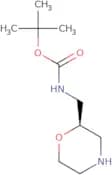
CAS :Versatile small molecule scaffoldFormule :C10H7NO3Degré de pureté :Min. 95%Masse moléculaire :189.17 g/mol(R)-2-(N-Boc-aminomethyl)morpholine
CAS :<p>Versatile small molecule scaffold</p>Formule :C10H20N2O3Degré de pureté :Min. 95%Masse moléculaire :216.28 g/mol1-Boc-pyrrolidine-3-ethanol
CAS :<p>Versatile small molecule scaffold</p>Formule :C11H21NO3Degré de pureté :Min. 95%Masse moléculaire :215.29 g/mol(1R,2S)-2-Phenylcyclopropane-1-carboxylic acid
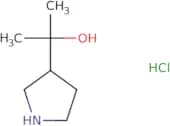
CAS :<p>(1R,2S)-2-Phenylcyclopropane-1-carboxylic acid is a dicarboxylic acid that is produced from the decarboxylation of benzyne. This compound has been shown to be a precursor of benzene and ozonolysis. The stereospecifically of (1R,2S)-2-Phenylcyclopropane-1-carboxylic acid has been determined using lead tetraacetate as the substrate. (1R,2S)-2-Phenylcyclopropane-1-carboxylic acid is an asymmetric molecule.</p>Formule :C10H10O2Degré de pureté :Min. 95%Masse moléculaire :162.18 g/mol(S)-2-(3-Pyrrolidinyl)-2-propanol Hydrochloride ee
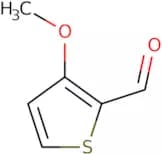
CAS :<p>Versatile small molecule scaffold</p>Formule :C7H16ClNODegré de pureté :Min. 95%Masse moléculaire :165.66 g/mol3-Methoxythiophene-2-carbaldehyde
CAS :<p>3-Methoxythiophene-2-carbaldehyde is a ligand that has been shown to form a stable complex with potassium chloride. This compound is also reactive, and can be stabilized in the reaction vessel. In the presence of sulfate ions, 3-methoxythiophene-2-carbaldehyde will react to form a phosphotungstic acid precipitate. The dehydrated salt can be recrystallized by adding phosphotungstic acid, which stabilizes the product.</p>Formule :C6H6O2SDegré de pureté :Min. 95%Masse moléculaire :142.18 g/molMethyl 2-(6-chloropyridin-3-yl)acetate
CAS :<p>Versatile small molecule scaffold</p>Formule :C8H8ClNO2Degré de pureté :Min. 95%Masse moléculaire :185.61 g/mol8-Chloroisoquinolin-5-amine
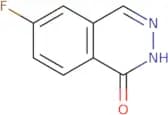
CAS :<p>Versatile small molecule scaffold</p>Formule :C9H7ClN2Degré de pureté :Min. 95%Masse moléculaire :178.62 g/mol6-fluoro-1,2-dihydrophthalazin-1-one
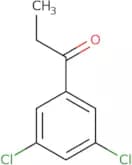
CAS :<p>Versatile small molecule scaffold</p>Formule :C8H5FN2ODegré de pureté :Min. 95%Masse moléculaire :164.14 g/mol1-(3,5-Dichloro-phenyl)-propan-1-one
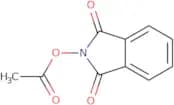
CAS :<p>Versatile small molecule scaffold</p>Formule :C9H8Cl2ODegré de pureté :Min. 95%Masse moléculaire :203.07 g/mol1,3-Dioxo-2,3-dihydro-1H-isoindol-2-yl acetate
CAS :1,3-Dioxo-2,3-dihydro-1H-isoindol-2-yl acetate is a reactive intermediate that can be used as a starting material for the synthesis of other organic compounds. It is synthesized by the reaction of an acid with an aldehyde or ketone in the presence of a base. The rate of this reaction depends on the functional groups present in both reactants and their relative concentrations. This intermediate can be converted to another chemical compound through various reactions, including hydroxymethylation, decarboxylation and oxidation. This chemical has been used as a cocatalyst for the production of 5-hydroxymethylfurfural (HMF).Formule :C10H7NO4Degré de pureté :Min. 95%Masse moléculaire :205.17 g/moltert-Butyl 2-bromo-2-methylpropanoate
CAS :tert-Butyl 2-bromo-2-methylpropanoate is a versatile compound with various applications. It is commonly used as a cytotoxic agent in the pharmaceutical industry and as an amide intermediate in organic synthesis. This compound has also been studied for its potential therapeutic effects, such as its ability to inhibit the growth of cancer cells. tert-Butyl 2-bromo-2-methylpropanoate is often utilized in research settings to study the efficacy of drugs like rabeprazole and tripterygium. Additionally, it finds applications in the production of polymers, catalysts, and hydrogen atom transfer reactions. With its wide range of uses, tert-Butyl 2-bromo-2-methylpropanoate is a valuable compound for researchers and industries alike.Formule :C8H15BrO2Degré de pureté :Min. 95%Masse moléculaire :223.11 g/mol6-Chloro-2-methyl-4-pyrimidinol
CAS :6-Chloro-2-methyl-4-pyrimidinol is an aldehyde that reacts with hydrazine to form a monoxide, which reacts with carbon monoxide to form a hydrazide.Formule :C5H5ClN2ODegré de pureté :Min. 95%Masse moléculaire :144.56 g/mol2,3-Dihydro-1H-pyrrolo[3,2-c]pyridine
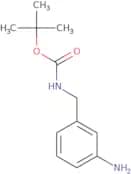
CAS :<p>2,3-Dihydro-1H-pyrrolo[3,2-c]pyridine is an alkaloid compound that has various applications in research and chemical studies. It has been found to interact with dopamine receptors and exhibit photothermal properties. This compound has been studied in the context of G. lucidum (also known as Reishi mushroom) and its potential therapeutic effects. Additionally, it has shown interactions with quinpirole, lithium, ergovaline, efrotomycin, and other compounds. The photocatalytic and fatty acid properties of 2,3-Dihydro-1H-pyrrolo[3,2-c]pyridine make it a versatile compound for various research purposes.</p>Degré de pureté :Min. 95%(3-Aminobenzyl)carbamic acid tert-butyl ester
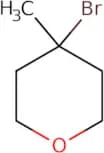
CAS :<p>Versatile small molecule scaffold</p>Formule :C12H18N2O2Degré de pureté :Min. 95%Masse moléculaire :222.28 g/mol4-Bromo-4-methyltetrahydropyran
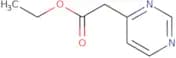
CAS :<p>Versatile small molecule scaffold</p>Formule :C6H11BrODegré de pureté :Min. 95%Masse moléculaire :179.06 g/molEthyl 2-(pyrimidin-4-yl)acetate
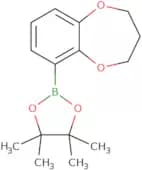
CAS :<p>Versatile small molecule scaffold</p>Formule :C8H10N2O2Degré de pureté :Min. 95%Masse moléculaire :166.18 g/mol2-(3,4-Dihydro-2H-1,5-benzodioxepin-6-yl)-4,4,5,5-tetramethyl-1,3,2-dioxaborolane
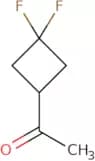
CAS :<p>Versatile small molecule scaffold</p>Formule :C15H21BO4Degré de pureté :Min. 95%Masse moléculaire :276.14 g/mol1-(3,3-Difluorocyclobutyl)ethan-1-one
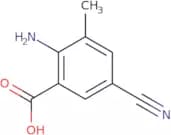
CAS :<p>Versatile small molecule scaffold</p>Formule :C6H8F2ODegré de pureté :Min. 95%Masse moléculaire :134.13 g/mol2-amino-5-cyano-3-methylbenzoic acid
CAS :<p>2-Amino-5-cyano-3-methylbenzoic acid is a diester of methylamine. It is an acid ester that has been used in the synthesis of other compounds. 2-Amino-5-cyano-3-methylbenzoic acid is an intermediate in the synthesis of some pharmaceuticals, such as carbamazepine and methylphenidate. This compound has not been shown to have any biological activity.</p>Formule :C9H8N2O2Degré de pureté :Min. 95%Masse moléculaire :176.18 g/moltert-Butyl 4-amino-4-(aminomethyl)piperidine-1-carboxylate
CAS :<p>Versatile small molecule scaffold</p>Formule :C11H23N3O2Degré de pureté :Min. 95%Masse moléculaire :229.32 g/mol4-Bromo-2,3-difluoropyridine
CAS :<p>Versatile small molecule scaffold</p>Formule :C5H2BrF2NDegré de pureté :Min. 95%Masse moléculaire :193.98 g/mol2-Imidazolidone-4-carboxylic acid
CAS :2-Imidazolidone-4-carboxylic acid is a potent inhibitor of matrix metalloproteinases, which are enzymes that break down proteins in the extracellular matrix. 2-Imidazolidone-4-carboxylic acid inhibits the activity of both serine protease and matrix metalloproteinase, two enzymes involved in the inflammation process. 2-Imidazolidone-4-carboxylic acid has been shown to inhibit the transport of amino acids, leading to decreased protein synthesis and cell growth. It also inhibits cancer cells by disrupting their ability to grow new blood vessels and invade other tissues.Formule :C4H6N2O3Degré de pureté :Min. 95%Masse moléculaire :130.1 g/molMethyl Pyridin-3-ylacetate
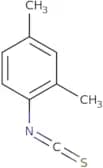
CAS :<p>Methyl Pyridin-3-ylacetate is an organic compound that is the methyl ester of pyridine-3-carboxylic acid. It has a melting point of 197°C, with an ionization potential of 1.78 eV and a lactam. Methyl Pyridin-3-ylacetate has been shown to react with hydrochloric acid to form picric acid and methyl 3-(hydroxymethyl)pyridine-2,5-dicarboxylate. Methyl Pyridin-3-ylacetate can be used in the preparation of picrates, which are used in the synthesis of dyes and explosives such as picric acid and TNT. Methyl Pyridin-3-ylacetate can also be demethylated by heating with sodium methoxide to give methyl pyridine carboxylate.</p>Formule :C8H9NO2Degré de pureté :Min. 95%Masse moléculaire :151.16 g/mol2,4-Dimethylphenyl isothiocyanate
CAS :<p>2,4-Dimethylphenyl isothiocyanate (DMIT) is a dipole molecule that has been used as a preservative and antimicrobial agent. DMIT has been shown to be an effective anti-microbial agent against Gram-positive bacteria such as Staphylococcus aureus, Enterococcus faecalis, and Streptococcus pyogenes. It also inhibits the growth of Gram-negative bacteria such as Escherichia coli, Pseudomonas aeruginosa, and Klebsiella pneumoniae. DMIT has been shown to be non-toxic to animals at high concentrations. It is also safe for use in food products because it does not react with polyunsaturated compounds.</p>Formule :C9H9NSDegré de pureté :Min. 95%Masse moléculaire :163.24 g/molMethyl 6-oxospiro[3.3]heptane-2-carboxylate
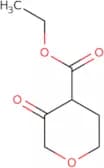
CAS :Versatile small molecule scaffoldFormule :C9H12O3Degré de pureté :Min. 95%Masse moléculaire :168.19 g/molEthyl 3-oxotetrahydro-2H-pyran-4-carboxylate
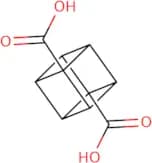
CAS :Versatile small molecule scaffoldFormule :C8H12O4Degré de pureté :Min. 95%Masse moléculaire :172.18 g/mol1,4-Cubanedicarboxylic acid
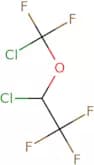
CAS :<p>1,4-Cubanedicarboxylic acid is an organic compound that is a diacid. It has been shown to be an inhibitor of chloride secretion in the intestine, and can also decrease the rate at which hydrogen ions are released into the intestinal lumen. 1,4-Cubanedicarboxylic acid is also a cross-linking agent that can be used in organic solvents for large-scale synthesis. The optical properties of 1,4-cubanedicarboxylic acid have been studied using FTIR spectroscopy. This agent has been found to react with intramolecular hydrogen to form a six membered ring.</p>Formule :C10H8O4Degré de pureté :Min. 95%Masse moléculaire :192.17 g/mol2-Chloro-2-(chlorodifluoromethoxy)-1,1,1-trifluoroethane
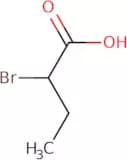
CAS :<p>2-Chloro-2-(chlorodifluoromethoxy)-1,1,1-trifluoroethane (HFC-152a) is a chemical compound that belongs to the group of chlorofluorocarbons. It has been used as a refrigerant and aerosol propellant. HFC-152a is an azeotrope with methyl ethyl ketone and ethyl ketone. It has also been reported to have properties as an ether, acetone, and difluoromethyl.</p>Formule :C3HCl2F5ODegré de pureté :Min. 95%Masse moléculaire :218.94 g/mol(S)-2-Bromobutyric acid
CAS :(S)-2-Bromobutyric acid is a chiral compound. It is an enantiomer of the biologically inactive (R)-2-bromobutyric acid. The (S)-enantiomer has been shown to exhibit biological activity, with a kinetic and detectable activity that are similar to those of the parent molecule. This compound can be used as a precursor for pharmaceuticals, such as antibiotics, which would be useful in cases where bacteria have developed resistance to existing antibiotics. The dehalogenase enzyme catalyzes the hydrolysis of halogenated aromatic compounds in a way that produces an alcohol and hydrogen bromide. This reaction can be detected by changes in the chemical properties of the environment or by detecting changes in the optical rotation or fluorescence of the product.Formule :C4H7BrO2Degré de pureté :Min. 95%Masse moléculaire :167 g/mol8-Chlorotetrazolo[1,5-A]pyrazine
CAS :<p>8-Chlorotetrazolo[1,5-A]pyrazine is a chlorine-containing compound. It is a heterocyclic aromatic organic compound and an important intermediate in the synthesis of other compounds. 8-Chlorotetrazolo[1,5-A]pyrazine is not found in nature. The elimination of chlorine from 8-chlorotetrazolo[1,5-A]pyrazine produces benzotriazole and the molecule tetrazole. 8-Chlorotetrazolo[1,5-A]pyrazine is used as a raw material for many organic syntheses.</p>Formule :C4H2N5ClDegré de pureté :Min. 95%Masse moléculaire :155.54 g/molMethyl 5-Hexynoate
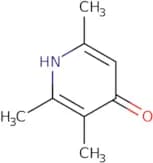
CAS :<p>Methyl 5-hexynoate is a synthetic product that can be synthesized from soybean lipoxygenase and hydrogenation reduction. This product has been shown to be a useful synthon for the synthesis of monoclonal antibodies with high binding affinity. The synthetic pathway, which involves cross-coupling and asymmetric synthesis, is outlined in the diagram below. The following are the steps involved in the production of methyl 5-hexynoate: 1) Addition of ethyl bromide to terminal alkynes 2) Addition of hydrochloric acid 3) Reaction with potassium tert-butoxide 4) Hydrogenation reduction 5) Cross-coupling reaction 6) Asymmetric synthesis</p>Formule :C7H10O2Degré de pureté :Min. 95%Masse moléculaire :126.15 g/mol2,3,6-Trimethylpyridin-4(1H)-One
CAS :Versatile small molecule scaffoldFormule :C8H11NODegré de pureté :Min. 95%Masse moléculaire :137.18 g/mol4-Methoxy-3-(methoxymethyl)butan-1-ol
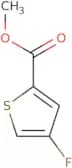
CAS :Versatile small molecule scaffoldFormule :C7H16O3Degré de pureté :Min. 95%Masse moléculaire :148.2 g/molMethyl 4-fluorothiophene-2-carboxylate
CAS :Methyl 4-fluorothiophene-2-carboxylate is a fluorinated organic compound that is used as a model compound in polymer chemistry. It has been used to synthesize polymers with stepwise fluorination and diketopyrrolopyrrole moieties. This molecule also has optoelectronic properties and can be converted to a conjugated, monofluorinated, or difluorinated form by the addition of electron-withdrawing groups such as nitro or cyano groups. Methyl 4-fluorothiophene-2-carboxylate is an acceptor for electron transfer reactions.Formule :C6H5FO2SDegré de pureté :Min. 95%Masse moléculaire :160.16 g/mol6-Bromo-1-methyl-2,3-dihydro-1H-indazol-3-one
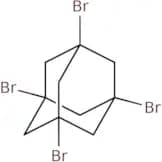
CAS :<p>Versatile small molecule scaffold</p>Formule :C8H7BrN2ODegré de pureté :Min. 95%Masse moléculaire :227.06 g/mol1,3,5,7-Tetrabromoadamantane
CAS :1,3,5,7-Tetrabromoadamantane is a molecule that has been synthesized and introduced as a mediator to introduce oxidants. The introduction of the oxidant is mediated by 1,3,5,7-tetrabromoadamantane. This molecule has been shown to be synthesized in two steps from hexamethylenetetramine (HMT) and iodomethane. The synthesis of this molecule can also be achieved by reacting synthons such as tetraphenylmethane with hydrochloric acid. 1,3,5,7-Tetrabromoadamantane is an equivalence mediator because it can mediate a redox reaction in which the oxidizing agent is reduced and the reducing agent is oxidized.Formule :C10H12Br4Degré de pureté :Min. 95%Masse moléculaire :451.82 g/molcis-6-Boc-octahydropyrrolo[3,4-b]morpholine
CAS :<p>Versatile small molecule scaffold</p>Formule :C11H20N2O3Degré de pureté :Min. 95%Masse moléculaire :228.29 g/mol1-(4-(4,4,5,5-Tetramethyl-1,3,2-dioxaborolan-2-yl)phenyl)cyclopropanecarbonitrile
CAS :Versatile small molecule scaffoldFormule :C16H20BNO2Degré de pureté :Min. 95%Masse moléculaire :269.15 g/mol1-Methanesulfonyl-1H-pyrazol-4-amine
CAS :<p>Versatile small molecule scaffold</p>Formule :C4H7N3O2SDegré de pureté :Min. 95%Masse moléculaire :161.19 g/mol(1R)-1-(3-Fluoro-4-methylphenyl)ethan-1-amine hydrochloride
CAS :Versatile small molecule scaffoldFormule :C9H13ClFNDegré de pureté :Min. 95%Masse moléculaire :189.66 g/mol(1R,4R)-2-Oxa-5-azabicyclo[2.2.1]heptane hydrochloride
CAS :<p>Versatile small molecule scaffold</p>Formule :C5H9NO·HClDegré de pureté :Min. 95%Masse moléculaire :135.59 g/moltert-Butyl 4-[(piperazin-1-yl)methyl]piperidine-1-carboxylate
CAS :Versatile small molecule scaffoldFormule :C15H29N3O2Degré de pureté :Min. 95%Masse moléculaire :283.41 g/mol2-(7-Amino-4-methyl-2-oxo-2H-chromen-3-yl)acetic acid
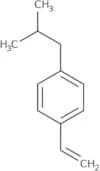
CAS :2-(7-Amino-4-methyl-2-oxo-2H-chromen-3-yl)acetic acid is a monoclonal antibody that recognizes basic proteins. It is used to study the receptor binding of these proteins and their role in inflammatory diseases. 2-(7-Amino-4-methyl-2-oxo-2H-chromen-3,6-)acetic acid is an amino function that enhances the localization of cholinergic receptors at the apical membrane of epithelial cells. It also inhibits the efflux pump activity of bacteria, which may be useful for treating bacterial infections.Formule :C12H11NO4Degré de pureté :Min. 95%Masse moléculaire :233.22 g/molp-Isobutylstyrene-d7
CAS :<p>p-Isobutylstyrene-d7 is a solid catalyst that can be used in the synthesis of organic compounds. It has been shown to have good activity for the transfer of acid chloride groups to aromatic ring systems and for the synthesis of thiadiazoles. p-Isobutylstyrene-d7 has been shown to be an excellent catalyst for the conversion of hydrochloric acid into hydrogen chloride, which can then be recycled. The toxicity studies on this compound have shown that it is not toxic to bacterial strains, which may make it a good candidate for use as a catalyst in bioremediation or a growth substrate. This catalyst has also been shown to have photocatalytic activity and may be used in the purification of water contaminated with heavy metals.</p>Formule :C12H9D7Degré de pureté :Min. 95%Masse moléculaire :167.3 g/mol(2S,6S)-2,6-Dimethylmorpholine
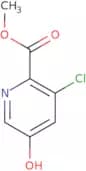
CAS :(2S,6S)-2,6-Dimethylmorpholine is an optically pure compound that can be used to optimize the epoxidase reaction. It belongs to the class of morpholines and has two enantiomers. The (2R,6R)-enantiomer is more active than the (2S,6S)-enantiomer in catalyzing the epoxidase reaction. The temperature optima for both enantiomers are different with the (2R,6R)-enantiomer having a higher optimal temperature than the (2S,6S) enantiomer. This compound can be used as a chiral auxiliary to separate racemic mixtures by focusing on one enantiomer at a time. It can also be used as an analytical method for determining plate number and plate height.Formule :C6H13NODegré de pureté :Min. 95%Masse moléculaire :115.17 g/molMethyl 3-chloro-5-hydroxypyridine-2-carboxylate
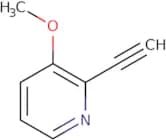
CAS :Versatile small molecule scaffoldFormule :C7H6NO3ClDegré de pureté :Min. 95%Masse moléculaire :187.58 g/mol2-Ethynyl-3-methoxypyridine
CAS :2-Ethynyl-3-methoxypyridine is a chiral, alkynyl compound that can be synthesized from the reaction of acetone and ethyne. This compound is axially chiral and has two rotational isomers, which are optically active. The synthesis of this compound was first reported in 1952 by cyclizing 2-ethynylpyridine with methoxyacetophenone in the presence of acetic acid. The photochemical reactions of this compound have been studied extensively and it has shown to be a useful substrate for pyridines.Formule :C8H7NODegré de pureté :Min. 95%Masse moléculaire :133.14 g/mol








![2,3-Dihydro-1H-pyrrolo[3,2-c]pyridine](/_next/image/?url=https%3A%2Fstatic.cymitquimica.com%2Fproducts%2F3D%2Fthumb-webp%2FYAA59628.webp&w=3840&q=75)


![Methyl 6-oxospiro[3.3]heptane-2-carboxylate](/_next/image/?url=https%3A%2Fstatic.cymitquimica.com%2Fproducts%2F3D%2Fthumb-webp%2FNVB48098.webp&w=3840&q=75)
![8-Chlorotetrazolo[1,5-A]pyrazine](/_next/image/?url=https%3A%2Fstatic.cymitquimica.com%2Fproducts%2F3D%2Fthumb-webp%2FCDA88819.webp&w=3840&q=75)



![cis-6-Boc-octahydropyrrolo[3,4-b]morpholine](/_next/image/?url=https%3A%2Fstatic.cymitquimica.com%2Fproducts%2F3D%2Fthumb-webp%2FNFA02702.webp&w=3840&q=75)


![(1R,4R)-2-Oxa-5-azabicyclo[2.2.1]heptane hydrochloride](/_next/image/?url=https%3A%2Fstatic.cymitquimica.com%2Fproducts%2F3D%2Fthumb-webp%2FBZA51579.webp&w=3840&q=75)
![tert-Butyl 4-[(piperazin-1-yl)methyl]piperidine-1-carboxylate](/_next/image/?url=https%3A%2Fstatic.cymitquimica.com%2Fproducts%2F3D%2Fthumb-webp%2FGQA72248.webp&w=3840&q=75)