


Building Blocks
Sous-catégories appartenant à la catégorie "Building Blocks"
- Acides boroniques et dérivés de l'acide boronique(5.778 produits)
- Building Blocks Chiraux(1.243 produits)
- Building Blocks Hydrocarbonés(6.098 produits)
- Building Blocks organiques(61.042 produits)
204339 produits trouvés pour "Building Blocks"
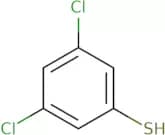
3,5-Dichlorothiophenol
CAS :3,5-Dichlorothiophenol is a potent inhibitor of the enzyme acetylcholinesterase. As an inhibitor of the enzyme, it blocks the breakdown of acetylcholine and leads to accumulation of acetylcholine at nerve endings. This can lead to death by asphyxiation. Acetylcholinesterase inhibitors such as 3,5-dichlorothiophenol are used in insecticides and chemical warfare agents. 3,5-Dichlorothiophenol has been shown to inhibit the enzyme acetycholinesterase in a dose-dependent manner in vitro with an IC50 of 8 μM. It has also been shown that 3,5-dichlorothiophenol can be used in surface-enhanced Raman spectroscopy (SERS) for detection of metal ions on surfaces.Formule :C6H4Cl2SDegré de pureté :Min. 95%Masse moléculaire :179.07 g/mol2,3-Dichlorobenzenethiol
CAS :2,3-Dichlorobenzenethiol is an organic compound that is used as a reagent in the synthesis of polymers. It inhibits HIV infection by inhibiting viral replication through the inhibition of reverse transcriptase and protease enzymes. This chemical has been used as a standard in analytical methods for estimating the inhibitory effect of substances on these enzymes. 2,3-Dichlorobenzenethiol also has an inhibitory effect on cyclohexane ring formation and polymerization initiation. It is also an important intermediate for the synthesis of naphthalene.
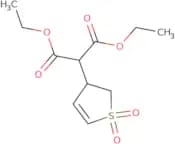
Formule :C6H4Cl2SDegré de pureté :Min. 95%Masse moléculaire :179.06 g/mol1,3-Diethyl 2-(1,1-dioxo-2,3-dihydro-1λ⁶-thiophen-3-yl)propanedioate
CAS :Versatile small molecule scaffold
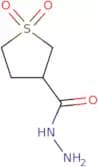
Formule :C11H16O6SDegré de pureté :Min. 95%Masse moléculaire :276.31 g/molTetrahydro-3-thiophenecarboxylic acid hydrazide 1,1-dioxide
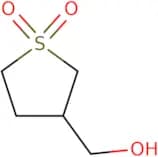
CAS :Versatile small molecule scaffoldFormule :C5H10N2O3SDegré de pureté :Min. 95%Masse moléculaire :178.21 g/mol(1,1-dioxothiolan-3-yl)methanol
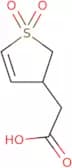
CAS :Versatile small molecule scaffoldFormule :C5H10O3SDegré de pureté :Min. 95%Masse moléculaire :150.19 g/mol2,3-Dihydro-3-thiopheneacetic acid 1,1-dioxide
CAS :2,3-Dihydro-3-thiopheneacetic acid 1,1-dioxide is a nucleophilic reagent that can be used to synthesize amides. It reacts with amines to form 2,3-dihydro-3-thiophenecarboxylic acid 1,1-diamide. Reactions of this compound with heterocycles such as pyridine and quinoline result in the formation of heterocyclic amines.
Formule :C6H8O4SDegré de pureté :Min. 95%Masse moléculaire :176.19 g/mol2-(Hydroxyamino)-3-phenylpropanoic acid
CAS :Versatile small molecule scaffold
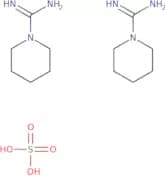
Formule :C9H11NO3Degré de pureté :Min. 95%Masse moléculaire :181.19 g/molBis(piperidine-1-carboximidamide), sulfuric acid
CAS :Versatile small molecule scaffoldFormule :C12H28N6O4SDegré de pureté :Min. 95%Masse moléculaire :352.46 g/mol3-Methyl-2-oxo-2,3-dihydro-1H-imidazole-4-carboxylic acid
CAS :Versatile small molecule scaffoldFormule :C5H6N2O3Degré de pureté :Min. 95%Masse moléculaire :142.11 g/mol1-Methyl-2-oxo-2,3-dihydro-1H-imidazole-4-carboxylic acid
CAS :Versatile small molecule scaffold
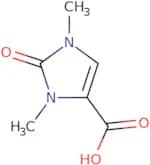
Formule :C5H6N2O3Degré de pureté :Min. 95%Masse moléculaire :142.11 g/mol1,3-Dimethyl-2-oxo-2,3-dihydro-1H-imidazole-4-carboxylic acid
CAS :Versatile small molecule scaffoldFormule :C6H8N2O3Degré de pureté :Min. 95%Masse moléculaire :156.14 g/mol4-Amino-2-cyclopentylpyrimidine-5-carbonitrile
CAS :Versatile small molecule scaffold
Formule :C10H12N4Degré de pureté :Min. 95%Masse moléculaire :188.23 g/mol3,4-Dichlorothiophene
CAS :3,4-Dichlorothiophene is a quinonoid compound that is synthesized from 3,4-dichlorobenzene and hydrogen sulphide. The reaction of the two compounds with persulphate, followed by hydrolysis and silver nitrate, yields 3,4-dichlorothiophene as a yellow liquid. This product can be treated with alkanoic acid or alkylated with an alkyl halide to produce homologues. 3,4-Dichlorothiophene reacts with ammonia in the presence of sodium amide to produce a mixture of amides. The reaction can also be carried out in the presence of diazotisation and nitration to form heterocycles.
Formule :C4H2Cl2SDegré de pureté :Min. 95%Masse moléculaire :153.03 g/mol2-(2,3-Dihydro-1,4-benzodioxin-6-yl)acetonitrile
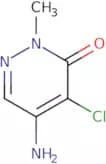
CAS :Versatile small molecule scaffoldFormule :C10H9NO2Degré de pureté :Min. 95%Masse moléculaire :175.18 g/mol5-amino-4-chloro-2-methyl-2,3-dihydropyridazin-3-one
CAS :5-Amino-4-chloro-2-methyl-2,3-dihydropyridazin-3-one is a metabolite of carbamazepine and caffeine. It is not an active compound, but it has been found to be a potent inhibitor of the enzyme aromatase. This inhibition prevents the conversion of androstenedione to estrone and testosterone to estradiol, which are hormones that regulate sex characteristics in humans. It is possible that this inhibition may be responsible for some of the side effects associated with high doses of these medications. 5-Amino-4-chloro-2 methyl 2,3 dihydropyridazine has also been shown to inhibit the growth of bacteria in vitro.
Formule :C5H6ClN3ODegré de pureté :Min. 95%Masse moléculaire :159.6 g/mol3-Chloro-4,6-dimethylpyridazine
CAS :3-Chloro-4,6-dimethylpyridazine is a chlorinated derivative of the pyridine family of compounds. It has been synthesized by the reaction of azides with sulfur and aminopyridazines with cinnolines. 3-Chloro-4,6-dimethylpyridazine can be used in research as a medicinal agent for treating bacterial infections. It also has anti-inflammatory properties that are related to its ability to inhibit prostaglandin synthesis. The compound was found to have potent antibacterial activity against methicillin resistant Staphylococcus aureus (MRSA) and Clostridium perfringens.
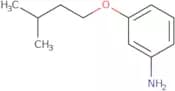
Formule :C6H7ClN2Degré de pureté :Min. 95%Masse moléculaire :142.59 g/mol3-(3-Methylbutoxy)aniline
CAS :Versatile small molecule scaffold
Formule :C11H17NODegré de pureté :Min. 95%Masse moléculaire :179.26 g/mol1-Cyclohexyl-1-propanol
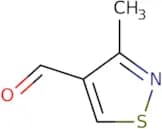
CAS :1-Cyclohexyl-1-propanol is an organic compound that is a colorless liquid with a sweet, etherial odor. It has been used in pharmaceutical preparations as a solvent and as an intermediate for the production of other compounds. 1-Cyclohexyl-1-propanol has been shown to have effects on the bladder muscle and detrusor muscle, which may be due to its ability to inhibit the activity of amines. The compound also forms enantiomers, which are stereoselective and react differently in multiphase reactions.Formule :C9H18ODegré de pureté :Min. 95%Masse moléculaire :142.24 g/mol3-Methyl-1,2-thiazole-4-carbaldehyde
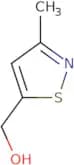
CAS :Versatile small molecule scaffoldFormule :C5H5NOSDegré de pureté :Min. 95%Masse moléculaire :127.17 g/mol(3-Methyl-1,2-thiazol-5-yl)methanol
CAS :Versatile small molecule scaffold
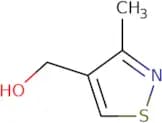
Formule :C5H7NOSDegré de pureté :Min. 95%Masse moléculaire :129.18 g/mol(3-Methyl-1,2-thiazol-4-yl)methanol
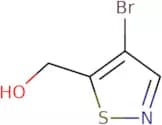
CAS :Versatile small molecule scaffoldFormule :C5H7NOSDegré de pureté :Min. 95%Masse moléculaire :129.18 g/mol(4-Bromo-1,2-thiazol-5-yl)methanol
CAS :Versatile small molecule scaffold
Formule :C4H4BrNOSDegré de pureté :Min. 95%Masse moléculaire :194.05 g/mol2-(5-chlorobenzo[b]thiophen-3-yl)acetic acid
CAS :Versatile small molecule scaffold
Formule :C10H7ClO2SDegré de pureté :Min. 95%Masse moléculaire :226.68 g/mol2-(5-Bromo-1-benzothiophen-3-yl)acetic acid
CAS :Versatile small molecule scaffold
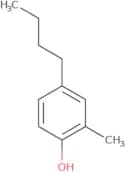
Formule :C10H7BrO2SDegré de pureté :Min. 95%Masse moléculaire :271.13 g/mol4-Butyl-2-methylphenol
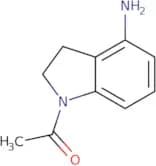
CAS :4-Butyl-2-methylphenol is a phenolic compound that is found in the essential oils of plants such as rosemary. It has been shown to inhibit the growth of animal cells, and this effect may be due to its ability to induce apoptosis. 4-Butyl-2-methylphenol also inhibits the production of basic fibroblast growth factor and epidermal growth factor by inhibiting protein synthesis and DNA synthesis. This chemical is an analog of platelet derived growth factor and has been shown to stimulate angiogenesis in vitro. 4-Butyl-2-methylphenol has been found to increase vessel density in animals when applied topically.Formule :C11H16ODegré de pureté :Min. 95%Masse moléculaire :164.24 g/mol1-(4-Aminoindoline)ethanone
CAS :Versatile small molecule scaffoldFormule :C10H12N2ODegré de pureté :Min. 95%Masse moléculaire :176.22 g/mol2-(2,4-Diphenylquinolin-3-yl)acetic acid
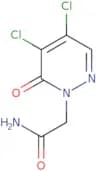
CAS :Versatile small molecule scaffoldFormule :C23H17NO2Degré de pureté :Min. 95%Masse moléculaire :339.4 g/mol2-(4,5-Dichloro-6-oxo-1,6-dihydropyridazin-1-yl)acetamide
CAS :Versatile small molecule scaffoldFormule :C6H5Cl2N3O2Degré de pureté :Min. 95%Masse moléculaire :222.03 g/mol[(6-Chloropyridazin-3-yl)amino]acetic acid
CAS :Versatile small molecule scaffold
Formule :C6H6ClN3O2Degré de pureté :Min. 95%Masse moléculaire :187.58 g/mol1-(2-Hydroxyethyl)-1,2,3,6-tetrahydropyridazine-3,6-dione
CAS :Versatile small molecule scaffoldFormule :C6H8N2O3Degré de pureté :Min. 95%Masse moléculaire :156.14 g/molTrichloropyridazin-4-amine
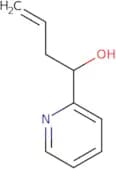
CAS :Versatile small molecule scaffoldFormule :C4H2Cl3N3Degré de pureté :Min. 95%Masse moléculaire :198.43 g/mol1-(Pyridin-2-yl)but-3-en-1-ol
CAS :Versatile small molecule scaffold
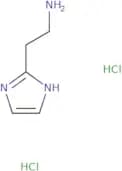
Formule :C9H11NODegré de pureté :Min. 95%Masse moléculaire :149.19 g/mol2-(1H-Imidazol-2-yl)ethanamine dihydrochloride
CAS :Versatile small molecule scaffoldFormule :C5H11Cl2N3Degré de pureté :Min. 95%Masse moléculaire :184.07 g/mol5-Methoxy-1H-pyrrolo[3,2-b]pyridine-2-carboxylic acid
CAS :Versatile small molecule scaffoldFormule :C9H8N2O3Degré de pureté :Min. 95%Masse moléculaire :192.17 g/mol(1H-Pyrrolo[3,2-b]pyridin-2-yl)methanol
CAS :Versatile small molecule scaffoldFormule :C8H8N2ODegré de pureté :Min. 95%Masse moléculaire :148.16 g/mol1H-Pyrrolo[3,2-b]pyridine-2-carbaldehyde
CAS :Versatile small molecule scaffoldFormule :C8H6N2ODegré de pureté :Min. 95%Masse moléculaire :146.15 g/mol3-Amino-2-(methylamino)propanoic acid dihydrochloride
CAS :Versatile small molecule scaffoldFormule :C4H12Cl2N2O2Degré de pureté :Min. 95%Masse moléculaire :191.05 g/mol4-(chloromethyl)-1-methyl-1H-imidazole hydrochloride
CAS :Produit contrôléVersatile small molecule scaffold
Formule :C5H8Cl2N2Degré de pureté :Min. 95%Masse moléculaire :167.03 g/mol1,3,5-Trichloro-2-(chloromethyl)benzene
CAS :1,3,5-Trichloro-2-(chloromethyl)benzene (TCMB) is a chemical compound that inhibits the synthesis of proteins and is used in cancer therapy. TCMB has been shown to inhibit protein synthesis by binding to the polymerase chain reaction enzyme transcriptase polymerase chain reaction. It also inhibits the activity of enzymes involved in lipid metabolism, such as lipases and cholesterol esterases. The serum bilirubin levels were found to be lower in mice treated with TCMB than in those not treated with TCMB. This may be due to the ability of this drug to inhibit the enzyme fatty acid synthase, which is responsible for synthesizing fatty acids. TCMB has been shown to induce apoptosis in bladder cells, which may be due to its inhibition of DNA synthesis and repair.
Formule :C7H4Cl4Degré de pureté :Min. 95%Masse moléculaire :229.9 g/mol2-Phenylcyclobutan-1-amine
CAS :2-Phenylcyclobutan-1-amine is a synthetic compound. It is a white crystalline solid that can be soluble in water, ethanol, and acetone. The compounds are chiral and exist as two stereoisomers: (S)-2-phenylcyclobutan-1-amine and (R)-2-phenylcyclobutan-1-amine. The two isomers have different effects on the central nervous system. The (S)-isomer is an analog of amphetamine and interacts with the serotonin receptor 5HT2A, while the (R)-isomer is an analog of methamphetamine which interacts with the dopamine receptors D1 and D2. 2-Phenylcyclobutan-1-amine has been shown to be more effective than cocaine in animal studies for Parkinson's disease treatment, but it has not been tested in humans. It also has properties that make it worthwhile for use as an insecticide or herbicide.
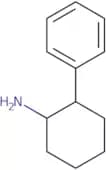
Formule :C10H13NDegré de pureté :Min. 95%Masse moléculaire :147.22 g/mol2-Phenylcyclohexanamine
CAS :2-Phenylcyclohexanamine is a synthetic, experimental compound. It has been shown to have high energy content and the ability to cross over from the gas phase to the liquid phase. 2-Phenylcyclohexanamine can be used as a thermodynamic probe in analytical research and has an efficient method for synthesis. The synthesis of 2-phenylcyclohexanamine is done by heating 1,1-diphenyl cyclopropane with cyclohexylamine, producing a mixture that can be purified with column chromatography. The analytical methodology for this compound includes GC/MS analysis of the raw material, reaction product, and final product.
Formule :C12H17NDegré de pureté :Min. 95%Masse moléculaire :175.27 g/mol2'-Methoxybiphenyl-2-carboxylic acid
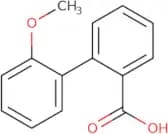
CAS :2'-Methoxybiphenyl-2-carboxylic acid is a benzene carboxylic acid that is used as a precursor for biphenyl-2-carboxylic acids. 2'-Methoxybiphenyl-2-carboxylic acid can be synthesized by refluxing 2'-hydroxybiphenyl with peroxides in the presence of benzene, followed by cyclisation and decarboxylation. Alternatively, 2'-methoxybiphenyl-2-carboxylic acid can be obtained by thermally decomposing 3,4,5,6-tetramethylbenzoic acid. This compound has been shown to react intramolecularly and intermediacy with triphenylene to form triphenyltetracarboxylic acids.Formule :C14H12O3Degré de pureté :Min. 95%Masse moléculaire :228.25 g/mol1-(Bromomethyl)cyclohexan-1-ol
CAS :1-(Bromomethyl)cyclohexan-1-ol is an organic solvent that is used in xerographic processes. It has been shown to be a good binder for active substances and can also be used as a stabilizer in the production of butyral and radical chain resins. This substance has hydroxy groups, which are responsible for the solubility of 1-(bromomethyl)cyclohexan-1-ol in water. It also has two benzyl radicals, which increase the solubility of this substance in organic solvents. This is an active substance with a valency of 2 and 4, so it can bind with up to 8 other molecules.
Formule :C7H13BrODegré de pureté :Min. 95%Masse moléculaire :193.08 g/mol3-Ethylcyclohex-2-en-1-one
CAS :Versatile small molecule scaffold
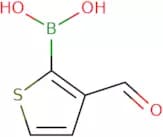
Formule :C8H12ODegré de pureté :Min. 95%Masse moléculaire :124.18 g/mol3-Formyl-2-thienylboronic acid
CAS :3-Formyl-2-thienylboronic acid is an organometallic compound that has a variety of bioactivities. It reacts with boronic acids to form cross-coupled products, which can be used in the synthesis of pharmaceuticals. 3-Formyl-2-thienylboronic acid has been shown to selectively react with a variety of boronic acids and produce highly substituted products. The constant nature of 3-Formyl-2-thienylboronic acid makes it suitable for introducing formyl groups into organic molecules for chemical ligation reactions. This compound is found in nature as an isomeric mixture of two enantiomers: R and S, which are chemically identical but have different biological properties.
Formule :C5H5BO3SDegré de pureté :Min. 95%Masse moléculaire :155.97 g/molEthyl 4-methyl-2-sulfanyl-1,3-thiazole-5-carboxylate
CAS :Versatile small molecule scaffoldFormule :C7H9NO2S2Degré de pureté :Min. 95%Masse moléculaire :203.3 g/molMethyl 2-(ethylamino)benzoate
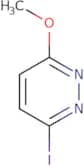
CAS :Methyl 2-(ethylamino)benzoate is a chemical compound that can be synthesized from anilines and aminophenols. It is an intermediate in the synthesis of aminobenzamides and yields high yields when methylated. The reactivity is highly dependent on the reaction conditions. For example, in the presence of strong acids, such as hydrochloric acid, it reacts to form dialkylamines. This compound has also been shown to be useful for the preparation of carbonyl compounds and five-membered rings.Formule :C10H13NO2Degré de pureté :Min. 95%Masse moléculaire :179.22 g/mol3-Iodo-6-methoxypyridazine
CAS :3-Iodo-6-methoxypyridazine is a type of diazine that is also known as 3,6-dimethoxy-N-(1,2,4-triazol-1-ylmethyl)pyridine. It is an agrochemical that has been shown to inhibit the growth of plants by interfering with nitrogen metabolism. The compound inhibits protein synthesis and nucleic acid synthesis through a nucleophilic attack on the nitrogen atom in the heterocycle. This compound has been used as an analog of pyridazine and cinnoline in the synthesis of other natural products.Formule :C5H5IN2ODegré de pureté :Min. 95%Masse moléculaire :236.01 g/mol3,4-Dimethyl-1-phenyl-1H-pyrazolo[3,4-b]pyridin-6-ol
CAS :Versatile small molecule scaffoldFormule :C14H13N3ODegré de pureté :Min. 95%Masse moléculaire :239.27 g/mol2-[(3,4-Dichlorobenzoyl)amino]acetic acid
CAS :Versatile small molecule scaffoldFormule :C9H7Cl2NO3Degré de pureté :Min. 95%Masse moléculaire :248.07 g/mol









![2-(5-chlorobenzo[b]thiophen-3-yl)acetic acid](/_next/image/?url=https%3A%2Fstatic.cymitquimica.com%2Fproducts%2F3D%2Fthumb-webp%2FSAA26630.webp&w=3840&q=75)


![[(6-Chloropyridazin-3-yl)amino]acetic acid](/_next/image/?url=https%3A%2Fstatic.cymitquimica.com%2Fproducts%2F3D%2Fthumb-webp%2FSAA28499.webp&w=3840&q=75)


![5-Methoxy-1H-pyrrolo[3,2-b]pyridine-2-carboxylic acid](/_next/image/?url=https%3A%2Fstatic.cymitquimica.com%2Fproducts%2F3D%2Fthumb-webp%2FSAA28833.webp&w=3840&q=75)
![(1H-Pyrrolo[3,2-b]pyridin-2-yl)methanol](/_next/image/?url=https%3A%2Fstatic.cymitquimica.com%2Fproducts%2F3D%2Fthumb-webp%2FSAA28847.webp&w=3840&q=75)
![1H-Pyrrolo[3,2-b]pyridine-2-carbaldehyde](/_next/image/?url=https%3A%2Fstatic.cymitquimica.com%2Fproducts%2F3D%2Fthumb-webp%2FSAA28852.webp&w=3840&q=75)






![3,4-Dimethyl-1-phenyl-1H-pyrazolo[3,4-b]pyridin-6-ol](/_next/image/?url=https%3A%2Fstatic.cymitquimica.com%2Fproducts%2F3D%2Fthumb-webp%2FSAA32144.webp&w=3840&q=75)
![2-[(3,4-Dichlorobenzoyl)amino]acetic acid](/_next/image/?url=https%3A%2Fstatic.cymitquimica.com%2Fproducts%2F3D%2Fthumb-webp%2FSAA32180.webp&w=3840&q=75)