


Building Blocks
Cette section contient des produits fondamentaux pour la synthèse de composés organiques et biologiques. Building blocks sont les matériaux de départ essentiels utilisés pour construire des molécules complexes à travers diverses réactions chimiques. Ils jouent un rôle crucial dans la découverte de médicaments, la science des matériaux et la recherche chimique. Chez CymitQuimica, nous offrons une gamme diversifiée de building blocks de haute qualité pour soutenir vos recherches innovantes et projets industriels, en vous assurant de disposer des composants essentiels pour une synthèse réussie.
Sous-catégories appartenant à la catégorie "Building Blocks"
- Acides boroniques et dérivés de l'acide boronique(5.778 produits)
- Building Blocks Chiraux(1.243 produits)
- Building Blocks Hydrocarbonés(6.098 produits)
- Building Blocks organiques(61.046 produits)
203857 produits trouvés pour "Building Blocks"
Trier par
Degré de pureté (%)
0
100
|
0
|
50
|
90
|
95
|
100
Methyl 2-{bis[(tert-butoxy)carbonyl]amino}prop-2-enoate
CAS :<p>Versatile small molecule scaffold</p>Formule :C14H23NO6Degré de pureté :Min. 95%Masse moléculaire :301.34 g/molN-Benzyl-2-methyl-4-nitroaniline
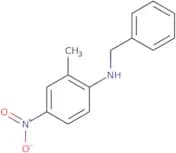
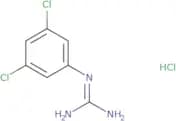
CAS :<p>N-Benzyl-2-methyl-4-nitroaniline is a molecule that belongs to the group of organic compounds. It has a phase transition temperature of -3 degrees Celsius and can be found in the crystal system of orthorhombic. The molecular weight of this compound is 194.16 g/mol, its diameter is 2.03 nm, and it has an activation energy of 3.56 eV. N-Benzyl-2-methyl-4-nitroaniline has a dipole moment and hydrogen bonding capabilities, which are due to the presence of polarizability and viscosity. It also has spontaneous emission properties and optical properties that depend on wavelength.</p>Formule :C14H14N2O2Degré de pureté :Min. 95%Masse moléculaire :242.27 g/molN-(3,5-Dichlorophenyl)guanidine hydrochloride
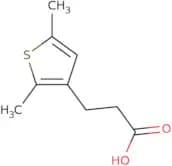
CAS :<p>Versatile small molecule scaffold</p>Formule :C7H8Cl3N3Degré de pureté :Min. 95%Masse moléculaire :240.5 g/mol3-(2,5-Dimethylthiophen-3-yl)propanoic acid
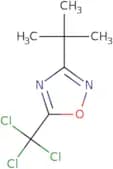
CAS :<p>Versatile small molecule scaffold</p>Formule :C9H12O2SDegré de pureté :Min. 95%Masse moléculaire :184.26 g/mol3-tert-Butyl-5-(trichloromethyl)-1,2,4-oxadiazole
CAS :<p>Versatile small molecule scaffold</p>Formule :C7H9Cl3N2ODegré de pureté :Min. 95%Masse moléculaire :243.5 g/molRef: 3D-BAA20215
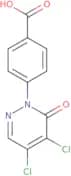
Produit arrêté4-(4,5-Dichloro-6-oxo-1,6-dihydropyridazin-1-yl)benzoic acid
CAS :<p>Versatile small molecule scaffold</p>Formule :C11H6Cl2N2O3Degré de pureté :Min. 95%Masse moléculaire :285.08 g/molRef: 3D-BAA14764
Produit arrêté2-{[3-(Dimethylamino)propyl]sulfanyl}aniline
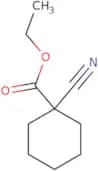
CAS :<p>Versatile small molecule scaffold</p>Formule :C11H18N2SDegré de pureté :Min. 95%Masse moléculaire :210.34 g/mol1-Cyano-cyclohexanecarboxylic acid ethyl ester
CAS :<p>1-Cyano-cyclohexanecarboxylic acid ethyl ester is a synthetic intermediate in the preparation of benzene. It is used as a reagent for the synthesis of methylcyclohexane and other cyclohexanones. The compound can be prepared by reacting chlorinated aliphatic hydrocarbons with carbon dioxide, followed by acidification and decarbonylation. 1-Cyano-cyclohexanecarboxylic acid ethyl ester can be purified by distillation or recrystallization from acetonitrile, chloroform, or benzene.</p>Formule :C10H15NO2Degré de pureté :Min. 95%Masse moléculaire :181.23 g/molRef: 3D-BAA13021
Produit arrêté7-Methyl-[1,2,4]triazolo[1,5-a]pyridin-8-amine
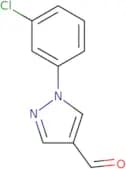
CAS :<p>Versatile small molecule scaffold</p>Formule :C7H8N4Degré de pureté :Min. 95%Masse moléculaire :148.17 g/mol1-(3-Chlorophenyl)-1H-pyrazole-4-carbaldehyde
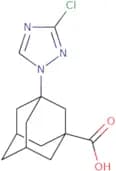
CAS :<p>1-(3-Chlorophenyl)-1H-pyrazole-4-carbaldehyde is a pesticide that acts as a selective insecticide. It is effective against the larval stage of insects, such as the cabbage moth, Plutella xylostella. This compound has been shown to have biological activity against mites and insects with hydrazine hydrochloride and cinnabarinus. 1-(3-Chlorophenyl)-1H-pyrazole-4-carbaldehyde has also been shown to be able to cyclize with hydrazine to form an insecticidal compound.</p>Formule :C10H7ClN2ODegré de pureté :Min. 95%Masse moléculaire :206.63 g/mol3-(3-Chloro-1H-1,2,4-triazol-1-yl)adamantane-1-carboxylic acid
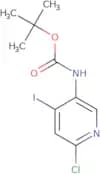
CAS :Versatile small molecule scaffoldFormule :C13H16ClN3O2Degré de pureté :Min. 95%Masse moléculaire :281.74 g/mol(6-Chloro-4-iodopyridin-3-yl)carbamic acid tert-butyl ester
CAS :<p>Versatile small molecule scaffold</p>Formule :C10H12ClIN2O2Degré de pureté :Min. 95%Masse moléculaire :354.57 g/molRef: 3D-ARA77700
Produit arrêté4-Bromo-1-[(4-chlorophenyl)methyl]-1H-pyrazol-3-amine
CAS :<p>Versatile small molecule scaffold</p>Formule :C10H9BrClN3Degré de pureté :Min. 95%Masse moléculaire :286.55 g/molRef: 3D-ARA75316
Produit arrêtétert-Butyl 5-nitroisoindoline-2-carboxylate
CAS :<p>tert-Butyl 5-nitroisoindoline-2-carboxylate is a platelet inhibitor that belongs to the group of antagonists. It has been shown to inhibit human platelets and inhibit the aggregation of fibrinogen. Tert-butyl 5-nitroisoindoline-2-carboxylate has also been shown to have high potency in animal models, but it is not yet known whether it will be effective in humans. The drug has been shown to be a potent antagonist at the platelet P2Y12 receptor, which mediates platelet aggregation and activation, as well as inhibiting ADP-, collagen-, thrombin-, and epinephrine-induced aggregation. Tert-butyl 5-nitroisoindoline-2-carboxylate may also act as a surrogate for agonists or mimetics of the P2Y12 receptor.</p>Formule :C13H16N2O4Degré de pureté :Min. 95%Masse moléculaire :264.28 g/mol2-Methyl-1H,5H-[1,2,4]triazolo[1,5-c]quinazoline-5-thione
CAS :<p>Versatile small molecule scaffold</p>Formule :C10H8N4SDegré de pureté :Min. 95%Masse moléculaire :216.26 g/mol2,2,2-Trifluoroethyl N-(furan-2-ylmethyl)carbamate
CAS :<p>Versatile small molecule scaffold</p>Formule :C8H8F3NO3Degré de pureté :Min. 95%Masse moléculaire :223.15 g/molRef: 3D-AKB15718
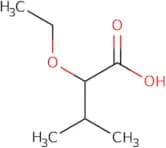
Produit arrêté2-Ethoxy-3-methylbutanoic acid
CAS :<p>Versatile small molecule scaffold</p>Formule :C7H14O3Degré de pureté :Min. 95%Masse moléculaire :146.18 g/molRef: 3D-AJB85637
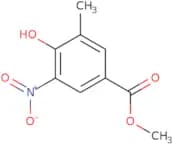
Produit arrêtéBenzoic acid, 4-hydroxy-3-methyl-5-nitro-, methyl ester
CAS :<p>Versatile small molecule scaffold</p>Formule :C9H9NO5Degré de pureté :Min. 95%Masse moléculaire :211.17 g/molRef: 3D-AJB33509
Produit arrêté3-[(4-Aminopiperidin-1-yl)methyl]benzonitrile
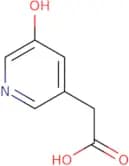
CAS :<p>Versatile small molecule scaffold</p>Formule :C13H17N3Degré de pureté :Min. 95%Masse moléculaire :215.29 g/mol2-(5-Hydroxypyridin-3-yl)acetic acid
CAS :<p>Versatile small molecule scaffold</p>Formule :C7H7NO3Degré de pureté :Min. 95%Masse moléculaire :153.14 g/mol2-[4-(4-Methoxyphenoxy)phenyl]ethan-1-amine hydrochloride
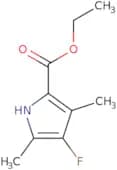
CAS :<p>Versatile small molecule scaffold</p>Formule :C15H18ClNO2Degré de pureté :Min. 95%Masse moléculaire :279.76 g/mol4-Fluoro-3,5-dimethyl-1H-pyrrole-2-carboxylic acid ethyl ester
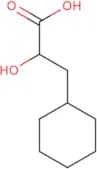
CAS :<p>Versatile small molecule scaffold</p>Formule :C9H12FNO2Degré de pureté :Min. 95%Masse moléculaire :185.2 g/mol3-Cyclohexyl-2-hydroxypropanoic acid
CAS :<p>Versatile small molecule scaffold</p>Formule :C9H16O3Degré de pureté :Min. 95%Masse moléculaire :172.22 g/molRef: 3D-ABA40054
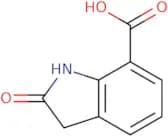
Produit arrêté2-oxo-Indoline-7-carboxylic acid
CAS :<p>2-Oxo-indoline-7-carboxylic acid is an antiinflammatory agent that belongs to the class of hydrazines. It has been shown to have antiinflammatory activity in stepwise manner, which starts with a hydrazine group attacking the carbonyl group of a carboxylic acid and forming a new heterocyclic ring. 2-Oxo-indoline-7-carboxylic acid also has esterase inhibitory effect and can be used for the treatment of inflammatory diseases such as rheumatoid arthritis.</p>Formule :C9H7NO3Degré de pureté :Min. 95%Masse moléculaire :177.16 g/molRef: 3D-ABA36943
Produit arrêté2-Benzyl-2-methyl-1,3-thiazolidine
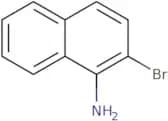
CAS :<p>Versatile small molecule scaffold</p>Formule :C11H12N2O4Degré de pureté :Min. 95%Masse moléculaire :236.22 g/mol1-Amino-2-bromonaphthalene
CAS :<p>1-Amino-2-bromonaphthalene is a synthetic compound that is used as a recyclable reagent. It has been shown to have an inhibitory effect on cancer cells and tissue, stabilizing the DNA molecule and preventing it from being broken down. 1-Amino-2-bromonaphthalene also has affinity for cancer cells and stabilizes the cell membrane by inhibiting phosphonate degradation. The drug has been envisaged as a potential candidate for cancer therapy due to its ability to stabilize the cell membrane and inhibit phosphonates, which are involved in cell division.</p>Formule :C10H8BrNDegré de pureté :Min. 95%Masse moléculaire :222.09 g/molRef: 3D-AAA77114
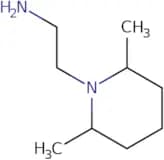
Produit arrêté2-(2,6-Dimethylpiperidin-1-yl)ethan-1-amine
CAS :<p>Versatile small molecule scaffold</p>Formule :C9H20N2Degré de pureté :Min. 95%Masse moléculaire :156.27 g/mol2-(Cyclopent-3-en-1-yl)acetic acid
CAS :<p>Versatile small molecule scaffold</p>Formule :C7H10O2Degré de pureté :Min. 95%Masse moléculaire :126.15 g/mol2-(2,2,3,3,3-Pentafluoropropoxy)ethan-1-ol
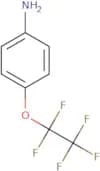
CAS :<p>Versatile small molecule scaffold</p>Formule :C5H7F5O2Degré de pureté :Min. 95%Masse moléculaire :194.1 g/mol4-(Perfluoroethoxy)aniline
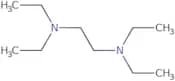
CAS :<p>Versatile small molecule scaffold</p>Formule :C8H6F5NODegré de pureté :Min. 95%Masse moléculaire :227.13 g/molN,N,N',N'-Tetraethylethylenediamine
CAS :<p>N,N,N',N'-Tetraethylethylenediamine is a chemical compound that is used in the production of polyurethane. It can be synthesized from ethylenediamine by reaction with a trialkyl orthoformate and an acid catalyst. This chemical has a hydroxyl group and two asymmetric nitrogen atoms. The steric interactions between the hydrogen atom on the nitrogen atom and the three methyl groups on one carbon atom are responsible for its kinetic data. Tetraethylethylenediamine has been shown to react with copper complexes to form new palladium complexes. These reactions are catalyzed by serine proteases such as subtilisin and pepsin. N,N,N',N'-Tetraethylethylenediamine is also used as a cross-linking agent in polyurethanes. Cross-linked polyurethanes have improved mechanical properties and resistance to abrasion compared</p>Formule :C10H24N2Degré de pureté :Min. 95%Masse moléculaire :172.32 g/molRef: 3D-AAA15077
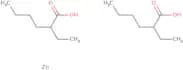
Produit arrêtéEthylhexanoic acid zinc
CAS :<p>Ethylhexanoic acid zinc salt is a viscosity-increasing agent that is used in the production of high-viscosity polymers. It is a carboxylate salt of ethyl hexanoic acid and zinc. The reaction of ethylhexane with zirconium oxide produces a viscous liquid with a strong cationic polymerization activity. This product reacts with diphenyl ether and aromatic hydrocarbons to form solid products. The reaction with calcium stearate, an ester of glycerol, results in the formation of particles that are insoluble in water but soluble in organic solvents. Ethylhexane also reacts with ethylene diamine to form methyl myristate, which has kinetic data available for it.</p>Formule :C16H30O4ZnDegré de pureté :Min. 95%Masse moléculaire :351.8 g/molRef: 3D-AAA13653
Produit arrêté2-Phenyl-3-butyn-2-ol
CAS :<p>2-Phenyl-3-butyn-2-ol (2PB2) is an organic compound that has been shown to inhibit the growth of cancer cells in vitro. It is a structural analogue of phenylacetate, which inhibits cell proliferation by inducing apoptosis. 2PB2 induces regression by altering the functional theory of population growth. It is also an isomeric compound and its structure activity relationship has been studied using logistic regression. 2PB2 is protonated at acidic pH, but not at physiological pH, which may be due to its carbinol group. This compound also has a lipase inhibitor effect and was found to interact with molecular descriptors that are involved in cancer cell proliferation.</p>Formule :C10H10ODegré de pureté :Min. 95%Masse moléculaire :146.19 g/molOctanenitrile
CAS :<p>Octanenitrile is a colorless liquid with a boiling point of 29.8 °C. It is soluble in water, ether, and chloroform, but insoluble in hexane. Octanenitrile has been shown to have an effect on the phase transition temperature by using deuterium isotopes. This compound can also be used to study the deuterium isotope effect on autoimmune diseases and cancer. The amine group in octanenitrile can be used to synthesize methylamines, one of which is malonic acid. The ph optimum for octanenitrile is 7-8. Octanenitrile reacts with hydrochloric acid to produce hydrogen chloride gas and dipropyl ether (CH3-CH2-O-CH3). Octanenitrile also has intramolecular hydrogen bonding that stabilizes the molecule, reducing activation energies for subsequent reactions such as fatty acid synthesis or polyunsaturated fatty acid synthesis</p>Formule :C8H15NDegré de pureté :Min. 95%Masse moléculaire :125.21 g/molRef: 3D-AAA12412
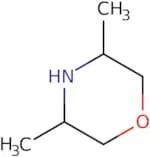
Produit arrêté3,5-Dimethylmorpholine
CAS :<p>3,5-Dimethylmorpholine is a chiral amide that has anticancer activity. It is a linker that can be used to form amide bonds between two molecules. 3,5-Dimethylmorpholine has been shown to have labile proton and cellular reactivity in vitro. The reaction selectivity of 3,5-dimethylmorpholine can be improved by using piperidine as the solvent. This compound exhibits anticancer activity against CDK4/6 (cyclin-dependent kinase 4/6) inhibitor-resistant cell lines. It also exhibits anticancerc activity in vitro against cells with high levels of cdk4/6 inhibition.</p>Formule :C6H13NODegré de pureté :Min. 95%Masse moléculaire :115.17 g/molRef: 3D-AAA12357
Produit arrêté7-(Trifluoromethyl)benzo[b]thiophene-2-carboxylic acid
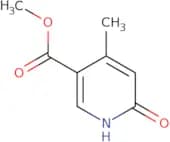
CAS :<p>Versatile small molecule scaffold</p>Formule :C10H5F3O2SDegré de pureté :Min. 95%Masse moléculaire :246.2 g/molMethyl 4-methyl-6-oxo-1,6-dihydropyridine-3-carboxylate
CAS :<p>Versatile small molecule scaffold</p>Formule :C8H9NO3Degré de pureté :Min. 95%Masse moléculaire :167.16 g/molRef: 3D-ZYB46502
Produit arrêté2-(2-Oxo-1,3-oxazolidin-5-yl)acetonitrile
CAS :<p>Versatile small molecule scaffold</p>Formule :C5H6N2O2Degré de pureté :Min. 95%Masse moléculaire :126.11 g/mol4,4,6,6-Tetramethyl-6,7-dihydro-4H-pyrano[4,3-d]thiazol-2-amine
CAS :<p>Versatile small molecule scaffold</p>Formule :C10H16N2OSDegré de pureté :Min. 95%Masse moléculaire :212.31 g/molRef: 3D-ZXC43392
Produit arrêtéMethyl 2-(chloromethyl)cyclohexane-1-carboxylate
CAS :<p>Versatile small molecule scaffold</p>Formule :C9H15ClO2Degré de pureté :Min. 95%Masse moléculaire :190.67 g/mol2,4-Dichloro-7-fluoroquinoline
CAS :<p>Versatile small molecule scaffold</p>Formule :C9H4Cl2FNDegré de pureté :Min. 95%Masse moléculaire :216.04 g/mol7-Fluoro-1,2,3,4-tetrahydroquinoline-4-carboxylic acid
CAS :<p>Versatile small molecule scaffold</p>Formule :C10H10FNO2Degré de pureté :Min. 95%Masse moléculaire :195.19 g/mol1-[5-(Trifluoromethyl)pyridin-2-yl]azetidin-3-ol
CAS :<p>Versatile small molecule scaffold</p>Formule :C9H9F3N2ODegré de pureté :Min. 95%Masse moléculaire :218.18 g/mol2-Methyl-N-(pentan-3-yl)pyrazolo[1,5-a]quinazolin-5-amine
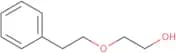
CAS :<p>Versatile small molecule scaffold</p>Formule :C16H20N4Degré de pureté :Min. 95%Masse moléculaire :268.36 g/mol2-(2-Phenylethoxy)ethan-1-ol
CAS :<p>Versatile small molecule scaffold</p>Formule :C10H14O2Degré de pureté :Min. 95%Masse moléculaire :166.22 g/molRef: 3D-ZCA12191
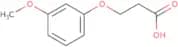
Produit arrêté3-(3-Methoxyphenoxy)propionic Acid
CAS :<p>Versatile small molecule scaffold</p>Formule :C10H12O4Degré de pureté :Min. 95%Masse moléculaire :196.2 g/moltert-Butyl N-{6-azaspiro[3.5]nonan-8-yl}carbamate
CAS :<p>Versatile small molecule scaffold</p>Formule :C13H24N2O2Degré de pureté :Min. 95%Masse moléculaire :240.34 g/mol2-Hydroxy-1,8-naphthyridine-4-carboxylic acid
CAS :<p>Versatile small molecule scaffold</p>Formule :C9H6N2O3Degré de pureté :Min. 95%Masse moléculaire :190.16 g/mol3-Amino-2-(difluoromethyl)benzoic acid
CAS :<p>Versatile small molecule scaffold</p>Formule :C8H7F2NO2Degré de pureté :Min. 95%Masse moléculaire :187.14 g/molrac-(4aR,7aS)-1H,2H,4aH,5H,7H,7aH-Furo[3,4-b]pyridine hydrochloride
CAS :<p>Versatile small molecule scaffold</p>Formule :C7H12ClNODegré de pureté :Min. 95%Masse moléculaire :161.6 g/mol
![Methyl 2-{bis[(tert-butoxy)carbonyl]amino}prop-2-enoate](/_next/image/?url=https%3A%2Fstatic.cymitquimica.com%2Fproducts%2F3D%2Fthumb-webp%2FBIA33862.webp&w=3840&q=75)

![2-{[3-(Dimethylamino)propyl]sulfanyl}aniline](/_next/image/?url=https%3A%2Fstatic.cymitquimica.com%2Fproducts%2F3D%2Fthumb-webp%2FBAA13477.webp&w=3840&q=75)
![7-Methyl-[1,2,4]triazolo[1,5-a]pyridin-8-amine](/_next/image/?url=https%3A%2Fstatic.cymitquimica.com%2Fproducts%2F3D%2Fthumb-webp%2FAWB61778.webp&w=3840&q=75)
![4-Bromo-1-[(4-chlorophenyl)methyl]-1H-pyrazol-3-amine](/_next/image/?url=https%3A%2Fstatic.cymitquimica.com%2Fproducts%2F3D%2Fthumb-webp%2FARA75316.webp&w=3840&q=75)

![2-Methyl-1H,5H-[1,2,4]triazolo[1,5-c]quinazoline-5-thione](/_next/image/?url=https%3A%2Fstatic.cymitquimica.com%2Fproducts%2F3D%2Fthumb-webp%2FAKB16035.webp&w=3840&q=75)

![3-[(4-Aminopiperidin-1-yl)methyl]benzonitrile](/_next/image/?url=https%3A%2Fstatic.cymitquimica.com%2Fproducts%2F3D%2Fthumb-webp%2FAEB21223.webp&w=3840&q=75)
![2-[4-(4-Methoxyphenoxy)phenyl]ethan-1-amine hydrochloride](/_next/image/?url=https%3A%2Fstatic.cymitquimica.com%2Fproducts%2F3D%2Fthumb-webp%2FAEA95600.webp&w=3840&q=75)





![7-(Trifluoromethyl)benzo[b]thiophene-2-carboxylic acid](/_next/image/?url=https%3A%2Fstatic.cymitquimica.com%2Fproducts%2F3D%2Fthumb-webp%2FAXA99866.webp&w=3840&q=75)

![4,4,6,6-Tetramethyl-6,7-dihydro-4H-pyrano[4,3-d]thiazol-2-amine](/_next/image/?url=https%3A%2Fstatic.cymitquimica.com%2Fproducts%2F3D%2Fthumb-webp%2FZXC43392.webp&w=3840&q=75)


![1-[5-(Trifluoromethyl)pyridin-2-yl]azetidin-3-ol](/_next/image/?url=https%3A%2Fstatic.cymitquimica.com%2Fproducts%2F3D%2Fthumb-webp%2FZJB83239.webp&w=3840&q=75)
![2-Methyl-N-(pentan-3-yl)pyrazolo[1,5-a]quinazolin-5-amine](/_next/image/?url=https%3A%2Fstatic.cymitquimica.com%2Fproducts%2F3D%2Fthumb-webp%2FZJB65233.webp&w=3840&q=75)
![tert-Butyl N-{6-azaspiro[3.5]nonan-8-yl}carbamate](/_next/image/?url=https%3A%2Fstatic.cymitquimica.com%2Fproducts%2F3D%2Fthumb-webp%2FYXC97772.webp&w=3840&q=75)

![rac-(4aR,7aS)-1H,2H,4aH,5H,7H,7aH-Furo[3,4-b]pyridine hydrochloride](/_next/image/?url=https%3A%2Fstatic.cymitquimica.com%2Fproducts%2F3D%2Fthumb-webp%2FYPD28574.webp&w=3840&q=75)