Building Blocks
Cette section contient des produits fondamentaux pour la synthèse de composés organiques et biologiques. Building blocks sont les matériaux de départ essentiels utilisés pour construire des molécules complexes à travers diverses réactions chimiques. Ils jouent un rôle crucial dans la découverte de médicaments, la science des matériaux et la recherche chimique. Chez CymitQuimica, nous offrons une gamme diversifiée de building blocks de haute qualité pour soutenir vos recherches innovantes et projets industriels, en vous assurant de disposer des composants essentiels pour une synthèse réussie.
Sous-catégories appartenant à la catégorie "Building Blocks"
- Acides boroniques et dérivés de l'acide boronique(5.778 produits)
- Building Blocks Chiraux(1.243 produits)
- Building Blocks Hydrocarbonés(6.099 produits)
- Building Blocks organiques(61.038 produits)
205376 produits trouvés pour "Building Blocks"
Trier par
Degré de pureté (%)
0
100
|
0
|
50
|
90
|
95
|
100
(3S,8aS)-3-(Hydroxymethyl)-octahydropyrrolo[1,2-a]piperazine-1,4-dione
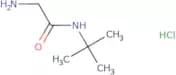
CAS :Versatile small molecule scaffoldFormule :C8H12N2O3Degré de pureté :Min. 95%Masse moléculaire :184.19 g/mol2-Amino-N-tert-butyl-acetamidehydrochloride
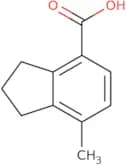
CAS :Versatile small molecule scaffoldFormule :C6H15ClN2ODegré de pureté :Min. 95%Masse moléculaire :166.65 g/mol7-Methyl-2,3-dihydro-1H-indene-4-carboxylic acid
CAS :Versatile small molecule scaffoldFormule :C11H12O2Degré de pureté :Min. 95%Masse moléculaire :176.21 g/mol2-[(1,1-Dioxo-1,2-benzothiazol-3-yl)amino]acetic acid
CAS :Versatile small molecule scaffoldFormule :C9H8N2O4SDegré de pureté :Min. 95%Masse moléculaire :240.24 g/mol4-[(1,1-Dioxo-1,2-benzothiazol-3-yl)amino]butanoic acid
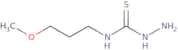
CAS :Produit contrôlé4-[(1,1-Dioxo-1,2-benzothiazol-3-yl)amino]butanoic acid is a ligand of the nicotinic acetylcholine receptor (nAChR). It has been shown to inhibit or activate nAChRs depending on the receptor subtype. 4-[(1,1-Dioxo-1,2-benzothiazol-3-yl)amino]butanoic acid has also been shown to be an effective inhibitor of the sodium channel. 4-[(1,1-Dioxo-1,2-benzothiazol-3-yl)amino]butanoic acid is a peptide with a molecular weight of 269.30 Da and purity greater than 99%. This compound is a research tool that can be used as an antibody for cell biology and immunology experiments.Formule :C11H12N2O4SDegré de pureté :Min. 95%Masse moléculaire :268.29 g/mol4-(3-Methoxypropyl)-3-thiosemicarbazide
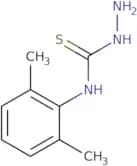
CAS :Versatile small molecule scaffoldFormule :C5H13N3OSDegré de pureté :Min. 95%Masse moléculaire :163.24 g/mol4-(2,6-Dimethylphenyl)-3-thiosemicarbazide
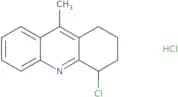
CAS :Versatile small molecule scaffoldFormule :C9H13N3SDegré de pureté :Min. 95%Masse moléculaire :195.28 g/mol4-Chloro-9-methyl-1,2,3,4-tetrahydroacridine
CAS :Versatile small molecule scaffold
Formule :C14H15Cl2NDegré de pureté :Min. 95%Masse moléculaire :268.2 g/molC -(4-Methyl-thiazol-2-yl)-methylamine dihydrochloride
CAS :Versatile small molecule scaffoldFormule :C5H10Cl2N2SDegré de pureté :Min. 95%Masse moléculaire :201.12 g/mol1-(2,2-Dimethylpropanoyl)piperidin-4-one
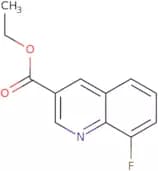
CAS :Produit contrôléVersatile small molecule scaffoldFormule :C10H17NO2Degré de pureté :Min. 95%Masse moléculaire :183.25 g/molEthyl 8-Fluoroquinoline-3-carboxylate
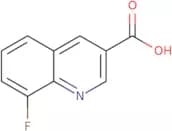
CAS :Versatile small molecule scaffoldFormule :C12H10FNO2Degré de pureté :Min. 95%Masse moléculaire :219.21 g/mol8-Fluoroquinoline-3-carboxylic acid
CAS :Versatile small molecule scaffoldFormule :C10H6FNO2Degré de pureté :Min. 95%Masse moléculaire :191.16 g/mol8-Chloroquinoline-3-carboxylic acid
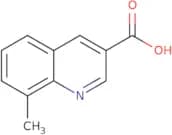
CAS :8-Chloroquinoline-3-carboxylic acid is an industrial chemical that is used as a pharmaceutical. It is also an antibacterial agent that has been shown to be effective against sulfite-reducing bacteria, such as Clostridium difficile and Helicobacter pylori. This drug inhibits bacterial growth by damaging the cell membrane and preventing the production of essential proteins for DNA replication. 8-Chloroquinoline-3-carboxylic acid is produced by treating quinoline with chlorination, followed by reaction with sulfuryl chloride or quinoline carboxylic acid.Formule :C10H6ClNO2Degré de pureté :Min. 95%Masse moléculaire :207.61 g/mol8-Methyl-quinoline-3-carboxylic acid
CAS :Versatile small molecule scaffoldFormule :C11H9NO2Degré de pureté :Min. 95%Masse moléculaire :187.2 g/mol8-Fluoro-3-quinolinecarbonitrile
CAS :Versatile small molecule scaffoldFormule :C10H5FN2Degré de pureté :Min. 95%Masse moléculaire :172.16 g/mol4-oxo-1,4-Dihydroquinoline-3-carbonitrile
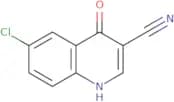
CAS :4-oxo-1,4-Dihydroquinoline-3-carbonitrile (4ODQ) is a synthetic compound that is acidic in nature. It hydrolyzes in acidic conditions to form a carboxylic acid and ammonia. 4ODQ can also react with amines to form azides, chloride to form chloramines, methyl anthranilate to form piperidines, trifluoride to form triflates, and morpholine to form morpholines. The chemical structure of 4ODQ consists of an anthranilate moiety which has been decarboxylated and an amine group which has been enaminated. 4ODQ inhibits the growth of cancer cells by binding to the ATP binding site on the enzyme kinase B (BRAF), thereby preventing phosphorylation of downstream proteins that are involved in cell proliferation. This inhibition leads to apoptosis or programmed cell death.Formule :C10H6N2ODegré de pureté :Min. 95%Masse moléculaire :170.17 g/mol6-Chloro-4-oxo-1,4-dihydroquinoline-3-carbonitrile
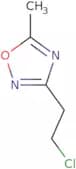
CAS :Versatile small molecule scaffoldFormule :C10H5ClN2ODegré de pureté :Min. 95%Masse moléculaire :204.61 g/mol3-(2-Chloroethyl)-5-methyl-1,2,4-oxadiazole
CAS :Versatile small molecule scaffold
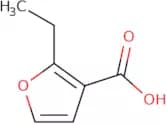
Formule :C5H7ClN2ODegré de pureté :Min. 95%Masse moléculaire :146.57 g/mol2-Ethylfuran-3-carboxylic acid
CAS :Versatile small molecule scaffold
Formule :C7H8O3Degré de pureté :Min. 95%Masse moléculaire :140.14 g/molMethyl 4-methylidenecyclohexane-1-carboxylate
CAS :Versatile small molecule scaffoldFormule :C9H14O2Degré de pureté :Min. 95%Masse moléculaire :154.21 g/mol1-Amino-2-(2-chlorophenyl)propan-2-ol
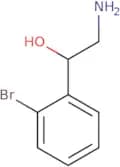
CAS :Versatile small molecule scaffoldFormule :C9H12ClNODegré de pureté :Min. 95%Masse moléculaire :185.65 g/mol2-amino-1-(2-bromophenyl)ethan-1-ol
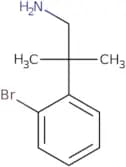
CAS :Versatile small molecule scaffoldFormule :C8H10BrNODegré de pureté :Min. 95%Masse moléculaire :216.1 g/mol2-(2-Bromophenyl)-2-methylpropan-1-amine
CAS :Versatile small molecule scaffoldFormule :C10H14BrNDegré de pureté :Min. 95%Masse moléculaire :228.13 g/mol1-[(Oxolan-2-yl)methyl]piperidin-4-one
CAS :Versatile small molecule scaffoldFormule :C10H17NO2Degré de pureté :Min. 95%Masse moléculaire :183.25 g/mol3-Methyl-[1,2]thiazolo[5,4-b]pyridine
CAS :Versatile small molecule scaffold
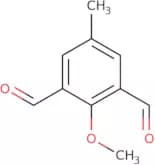
Formule :C7H6N2SDegré de pureté :Min. 95%Masse moléculaire :150.2 g/mol2-Methoxy-5-methylbenzene-1,3-dicarbaldehyde
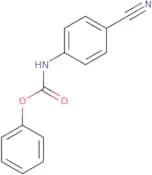
CAS :2-Methoxy-5-methylbenzene-1,3-dicarbaldehyde (MMDA) is a reactive molecule that has been used for cross linking and insolubilizing polymers. It is an important intermediate in the synthesis of methyl methacrylate, which is used in the production of acrylic adhesives and coatings. 2-Methoxy-5-methylbenzene-1,3-dicarbaldehyde can be used as a monomer or comonomer to produce polymers with various functionalities. This molecule undergoes bifunctional reactions with acceptor molecules such as phenols, amines and alcohols. 2-Methoxy-5-methylbenzene-1,3-dicarbaldehyde reacts with triplet oxygen to form singlet oxygen. This reaction results in the formation of reactive radicals that can cause oxidation reactions on the acceptor molecule. Monitoring this process is possible through monitoring the acceptFormule :C10H10O3Degré de pureté :Min. 95%Masse moléculaire :178.18 g/molPhenyl-N-(4-cyanophenyl)carbamate
CAS :Versatile small molecule scaffoldFormule :C14H10N2O2Degré de pureté :Min. 95%Masse moléculaire :238.24 g/mol2-(Chloromethyl)-[1,2,4]triazolo[1,5-a]pyridine
CAS :Versatile small molecule scaffoldFormule :C7H6ClN3Degré de pureté :Min. 95%Masse moléculaire :167.59 g/mol1-Bromospiro[2.3]hexane
CAS :Versatile small molecule scaffold
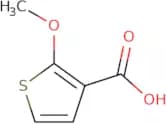
Formule :C6H9BrDegré de pureté :Min. 95%Masse moléculaire :161.04 g/mol2-Methoxythiophene-3-carboxylic acid
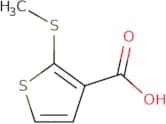
CAS :Versatile small molecule scaffoldFormule :C6H6O3SDegré de pureté :Min. 95%Masse moléculaire :158.18 g/mol2-(Methylsulfanyl)thiophene-3-carboxylic acid
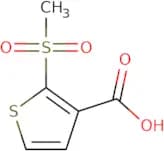
CAS :Versatile small molecule scaffoldFormule :C6H6O2S2Degré de pureté :Min. 95%Masse moléculaire :174.2 g/mol2-Methanesulfonylthiophene-3-carboxylic acid
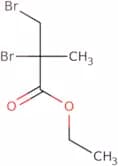
CAS :Versatile small molecule scaffoldFormule :C6H6O4S2Degré de pureté :Min. 95%Masse moléculaire :206.2 g/molEthyl 2,3-dibromo-2-methylpropanoate
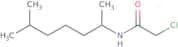
CAS :Versatile small molecule scaffoldFormule :C6H10Br2O2Degré de pureté :Min. 95%Masse moléculaire :273.95 g/mol2-Chloro-N-(6-methylheptan-2-yl)acetamide
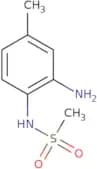
CAS :Versatile small molecule scaffoldFormule :C10H20ClNODegré de pureté :Min. 95%Masse moléculaire :205.72 g/molN-(2-Amino-4-methylphenyl)methanesulfonamide
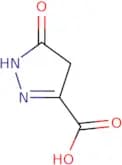
CAS :Versatile small molecule scaffoldFormule :C8H12N2O2SDegré de pureté :Min. 95%Masse moléculaire :200.26 g/mol5-Oxo-4,5-dihydro-1H-pyrazole-3-carboxylic acid
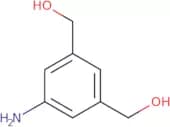
CAS :Versatile small molecule scaffoldFormule :C4H4N2O3Degré de pureté :Min. 95%Masse moléculaire :128.09 g/mol5-Amino-1,3-dihydroxymethylbenzene
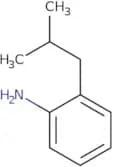
CAS :5-Amino-1,3-dihydroxymethylbenzene is a ligand that binds to acetyl coenzyme A. It has been used in the cross-coupling of aryl halides with alkyl or aryl Grignard reagents. 5-Amino-1,3-dihydroxymethylbenzene is recycled and used as a ligand in reaction conditions that are not compatible with other ligands. The efficiency of this method is dependent on the use of magnetic nanoparticles for separation and filtering. 5-Amino-1,3-dihydroxymethylbenzene can be linked to diphosphine ligands by heating and stirring in order to create an efficient catalyst system.Formule :C8H11NO2Degré de pureté :Min. 95%Masse moléculaire :153.18 g/mol2-(2-Methylpropyl)aniline
CAS :2-(2-Methylpropyl)aniline is chemically related to nitroxyl, which is a reactive radical. 2-(2-Methylpropyl)aniline is used as an intermediate in the preparation of other chemical compounds. It can be found in solvents such as nitrobenzene and is prepared by alkylation of 2-methylpropanal with formaldehyde. This chemical has been shown to react with nuclei to form radical intermediates that are then stabilized by anion radicals. These reactions lead to the formation of reaction products such as hydrocarbons.Formule :C10H15NDegré de pureté :Min. 95%Masse moléculaire :149.24 g/mol2-Bromo-1-isocyanato-4-methylbenzene
CAS :Versatile small molecule scaffoldFormule :C8H6BrNODegré de pureté :Min. 95%Masse moléculaire :212.04 g/mol2-Isocyanato-1,1-dimethoxyethane
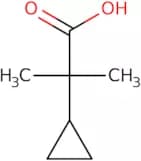
CAS :Versatile small molecule scaffoldFormule :C5H9NO3Degré de pureté :Min. 95%Masse moléculaire :131.13 g/mol2-Cyclopropyl-2-methylpropanoic acid
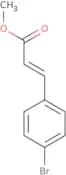
CAS :Versatile small molecule scaffoldFormule :C7H12O2Degré de pureté :Min. 95%Masse moléculaire :128.17 g/mol(E)-Methyl 3-(4-bromophenyl)acrylate
CAS :(E)-Methyl 3-(4-bromophenyl)acrylate is an isoenzyme that belongs to the group of cinnamic acid derivatives. It has been shown to induce apoptotic cell death in human ovarian carcinoma cells. This compound inhibits the production of histones and DNA, which may lead to the inhibition of transcription and replication of mRNA. (E)-Methyl 3-(4-bromophenyl)acrylate also induces modifications in proteins, such as acetylation, which may account for its apoptotic effects. Research has shown that (E)-methyl 3-(4-bromophenyl)acrylate has equitoxic effects on aryl halides and aryl chlorides.Formule :C10H9BrO2Degré de pureté :Min. 95%Masse moléculaire :241.08 g/mol1H-1,3-Benzodiazole-5,6-diamine
CAS :1,3-Benzodiazole-5,6-diamine is an antimicrobial agent that belongs to the group of benzimidazoles and has antifungal activities. It can be used for the treatment of infections caused by bacteria or fungi. 1,3-Benzodiazole-5,6-diamine binds to DNA gyrase and topoisomerase IV and inhibits bacterial growth. This drug also inhibits the synthesis of proteins in fungi and has been shown to inhibit the production of ergosterol, which is a major component of fungal cell membranes.Formule :C7H8N4Degré de pureté :Min. 95%Masse moléculaire :148.17 g/mol1-(2-Chloroethyl)-2-methyl-1H-imidazole hydrochloride
CAS :Versatile small molecule scaffoldFormule :C6H10Cl2N2Degré de pureté :Min. 95%Masse moléculaire :181.1 g/mol5-(Isocyanatomethyl)-1,3-benzodioxole
CAS :Versatile small molecule scaffold
Formule :C9H7NO3Degré de pureté :Min. 95%Masse moléculaire :177.16 g/mol3-Methyl-1-(phenylsulfanyl)butan-2-one
CAS :Versatile small molecule scaffoldFormule :C11H14OSDegré de pureté :Min. 95%Masse moléculaire :194.3 g/mol1-Methyl-1H,4H,5H,6H,7H-pyrazolo[3,4-c]pyridin-3-ol
CAS :Versatile small molecule scaffoldFormule :C7H11N3ODegré de pureté :Min. 95%Masse moléculaire :153.18 g/mol1-tert-Butyl 4-methyl 1,2,3,4-tetrahydropyridine-1,4-dicarboxylate
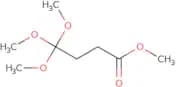
CAS :Versatile small molecule scaffoldFormule :C12H19NO4Degré de pureté :Min. 95%Masse moléculaire :241.28 g/molMethyl 4,4,4-trimethoxybutanoate
CAS :Versatile small molecule scaffoldFormule :C8H16O5Degré de pureté :Min. 95%Masse moléculaire :192.21 g/molMethyl 3-phenylfuran-2-carboxylate
CAS :Methyl 3-phenylfuran-2-carboxylate is a synthetic analogues of the natural product orobanche. It has been shown to have large-scale, synthetic and linkage properties. Methyl 3-phenylfuran-2-carboxylate has high activities against orobanche and other parasitic plants, such as striga and germination. Moreover, this compound is an analogue of the natural product orobanche.
Formule :C12H10O3Degré de pureté :Min. 95%Masse moléculaire :202.21 g/mol
![(3S,8aS)-3-(Hydroxymethyl)-octahydropyrrolo[1,2-a]piperazine-1,4-dione](/_next/image/?url=https%3A%2Fstatic.cymitquimica.com%2Fproducts%2F3D%2Fthumb-webp%2FWCA01804.webp&w=3840&q=75)

![2-[(1,1-Dioxo-1,2-benzothiazol-3-yl)amino]acetic acid](/_next/image/?url=https%3A%2Fstatic.cymitquimica.com%2Fproducts%2F3D%2Fthumb-webp%2FWCA05477.webp&w=3840&q=75)
![4-[(1,1-Dioxo-1,2-benzothiazol-3-yl)amino]butanoic acid](/_next/image/?url=https%3A%2Fstatic.cymitquimica.com%2Fproducts%2F3D%2Fthumb-webp%2FWCA05478.webp&w=3840&q=75)







![1-[(Oxolan-2-yl)methyl]piperidin-4-one](/_next/image/?url=https%3A%2Fstatic.cymitquimica.com%2Fproducts%2F3D%2Fthumb-webp%2FWCA10610.webp&w=3840&q=75)
![3-Methyl-[1,2]thiazolo[5,4-b]pyridine](/_next/image/?url=https%3A%2Fstatic.cymitquimica.com%2Fproducts%2F3D%2Fthumb-webp%2FWCA10934.webp&w=3840&q=75)
![2-(Chloromethyl)-[1,2,4]triazolo[1,5-a]pyridine](/_next/image/?url=https%3A%2Fstatic.cymitquimica.com%2Fproducts%2F3D%2Fthumb-webp%2FWCA13994.webp&w=3840&q=75)
![1-Bromospiro[2.3]hexane](/_next/image/?url=https%3A%2Fstatic.cymitquimica.com%2Fproducts%2F3D%2Fthumb-webp%2FWCA15328.webp&w=3840&q=75)




![1-Methyl-1H,4H,5H,6H,7H-pyrazolo[3,4-c]pyridin-3-ol](/_next/image/?url=https%3A%2Fstatic.cymitquimica.com%2Fproducts%2F3D%2Fthumb-webp%2FWCA23324.webp&w=3840&q=75)