Building Blocks
Sous-catégories appartenant à la catégorie "Building Blocks"
- Acides boroniques et dérivés de l'acide boronique(5.778 produits)
- Building Blocks Chiraux(1.243 produits)
- Building Blocks Hydrocarbonés(6.099 produits)
- Building Blocks organiques(61.038 produits)
205376 produits trouvés pour "Building Blocks"
6-Chlorohexanol
CAS :6-Chlorohexanol is a fatty alcohol with a hydroxyl group. It is soluble in water and has a phase transition temperature of -114°C. 6-Chlorohexanol can be synthesized by reacting 2,6-dichlorophenol with hydrochloric acid and sodium hydroxide in the presence of azobenzene. The reaction solution is then heated to about 300°C for 3 hours. 6-Chlorohexanol is used as a model system for studying the photochemical reactions of fatty acids. Hydroxy groups are susceptible to light exposure, which leads to the formation of carbonyl compounds such as malonic acid and chloride monomers.Formule :C6H13ClODegré de pureté :Min. 95%Couleur et forme :PowderMasse moléculaire :136.62 g/mol[(1S)-1-Ethyl-2-oxopropyl]-1,1-dimethylethyl ester carbamic acid
CAS :Versatile small molecule scaffoldFormule :C10H19NO3Degré de pureté :Min. 95%Masse moléculaire :201.26 g/molMCPA 2-ethylhexyl ester
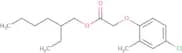
CAS :Please enquire for more information about MCPA 2-ethylhexyl ester including the price, delivery time and more detailed product information at the technical inquiry form on this pageFormule :C17H25ClO3Degré de pureté :Min. 95%Masse moléculaire :312.83 g/mol3-Methyl-2-(methylthio)benzo[d]thiazol-3-ium iodide
CAS :Please enquire for more information about 3-Methyl-2-(methylthio)benzo[d]thiazol-3-ium iodide including the price, delivery time and more detailed product information at the technical inquiry form on this pageFormule :C9H10NS2•IDegré de pureté :Min. 95%Masse moléculaire :323.22 g/mol5-Methyl-3-oxo-hexanoic acid methyl ester
CAS :Versatile small molecule scaffoldFormule :C8H14O3Degré de pureté :Min. 95%Masse moléculaire :158.2 g/molMethyl 5-amino-1,3,4-thiadiazole-2-carboxylate
CAS :Versatile small molecule scaffold
Formule :C4H5N3O2SDegré de pureté :Min. 95%Masse moléculaire :159.17 g/mol(2,2-Difluoroethyl)hydrazine hydrochloride
CAS :Versatile small molecule scaffoldFormule :C2H7ClF2N2Degré de pureté :Min. 95%Masse moléculaire :132.54 g/molBocNH-PEG3-CH2CH2NH2
CAS :BocNH-PEG3-CH2CH2NH2 is a PEG compound with two different functional groups (also known as heterobifunctional). Unlike homobifunctional PEG compounds (same functional group on both ends), this type of compounds are more versatile as have two different anchor points. BocNH-PEG3-CH2CH2NH2 is used as a linker and spacer to add a PEG moiety, via pegylation (a bioconjugation technique) to proteins, peptides, oligonucleotides, small molecules and nanoparticles.Formule :C13H28N2O5Degré de pureté :Min. 95%Couleur et forme :Clear LiquidMasse moléculaire :292.37 g/mol4-Hydroxybenzenesulfonic acid, 65% aqueous solution
CAS :4-Hydroxybenzenesulfonic acid is a chemical compound that is used as an antimicrobial agent in industrial applications. It is commonly used as a corrosion inhibitor, a chelating agent, and an additive for detergents and other cleaning products. 4-Hydroxybenzenesulfonic acid has been shown to inhibit the growth of bacteria by binding to fatty acids in the cell membrane and preventing them from being incorporated into the cell wall. This process causes the cell wall to weaken and eventually rupture. The reaction mechanism of 4-hydroxybenzenesulfonic acid is similar to that of p-hydroxybenzoic acid, which also inhibits bacterial growth by attacking fatty acids in the cell membrane. 4-Hydroxybenzenesulfonic acid may be preferable because it can be produced from renewable sources rather than from petroleum or natural gas.Formule :C6H6O4SDegré de pureté :65%MinCouleur et forme :Red PowderMasse moléculaire :174.18 g/molN-(4-Bromophenyl)-N-phenylacrylamide
CAS :Versatile small molecule scaffoldFormule :C15H12BrNODegré de pureté :Min. 95%Couleur et forme :PowderMasse moléculaire :302.16 g/molN-Fluorobenzenesulfonimide
CAS :N-Fluorobenzenesulfonimide is an organic compound with the molecular formula CHFNS. It is a fluorinating agent that can be used for the synthesis of organic compounds. N-Fluorobenzenesulfonimide has been shown to have anti-inflammatory properties and has shown promising results in animal studies for the treatment of hepatitis. The mechanism of action is not fully understood, but it may involve the formation of hydrogen bonds between N-fluorobenzenesulfonimide and amino acid residues in proteins, leading to inhibition of protein synthesis.
Formule :C12H10FNO4S2Degré de pureté :Min. 95%Couleur et forme :White PowderMasse moléculaire :315.34 g/mol3-Hydroxynaphthalene-2-carboxaldehyde
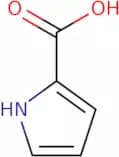
CAS :3-Hydroxynaphthalene-2-carboxaldehyde is a primary amino acid that can exist in two forms, the imine and the enamine tautomers. The proton on carbon 2 is acidic, which allows for hydrogen bonding with other molecules. The 3-hydroxynaphthalene-2-carboxaldehyde has a viscosity of 1mm2/s and a fluorescence emission maximum at about 275nm. It also has optical properties that are similar to naphthalene.Formule :C11H8O2Degré de pureté :Min. 95%Masse moléculaire :172.18 g/molPyrrole-2-carboxylic acid
CAS :Pyrrole-2-carboxylic acid is a polycyclic aromatic compound that can be found in coal tar. It has been shown to have anti-inflammatory, antiallergic, and antifungal properties. Pyrrole-2-carboxylic acid is produced by the human body as an intermediate in the metabolism of tryptophan. This compound can also be synthesized and used to treat chronic bronchitis, which is caused by excessive mucus production and inflammation of the airways. The reaction mechanism for pyrrole-2-carboxylic acid is similar to that of other drugs that are used in respiratory therapy, such as aminophylline or acetylcysteine.
Formule :C5H5NO2Degré de pureté :Min. 95%Masse moléculaire :111.1 g/mol2,4,6-Triphenylpyridine
CAS :2,4,6-Triphenylpyridine is an aromatic heterocycle with a benzyl group and trifluoroacetic acid at the 2-, 4-, and 6-positions. It is a colorless solid that has a melting point of 183 °C. In the gas phase, it exists as three anion radicals (2-, 4-, and 6-). These radicals are responsible for its optical properties. The 2-anion radical has a blue emission spectrum while the 4- and 6-anion radicals have red emission spectra. 2,4,6-Triphenylpyridine can be used as an indicator for trifluoroacetic acid or benzonitrile. It is soluble in primary alcohols such as methanol and ethanol at lower temperatures, but becomes insoluble at higher temperatures. 2,4,6-Triphenylpyridine also has functional theory applications due to its ability to
Formule :C23H17NDegré de pureté :Min. 95%Masse moléculaire :307.4 g/molMethyl 2-(chloromethyl)nicotinate
CAS :Methyl 2-(chloromethyl)nicotinate is an organic compound that belongs to the class of esters. It is a reaction product of methyl 3-hydroxybenzoate and nitrous acid. This compound has antimicrobial activity and can be used to treat bacterial infections. Methyl 2-(chloromethyl)nicotinate has been shown to inhibit the growth of various bacteria, including methicillin-resistant Staphylococcus aureus (MRSA), Escherichia coli, Klebsiella pneumoniae, Pseudomonas aeruginosa, Salmonella typhi, and Salmonella typhimurium. The cyano group in this molecule may be responsible for its antibacterial activity. The efficiency of methyl 2-(chloromethyl)nicotinate varies with different types of bacteria. For example, it was more effective against MRSA than against Escherichia coli or Klebsiella pneumoniaeFormule :C8H8ClNO2Degré de pureté :Min. 95%Masse moléculaire :185.61 g/mol3-Methoxy-1-methyl-1H-pyrazole-4-carbaldehyde
CAS :Versatile small molecule scaffoldFormule :C6H8N2O2Degré de pureté :Min. 95%Couleur et forme :PowderMasse moléculaire :140.14 g/moltert-butyl 4-oxo-2,3-dihydroquinoline-1-carboxylate
CAS :Versatile small molecule scaffoldFormule :C14H17NO3Degré de pureté :Min. 95%Masse moléculaire :247.29 g/mol(S)-2-(N-Boc-aminomethyl)morpholine
CAS :Versatile small molecule scaffold
Formule :C10H20N2O3Degré de pureté :Min. 95%Masse moléculaire :216.27 g/mol1-Boc-3-Oxo-1,4-diazepane
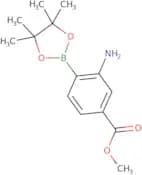
CAS :Versatile small molecule scaffoldFormule :C10H18N2O3Degré de pureté :Min. 95%Masse moléculaire :214.27 g/molMethyl 3-amino-4-(tetramethyl-1,3,2-dioxaborolan-2-yl)benzoate
CAS :Versatile small molecule scaffold
Formule :C14H20BNO4Degré de pureté :Min. 95%Masse moléculaire :277.13 g/mol2-(tert-Butyl)-5-chloroisothiazol-3(2H)-one
CAS :Versatile small molecule scaffoldFormule :C7H10ClNOSDegré de pureté :Min. 95%Masse moléculaire :191.68 g/mol5-Bromo-3-(difluoromethyl)pyridine-2-carboxylic acid
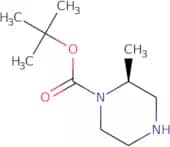
CAS :Versatile small molecule scaffoldFormule :C7H4BrF2NO2Degré de pureté :Min. 95%Masse moléculaire :252.01 g/mol(S)-1-N-Boc-2-methylpiperazine
CAS :(S)-1-N-Boc-2-methylpiperazine is a quinolone synthon that has been shown to have antibacterial activity against bacteria. The synthesis of this compound is done through the condensation of piperazine with an N-Boc protected 2,6-dichloroquinoline. This reaction proceeds in good yield and enantioselectivity. The antibacterial properties of (S)-1-N-Boc-2-methylpiperazine are not yet known.Formule :C10H20N2O2Degré de pureté :Min. 95%Couleur et forme :White PowderMasse moléculaire :200.28 g/mol1-Methyl-1,2,4-triazole
CAS :1-Methyl-1,2,4-triazole is a molecule containing nitrogen atoms. It can be used as a monomer in the preparation of polymers or materials. 1-Methyl-1,2,4-triazole has been shown to be effective for the equilibration of mixtures of organic compounds in analytical methods and matrix effect studies. The reaction vessel must be unsymmetrical to prevent the polymer from sticking to it and causing potential problems with the separation process.Formule :C3H5N3Degré de pureté :Min. 98%Couleur et forme :Clear LiquidMasse moléculaire :83.09 g/mol1-(4-(4,4,5,5-Tetramethyl-1,3,2-dioxaborolan-2-yl)phenyl)cyclopropanecarbonitrile
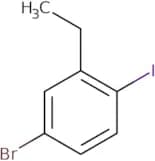
CAS :Versatile small molecule scaffoldFormule :C16H20BNO2Degré de pureté :Min. 95%Masse moléculaire :269.15 g/mol4-Bromo-2-ethyliodobenzene
CAS :Versatile small molecule scaffold
Formule :C8H8BrIDegré de pureté :Min. 95%Masse moléculaire :310.96 g/mol5-bromo-6-methoxy-1h-indole
CAS :5-bromo-6-methoxy-1H-indole is a synthetic, nonsteroidal compound that is structurally related to prednisolone. It has been shown to induce the synthesis of collagen by stimulating fibroblasts in culture. This drug also has anti-inflammatory and modulating effects on s1p receptors, which may be due to its ability to inhibit the production of proinflammatory cytokines such as tumor necrosis factor alpha (TNFα). 5-bromo-6-methoxy-1H-indole is a potent inhibitor of acid methyl esters, which are involved in inflammation and tissue destruction. 5-bromo-6-methoxy-1H--indole also has an effect on dermal cells, which may be due to its ability to inhibit the production of matrix metalloproteinase enzymes. This drug can also cause atrophy in granuloma cells and prevent the development of inflammatory
Formule :C9H8BrNODegré de pureté :Min. 95%Masse moléculaire :226.07 g/mol4,6-Dichloro-5-fluoronicotinic Acid
CAS :Versatile small molecule scaffoldFormule :C6H2Cl2FNO2Degré de pureté :Min. 95%Masse moléculaire :209.99 g/molγ-L-Glutamyl-α-naphthylamide monohydrate
CAS :Gamma-L-glutamyl-alpha-naphthylamide is an enzyme that catalyzes the conversion of L-glutamic acid to L-glutamate. It is expressed in red blood cells, human liver, and human serum. Gamma-L-glutamyl-alpha-naphthylamide has been shown to have various specificities for different tissues and isoenzymes. This enzyme also has immunoassay procedures that are used to detect it in tissues or cells. These assays use monoclonal antibodies or solubilized gamma-L-glutamyl-alpha-naphthylamide molecules as detection agents.Formule :C15H16N2O3•H2ODegré de pureté :Min. 95%Couleur et forme :PowderMasse moléculaire :290.31 g/mol4-Fluoro-2-methoxy-5-nitroaniline
CAS :Intermediate in the synthesis of osimertinib (AZD9291)Formule :C7H7FN2O3Degré de pureté :Min. 95%Masse moléculaire :186.14 g/molMethyl 2-(2-amino-5-ethyl-1,3-thiazol-4-yl)acetate
CAS :Versatile small molecule scaffoldFormule :C8H12N2O2SDegré de pureté :Min. 95%Masse moléculaire :200.26 g/molEthyl 4,6-dihydroxypyridazine-3-carboxylate
CAS :Versatile small molecule scaffold
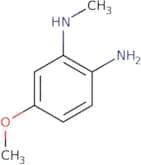
Formule :C7H8N2O4Degré de pureté :Min. 95%Masse moléculaire :184.15 g/mol5-Methoxy-N1-methylbenzene-1,2-diamine
CAS :Versatile small molecule scaffold
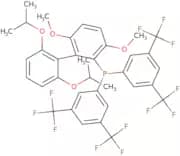
Formule :C8H12N2ODegré de pureté :Min. 95%Masse moléculaire :152.19 g/molBis(3,5-bis(trifluoromethyl)phenyl)(2²,6²-bis(isopropoxy)-3,6-dimethoxybiphenyl-2-yl)phosphine
CAS :Versatile small molecule scaffold
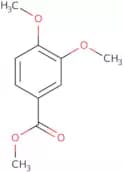
Formule :C36H31F12O4PDegré de pureté :Min. 95%Masse moléculaire :786.58 g/molMethyl 3,4-dimethoxybenzoate
CAS :Methyl 3,4-dimethoxybenzoate is an acetate extract that has been shown to inhibit tyrosinase activity. This compound also has a potent inhibitory effect on the production of p-hydroxybenzoic acid. Methyl 3,4-dimethoxybenzoate can be synthesized from protocatechuic acid and methoxy groups. It is a chemical reaction involving three steps: condensation, dehydration, and reduction. Tyrosinase is an enzyme in the melanin biosynthetic pathway that catalyzes the conversion of tyrosine to dopaquinone. Tyrosinase activity can be inhibited by methyl 3,4-dimethoxybenzoate through competitive inhibition or by its ability to reduce the availability of substrate for this enzyme.Formule :C10H12O4Degré de pureté :Min. 95%Couleur et forme :PowderMasse moléculaire :196.2 g/molFmoc-D-Ala-OH
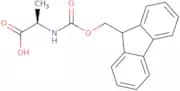
CAS :Fmoc-D-Ala-OH is a synthetic cyclic peptide that has been shown to have anticancer properties. This compound was synthesized by solid-phase chemistry and exhibits an inhibitory effect on cancer cells. Fmoc-D-Ala-OH blocks the synthesis of proteins in cancer cells, leading to cell death. It also inhibits the activity of serine proteases such as degarelix acetate, which are important for cancer cell growth and metastasis.Formule :C18H17NO4Degré de pureté :Min. 95%Couleur et forme :PowderMasse moléculaire :311.33 g/molMethyl 4-chloropyrimidine-2-carboxylate
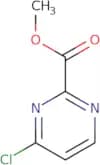
CAS :Versatile small molecule scaffoldFormule :C6H5ClN2O2Degré de pureté :Min. 95%Masse moléculaire :172.57 g/mol(2-Methyl-4-pyrimidinyl)methanol
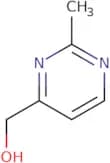
CAS :Versatile small molecule scaffoldFormule :C6H8N2ODegré de pureté :Min. 95%Masse moléculaire :124.14 g/molMethyl 4-(hydroxymethyl)norbornane-1-carboxylate
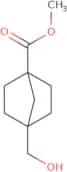
CAS :Versatile small molecule scaffoldFormule :C10H16O3Degré de pureté :Min. 95%Masse moléculaire :184.23 g/molEthyl 3-amino-5-bromo-1H-pyrazole-4-carboxylate
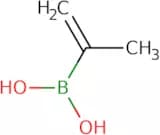
CAS :Versatile small molecule scaffoldFormule :C6H8BrN3O2Degré de pureté :Min. 95%Masse moléculaire :234.05 g/molProp-1-en-2-ylboronic acid
CAS :Prop-1-en-2-ylboronic acid is a chemical compound that belongs to the group of aromatic hydrocarbons. It is used in pharmaceutical preparations as a monomer and as a chiral building block for the synthesis of oxazolidinones, which are used in medicinal chemistry as protein inhibitors against cancers. Prop-1-en-2-ylboronic acid is also used as a reagent in preparative high performance liquid chromatography. This chemical has shown maximal response against colorectal carcinoma cells and has been shown to be an inhibitor of cholesterol ester transfer.Formule :C3H7BO2Degré de pureté :90%MinMasse moléculaire :85.9 g/mol5-bromo-3-iodopyrazolo[1,5-a]pyridine
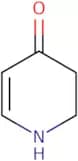
CAS :Versatile small molecule scaffoldFormule :C7H4BrIN2Degré de pureté :Min. 95%Masse moléculaire :322.9 g/mol1,2,3,4-Tetrahydropyridin-4-one
CAS :1,2,3,4-Tetrahydropyridin-4-one is an organic compound that can be synthesized by a cross-coupling reaction between a pyridine and chloroformate. The reaction mechanism involves nucleophilic addition of the amine to the electrophile followed by reductive elimination. This process leads to the formation of a tetrahydroquinoline skeleton with stereoselectivity. Tetrahydropyridin-4-one can also be synthesized from an iminium ion or an activated pyridinium salt. The resulting product will have a different skeleton because it was synthesized through different mechanisms.Formule :C5H7NODegré de pureté :Min. 95%Masse moléculaire :97.12 g/molTert-butyl N-(8-bromooctyl)carbamate
CAS :Please enquire for more information about Tert-butyl N-(8-bromooctyl)carbamate including the price, delivery time and more detailed product information at the technical inquiry form on this page
Formule :C13H26BrNO2Degré de pureté :Min. 95%Masse moléculaire :308.26 g/mol(2R,3S)-Benzyl 6-oxo-2,3-diphenylmorpholine-4-carboxylate
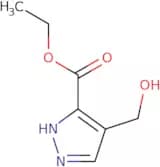
CAS :(2R,3S)-Benzyl 6-oxo-2,3-diphenylmorpholine-4-carboxylate is a molecule with an enantioselective synthesis and a preparative method. It has been catalysed by chiral reagents such as chiral catalysts, chiral auxiliaries, and chiral ligands. This molecule can be synthesized in racemic form or in the form of its two enantiomers. The two enantiomers have different physical properties and biological activities. (2S,3S)-Benzyl 6-oxo-2,3-diphenylmorpholine-4-carboxylate is known to be an inhibitor of protein kinase C (PKC) that causes the release of intracellular calcium ions from cytoplasmic stores. The other enantiomer (2R,3S)-benzyl 6-oxo-2,3-dFormule :C24H21NO4Degré de pureté :Min. 95%Masse moléculaire :387.43 g/molEthyl 4-(hydroxymethyl)-1H-pyrazole-3-carboxylate
CAS :Versatile small molecule scaffoldFormule :C7H10N2O3Degré de pureté :Min. 95%Masse moléculaire :170.17 g/molMethyl 3-oxocyclohexanecarboxylate
CAS :Methyl 3-oxocyclohexanecarboxylate is a chiral molecule that belongs to the class of β-unsaturated ketones. It has been shown to interact with enzymes from horse liver, dehydrogenase and carbanion. Methyl 3-oxocyclohexanecarboxylate is unreactive under most conditions and does not react with other molecules. The compound can be used as a starting material for the synthesis of olefinic compounds.Formule :C8H12O3Degré de pureté :Min. 95%Masse moléculaire :156.18 g/mol4-Formylbenzoic acid
CAS :4-Formylbenzoic acid is an organic compound with the molecular formula CH2=C(O)CH=CHCO2H. It is a white solid that is soluble in water and has a strong, unpleasant odor. 4-Formylbenzoic acid has been shown to have affinity for binding to odorous molecules such as sulfur compounds, amines, and mercaptans. The binding of these molecules to the 4-formylbenzoic acid leads to a decrease in their odor concentration. This process can be done using electrochemical impedance spectroscopy or optical sensors. The oxidation of 4-formylbenzoic acid by trifluoroacetic acid produces 2-formylphenol and formaldehyde, which are themselves volatile compounds with an unpleasant odor. These reactions may be used as wastewater treatment methods. Langmuir adsorption isotherm may be used as an analytical method for measuring the concentration of 4-formylbenzoic acid
Formule :C8H6O3Degré de pureté :Min. 98 Area-%Couleur et forme :White Yellow PowderMasse moléculaire :150.13 g/mol4-Iodo-1-methyl-1h-pyrazole-5-carbonitrile
CAS :4-Iodo-1-methyl-1H-pyrazole-5-carbonitrile is a tetrazole molecule that has been shown to have potent and selective inhibitory activity against human PCSK9. This compound binds to the catalytic site of PCSK9 and prevents the formation of an active enzyme, therefore inhibiting the production of LDL cholesterol. 4-Iodo-1-methyl-1H-pyrazole-5-carbonitrile is a prodrug that is metabolized by acetaldehyde dehydrogenase to form an active inhibitor. The reaction proceeds in a chiral and enantioselective manner, which allows for the synthesis of racemic mixtures of this drug.Formule :C5H4IN3Degré de pureté :Min. 95%Masse moléculaire :233.01 g/mol2-Furanamine hydrochloride
CAS :Please enquire for more information about 2-Furanamine hydrochloride including the price, delivery time and more detailed product information at the technical inquiry form on this page
Formule :C4H5NO•HClDegré de pureté :Min. 95%Couleur et forme :PowderMasse moléculaire :119.55 g/mol


![[(1S)-1-Ethyl-2-oxopropyl]-1,1-dimethylethyl ester carbamic acid](/_next/image/?url=https%3A%2Fstatic.cymitquimica.com%2Fproducts%2F3D%2Fthumb-webp%2FEMA02105.webp&w=3840&q=75)
![3-Methyl-2-(methylthio)benzo[d]thiazol-3-ium iodide](/_next/image/?url=https%3A%2Fstatic.cymitquimica.com%2Fproducts%2F3D%2Fthumb-webp%2FFM184304.webp&w=3840&q=75)














![5-bromo-3-iodopyrazolo[1,5-a]pyridine](/_next/image/?url=https%3A%2Fstatic.cymitquimica.com%2Fproducts%2F3D%2Fthumb-webp%2FCEC88182.webp&w=3840&q=75)