


Building Blocks
Sous-catégories appartenant à la catégorie "Building Blocks"
- Acides boroniques et dérivés de l'acide boronique(5.778 produits)
- Building Blocks Chiraux(1.243 produits)
- Building Blocks Hydrocarbonés(6.098 produits)
- Building Blocks organiques(61.036 produits)
205240 produits trouvés pour "Building Blocks"
4-Amino-1-methyl-2λ⁶-thia-1-azaspiro[4.5]dec-3-ene-2,2-dione
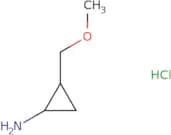
CAS :Versatile small molecule scaffoldFormule :C9H16N2O2SDegré de pureté :Min. 95%Masse moléculaire :216.3 g/mol(1S,2S)-2-(Methoxymethyl)cyclopropan-1-amine hydrochloride
CAS :Versatile small molecule scaffoldFormule :C5H12ClNODegré de pureté :Min. 95%Masse moléculaire :137.6 g/molrac-(1R,2R)-2-Ethoxycyclopropan-1-amine hydrochloride
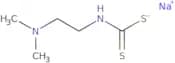
CAS :Versatile small molecule scaffoldFormule :C5H12ClNODegré de pureté :Min. 95%Masse moléculaire :137.6 g/molSodium (2-(dimethylamino)ethyl)carbamodithioate
CAS :Versatile small molecule scaffold
Formule :C5H11N2NaS2Degré de pureté :Min. 95%Masse moléculaire :186.3 g/mol3-(Bromomethyl)-5-[2-(trimethylsilyl)ethynyl]benzene-1-sulfonyl fluoride
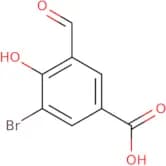
CAS :Versatile small molecule scaffoldFormule :C12H14BrFO2SSiDegré de pureté :Min. 95%Masse moléculaire :349.29 g/mol3-Bromo-5-formyl-4-hydroxybenzoic acid
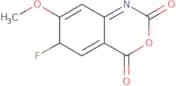
CAS :Versatile small molecule scaffoldFormule :C8H5BrO4Degré de pureté :Min. 95%Masse moléculaire :245.03 g/mol6-Fluoro-7-methoxy-2,4-dihydro-1H-3,1-benzoxazine-2,4-dione
CAS :Versatile small molecule scaffoldFormule :C9H6FNO4Degré de pureté :Min. 95%Masse moléculaire :211.15 g/mol4,4,5,5-Tetramethyl-2-[4-(pentafluoroethyl)phenyl]-1,3,2-dioxaborolane
CAS :Versatile small molecule scaffold
Formule :C14H16BF5O2Degré de pureté :Min. 95%Masse moléculaire :322.08 g/moltert-Butyl N-(trimethylsilyl)carbamate
CAS :Versatile small molecule scaffoldFormule :C8H19NO2SiDegré de pureté :Min. 95%Masse moléculaire :189.33 g/molN-[2-(Aminomethyl)phenyl]acetamide hydrochloride
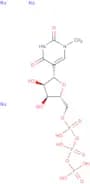
CAS :Versatile small molecule scaffoldFormule :C9H13ClN2ODegré de pureté :Min. 95%Masse moléculaire :200.66 g/molN1-Methyl-pseudouridine-5'-triphosphate trisodium, 100mM aqueous solution
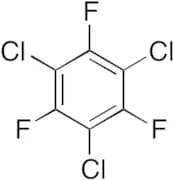
CAS :Methyl-pseudouridine-5'-triphosphate trisodium is the triphosphate of 1-Methylpseudouridine is a substitute for uridine in modified mRNA. This substitution has shown to increase transfection by reducing immuogenicity. UV max wavelength = 272nmFormule :C10H17N2O15P3•Na3Degré de pureté :Min. 95%Couleur et forme :Clear LiquidMasse moléculaire :567.17 g/mol1,3,5-Trifluorotrichlorobenzene
CAS :Applications 1,3,5-Trifluorotrichlorobenzene is a useful reagent.
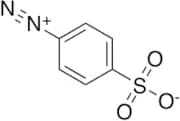
Formule :C6Cl3F3Masse moléculaire :235.424-Diazobenzenesulfonic Acid
CAS :Applications 4-Diazobenzenesulfonic acid (cas# 305-80-6) is a useful research chemical.
Formule :C6H4N2O3SMasse moléculaire :184.17(2S)-3-Hydroxy-2-phenylpropanoic acid
CAS :(2S)-3-Hydroxy-2-phenylpropanoic acid is an unlabelled, naturally occurring compound. It is the citric acid analog of L-phenylalanine. The structure of (2S)-3-Hydroxy-2-phenylpropanoic acid is a skeleton that consists of one hydroxyl group and one carboxylic acid group. The carboxylic acid group has a double bond in the alpha position to the carboxyl carbon, which gives this molecule an acidic character. The chloride ion is also present in this structure. This molecule can be synthesized by a kinetic reaction that involves fatty acids and brugmansia as catalysts. It can also be synthesized through a catalysed reaction using thionyl chloride as a catalyst.
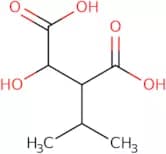
Formule :C9H10O3Degré de pureté :Min. 95%Masse moléculaire :166.17 g/mol2-Hydroxy-3-(1-methylethyl)-butanedioic acid
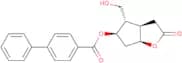
CAS :2-Hydroxy-3-(1-methylethyl)-butanedioic acid is an organic compound that is a metabolite of the amino acid methionine. It is formed by the oxidation of the methyl group on the 2 position in methionine. The protein subunits are expressed in liver cells and it has been shown to have antioxidant properties. The analytical methods used for this compound include LC-MS/MS, which separates it into its individual isomers. This method can be used to determine the purity of 2-hydroxy-3-(1-methylethyl)-butanedioic acid. The carbonyl group in this molecule makes it susceptible to steric interactions with other molecules, which may lead to it being oxidized or reduced. It has been found that 2-hydroxy-3-(1-methylethyl)-butanedioic acid shows thermophilic and enterocolitic properties.Formule :C7H12O5Degré de pureté :Min. 95%Masse moléculaire :176.17 g/mol(-)-Corey lactone 4-phenylbenzoate
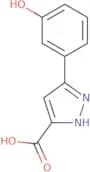
CAS :Corey lactone 4-phenylbenzoate is an efficient, large-scale preparation of (-)-Corey lactone. It is synthesized in two steps from 4-phenylbenzoic acid and ethyl acetoacetate. Corey lactone 4-phenylbenzoate has been used for the synthesis of a variety of natural products. This compound is also a precursor to the synthesis of other compounds, such as 3-amino-4-(2'-hydroxyethoxy)benzaldehyde.Formule :C21H20O5Degré de pureté :Min. 95%Masse moléculaire :352.38 g/mol5-(3-Hydroxyphenyl)-1H-pyrazole-3-carboxylic acid
CAS :Versatile small molecule scaffold
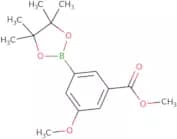
Formule :C10H8N2O3Degré de pureté :Min. 95%Masse moléculaire :204.18 g/mol3-Methoxy-5-(methoxycarbonyl)phenylboronic acid pinacol ester
CAS :Versatile small molecule scaffoldFormule :C15H21BO5Degré de pureté :Min. 95%Masse moléculaire :292.14 g/mol4-Chloro-8-quinolinol
CAS :4-Chloro-8-quinolinol is a quinoline derivative that has been shown to have pharmacological effects. It is used in the synthesis of other compounds, such as 5-chloro-8-hydroxyquinoline, which is used in the treatment of cancer. 4-Chloro-8-quinolinol can also be prepared by oxidizing 5,6,7,8 tetrachloroquinoline with chlorine and ammonia. The photophysical properties of this compound are analogous to those of benzothiazole derivatives. The fluorescence emission spectrum ranges from 360 nm to 450 nm with a maximum at 390 nm and emission intensity at 350 nm. This compound exhibits fungitoxicity against Penicillium notatum and Aspergillus fumigatus.
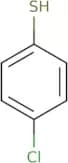
Formule :C9H6ClNODegré de pureté :Min. 95%Masse moléculaire :179.6 g/mol4-Chlorobenzenethiol
CAS :4-Chlorobenzenethiol is a chemical compound that contains a fatty acid. It is an intramolecular hydrogen donor with the ability to form a disulfide bond. The compound also has high stability and can be used in organic synthesis reactions involving reactive sulfur groups. 4-Chlorobenzenethiol reacts with sodium carbonate to produce sodium thiocarbonate and chloroform, which are then reacted with phosphorus pentoxide for oxidation. The reaction mechanism is similar to that of the Diels-Alder reaction and the model system involves dinucleotide phosphate. 4-Chlorobenzenethiol can be reacted with hydrochloric acid or trifluoroacetic acid as an oxidizing agent.
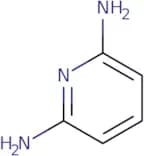
Formule :C6H5ClSDegré de pureté :Min. 95%Couleur et forme :White PowderMasse moléculaire :144.62 g/mol2,6-Diaminopyridine
CAS :2,6-Diaminopyridine is a heterocyclic compound that is used in analytical chemistry as an indicator for the presence of protonated amines. It is prepared by coupling 2,6-diamino-pyridine with 1,3-benzodioxole-5-carboxylic acid. The nitrogen atoms are electron withdrawing groups and form hydrogen bonding interactions with the protonated amine. This type of interaction leads to a phase transition temperature of about 115°C and a high value for electrochemical impedance spectroscopy (EIS) measurements. The reaction mechanism involves the formation of a protonated amine from 2,6-diaminopyridine and 1,3-benzodioxole-5-carboxylic acid followed by proton transfer to yield the corresponding pyridinium salt.
Formule :C5H7N3Degré de pureté :Min. 95%Couleur et forme :Beige To Brown SolidMasse moléculaire :109.13 g/mol1H,1H,7H-Dodecafluoroheptanol
CAS :1H,1H,7H-Dodecafluoroheptanol is a perfluorinated compound. It has been shown to be an efficient scavenger of reactive oxygen species (ROS) and to have a protective effect on collagen. The reaction mechanism of 1H,1H,7H-dodecafluoroheptanol is not fully understood. However, it has been shown that the chloride ion plays a key role in the formation of this product from 1H,1H,7F-dodecafluoroheptane. The reaction vessel used in this synthesis is critical because it must be anhydrous to prevent the formation of 1HF3OCl. Magnetic resonance spectroscopy has been used to study the chemical structures of this compound.
Formule :C7H4F12ODegré de pureté :Min. 95%Couleur et forme :Colorless PowderMasse moléculaire :332.09 g/mol2-(4-Carboxy-phenyl)-pyrrolidine-1-carboxylic acid tert-butyl ester
CAS :Versatile small molecule scaffoldFormule :C16H21NO4Degré de pureté :Min. 95%Masse moléculaire :291.34 g/mol4-(4-Methylpiperazin-1-yl)-2-(trifluoromethyl)aniline
CAS :Versatile small molecule scaffold
Formule :C12H16N3F3Degré de pureté :Min. 95%Masse moléculaire :259.27 g/mol(2R,6R)-2,6-Dimethylmorpholine
CAS :(2R,6R)-2,6-Dimethylmorpholine is an isomerizing agent that converts (2S,6S)-2,6-dimethylmorpholine to (2R,6R)-2,6-dimethylmorpholine. It has been used in the synthesis of pharmaceuticals and optimization of reaction conditions. The optimum condition for the conversion is a temperature of 40°C with a time of 4 hours. It can also be used to synthesize mandelic acid from phenylglyoxal and nitroethane. This compound has been shown to have antibacterial activity against tonsillar bacteria and enantiomers with different sensitivities may be analyzed using plates coated with silica gel or polymeric resins. Parameters such as pH and temperature must also be optimized for this process.Formule :C6H13NODegré de pureté :Min. 95%Masse moléculaire :115.17 g/mol3,4-Difluoro-1H-Pyrrole
CAS :3,4-Difluoro-1H-Pyrrole is a neutral compound with a molecular weight of 136.17 g/mol. It has the chemical formula C6H3F2N and it can be found in reactions involving the congener and coordination chemistry. 3,4-Difluoro-1H-Pyrrole is an intermediate in organic synthesis that is used as starting material for other organic compounds such as pharmaceuticals and agrochemicals. The redox potential of 3,4-Difluoro-1H-Pyrrole is -0.42 V for the reaction with chloride solution and its basicity is 0.89 mM at 25°C. This molecule has been studied by X-ray crystallography and by titration calorimetry for hydrogen bonding interactions.Formule :C4H3F2NDegré de pureté :Min. 95%Masse moléculaire :103.07 g/mol3-Boc-3-azabicyclo[3.2.1]octan-8-amine
CAS :Versatile small molecule scaffoldFormule :C12H22N2O2Degré de pureté :Min. 95%Masse moléculaire :226.32 g/molFmoc-b-Ala-Ala-Pro-OH
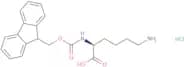
CAS :Fmoc-b-Ala-Ala-Pro-OH is a reaction component that can be used in the synthesis of peptides and other compounds. It is a building block for the preparation of complex compounds, such as small molecules, polymers and natural products. Fmoc-b-Ala-Ala-Pro-OH has been shown to be useful in the synthesis of various types of reagents, including antibiotics and pharmaceuticals. This chemical has been reported as a useful scaffold for the preparation of high quality research chemicals. Fmoc-b-Ala-Ala-Pro is also an intermediate in the synthesis of speciality chemicals and fine chemicals.Formule :C26H29N3O6Degré de pureté :Min. 95%Couleur et forme :White PowderMasse moléculaire :479.53 g/molFmoc-Lys-OH·HCl
CAS :Fmoc-Lys-OH·HCl is an acidic pyrylium that has been shown to be a potent inhibitor of tumor vasculature. It binds to the human serum albumin and inhibits the binding of ligands to the receptor tyrosine kinases, which are involved in brain tumor proliferation. Fmoc-Lys-OH·HCl has also been shown to inhibit the growth of cancer cells by binding to cell membrane receptors and inhibiting protein synthesis. This compound is also isomeric, meaning it can exist in different forms with different properties.Formule :C21H24N2O4·HClDegré de pureté :Min. 95 Area-%Couleur et forme :White PowderMasse moléculaire :404.89 g/mol3-amino-6-bromopyridin-2-ol hydrobromide
CAS :Versatile small molecule scaffold
Formule :C5H6Br2N2ODegré de pureté :Min. 95%Masse moléculaire :269.9 g/molIr[dffppy]2-(4,4′-dcf3bpy)pf6
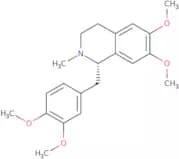
CAS :Please enquire for more information about Ir[dffppy]2-(4,4′-dcf3bpy)pf6 including the price, delivery time and more detailed product information at the technical inquiry form on this pageFormule :C34H16F18IrN4PDegré de pureté :Min. 95%Masse moléculaire :1,045.68 g/mol(S)-Laudanosine
CAS :Laudanosine is a gamma-aminobutyric acid (GABA) analog that is metabolized by the liver to form laudanosine. Laudanosine has been shown to be a competitive antagonist of benzodiazepine binding sites, including those of atracurium, mivacurium chloride, and diazepam. Laudanosine has also been shown to inhibit cyclic nucleotide phosphodiesterases in vitro, with clinical relevance for its use as an anti-epileptic drug.
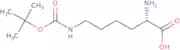
Formule :C21H27NO4Degré de pureté :Min. 95%Masse moléculaire :357.44 g/molH-Lys(Boc)-OH
CAS :H-Lys(Boc)-OH is an ε-amino-protected lysine that plays a pivotal role in solution phase peptide synthesis. Strategically protected at the ε-amino group, it allows controlled peptide assembly, and it serves as intermediate for synthesizing β-peptides. The bulky Boc (tert-butyloxycarbonyl) group shields its epsilon amine (NH2) group, acting as a protective measure to prevent unwanted side reactions.Formule :C11H22N2O4Couleur et forme :White PowderMasse moléculaire :246.3 g/molNe-Z-L-lysine tert-butyl ester hydrochloride
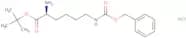
CAS :Ne-Z-L-lysine tert-butyl ester hydrochloride is a multidrug that inhibits the activity of the P-glycoprotein (Pgp) transporter. This drug is an antigen that can be used as a marker for cytostatic drugs, and it can be used in radionuclide localization. Ne-Z-L-lysine tert-butyl ester hydrochloride has been shown to have cytostatic effects on malignant cells, but its cytotoxicity varies depending on the type of cancer cell. Ne-Z-L-lysine tert-butyl ester hydrochloride has also been shown to be degradable and to possess conjugates with antibodies, which makes it useful for treating some types of cancers. Ne-Z-L-lysine tert-butyl ester hydrochloride is not active against resistant cells such as those expressing Pgp or MRP1 proteins.Formule :C18H28N2O4·HClDegré de pureté :Min. 95%Couleur et forme :White PowderMasse moléculaire :372.89 g/mol4-(Oxazol-2-yl)aniline
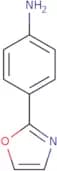
CAS :Versatile small molecule scaffold
Formule :C9H8N2ODegré de pureté :Min. 95%Masse moléculaire :160.17 g/molN-(2,6-Dimethylphenyl)-2-({[(2,6-dimethylphenyl)carbamoyl]methyl}amino)acetamide
CAS :2,6-Dimethylphenylacetic acid is a hydrogen phosphate that is soluble in solvents such as acetonitrile. It has been used in the synthesis of lidocaine with high sensitivity and specificity. It can be used to detect phosphoric compounds, which are often present in pharmaceuticals and food supplements. This compound has also been shown to have a solvent effect on the conditions of the reaction, making it a useful additive for optimizing processes. The main impurities of this compound are 2-methylbenzoic acid and benzoic acid.
Formule :C20H25N3O2Degré de pureté :Min. 95%Masse moléculaire :339.4 g/molMethyl 2-(chloromethyl)nicotinate
CAS :Methyl 2-(chloromethyl)nicotinate is an organic compound that belongs to the class of esters. It is a reaction product of methyl 3-hydroxybenzoate and nitrous acid. This compound has antimicrobial activity and can be used to treat bacterial infections. Methyl 2-(chloromethyl)nicotinate has been shown to inhibit the growth of various bacteria, including methicillin-resistant Staphylococcus aureus (MRSA), Escherichia coli, Klebsiella pneumoniae, Pseudomonas aeruginosa, Salmonella typhi, and Salmonella typhimurium. The cyano group in this molecule may be responsible for its antibacterial activity.
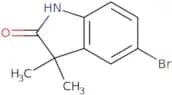
The efficiency of methyl 2-(chloromethyl)nicotinate varies with different types of bacteria. For example, it was more effective against MRSA than against Escherichia coli or Klebsiella pneumoniaeFormule :C8H8ClNO2Degré de pureté :Min. 95%Masse moléculaire :185.61 g/mol5-Bromo-3,3-dimethyl-2,3-dihydro-1H-indol-2-one
CAS :Versatile small molecule scaffoldFormule :C10H10NOBrDegré de pureté :Min. 95%Masse moléculaire :240.09 g/mol4-Bromo-2,3-difluoropyridine
CAS :Versatile small molecule scaffold
Formule :C5H2BrF2NDegré de pureté :Min. 95%Masse moléculaire :193.98 g/mol1,9-Nonanediol
CAS :1,9-Nonanediol is a chemical substance that has been synthesized with the use of a constant pressure process. It is an asymmetric synthesis with light exposure. The molecule has been characterized by chromatographic methods and has the molecular formula CH3(CH2)9O. 1,9-Nonanediol is a dodecanedioic acid and an aliphatic hydrocarbon. It exists in two forms: one hydroxyl group and one hydrogen bond, which are both involved in the dehydration process. This substance does not have any chloride or magnetic resonance spectroscopy properties because it does not contain any chlorine atoms or hydrogen atoms.Formule :C9H20O2Degré de pureté :Min. 95%Masse moléculaire :160.25 g/mol2-Methylthiazole-4-carboxaldehyde
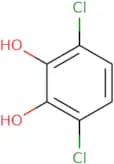
CAS :2-Methylthiazole-4-carboxaldehyde is an aldehyde that is the product of the condensation of 2,4-dibenzoylacetone and acetone in the presence of diazomethane. It has been used as a precursor to other compounds such as benzoyl chloride, glyoxal, and aldehydes. 2-Methylthiazole-4-carboxaldehyde can be synthesized using acetylation or nitration of thiols or with glyoxal or aldehyde. The reactivity of this compound is high and can be carried out in high yield.Formule :C5H5NOSDegré de pureté :Min. 95%Masse moléculaire :127.16 g/mol3,6-Dichlorobenzene-1,2-diol
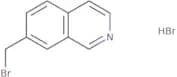
CAS :3,6-Dichlorobenzene-1,2-diol is a conjugate acid of benzene. It has two dimensions in the plane of the molecule and three dimensions in space. The molecule is composed of six carbon atoms, six hydrogen atoms, and one chlorine atom. 3,6-Dichlorobenzene-1,2-diol has a centroid at the center of the molecule that is surrounded by a ring of four hydrogen atoms. The hydrogen-bonded molecules stack on top of each other to form a hexagonal shape. 3,6-Dichlorobenzene-1,2-diol forms hydrogen bonds with other molecules through its lone pairs of electrons on both oxygen atoms as well as through its pi electron system.Formule :C6H4Cl2O2Degré de pureté :Min. 95%Masse moléculaire :179 g/mol7-(Bromomethyl)isoquinoline hydrobromide
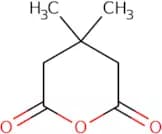
CAS :Versatile small molecule scaffoldFormule :C10H8BrN·HBrDegré de pureté :Min. 95%Masse moléculaire :303 g/mol3,3-Dimethylglutaric Anhydride
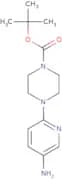
CAS :3,3-Dimethylglutaric Anhydride is a molecule that belongs to the group of daptomycin analogues. It has shown promising in vitro activity against cancer cells and is currently being investigated for its potential as a novel chemotherapeutic agent. The synthesis of this compound involves a Friedel-Crafts reaction, which creates a five-membered ring by reacting two carbonyl groups with an alkyl halide or phenyl sulfonium salt. 3,3-Dimethylglutaric Anhydride has been shown to bind to 5-HT1A receptors and inhibit their function. This compound also interacts with phosphate groups on proteins, creating a phosphate derivative. This interaction may be due to its ability to form an electrochemical bond with the phosphate group.Formule :C7H10O3Degré de pureté :Min. 95%Masse moléculaire :142.15 g/mol1-Boc-4-(5-Aminopyridin-2-yl)piperazine
CAS :Versatile small molecule scaffoldFormule :C14H22N4O2Degré de pureté :Min. 95%Masse moléculaire :278.35 g/mol3-Bromo-5-cyanobenzaldehyde
CAS :Versatile small molecule scaffoldFormule :C8H4BrNODegré de pureté :Min. 95%Masse moléculaire :210.04 g/mol5-Bromo-1-methyl-1H-pyrazole-4-carboxylic acid
CAS :Versatile small molecule scaffoldFormule :C5H5BrN2O2Degré de pureté :Min. 95%Masse moléculaire :205.01 g/mol4-Iodo-1-methyl-1h-pyrazole-5-carbonitrile
CAS :4-Iodo-1-methyl-1H-pyrazole-5-carbonitrile is a tetrazole molecule that has been shown to have potent and selective inhibitory activity against human PCSK9. This compound binds to the catalytic site of PCSK9 and prevents the formation of an active enzyme, therefore inhibiting the production of LDL cholesterol. 4-Iodo-1-methyl-1H-pyrazole-5-carbonitrile is a prodrug that is metabolized by acetaldehyde dehydrogenase to form an active inhibitor. The reaction proceeds in a chiral and enantioselective manner, which allows for the synthesis of racemic mixtures of this drug.Formule :C5H4IN3Degré de pureté :Min. 95%Masse moléculaire :233.01 g/mol[(1S)-1-Ethyl-2-oxopropyl]-1,1-dimethylethyl ester carbamic acid
CAS :Versatile small molecule scaffoldFormule :C10H19NO3Degré de pureté :Min. 95%Masse moléculaire :201.26 g/moltert-Butyl (4-formylpyridin-2-yl)carbamate
CAS :Versatile small molecule scaffoldFormule :C11H14N2O3Degré de pureté :Min. 95%Masse moléculaire :222.2 g/mol
![4-Amino-1-methyl-2λ⁶-thia-1-azaspiro[4.5]dec-3-ene-2,2-dione](/_next/image/?url=https%3A%2Fstatic.cymitquimica.com%2Fproducts%2F3D%2Fthumb-webp%2FNID35367.webp&w=3840&q=75)

![3-(Bromomethyl)-5-[2-(trimethylsilyl)ethynyl]benzene-1-sulfonyl fluoride](/_next/image/?url=https%3A%2Fstatic.cymitquimica.com%2Fproducts%2F3D%2Fthumb-webp%2FNID82912.webp&w=3840&q=75)
![4,4,5,5-Tetramethyl-2-[4-(pentafluoroethyl)phenyl]-1,3,2-dioxaborolane](/_next/image/?url=https%3A%2Fstatic.cymitquimica.com%2Fproducts%2F3D%2Fthumb-webp%2FNID97450.webp&w=3840&q=75)

![N-[2-(Aminomethyl)phenyl]acetamide hydrochloride](/_next/image/?url=https%3A%2Fstatic.cymitquimica.com%2Fproducts%2F3D%2Fthumb-webp%2FNJA42828.webp&w=3840&q=75)





![3-Boc-3-azabicyclo[3.2.1]octan-8-amine](/_next/image/?url=https%3A%2Fstatic.cymitquimica.com%2Fproducts%2F3D%2Fthumb-webp%2FFDC76351.webp&w=3840&q=75)


![Ir[dffppy]2-(4,4′-dcf3bpy)pf6](/_next/image/?url=https%3A%2Fstatic.cymitquimica.com%2Fproducts%2F3D%2Fthumb-webp%2FFGD43792.webp&w=3840&q=75)
![N-(2,6-Dimethylphenyl)-2-({[(2,6-dimethylphenyl)carbamoyl]methyl}amino)acetamide](/_next/image/?url=https%3A%2Fstatic.cymitquimica.com%2Fproducts%2F3D%2Fthumb-webp%2FVEB79807.webp&w=3840&q=75)






![[(1S)-1-Ethyl-2-oxopropyl]-1,1-dimethylethyl ester carbamic acid](/_next/image/?url=https%3A%2Fstatic.cymitquimica.com%2Fproducts%2F3D%2Fthumb-webp%2FEMA02105.webp&w=3840&q=75)
