


Building Blocks
Sous-catégories appartenant à la catégorie "Building Blocks"
- Acides boroniques et dérivés de l'acide boronique(5.778 produits)
- Building Blocks Chiraux(1.243 produits)
- Building Blocks Hydrocarbonés(6.099 produits)
- Building Blocks organiques(61.038 produits)
205375 produits trouvés pour "Building Blocks"
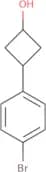
3-(4-Bromophenyl)cyclobutan-1-ol
CAS :Versatile small molecule scaffold
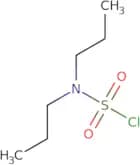
Formule :C10H11BrODegré de pureté :Min. 95%Masse moléculaire :227.1 g/molN,N-Dipropylsulfamoyl chloride
CAS :N,N-Dipropylsulfamoyl chloride is an organic compound with the chemical formula ClCH(NH)SOCl. It is a colorless liquid that is soluble in water and polar organic solvents. The molecule consists of a pyrimidine moiety substituted at one of the nitrogen atoms with an alkylthio group, and a sulfamoyl substituent on the other nitrogen atom. This compound has been used as a diluent for reactions involving other chlorinating agents and to produce cyclohexane derivatives.
Formule :C6H14ClNO2SDegré de pureté :Min. 95%Masse moléculaire :199.7 g/molRef: 3D-KBA87727
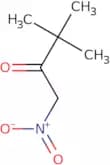
Produit arrêté3,3-Dimethyl-1-nitrobutan-2-one
CAS :3,3-Dimethyl-1-nitrobutan-2-one is a ligand that is used in magnetic resonance spectroscopy. It has an axial symmetry and a square planar geometry with four apical nitrogens and four tetragonally equatorial nitrogens. The oxygen atoms are located equatorially. The ligand has two magnetic isotopes, one of which is 3,3-dimethyl-1-nitrobutan-2-one (DMB) with a nuclear spin of 1/2 and the other being 2,2'-dimethylpropionyloxybutyronitrile (DMPRB) with a nuclear spin of 3/2. The electronic spectrum for DMB spans from about 0.4 to about 10 MHz, while the spectrum for DMPRB spans from about 0.4 to about 5 MHz. 3,3-Dimethyl-1-nitrobutan-2-one also has a chrom
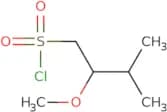
Formule :C6H11NO3Degré de pureté :Min. 95%Masse moléculaire :145.16 g/mol2-Methoxy-3-methylbutane-1-sulfonyl chloride
CAS :Versatile small molecule scaffold
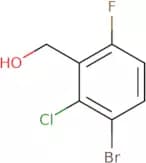
Formule :C6H13ClO3SDegré de pureté :Min. 95%Masse moléculaire :200.68 g/mol3-Bromo-2-chloro-6-fluorobenzyl alcohol
CAS :Versatile small molecule scaffold
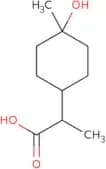
Formule :C7H5BrClFODegré de pureté :Min. 95%Masse moléculaire :239.47 g/mol2-(4-Hydroxy-4-methylcyclohexyl)propanoic acid
CAS :Versatile small molecule scaffold
Formule :C10H18O3Degré de pureté :Min. 95%Masse moléculaire :186.25 g/mol1-Methyl-1,7-diazaspiro[4.5]decane dihydrochloride
CAS :Versatile small molecule scaffold
Formule :C9H20Cl2N2Degré de pureté :Min. 95%Masse moléculaire :227.17 g/mol1-Methyl-3-[(propan-2-yl)carbamoyl]-1H-pyrazole-5-carboxylic acid
CAS :Versatile small molecule scaffoldFormule :C9H13N3O3Degré de pureté :Min. 95%Masse moléculaire :211.22 g/mol9-Oxo-6,7,8,9-tetrahydro-5H-benzo[7]annulene-2-carboxylic acid
CAS :Versatile small molecule scaffoldFormule :C12H12O3Degré de pureté :Min. 95%Masse moléculaire :204.22 g/molN'-(3-Hydroxyphenyl)-N,N-dimethylsulfamide
CAS :Versatile small molecule scaffold
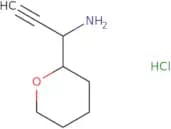
Formule :C8H12N2O3SDegré de pureté :Min. 95%Masse moléculaire :216.26 g/mol1-(Oxan-2-yl)prop-2-yn-1-amine hydrochloride
CAS :Versatile small molecule scaffoldFormule :C8H14ClNODegré de pureté :Min. 95%Masse moléculaire :175.65 g/mol[1-(Fluoromethyl)cyclopropyl]methanesulfonyl chloride
CAS :Versatile small molecule scaffold
Formule :C5H8ClFO2SDegré de pureté :Min. 95%Masse moléculaire :186.63 g/mol(2-Cyanopyrimidin-5-yl)boronic acid
CAS :Versatile small molecule scaffold
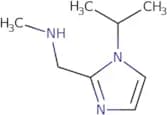
Formule :C5H4BN3O2Degré de pureté :Min. 95%Masse moléculaire :148.92 g/mol1-(1-Isopropyl-1H-imidazol-2-yl)-N-methylmethanamine
CAS :Versatile small molecule scaffold
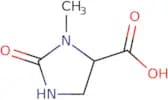
Formule :C8H15N3Degré de pureté :Min. 95%Masse moléculaire :153.22 g/mol3-Methyl-2-oxoimidazolidine-4-carboxylic acid
CAS :Versatile small molecule scaffold
Formule :C5H8N2O3Degré de pureté :Min. 95%Masse moléculaire :144.13 g/mol2,4-Dimethylfuran-3-carboxylic acid
CAS :2,4-Dimethylfuran-3-carboxylic acid is a dianion that is used as a fungicide. It has been shown to be effective against many plant diseases, including powdery mildews, rusts, and sooty molds. The methyl ester of 2,4-dimethylfuran-3-carboxylic acid can be synthesized in the laboratory from cyclohexanone and methylamine. The reactive methyl group of the dianion catalyzes the reaction with hydroxyl groups on other molecules, forming an amide or alkylating agent. This reaction occurs stereoselectively when one of the hydrogens on the carbon adjacent to the carboxylate group is also replaced by a methyl group.
Formule :C7H8O3Degré de pureté :Min. 95%Masse moléculaire :140.14 g/molRef: 3D-QAA05872
Produit arrêté4-Chloro-2-hydroxy-6-methylphenylboronic acid
CAS :Versatile small molecule scaffoldFormule :C7H8BClO3Degré de pureté :Min. 95%Masse moléculaire :186.4 g/molRef: 3D-HYB96150
Produit arrêté2-Bromo-3,3,3-trifluoro-1-propene
CAS :Produit contrôlé2-Bromo-3,3,3-trifluoro-1-propene is a chemical compound that has been synthesized in an asymmetric reaction. The reactant is bromopropane and the product is 2,2,2-trifluoropropene. The methylene group on the propene molecule is activated by the nucleophilic attack of a fluoride ion from hydrogen fluoride to form a cavity with a highly strained bond. The kinetic study of this reaction revealed that the activation energy for the reaction is 42 kJ/mol. Palladium-catalyzed coupling reactions are catalyzed by palladium and require nonpolar solvents such as toluene or dichloromethane. This type of reaction has been shown to be exothermic with an isolated yield of 1%.
Formule :C3H2BrF3Degré de pureté :Min. 95%Couleur et forme :Colorless PowderMasse moléculaire :174.95 g/molRef: 3D-FB11073
Produit arrêté1-Hydroxycyclopentane-1-carbonitrile
CAS :1-Hydroxycyclopentane-1-carbonitrile is a monomer that is hydrolyzed to form benzoin and cyanohydrins. It can be used in the production of scifinder as a monomer or dimerizer.
Formule :C6H9NODegré de pureté :Min. 95%Masse moléculaire :111.14 g/moltert-Butyl (2,2-difluoro-3-hydroxypropyl)carbamate
CAS :Versatile small molecule scaffoldFormule :C10H13NO4Degré de pureté :Min. 95%Masse moléculaire :211.21 g/molRef: 3D-PCC39821
Produit arrêté3-Hydroxy-5-methylpyridine
CAS :3-Hydroxy-5-methylpyridine (3HMP) is a chemical substance that has been classified as an amine. It is a product of the metabolism of purines, which are nitrogenous bases found in DNA and RNA. 3HMP is produced by aerogenic bacteria (such as Enterobacter), and can be used to estimate the number of these bacteria present in water samples. 3HMP has been shown to have antiviral properties against influenza virus, and can be used as a biomarker for the presence of other viruses in animals. 3HMP also has mineralization properties, which have been studied extensively, particularly with regards to pancreatic disease.
Formule :C6H7NODegré de pureté :Min. 95%Couleur et forme :PowderMasse moléculaire :109.13 g/mol4,5-Dihydro-1H-imidazol-2-amine hydrochloride
CAS :Please enquire for more information about 4,5-Dihydro-1H-imidazol-2-amine hydrochloride including the price, delivery time and more detailed product information at the technical inquiry form on this page
Formule :C3H7N3•HClDegré de pureté :Min. 95%Masse moléculaire :121.57 g/mol8-Bromo-2-methylimidazo[1,2-a]pyridine
CAS :Versatile small molecule scaffold
Formule :C8H7N2BrDegré de pureté :Min. 95%Masse moléculaire :211.05 g/mol4,5-Dihydroxy-2,3-Pentanedione
CAS :4,5-Dihydroxy-2,3-pentanedione is a carbonyl compound that is the product of the oxidation of ascorbic acid. It is used in wastewater treatment and has antimicrobial properties against infectious diseases. This compound has been shown to inhibit protein synthesis by binding to the ribosome and preventing the formation of peptide bonds between amino acids. 4,5-Dihydroxy-2,3-pentanedione has also been shown to bind to plasma proteins, which may be due to its acyl chain structure. 4,5-Dihydroxy-2,3-pentanedione can be synthesized in a catalytic mechanism that involves dehydroascorbic acid and molecular oxygen.
Formule :C5H8O4Degré de pureté :Min. 95%Couleur et forme :PowderMasse moléculaire :132.11 g/molPiperyline
CAS :Piperyline is an alkanoic acid that has shown to be effective against skin cancer. It also has antimicrobial properties, which may be due to its ability to bind metal ions and form polymeric compounds. Piperyline inhibits microbial growth by inhibiting the synthesis of proteins and nucleic acids. The antimicrobial activity is related to its cationic polymerization with hydroxyl groups, which forms a structure that can inhibit microbial enzymes and disrupt microbial cell membranes. This compound also interacts with the skin's natural lipids, making it difficult for microorganisms to attach and grow on the skin. Piperyline is synthesized in organic chemistry laboratories as an amide precursor of other pharmaceuticals such as penicillin.
Formule :C16H17NO3Degré de pureté :Min. 95%Masse moléculaire :271.31 g/mol

![1-Methyl-1,7-diazaspiro[4.5]decane dihydrochloride](/_next/image/?url=https%3A%2Fstatic.cymitquimica.com%2Fproducts%2F3D%2Fthumb-webp%2FNKD10054.webp&w=3840&q=75)
![1-Methyl-3-[(propan-2-yl)carbamoyl]-1H-pyrazole-5-carboxylic acid](/_next/image/?url=https%3A%2Fstatic.cymitquimica.com%2Fproducts%2F3D%2Fthumb-webp%2FPVA81813.webp&w=3840&q=75)
![9-Oxo-6,7,8,9-tetrahydro-5H-benzo[7]annulene-2-carboxylic acid](/_next/image/?url=https%3A%2Fstatic.cymitquimica.com%2Fproducts%2F3D%2Fthumb-webp%2FPKB95830.webp&w=3840&q=75)

![[1-(Fluoromethyl)cyclopropyl]methanesulfonyl chloride](/_next/image/?url=https%3A%2Fstatic.cymitquimica.com%2Fproducts%2F3D%2Fthumb-webp%2FPCC96395.webp&w=3840&q=75)






![8-Bromo-2-methylimidazo[1,2-a]pyridine](/_next/image/?url=https%3A%2Fstatic.cymitquimica.com%2Fproducts%2F3D%2Fthumb-webp%2FUXB37475.webp&w=3840&q=75)

