Building Blocks
Sous-catégories appartenant à la catégorie "Building Blocks"
- Acides boroniques et dérivés de l'acide boronique(5.784 produits)
- Building Blocks Chiraux(1.242 produits)
- Building Blocks Hydrocarbonés(6.105 produits)
- Building Blocks organiques(61.061 produits)
205399 produits trouvés pour "Building Blocks"
2-(4-Amino-1h-pyrazol-1-yl)ethanol
CAS :Versatile small molecule scaffold
Formule :C5H9N3ODegré de pureté :Min. 95%Masse moléculaire :127.15 g/mol6-Oxa-2-azaspiro[3.4]octane HCl
CAS :Versatile small molecule scaffold
Formule :C6H12ClNODegré de pureté :Min. 95%Masse moléculaire :149.62 g/mol4-Bromo-2-chloro-6-fluorobenzaldehyde
CAS :Versatile small molecule scaffoldFormule :C7H3BrClFODegré de pureté :Min. 95%Masse moléculaire :237.45 g/molRef: 3D-EMB62133
Produit arrêté(e)-(2-(1-(tert-butoxycarbonyl)piperidin-4-yl)vinyl)boronic acid pinacol ester
CAS :Versatile small molecule scaffold
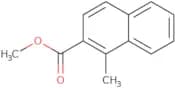
Formule :C18H32BNO4Degré de pureté :Min. 95%Masse moléculaire :337.27 g/molMethyl 1-methylnaphthalene-2-carboxylate
CAS :Versatile small molecule scaffold
Formule :C13H12O2Degré de pureté :Min. 95%Masse moléculaire :200.23 g/molRef: 3D-YCA72117
Produit arrêté1-Boc-pyrrolidine-3-ethanol
CAS :Versatile small molecule scaffold
Formule :C11H21NO3Degré de pureté :Min. 95%Masse moléculaire :215.29 g/molRef: 3D-KGA13254
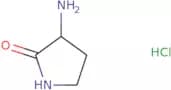
Produit arrêté3-aminopyrrolidin-2-one hcl
CAS :3-Aminopyrrolidin-2-one hcl is an antibiotic that is used to treat tuberculosis. It inhibits the enzyme transacylase, which catalyses the conversion of L-lysine into L-pipecolic acid in bacteria. This antibiotic has been shown to be effective against Mycobacterium tuberculosis and Mycobacterium avium complex. 3-Aminopyrrolidin-2-one hcl has a broad spectrum of activity against gram positive and gram negative bacteria, but it is not active against acid-fast bacteria.
Formule :C4H9ClN2ODegré de pureté :Min. 95%Masse moléculaire :136.58 g/molRef: 3D-SEA87949
Produit arrêté4(4,4,5,5-Tetramethyl-1,3,2-dioxaborolan-2-yl)-2,3-dihydro-1H-inden-1-one
CAS :Versatile small molecule scaffold
Formule :C15H19BO3Degré de pureté :Min. 95%Masse moléculaire :258.12 g/molRef: 3D-WYB23908
Produit arrêtéMethyl 5-Hexynoate
CAS :Methyl 5-hexynoate is a synthetic product that can be synthesized from soybean lipoxygenase and hydrogenation reduction. This product has been shown to be a useful synthon for the synthesis of monoclonal antibodies with high binding affinity. The synthetic pathway, which involves cross-coupling and asymmetric synthesis, is outlined in the diagram below. The following are the steps involved in the production of methyl 5-hexynoate: 1) Addition of ethyl bromide to terminal alkynes 2) Addition of hydrochloric acid 3) Reaction with potassium tert-butoxide 4) Hydrogenation reduction 5) Cross-coupling reaction 6) Asymmetric synthesis
Formule :C7H10O2Degré de pureté :Min. 95%Masse moléculaire :126.15 g/molRef: 3D-CDA75851
Produit arrêté3-(iodomethyl)oxetane
CAS :Versatile small molecule scaffold
Formule :C4H7IODegré de pureté :Min. 95%Masse moléculaire :198 g/molRef: 3D-DQB01377
Produit arrêté4-Bromo-2,6-dimethoxybenzaldehyde
CAS :Versatile small molecule scaffold
Formule :C9H9BrO3Degré de pureté :Min. 95%Masse moléculaire :245.07 g/molRef: 3D-EEC05038
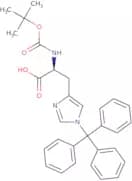
Produit arrêtéBoc-His(Trt)-OH
CAS :Boc-His(Trt)-OH is a chemical compound that has been used in the laboratory to study uptake and binding of compounds. It is stable in complex with albumin, which has led to its use as a model system for studying hepatic steatosis. This chemical can be synthesized by solid-phase synthesis with trifluoroacetic acid and polypeptide synthesis. FT-IR spectroscopy has been used to characterize Boc-His(Trt)-OH, revealing its chemical diversity.
Formule :C30H31N3O4Degré de pureté :Min. 95%Couleur et forme :PowderMasse moléculaire :497.58 g/mol4-Chloro-8-quinolinol
CAS :4-Chloro-8-quinolinol is a quinoline derivative that has been shown to have pharmacological effects. It is used in the synthesis of other compounds, such as 5-chloro-8-hydroxyquinoline, which is used in the treatment of cancer. 4-Chloro-8-quinolinol can also be prepared by oxidizing 5,6,7,8 tetrachloroquinoline with chlorine and ammonia. The photophysical properties of this compound are analogous to those of benzothiazole derivatives. The fluorescence emission spectrum ranges from 360 nm to 450 nm with a maximum at 390 nm and emission intensity at 350 nm. This compound exhibits fungitoxicity against Penicillium notatum and Aspergillus fumigatus.
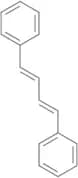
Formule :C9H6ClNODegré de pureté :Min. 95%Masse moléculaire :179.6 g/moltrans,trans-1,4-Diphenyl-1,3-butadiene
CAS :Used in the preparation of metal-diene reagents (e.g. for carbocyclization)
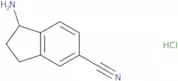
Formule :C16H14Degré de pureté :Min. 95%Masse moléculaire :206.28 g/mol1-Amino-2,3-dihydro-1H-indene-5-carbonitrile hydrochloride
CAS :Versatile small molecule scaffoldFormule :C10H11ClN2Degré de pureté :Min. 95%Masse moléculaire :194.66 g/molRef: 3D-DLB55597
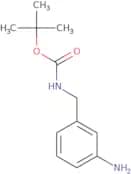
Produit arrêté(3-Aminobenzyl)carbamic acid tert-butyl ester
CAS :Versatile small molecule scaffold
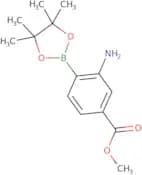
Formule :C12H18N2O2Degré de pureté :Min. 95%Masse moléculaire :222.28 g/molMethyl 3-amino-4-(tetramethyl-1,3,2-dioxaborolan-2-yl)benzoate
CAS :Versatile small molecule scaffold
Formule :C14H20BNO4Degré de pureté :Min. 95%Masse moléculaire :277.13 g/molRef: 3D-AJB68926
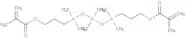
Produit arrêtéMethacryloxypropyl terminated polydimethylsiloxanes
CAS :MW 20,000 - 30,000
Formule :C20H40O6Si3Degré de pureté :Min. 95%Masse moléculaire :460.8 g/molRef: 3D-ICA13003
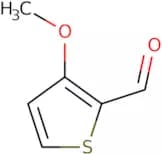
Produit arrêté3-Methoxythiophene-2-carbaldehyde
CAS :3-Methoxythiophene-2-carbaldehyde is a ligand that has been shown to form a stable complex with potassium chloride. This compound is also reactive, and can be stabilized in the reaction vessel. In the presence of sulfate ions, 3-methoxythiophene-2-carbaldehyde will react to form a phosphotungstic acid precipitate. The dehydrated salt can be recrystallized by adding phosphotungstic acid, which stabilizes the product.
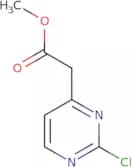
Formule :C6H6O2SDegré de pureté :Min. 95%Masse moléculaire :142.18 g/molMethyl 2-(2-chloropyrimidin-4-yl)acetate
CAS :Versatile small molecule scaffold
Formule :C7H7ClN2O2Degré de pureté :Min. 95%Masse moléculaire :186.59 g/molRef: 3D-RYB12971
Produit arrêté3,6-Dichloropicolinonitrile
CAS :3,6-Dichloropicolinonitrile is a peroxide that is used in the synthesis of organic compounds. It is produced by the reaction of sodium carbonate and hydrochloric acid with nitric acid as a catalyst. 3,6-Dichloropicolinonitrile has been shown to be more selective than other oxidizing agents such as hydrogen peroxide and potassium permanganate. The product can then be purified by adding diacetate, which selectively reacts with the chlorine to form acetyl chloride and glycolic acid. The resulting mixture can then be distilled to produce 3,6-dichloropicolinonitrile in high purity. 3,6-Dichloropicolinonitrile can also be used in electrochemical methods for the synthesis of cyanides or biochemically for virulent products such as pesticides and organic solvents.
Formule :C6H2Cl2N2Degré de pureté :Min. 95%Masse moléculaire :173 g/molRef: 3D-BAA70218
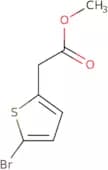
Produit arrêtéMethyl 2-(5-bromothiophen-2-yl)acetate
CAS :Versatile small molecule scaffold
Formule :C7H7BrO2SDegré de pureté :Min. 95%Masse moléculaire :235.1 g/molRef: 3D-SCA13756
Produit arrêté5-Chloro-3-methylpyridazine hydrochloride
CAS :Versatile small molecule scaffoldFormule :C5H6Cl2N2Degré de pureté :Min. 95%Masse moléculaire :165 g/molRef: 3D-DLD47296
Produit arrêtéTripropylphosphine
CAS :Tripropylphosphine is a fatty acid that can be synthesized by reacting tripropyl alcohol with phosphorus trichloride. Tripropylphosphine is soluble in organic solvents, and has an optical rotation of +58°. It has been shown to have cancer-inhibiting properties, as well as the ability to inhibit tumor growth and induce apoptosis in cancer cells. This compound may also be used as a growth regulator, since it inhibits the synthesis of certain proteins and enzymes.
Formule :C9H21PDegré de pureté :Min. 95%Masse moléculaire :160.24 g/molRef: 3D-FT155680
Produit arrêté1-(4-Ethylphenyl)-2,2,2-trifluoroethan-1-ol
CAS :Versatile small molecule scaffold
Formule :C10H11F3ODegré de pureté :Min. 95%Masse moléculaire :204.19 g/molRef: 3D-GFA25225
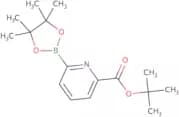
Produit arrêtétert-Butyl 6-(4,4,5,5-tetramethyl-1,3,2-dioxaborolan-2-yl)picolinate
CAS :Versatile small molecule scaffoldFormule :C16H24BNO4Degré de pureté :Min. 95%Masse moléculaire :305.2 g/mol4,5-Dihydroxy-2,3-Pentanedione
CAS :4,5-Dihydroxy-2,3-pentanedione is a carbonyl compound that is the product of the oxidation of ascorbic acid. It is used in wastewater treatment and has antimicrobial properties against infectious diseases. This compound has been shown to inhibit protein synthesis by binding to the ribosome and preventing the formation of peptide bonds between amino acids. 4,5-Dihydroxy-2,3-pentanedione has also been shown to bind to plasma proteins, which may be due to its acyl chain structure. 4,5-Dihydroxy-2,3-pentanedione can be synthesized in a catalytic mechanism that involves dehydroascorbic acid and molecular oxygen.
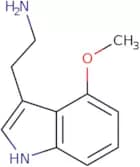
Formule :C5H8O4Degré de pureté :Min. 95%Couleur et forme :PowderMasse moléculaire :132.11 g/mol2-(4-Methoxy-1H-indol-3-yl)ethan-1-amine
CAS :Produit contrôlé2-(4-Methoxy-1H-indol-3-yl)ethan-1-amine is a synthetic compound that belongs to the class of organocatalysts. It is a serotonin receptor agonist, and has been shown to act as an antagonist at the 5HT2AR. This drug has been shown to have stereoselective effects in vitro, with high affinity for the S form of 5HT2AR. 2-(4-Methoxy-1H-indol-3-yl)ethan-1-amine also has some activity against dopamine receptors, but not as much as other compounds in its class. !--[if !supportLists]-->· !--[endif]-->This drug binds to speciogynine and alstovenine receptors, which are part of the opioid system.!--[if !supportLists]-->· !--[endif]-->Modelling studies suggest that 2-(4-M
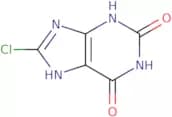
Formule :C11H14N2ODegré de pureté :Min. 95%Couleur et forme :PowderMasse moléculaire :190.24 g/mol8-Chloro-3,7-dihydro-1H-purine-2,6-dione
CAS :8-Chloro-3,7-dihydro-1H-purine-2,6-dione is a reactive molecule that binds to the active site of bacterial cyclic nucleotide phosphodiesterases and inhibits their activity. This inhibition prevents the breakdown of cAMP and cGMP, which are important second messengers in eukaryotic cells. 8-Chloro-3,7-dihydro-1H-purine-2,6-dione is also a potent inhibitor of protein synthesis and has been used in research studies on wheat leaves.
Formule :C5H3N4O2ClDegré de pureté :Min. 95%Couleur et forme :PowderMasse moléculaire :186.56 g/molH-Ala-Ala-Pro-OH trifluoroacetate
CAS :Please enquire for more information about H-Ala-Ala-Pro-OH trifluoroacetate including the price, delivery time and more detailed product information at the technical inquiry form on this page
Formule :C11H19N3O4•C2HF3O2Degré de pureté :Min. 95%Masse moléculaire :371.31 g/molPoly(dioxanone)
CAS :Poly(dioxanone) is a biocompatible polymer that has been shown to promote bone growth in animal models. It is a cross-linking agent and can be used as an alternative to copper chromite, which is the most common cross-linking agent used in tissue engineering. Poly(dioxanone) has been shown to promote bone growth by stimulating the production of growth factors and increasing the activity of osteoblasts, cells that produce new bone. The material also promotes matrix deposition and remodeling, leading to increased bone density.
Formule :(C4H6O3)nDegré de pureté :Min. 95%Couleur et forme :PowderRef: 3D-FP34560
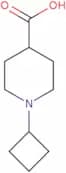
Produit arrêté1-Cyclobutylpiperidine-4-carboxylic acid
CAS :Versatile small molecule scaffold
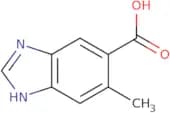
Formule :C10H17NO2Degré de pureté :Min. 95%Masse moléculaire :183.25 g/mol6-Methylbenzimidazole-5-carboxylic acid
CAS :Versatile small molecule scaffold
Formule :C9H8N2O2Degré de pureté :Min. 95%Masse moléculaire :176.17 g/molRef: 3D-KAA35176
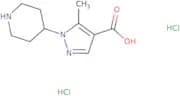
Produit arrêté5-Methyl-1-(piperidin-4-yl)-1H-pyrazole-4-carboxylic acid dihydrochloride
CAS :Versatile small molecule scaffoldFormule :C10H17Cl2N3O2Degré de pureté :Min. 95%Masse moléculaire :282.16 g/molRef: 3D-DXC56745
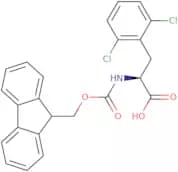
Produit arrêtéFmoc-2,6-dichloro-L-phenylalanine
CAS :Please enquire for more information about Fmoc-2,6-dichloro-L-phenylalanine including the price, delivery time and more detailed product information at the technical inquiry form on this page
Formule :C24H19Cl2NO4Degré de pureté :Min. 95%Masse moléculaire :456.32 g/mol1-(3-Amino-1H-pyrazol-1-yl)-2-methylpropan-2-ol
CAS :Versatile small molecule scaffold
Formule :C7H13N3ODegré de pureté :Min. 95%Masse moléculaire :155.2 g/molRef: 3D-DQB01347
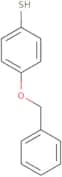
Produit arrêté4-(Benzyloxy)thiophenol
CAS :Versatile small molecule scaffold
Formule :C13H12OSDegré de pureté :Min. 95%Masse moléculaire :216.3 g/molRef: 3D-PPA33959
Produit arrêté2-[(tert-Butoxy)carbonyl]-2-azabicyclo[3.1.0]hexane-5-carboxylic acid
CAS :Versatile small molecule scaffold
Formule :C11H17NO4Degré de pureté :Min. 95%Masse moléculaire :227.26 g/molRef: 3D-BAC00454
Produit arrêtéPiperyline
CAS :Piperyline is an alkanoic acid that has shown to be effective against skin cancer. It also has antimicrobial properties, which may be due to its ability to bind metal ions and form polymeric compounds. Piperyline inhibits microbial growth by inhibiting the synthesis of proteins and nucleic acids. The antimicrobial activity is related to its cationic polymerization with hydroxyl groups, which forms a structure that can inhibit microbial enzymes and disrupt microbial cell membranes. This compound also interacts with the skin's natural lipids, making it difficult for microorganisms to attach and grow on the skin. Piperyline is synthesized in organic chemistry laboratories as an amide precursor of other pharmaceuticals such as penicillin.
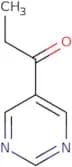
Formule :C16H17NO3Degré de pureté :Min. 95%Masse moléculaire :271.31 g/mol1-(Pyrimidin-5-yl)propan-1-one
CAS :Versatile small molecule scaffold
Formule :C7H8N2ODegré de pureté :Min. 95%Masse moléculaire :136.15 g/molN-(2-Methyl-6-benzoxazolyl)-2-propenamide
CAS :Please enquire for more information about N-(2-Methyl-6-benzoxazolyl)-2-propenamide including the price, delivery time and more detailed product information at the technical inquiry form on this page
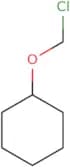
Formule :C11H10N2O2Degré de pureté :Min. 95%Masse moléculaire :202.21 g/molChloromethyl cyclohexyl ether
CAS :Chloromethyl cyclohexyl ether is a light-sensitive cross-linking agent that can be activated by light. It has two functional groups, a hydroxyl group and a chlorine atom. The skeleton of chloromethyl cyclohexyl ether is composed of an alicyclic hydrocarbon with six carbons and the molecule contains two divalent hydrocarbons, one of which is a trifluoromethyl group. Chloromethyl cyclohexyl ether has been used as a solid catalyst in the synthesis of amides and is also used in hyperproliferative diseases such as cancer.
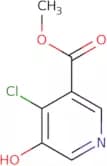
Formule :C7H13ClODegré de pureté :Min. 95%Masse moléculaire :148.63 g/molMethyl 4-chloro-5-hydroxy-3-pyridinecarboxylate
CAS :Versatile small molecule scaffold
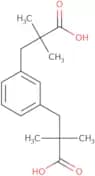
Formule :C7H6ClNO3Degré de pureté :Min. 95%Masse moléculaire :187.58 g/mol±,±,±²,±²-Tetramethyl-1,3-benzenedipropionic acid
CAS :Versatile small molecule scaffold
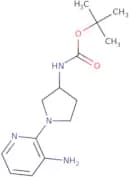
Formule :C16H22O4Degré de pureté :Min. 95%Masse moléculaire :278.34 g/mol(R)-tert-Butyl 1-(3-aminopyridin-2-yl)pyrrolidin-3-ylcarbamate
CAS :Versatile small molecule scaffoldFormule :C14H22N4O2Degré de pureté :Min. 95%Masse moléculaire :278.35 g/mol2,5-Dimethoxytetrahydrofuran
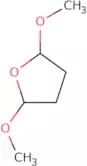
CAS :2,5-Dimethoxytetrahydrofuran is an organic compound that can be synthesized from 2,5-dimethoxybenzaldehyde and tetrahydrofuran. The asymmetric synthesis of this compound was first reported in 1968. The nmr spectrum of 2,5-dimethoxytetrahydrofuran shows two signals at δ 5.89 and δ 7.03 ppm. This compound is soluble in water and organic solvents such as dichloromethane, benzene, toluene, chloroform, and methanol. 2,5-Dimethoxytetrahydrofuran has been shown to have pain-relieving effects using the formalin test in mice and rats. It also has antineoplastic properties when used with other quinoline derivatives.br>br> 2,5-Dimethoxytetrahydrofuran is a white solid
Formule :C6H12O3Degré de pureté :Min. 95%Couleur et forme :PowderMasse moléculaire :132.16 g/molMacaridine
CAS :Please enquire for more information about Macaridine including the price, delivery time and more detailed product information at the technical inquiry form on this page
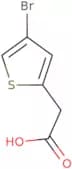
Formule :C13H13NO2Degré de pureté :Min. 95%Masse moléculaire :215.25 g/mol4-Bromothiophene-2-acetic acid
CAS :Versatile small molecule scaffold
Formule :C6H5BrO2SDegré de pureté :Min. 95%Masse moléculaire :221.07 g/molRef: 3D-LGA94289
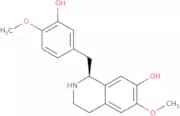
Produit arrêtéNor reticuline
CAS :Norreticuline is a virus-induced gene that is primarily found in the opium poppy, Papaver somniferum. Norreticuline has been shown to be biosynthesized from reticuline by a series of enzymatic reactions. It is also involved in the metabolic pathway of papaverine, which is an alkaloid that has been used as a vasodilator and anti-hypertensive drug. The optimum pH for norreticuline production is between 6 and 7. Norreticuline has demonstrated anticancer activity against various tumor cells, such as breast cancer cells and colon cancer cells. Norreticuline may also have antiviral properties due to its ability to inhibit viral DNA replication and synthesis of viral proteins.
Formule :C18H21NO4Degré de pureté :Min. 95%Masse moléculaire :315.36 g/mol


![6-Oxa-2-azaspiro[3.4]octane HCl](/_next/image/?url=https%3A%2Fstatic.cymitquimica.com%2Fproducts%2F3D%2Fthumb-webp%2FJEC65612.webp&w=3840&q=75)













![2-[(tert-Butoxy)carbonyl]-2-azabicyclo[3.1.0]hexane-5-carboxylic acid](/_next/image/?url=https%3A%2Fstatic.cymitquimica.com%2Fproducts%2F3D%2Fthumb-webp%2FBAC00454.webp&w=3840&q=75)