Building Blocks
Cette section contient des produits fondamentaux pour la synthèse de composés organiques et biologiques. Building blocks sont les matériaux de départ essentiels utilisés pour construire des molécules complexes à travers diverses réactions chimiques. Ils jouent un rôle crucial dans la découverte de médicaments, la science des matériaux et la recherche chimique. Chez CymitQuimica, nous offrons une gamme diversifiée de building blocks de haute qualité pour soutenir vos recherches innovantes et projets industriels, en vous assurant de disposer des composants essentiels pour une synthèse réussie.
Sous-catégories appartenant à la catégorie "Building Blocks"
- Acides boroniques et dérivés de l'acide boronique(5.756 produits)
- Building Blocks Chiraux(1.242 produits)
- Building Blocks Hydrocarbonés(6.095 produits)
- Building Blocks organiques(61.038 produits)
196817 produits trouvés pour "Building Blocks"
Trier par
Degré de pureté (%)
0
100
|
0
|
50
|
90
|
95
|
100
5-Oxo-4H,5H-[1,2,4]triazolo[1,5-a]quinazoline-2-carboxylic acid
CAS :<p>Versatile small molecule scaffold</p>Formule :C10H6N4O3Degré de pureté :Min. 95%Masse moléculaire :230.2 g/molMethyl 4-hydroxy-2-sulfanylquinoline-3-carboxylate
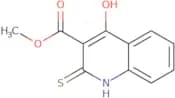
CAS :<p>Methyl 4-hydroxy-2-sulfanylquinoline-3-carboxylate (MSQ) is a synthetic molecule that has shown to have antiviral activity against the hepatitis B virus. This compound is a competitive inhibitor of the virus and prevents it from infecting cells. MSQ has also been shown to inhibit other viruses, such as herpes simplex virus, influenza A and C, rotavirus, and human immunodeficiency virus type 1 (HIV-1). The high inhibition of MSQ can be attributed to its ability to form hydrogen bonds with the amino acid residues in viral proteins. Additionally, MSQ interacts with anions in the active site of the enzymes that are necessary for viral replication through alkylation reactions.<br>MSQ has been found to be selective for influenza A and C by binding at different sites on the enzyme compared to other compounds like zanamivir and oseltamivir. The single-crystal x</p>Formule :C11H9NO3SDegré de pureté :Min. 95%Masse moléculaire :235.26 g/mol[(2-Bromo-5-chlorophenyl)methyl](2-methylpropyl)amine
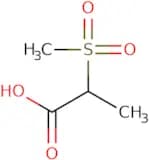
CAS :<p>Versatile small molecule scaffold</p>Formule :C11H15BrClNDegré de pureté :Min. 95%Masse moléculaire :276.6 g/mol2-(Methylsulfonyl)propanoic acid
CAS :<p>Versatile small molecule scaffold</p>Formule :C4H8O4SDegré de pureté :Min. 95%Masse moléculaire :152.17 g/molRef: 3D-JHB28027
Produit arrêté1-(4-Fluorophenyl)-5-methyl-1H-pyrazol-4-amine hydrochloride
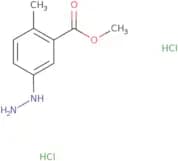
CAS :<p>Versatile small molecule scaffold</p>Formule :C10H11ClFN3Degré de pureté :Min. 95%Masse moléculaire :227.66 g/molMethyl 5-hydrazinyl-2-methylbenzoate dihydrochloride
CAS :<p>Versatile small molecule scaffold</p>Formule :C9H14Cl2N2O2Degré de pureté :Min. 95%Masse moléculaire :253.12 g/molRef: 3D-JBD31639
Produit arrêté8-Thia-1-azabicyclo[3.2.1]octane-5-carboxylic acid 8,8-dioxide
CAS :<p>Versatile small molecule scaffold</p>Formule :C7H11NO4SDegré de pureté :Min. 95%Masse moléculaire :205.2 g/mol4-Methyl-5-(methylsulfanyl)-1,3-thiazol-2-amine
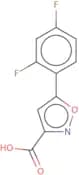
CAS :<p>Versatile small molecule scaffold</p>Formule :C5H8N2S2Degré de pureté :Min. 95%Masse moléculaire :160.3 g/mol5-(2,4-Difluorophenyl)Isoxazole-3-carboxylic acid
CAS :<p>Versatile small molecule scaffold</p>Formule :C10H5F2NO3Degré de pureté :Min. 95%Masse moléculaire :225.15 g/mol2-Cyclopropyl-6-methylbenzoic acid
CAS :<p>Versatile small molecule scaffold</p>Formule :C11H12O2Degré de pureté :Min. 95%Masse moléculaire :176.21 g/molRef: 3D-PZC69597
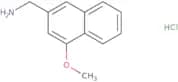
Produit arrêté(4-Methoxynaphthalen-2-yl)methanamine hydrochloride
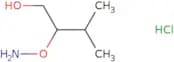
CAS :<p>Versatile small molecule scaffold</p>Formule :C12H14ClNODegré de pureté :Min. 95%Masse moléculaire :223.7 g/mol2-(Aminooxy)-3-methylbutan-1-ol hydrochloride
CAS :<p>Versatile small molecule scaffold</p>Formule :C5H14ClNO2Degré de pureté :Min. 95%Masse moléculaire :155.62 g/mol10-Oxa-4-azatricyclo[5.2.1.0,2,6]dec-8-ene hydrochloride
CAS :<p>Versatile small molecule scaffold</p>Formule :C8H12ClNODegré de pureté :Min. 95%Masse moléculaire :173.64 g/mol2-Bromo-3,3,3-trifluoro-1-propene
CAS :Produit contrôlé<p>2-Bromo-3,3,3-trifluoro-1-propene is a chemical compound that has been synthesized in an asymmetric reaction. The reactant is bromopropane and the product is 2,2,2-trifluoropropene. The methylene group on the propene molecule is activated by the nucleophilic attack of a fluoride ion from hydrogen fluoride to form a cavity with a highly strained bond. The kinetic study of this reaction revealed that the activation energy for the reaction is 42 kJ/mol. Palladium-catalyzed coupling reactions are catalyzed by palladium and require nonpolar solvents such as toluene or dichloromethane. This type of reaction has been shown to be exothermic with an isolated yield of 1%.</p>Formule :C3H2BrF3Degré de pureté :Min. 95%Couleur et forme :Colorless PowderMasse moléculaire :174.95 g/molRef: 3D-FB11073
Produit arrêté2-Oxa-spiro[3.3]heptan-6-ol
CAS :<p>Versatile small molecule scaffold</p>Formule :C6H10O2Degré de pureté :Min. 95%Masse moléculaire :114.14 g/molRef: 3D-NEC38108
Produit arrêté2-Cyano-5-fluorophenol
CAS :<p>2-Cyano-5-fluorophenol is an organic compound that is used as a precursor to medicines and other chemicals. It reacts with calcium hydroxide in water to form 2-cyano-5-hydroxyfluorobenzene, which can be hydrolyzed to form 2-cyano-5-chlorofluorobenzene. This compound can also react with sodium hydroxide to produce sodium cyanate, which can be hydrolyzed to form sodium chloride and hydrogen cyanide gas. The alkali metal ions are needed for this reaction, which is why the product should not be exposed to water or moisture. 2-Cyano-5-fluorophenol has been shown to have liquid crystal properties and is used in the production of certain types of polymers. 2Cyano-5Fluorophenol crystals are also used in some medicines such as acetaminophen (paracetamol).</p>Formule :C7H4FNODegré de pureté :Min. 95%Masse moléculaire :137.11 g/molRef: 3D-LHA59001
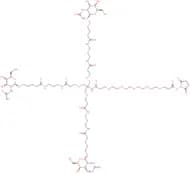
Produit arrêtéTri-b-GalNAc-PEG5-NHS ester
CAS :<p>Tri-GalNAc-NHS ester is a multivalent molecule composed of three GalNAc cluster arms. It is a protein degrader and a ligand of the asialoglycoprotein receptor (ASGPR) used for the development of targeted therapies for liver diseases. The GalNAc arms enable high-affinity binding to the ASGPR on hepatocyte surfaces. The crucial functional group, N-hydroxysuccinimide (NHS) ester, is known for its ease of conjugation with various biomolecules possessing amine (NH2) groups. This biocompatible reaction strategy allows the design and development of targeted conjugates such as drug-GalNAc conjugates, siRNA delivery vehicles, or probes for ASGPR imaging in the liver.</p>Formule :C79H137N11O37Degré de pureté :Min. 95%Couleur et forme :PowderMasse moléculaire :1,832.99 g/mol
![5-Oxo-4H,5H-[1,2,4]triazolo[1,5-a]quinazoline-2-carboxylic acid](/_next/image/?url=https%3A%2Fstatic.cymitquimica.com%2Fproducts%2F3D%2Fthumb-webp%2FJWC98315.webp&w=3840&q=75)

amine](/_next/image/?url=https%3A%2Fstatic.cymitquimica.com%2Fproducts%2F3D%2Fthumb-webp%2FSJC31753.webp&w=3840&q=75)

![8-Thia-1-azabicyclo[3.2.1]octane-5-carboxylic acid 8,8-dioxide](/_next/image/?url=https%3A%2Fstatic.cymitquimica.com%2Fproducts%2F3D%2Fthumb-webp%2FRPD13848.webp&w=3840&q=75)


![10-Oxa-4-azatricyclo[5.2.1.0,2,6]dec-8-ene hydrochloride](/_next/image/?url=https%3A%2Fstatic.cymitquimica.com%2Fproducts%2F3D%2Fthumb-webp%2FPZC05833.webp&w=3840&q=75)

![2-Oxa-spiro[3.3]heptan-6-ol](/_next/image/?url=https%3A%2Fstatic.cymitquimica.com%2Fproducts%2F3D%2Fthumb-webp%2FNEC38108.webp&w=3840&q=75)