Building Blocks
Cette section contient des produits fondamentaux pour la synthèse de composés organiques et biologiques. Building blocks sont les matériaux de départ essentiels utilisés pour construire des molécules complexes à travers diverses réactions chimiques. Ils jouent un rôle crucial dans la découverte de médicaments, la science des matériaux et la recherche chimique. Chez CymitQuimica, nous offrons une gamme diversifiée de building blocks de haute qualité pour soutenir vos recherches innovantes et projets industriels, en vous assurant de disposer des composants essentiels pour une synthèse réussie.
Sous-catégories appartenant à la catégorie "Building Blocks"
- Acides boroniques et dérivés de l'acide boronique(5.778 produits)
- Building Blocks Chiraux(1.243 produits)
- Building Blocks Hydrocarbonés(6.099 produits)
- Building Blocks organiques(61.038 produits)
205376 produits trouvés pour "Building Blocks"
Trier par
Degré de pureté (%)
0
100
|
0
|
50
|
90
|
95
|
100
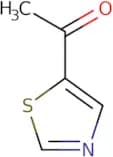
1-(5-Thiazolyl)ethanone
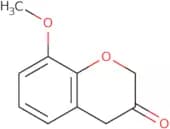
CAS :1-(5-Thiazolyl)ethanone is an antimicrobial agent that has been shown to be active against staphylococcus and other bacteria. It is a nucleophilic reagent that reacts with the amine group of amino acids in proteins, which leads to the formation of protein adducts. 1-(5-Thiazolyl)ethanone has been found to be safe for use in humans and animals and does not have any significant side effects. The chemical is also able to kill cancer cells by inhibiting DNA synthesis, RNA synthesis, and protein synthesis. This drug has been shown to have antibacterial activity against a number of different bacterial strains, including methicillin-resistant Staphylococcus aureus (MRSA) isolates.Formule :C5H5NOSDegré de pureté :Min. 95%Masse moléculaire :127.16 g/mol8-Methoxychroman-3-one
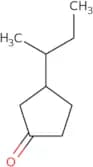
CAS :8-Methoxychroman-3-one is a carboxylic acid that has been chemically modified to contain an acrylonitrile group. It can be synthesized by the reaction of nitric acid and glycidyl methacrylate. 8-Methoxychroman-3-one is used as a building block in organic synthesis. It is also used as a precursor for the production of other chemicals, such as dyes and pharmaceuticals. This compound can be converted to optically active forms by reacting with an optically active amine such as (S)-(-)-2-(tert-butyldimethylsilyl)azide or (R)-(+)-2-(tert-butyldimethylsilyl)azide. 8-Methoxychroman-3-one can be hydrolyzed with an aluminum alkoxide to produce glycidol, which is used in the production of polyurethFormule :C10H10O3Degré de pureté :Min. 95%Masse moléculaire :178.18 g/mol3-(Butan-2-yl)cyclopentan-1-one
CAS :Versatile small molecule scaffold
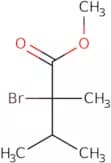
Formule :C9H16ODegré de pureté :Min. 95%Masse moléculaire :140.22 g/molMethyl 2-bromo-2,3-dimethylbutanoate
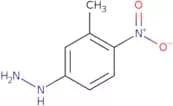
CAS :Versatile small molecule scaffoldFormule :C7H13BrO2Degré de pureté :Min. 95%Masse moléculaire :209.08 g/mol(3-Methyl-4-nitrophenyl)hydrazine
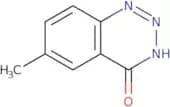
CAS :3-Methyl-4-nitrophenylhydrazine is a metabolic product of clozapine and has been found to be a potent neuroleptic agent. 3-Methyl-4-nitrophenylhydrazine has been shown to inhibit the uptake of dopamine by binding to the dopamine transporter, which leads to an increase in dopaminergic activity. This compound also inhibits the synthesis of polyphosphoric acid, which may be due to its ability to act as an antidopaminergic agent.Formule :C7H9N3O2Degré de pureté :Min. 95%Masse moléculaire :167.17 g/mol6-Methyl-3,4-dihydro-1,2,3-benzotriazin-4-one
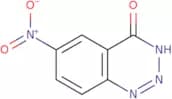
CAS :Versatile small molecule scaffoldFormule :C8H7N3ODegré de pureté :Min. 95%Masse moléculaire :161.16 g/mol6-Nitro-3,4-dihydro-1,2,3-benzotriazin-4-one
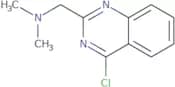
CAS :Versatile small molecule scaffoldFormule :C7H4N4O3Degré de pureté :Min. 95%Masse moléculaire :192.13 g/mol4-Chloro-N,N-dimethylquinazolin-2-amine
CAS :4-Chloro-N,N-dimethylquinazolin-2-amine is a silicone that is used as an active substance in polydimethylsiloxane. It has a cyclic structure and transesterification reaction with alkanoic acid. This active substance has hydrophobic properties that make it suitable for use in deodorizing and encapsulated products. 4-Chloro-N,N-dimethylquinazolin-2-amine also has the ability to react with alcohols to form esters, which can be used as solvents or fragrances.
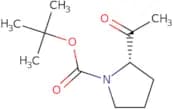
Formule :C11H12ClN3Degré de pureté :Min. 95%Masse moléculaire :221.68 g/mol(S)-tert-Butyl 2-acetylpyrrolidine-1-carboxylate
CAS :Versatile small molecule scaffold
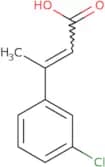
Formule :C11H19NO3Degré de pureté :Min. 95%Masse moléculaire :213.28 g/mol3-(3-Chlorophenyl)but-2-enoic acid
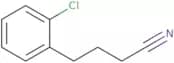
CAS :Versatile small molecule scaffoldFormule :C10H9ClO2Degré de pureté :Min. 95%Masse moléculaire :196.63 g/mol4-(2-Chlorophenyl)butanenitrile
CAS :Versatile small molecule scaffold
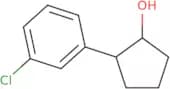
Formule :C10H10ClNDegré de pureté :Min. 95%Masse moléculaire :179.64 g/mol2-(3-Chlorophenyl)cyclopentan-1-ol
CAS :Versatile small molecule scaffold
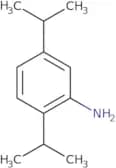
Formule :C11H13ClODegré de pureté :Min. 95%Masse moléculaire :196.67 g/mol2,5-Diisopropylaniline
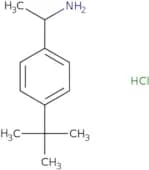
CAS :Versatile small molecule scaffoldFormule :C12H19NDegré de pureté :Min. 95%Masse moléculaire :177.29 g/mol1-(4-tert-Butylphenyl)ethanamine HCl
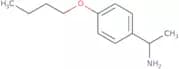
CAS :Versatile small molecule scaffoldFormule :C12H19N·HClDegré de pureté :Min. 95%Masse moléculaire :213.75 g/mol1-(4-Butoxyphenyl)ethanamine
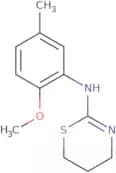
CAS :Versatile small molecule scaffoldFormule :C12H19NODegré de pureté :Min. 95%Masse moléculaire :193.28 g/molN-(2-Methoxy-5-methylphenyl)-5,6-dihydro-4H-1,3-thiazin-2-amine
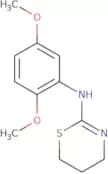
CAS :Versatile small molecule scaffoldFormule :C12H16N2OSDegré de pureté :Min. 95%Masse moléculaire :236.34 g/molN-(2,5-Dimethoxyphenyl)-5,6-dihydro-4H-1,3-thiazin-2-amine
CAS :Versatile small molecule scaffoldFormule :C12H16N2O2SDegré de pureté :Min. 95%Masse moléculaire :252.33 g/mol1-[(2-Bromophenyl)methyl]-4-methylpiperazine
CAS :Produit contrôléVersatile small molecule scaffoldFormule :C12H17BrN2Degré de pureté :Min. 95%Masse moléculaire :269.18 g/mol3-Phenyl-3-(propan-2-yl)azetidine hydrochloride
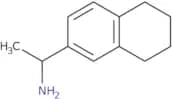
CAS :Versatile small molecule scaffoldFormule :C12H18ClNDegré de pureté :Min. 95%Masse moléculaire :211.73 g/mol1-(5,6,7,8-Tetrahydro-naphthalen-2-yl)-ethylamine
CAS :Versatile small molecule scaffoldFormule :C12H17NDegré de pureté :Min. 95%Masse moléculaire :175.27 g/mol

![1-[(2-Bromophenyl)methyl]-4-methylpiperazine](/_next/image/?url=https%3A%2Fstatic.cymitquimica.com%2Fproducts%2F3D%2Fthumb-webp%2FRDA56085.webp&w=3840&q=75)