Building Blocks
Cette section contient des produits fondamentaux pour la synthèse de composés organiques et biologiques. Building blocks sont les matériaux de départ essentiels utilisés pour construire des molécules complexes à travers diverses réactions chimiques. Ils jouent un rôle crucial dans la découverte de médicaments, la science des matériaux et la recherche chimique. Chez CymitQuimica, nous offrons une gamme diversifiée de building blocks de haute qualité pour soutenir vos recherches innovantes et projets industriels, en vous assurant de disposer des composants essentiels pour une synthèse réussie.
Sous-catégories appartenant à la catégorie "Building Blocks"
- Acides boroniques et dérivés de l'acide boronique(5.778 produits)
- Building Blocks Chiraux(1.243 produits)
- Building Blocks Hydrocarbonés(6.098 produits)
- Building Blocks organiques(61.046 produits)
203857 produits trouvés pour "Building Blocks"
Trier par
Degré de pureté (%)
0
100
|
0
|
50
|
90
|
95
|
100
(Oc-6-21)-(4-Bromophenyl)Pentafluoro-Sulfur
CAS :(Oc-6-21)-(4-Bromophenyl)Pentafluoro-Sulfur is the chemical compound with the formula BrSbF5. It is a yellow solid that is soluble in organic solvents. The molecule consists of a pentafluorothiophenium cation and a bromine anion. It has two regioisomers, one with the sulfur atom in the 4 position and one with it in the 6 position. The compound has been studied as a precursor to polythiophene, which can be synthesized by heating BrSbF5 with sulfur dichloride.Formule :C6H4BrF5SDegré de pureté :Min. 95%Masse moléculaire :283.06 g/molNe-Z-L-lysine tert-butyl ester hydrochloride
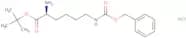
CAS :Ne-Z-L-lysine tert-butyl ester hydrochloride is a multidrug that inhibits the activity of the P-glycoprotein (Pgp) transporter. This drug is an antigen that can be used as a marker for cytostatic drugs, and it can be used in radionuclide localization. Ne-Z-L-lysine tert-butyl ester hydrochloride has been shown to have cytostatic effects on malignant cells, but its cytotoxicity varies depending on the type of cancer cell. Ne-Z-L-lysine tert-butyl ester hydrochloride has also been shown to be degradable and to possess conjugates with antibodies, which makes it useful for treating some types of cancers. Ne-Z-L-lysine tert-butyl ester hydrochloride is not active against resistant cells such as those expressing Pgp or MRP1 proteins.Formule :C18H28N2O4·HClDegré de pureté :Min. 95%Couleur et forme :White PowderMasse moléculaire :372.89 g/molMethyl 4-amino-2-methoxybenzoate
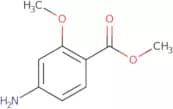
CAS :Methyl 4-amino-2-methoxybenzoate is a solute with anticancer activity. It has been shown to inhibit the growth of erythrocytes and cancer cells in vitro. The mechanism of action is associated with its ability to bind to aminobenzothiazole, which inhibits the production of DNA and RNA. Methyl 4-amino-2-methoxybenzoate has also been shown to inhibit the proliferation of human muscle cells and induce their differentiation. This drug does not have any effect on lipid or protein synthesis in cells, which may be due to its solvent perturbation properties.Formule :C9H11NO3Degré de pureté :Min. 95%Couleur et forme :PowderMasse moléculaire :181.19 g/molIR-780 iodide
CAS :IR-780 iodide is a water-soluble drug that has been shown to have significant cytotoxicity against prostate cancer cells. It binds to the mitochondrial membrane potential, which is involved in energy production and the regulation of the cell cycle. IR-780 iodide is taken up by tumor cells, where it inhibits adriamycin uptake and induces apoptosis. In vitro assays have shown that IR-780 iodide can be used as a diagnostic tool for detecting bladder cancer by binding to the mitochondria of cells from patients with bladder cancer. In vivo studies have been done in mice to determine the effectiveness of IR-780 iodide in treating cervical cancer. These studies showed that IR-780 iodide was not significantly effective in vivo, due to its low bioavailability and lack of specificity for cervical cancer cells. Histological analysis showed that IR-780 iodide did not inhibit tumor growth or induce apoptosis in vivo.Formule :C36H44ClIN2Degré de pureté :Min. 95%Masse moléculaire :667.11 g/moltert-Butyl N-(4-methylphenyl)carbamate
CAS :Tert-butyl N-(4-methylphenyl)carbamate is a reusable, efficient method for the synthesis of tert-butyl carbamates from amines and carbon dioxide. This reaction is an example of a C–H bond activation that proceeds through an anion intermediate. The reaction time can be reduced by irradiation to increase the efficiency. Electrons are unpaired during this process, which is modeled with quantum mechanics software. Chloride is used as a catalyst to activate the electron and generate a reactive intermediate. Amine functionalities are added to the molecule in order to give it desired properties. The chloride group can be replaced with other anions such as bromide or iodide, which will also introduce different reactivity patterns.Formule :C12H17NO2Degré de pureté :Min. 95%Masse moléculaire :207.27 g/mol4-Iodo-1-methylpyrazole
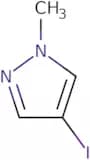
CAS :4-Iodo-1-methylpyrazole is a reductive agent that is used in organic synthesis. It can be used as a reducing agent for the conversion of aldehydes and ketones to alcohols. 4-Iodo-1-methylpyrazole can be crystallized from diethyl etherate and blood. The product yield from this reaction is high, but it requires an oxidant such as trifluoride or plavix to react with the diacetates. 4-Iodo-1-methylpyrazole can also be synthesized by reacting allylsilanes with iodine gas in the presence of a base. This synthesis method produces 4-iodo-1-methylpyrazole in good yield and with little difficulty.Formule :C4H5IN2Degré de pureté :Min. 95%Couleur et forme :White To Light (Or Pale) Yellow To Tan SolidMasse moléculaire :208 g/mol5-Iodo-2-nitrobenzoic acid
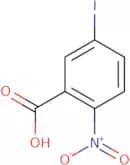
CAS :5-Iodo-2-nitrobenzoic acid is a fine chemical that is used as a building block in the synthesis of complex compounds and research chemicals. This compound has been shown to be an effective reagent for the synthesis of many different types of compounds. It can also be used as a reactant or intermediate in organic syntheses, such as those involving cross-coupling reactions. 5-Iodo-2-nitrobenzoic acid is a versatile building block that can be used in both simple and complex chemical reactions.Formule :C7H4INO4Degré de pureté :Min. 95%Couleur et forme :Yellow PowderMasse moléculaire :293.02 g/mol4-Imidazole methyl carboxylate
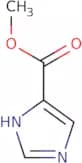
CAS :<p>4-Imidazole methyl carboxylate is a drug that inhibits the activity of dehydrogenases and other enzymes. It has been shown to be an inhibitor of the enzyme catalase in vitro and in vivo, which may be due to its ability to bind bidentately with the active site. 4-Imidazole methyl carboxylate is effective when administered orally, and it has been shown to improve symptoms of neurodegenerative diseases such as Alzheimer's disease. This drug also has a trifunctional chemical structure that contains a macrocyclic ring system with an imidazole group and a carboxylic acid group. The redox potential of this molecule makes it suitable for use as an antioxidant.</p>Formule :C5H6N2O2Degré de pureté :Min. 95%Couleur et forme :White PowderMasse moléculaire :126.11 g/mol4-(Oxazol-2-yl)aniline
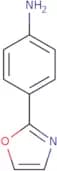
CAS :<p>Versatile small molecule scaffold</p>Formule :C9H8N2ODegré de pureté :Min. 95%Masse moléculaire :160.17 g/mol2-Fluoro-3-iodo-6-(trifluoromethyl)pyridine
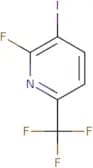
CAS :<p>Versatile small molecule scaffold</p>Formule :C6H2F4INDegré de pureté :Min. 95%Masse moléculaire :290.98 g/molEthyl 4-bromoacetoacetate
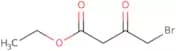
CAS :Ethyl 4-bromoacetoacetate is a chemical compound that is used in the synthesis of quinoline derivatives. It also has antiinflammatory properties and can be used to treat inflammatory diseases such as arthritis. The thermal expansion of this compound is greater than that of water, which can be useful in treating respiratory problems by providing increased oxygen transport. Ethyl 4-bromoacetoacetate is a reactive chemical that reacts with hydrochloric acid to produce hydrogen gas and ethyl bromide gas. It also undergoes nucleophilic substitutions at the carbon atom adjacent to the acetoacetate group. This reaction solution can be analyzed using magnetic resonance spectroscopy, which produces data on the sequences of this compound's atoms and its antiinflammatory activity.Formule :C6H9BrO3Degré de pureté :90%NmrMasse moléculaire :209.04 g/mol2-Ethyl-2-oxazoline
CAS :<p>2-Ethyl-2-oxazoline is a structural analysis of 2-ethyl-2-oxazoline. It is a biocompatible polymer that has been shown to be cytotoxic to cells in culture. The mechanism for this cytotoxicity is not clear, but it may be due to the significant hydroxyl group present in the molecule. 2-Ethyl-2-oxazoline is also a pharmacological agent and can be used as an adjuvant in vaccines. This polymer has shown no significant antibody response and has water vapor permeability properties.</p>Formule :C5H9NODegré de pureté :Min. 99 Area-%Couleur et forme :Clear LiquidMasse moléculaire :99.13 g/moltert-Butyl 3-(piperidin-3-yl)azetidine-1-carboxylate
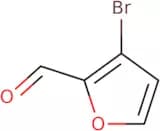
CAS :Versatile small molecule scaffoldFormule :C13H24N2O2Degré de pureté :Min. 95%Masse moléculaire :240.35 g/mol3-Bromofuran-2-carbaldehyde
CAS :3-Bromofuran-2-carbaldehyde is a chemical compound that belongs to the group of carbonyl compounds. It is an acetylated form of 3-bromofuran and its molecular formula is C6H5BrO. This chemical contains a carbonyl group, which reacts with the hydroxyl group in epidermal growth factor (EGF) to produce epidermal growth. 3-Bromofuran-2-carbaldehyde has been shown to be an adrenergic receptor agonist and can be used as a structural formula blocker or hydrochloric acid. The chemical can also be synthesized in acidic conditions using methods such as fluorination, chlorination, and acetylation.Formule :C5H3BrO2Degré de pureté :Min. 95%Masse moléculaire :174.98 g/mol6-Chloro-2-methyl-4-pyrimidinol
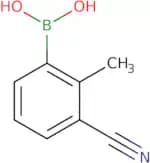
CAS :6-Chloro-2-methyl-4-pyrimidinol is an aldehyde that reacts with hydrazine to form a monoxide, which reacts with carbon monoxide to form a hydrazide.Formule :C5H5ClN2ODegré de pureté :Min. 95%Masse moléculaire :144.56 g/mol3-Cyano-2-methylphenylboronic acid
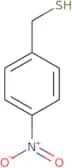
CAS :<p>3-Cyano-2-methylphenylboronic acid is a high quality compound that can be used as a reagent, intermediate, or building block in the synthesis of complex compounds. This chemical is also useful as a speciality chemical and research chemical. 3-Cyano-2-methylphenylboronic acid has versatile uses in organic synthesis due to its versatility in reactions and building blocks.</p>Formule :C8H8BNO2Degré de pureté :Min. 95%Couleur et forme :PowderMasse moléculaire :160.97 g/mol(4-Nitrophenyl)methanethiol
CAS :<p>4-Nitrophenylmethanethiol is a reactive molecule that reacts with dopamine D3, an important cytosolic protein, to form a stable covalent bond. This reaction was shown to be pH-dependent and the products were identified by x-ray diffraction data. The disulfide bond formed by this reaction is then reduced to the corresponding sulfhydryl group with sodium borohydride or hydroxide solution. 4-Nitrophenylmethanethiol also reacts with inorganic acid and sodium carbonate to form a molecule containing carbapenem, which is a model protein used in research on chemical reactions. 4-Nitrophenylmethanethiol reacts with chloride ions and phenyl groups to yield hydrochloric acid as the final product of the chemical reaction.</p>Formule :C7H7NO2SDegré de pureté :Min. 95%Masse moléculaire :169.2 g/molBocNH-PEG3-CH2CH2NH2
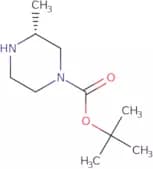
CAS :BocNH-PEG3-CH2CH2NH2 is a PEG compound with two different functional groups (also known as heterobifunctional). Unlike homobifunctional PEG compounds (same functional group on both ends), this type of compounds are more versatile as have two different anchor points. BocNH-PEG3-CH2CH2NH2 is used as a linker and spacer to add a PEG moiety, via pegylation (a bioconjugation technique) to proteins, peptides, oligonucleotides, small molecules and nanoparticles.Formule :C13H28N2O5Degré de pureté :Min. 95%Couleur et forme :Clear LiquidMasse moléculaire :292.37 g/mol(R)-4-Boc-2-methylpiperazine
CAS :<p>(R)-4-Boc-2-methylpiperazine is a picolinamide dehydrogenase inhibitor that is used to treat type 2 diabetes. It has been shown to reduce blood glucose levels in animal models and human subjects with type 2 diabetes mellitus. The mechanism of action is thought to be via inhibition of the 11β-hydroxysteroid dehydrogenase, which increases insulin sensitivity. This drug also has good oral bioavailability, does not cause weight gain, and has an acceptable safety profile.</p>Formule :C10H20N2O2Degré de pureté :Min. 95%Couleur et forme :White PowderMasse moléculaire :200.28 g/mol1,2-Bis(chlorodimethylsilyl)ethane
CAS :<p>1,2-Bis(chlorodimethylsilyl)ethane is a reactive chemical that is synthesized from hydroxychloroformates and hydrogen chloride. It reacts with silicon to form chlorosilanes, which are then used in the polymerization of siloxanes. 1,2-Bis(chlorodimethylsilyl)ethane has been shown to be an effective initiator for the polymerization of methyl methacrylate and ethylene glycol dimethacrylate. 1,2-Bis(chlorodimethylsilyl)ethane is also used as a hydroxyl group donor in organic reactions.</p>Formule :C6H16Cl2Si2Degré de pureté :Min. 95 Area-%Couleur et forme :PowderMasse moléculaire :215.27 g/mol