Building Blocks
Cette section contient des produits fondamentaux pour la synthèse de composés organiques et biologiques. Building blocks sont les matériaux de départ essentiels utilisés pour construire des molécules complexes à travers diverses réactions chimiques. Ils jouent un rôle crucial dans la découverte de médicaments, la science des matériaux et la recherche chimique. Chez CymitQuimica, nous offrons une gamme diversifiée de building blocks de haute qualité pour soutenir vos recherches innovantes et projets industriels, en vous assurant de disposer des composants essentiels pour une synthèse réussie.
Sous-catégories appartenant à la catégorie "Building Blocks"
- Acides boroniques et dérivés de l'acide boronique(5.778 produits)
- Building Blocks Chiraux(1.243 produits)
- Building Blocks Hydrocarbonés(6.098 produits)
- Building Blocks organiques(61.057 produits)
200710 produits trouvés pour "Building Blocks"
Trier par
Degré de pureté (%)
0
100
|
0
|
50
|
90
|
95
|
100
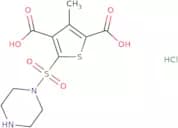
3-Methyl-5-(piperazine-1-sulfonyl)thiophene-2,4-dicarboxylic acid hydrochloride
CAS :<p>Versatile small molecule scaffold</p>Formule :C11H15ClN2O6S2Degré de pureté :Min. 95%Masse moléculaire :370.8 g/molRef: 3D-CSB54508
Produit arrêté[2-(4-Bromophenoxy)ethyl](ethyl)amine hydrochloride
CAS :<p>Versatile small molecule scaffold</p>Formule :C10H15BrClNODegré de pureté :Min. 95%Masse moléculaire :280.59 g/mol1-[4-(Aminomethyl)phenyl]-n-isopropylmethanesulfonamide HCl
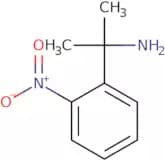
CAS :<p>Versatile small molecule scaffold</p>Formule :C11H18N2O2S·HClDegré de pureté :Min. 95%Masse moléculaire :278.8 g/mol2-(2-Nitrophenyl)propan-2-amine
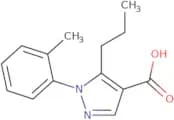
CAS :<p>Versatile small molecule scaffold</p>Formule :C9H12N2O2Degré de pureté :Min. 95%Masse moléculaire :180.2 g/mol1-(2-Methylphenyl)-5-propyl-1H-pyrazole-4-carboxylic acid
CAS :<p>Versatile small molecule scaffold</p>Formule :C14H16N2O2Degré de pureté :Min. 95%Masse moléculaire :244.29 g/molRef: 3D-CQB28436
Produit arrêté3-[(4-Butylphenyl)sulfamoyl]benzoic acid
CAS :<p>3-[(4-Butylphenyl)sulfamoyl]benzoic acid is a sulfonamide that inhibits the activity of antibodies by binding to the antibody molecule. 3-[(4-Butylphenyl)sulfamoyl]benzoic acid is used as a research tool in cell biology, pharmacology, and immunology. It has been shown to inhibit the activity of ion channels by binding to the channel protein. The drug also binds to ligands and activates them, which may be due to its ability to bind with high affinity and specificity. 3-[(4-Butylphenyl)sulfamoyl]benzoic acid also binds with high affinity and specificity to receptors that are involved in cellular signaling.</p>Formule :C17H19NO4SDegré de pureté :Min. 95%Masse moléculaire :333.4 g/molrac-[(1R,5R)-2-Benzyl-2-azabicyclo[3.2.0]heptan-1-yl]methanol
CAS :Versatile small molecule scaffoldFormule :C14H19NODegré de pureté :Min. 95%Masse moléculaire :217.3 g/mol1-[(4-Bromo-2-chlorophenyl)methyl]-1H-pyrazol-4-amine
CAS :<p>Versatile small molecule scaffold</p>Formule :C10H9BrClN3Degré de pureté :Min. 95%Masse moléculaire :286.55 g/mol(1R,2R,6S,7S)-4,9-Diazatricyclo[5.3.0.0,2,6]decane dihydrochloride
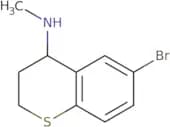
CAS :<p>Versatile small molecule scaffold</p>Formule :C8H16Cl2N2Degré de pureté :Min. 95%Masse moléculaire :211.1 g/mol6-Bromo-N-methyl-3,4-dihydro-2H-1-benzothiopyran-4-amine
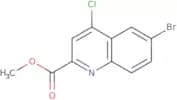
CAS :<p>Versatile small molecule scaffold</p>Formule :C10H12BrNSDegré de pureté :Min. 95%Masse moléculaire :258.18 g/molMethyl 6-bromo-4-chloroquinoline-2-carboxylate
CAS :<p>Versatile small molecule scaffold</p>Formule :C11H7BrClNO2Degré de pureté :Min. 95%Masse moléculaire :300.54 g/molRef: 3D-MKB58750
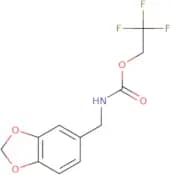
Produit arrêté2,2,2-Trifluoroethyl N-(1,3-dioxaindan-5-ylmethyl)carbamate
CAS :<p>Versatile small molecule scaffold</p>Formule :C11H10F3NO4Degré de pureté :Min. 95%Masse moléculaire :277.2 g/mol2-([(Furan-2-ylmethyl)(methyl)carbamoyl]amino)acetic acid
CAS :<p>Versatile small molecule scaffold</p>Formule :C9H12N2O4Degré de pureté :Min. 95%Masse moléculaire :212.2 g/mol3-Chloro-N-methyl-2-nitroaniline
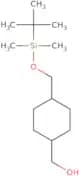
CAS :<p>3-Chloro-N-methyl-2-nitroaniline is an antibiotic that belongs to the group of quinolone antibiotics. It has a broad spectrum against Gram-positive and Gram-negative bacteria, including methicillin resistant Staphylococcus aureus (MRSA) and Pseudomonas aeruginosa. 3-Chloro-N-methyl-2-nitroaniline binds to bacterial DNA gyrase and topoisomerase IV, as well as human DNA gyrase and topoisomerase II, inhibiting their activity. This leads to cell death by interfering with the production of proteins vital for cell division. The optimal parameters for this drug have been found using isothermal titration calorimetry on the enzyme gyrase in the presence of different concentrations of 3CMA. Pharmacological targets for this drug include DNA gyrase and topoisomerase IV.</p>Formule :C7H7ClN2O2Degré de pureté :Min. 95%Masse moléculaire :186.59 g/molrac-((1R,4R)-4-(((tert-Butyldimethylsilyl)oxy)methyl)cyclohexyl)methanol
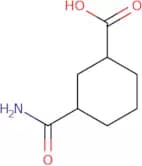
CAS :<p>Versatile small molecule scaffold</p>Formule :C14H30O2SiDegré de pureté :Min. 95%Masse moléculaire :258.47 g/mol3-Carbamoylcyclohexane-1-carboxylic acid
CAS :<p>Versatile small molecule scaffold</p>Formule :C8H13NO3Degré de pureté :Min. 95%Masse moléculaire :171.19 g/mol2-Phenoxyaniline
CAS :<p>2-Phenoxyaniline is a nitro compound that can be converted to the corresponding palladium complexes. It is an inhibitor of the acylation reaction, which is a type of chemical reaction in which an organic molecule reacts with an acid. The inhibition of this reaction has been shown to have an effect on heart disease, specifically by lowering cholesterol levels and reducing atherosclerosis. 2-Phenoxyaniline has also been shown to inhibit the activation energy for electron transfer reactions, making it useful as a catalyst in analytical methods. 2-Phenoxyaniline also undergoes vibrational spectroscopy when exposed to liquid chromatography and other analytical methods.</p>Formule :C12H11NODegré de pureté :Min. 95%Couleur et forme :Brown PowderMasse moléculaire :185.22 g/molRef: 3D-FP106356
Produit arrêté2-Bromo-3,3,3-trifluoro-1-propene
CAS :Produit contrôlé<p>2-Bromo-3,3,3-trifluoro-1-propene is a chemical compound that has been synthesized in an asymmetric reaction. The reactant is bromopropane and the product is 2,2,2-trifluoropropene. The methylene group on the propene molecule is activated by the nucleophilic attack of a fluoride ion from hydrogen fluoride to form a cavity with a highly strained bond. The kinetic study of this reaction revealed that the activation energy for the reaction is 42 kJ/mol. Palladium-catalyzed coupling reactions are catalyzed by palladium and require nonpolar solvents such as toluene or dichloromethane. This type of reaction has been shown to be exothermic with an isolated yield of 1%.</p>Formule :C3H2BrF3Degré de pureté :Min. 95%Couleur et forme :Colorless PowderMasse moléculaire :174.95 g/molRef: 3D-FB11073
Produit arrêté3-amino-6-bromopyridin-2-ol hydrobromide
CAS :<p>Versatile small molecule scaffold</p>Formule :C5H6Br2N2ODegré de pureté :Min. 95%Masse moléculaire :269.9 g/mol2-Acetylbenzoic acid
CAS :<p>2-Acetylbenzoic acid is a functional molecule that contains an acetyl group. It can form hydrogen bonds with other molecules and has been shown to induce apoptosis in cells. The reaction products of 2-acetylbenzoic acid are malonic acid, acetylsalicylic acid, and 2-benzoylbenzoic acid. These three compounds are made by the addition of hydrogen or hydroxide to the molecule 2-acetylbenzoic acid. The molecule has two functional groups: a carbonyl group and an acetyl group. The chemical structure of this molecule can be seen in the figure below.<br>2-Acetylbenzoic Acid</p>Formule :C9H8O3Degré de pureté :Min. 95%Couleur et forme :PowderMasse moléculaire :164.16 g/mol

amine hydrochloride](/_next/image/?url=https%3A%2Fstatic.cymitquimica.com%2Fproducts%2F3D%2Fthumb-webp%2FCSB52513.webp&w=3840&q=75)
![1-[4-(Aminomethyl)phenyl]-n-isopropylmethanesulfonamide HCl](/_next/image/?url=https%3A%2Fstatic.cymitquimica.com%2Fproducts%2F3D%2Fthumb-webp%2FCSB08949.webp&w=3840&q=75)
![3-[(4-Butylphenyl)sulfamoyl]benzoic acid](/_next/image/?url=https%3A%2Fstatic.cymitquimica.com%2Fproducts%2F3D%2Fthumb-webp%2FCQA76955.webp&w=3840&q=75)
![rac-[(1R,5R)-2-Benzyl-2-azabicyclo[3.2.0]heptan-1-yl]methanol](/_next/image/?url=https%3A%2Fstatic.cymitquimica.com%2Fproducts%2F3D%2Fthumb-webp%2FCPD88350.webp&w=3840&q=75)
![1-[(4-Bromo-2-chlorophenyl)methyl]-1H-pyrazol-4-amine](/_next/image/?url=https%3A%2Fstatic.cymitquimica.com%2Fproducts%2F3D%2Fthumb-webp%2FCPC18522.webp&w=3840&q=75)
![(1R,2R,6S,7S)-4,9-Diazatricyclo[5.3.0.0,2,6]decane dihydrochloride](/_next/image/?url=https%3A%2Fstatic.cymitquimica.com%2Fproducts%2F3D%2Fthumb-webp%2FCND73121.webp&w=3840&q=75)
![2-([(Furan-2-ylmethyl)(methyl)carbamoyl]amino)acetic acid](/_next/image/?url=https%3A%2Fstatic.cymitquimica.com%2Fproducts%2F3D%2Fthumb-webp%2FGWB17908.webp&w=3840&q=75)