Building Blocks
Sous-catégories appartenant à la catégorie "Building Blocks"
- Acides boroniques et dérivés de l'acide boronique(5.784 produits)
- Building Blocks Chiraux(1.243 produits)
- Building Blocks Hydrocarbonés(6.105 produits)
- Building Blocks organiques(61.066 produits)
205426 produits trouvés pour "Building Blocks"
4-[1-(Morpholin-4-yl)ethyl]aniline
CAS :Versatile small molecule scaffold
Formule :C12H18N2ODegré de pureté :Min. 95%Masse moléculaire :206.28 g/molRef: 3D-ADB80406
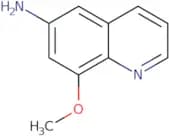
Produit arrêté8-Methoxyquinolin-6-amine
CAS :Versatile small molecule scaffold
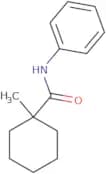
Formule :C10H10N2ODegré de pureté :Min. 95%Masse moléculaire :174.2 g/mol1-Methyl-N-phenylcyclohexane-1-carboxamide
CAS :Versatile small molecule scaffold
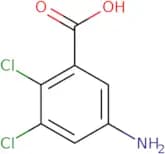
Formule :C14H19NODegré de pureté :Min. 95%Masse moléculaire :217.31 g/mol5-Amino-2,3-dichlorobenzoic acid
CAS :Versatile small molecule scaffold
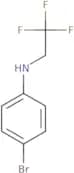
Formule :C7H5Cl2NO2Degré de pureté :Min. 95%Masse moléculaire :206.02 g/mol4-bromo-N-(2,2,2-trifluoroethyl)aniline
CAS :Versatile small molecule scaffold
Formule :C8H7BrF3NDegré de pureté :Min. 95%Masse moléculaire :254 g/molRef: 3D-ACA88529
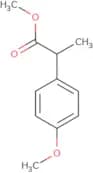
Produit arrêtéMethyl 2-(4-methoxyphenyl)propanoate
CAS :Versatile small molecule scaffold
Formule :C11H14O3Degré de pureté :Min. 95%Masse moléculaire :194.23 g/molRef: 3D-ACA41573
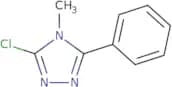
Produit arrêté3-Chloro-4-methyl-5-phenyl-4H-1,2,4-triazole
CAS :Versatile small molecule scaffold
Formule :C9H8ClN3Degré de pureté :Min. 95%Masse moléculaire :193.63 g/molRef: 3D-ACA36942
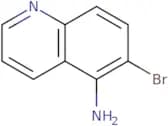
Produit arrêté5-Amino-6-bromoquinoline
CAS :Versatile small molecule scaffold
Formule :C9H7BrN2Degré de pureté :Min. 95%Masse moléculaire :223.07 g/molRef: 3D-ACA35839
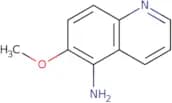
Produit arrêté6-Methoxyquinolin-5-amine
CAS :6-Methoxyquinolin-5-amine is a cytotoxic drug that belongs to the class of quinoline derivatives. It has been shown to induce cell death in cancer cells through a caspase-independent mechanism. 6-Methoxyquinolin-5-amine is also able to induce autophagy, which is a process of self-digestion and recycling of cellular components. The chemical stability of 6-methoxyquinolin-5-amine is greater than that of most other cytotoxic drugs, making it an active analogue with improved pharmacokinetic properties. This compound induces apoptosis by binding to the mitochondria and inhibiting electron transport chain activity. 6-Methoxyquinolin-5-amine can also cause reactive oxygen species release, which leads to DNA damage and subsequent apoptosis induction.
Formule :C10H10N2ODegré de pureté :Min. 95%Masse moléculaire :174.2 g/molRef: 3D-ACA35838
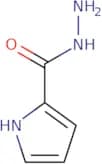
Produit arrêté1H-pyrrole-2-carbohydrazide
CAS :1H-Pyrrole-2-carbohydrazide is an antimicrobial agent that belongs to the group of synthetic compounds. It can be synthesized by the cross-coupling reaction of anilines with halides, diastereomeric products being formed. The reaction product is purified by preparative high performance liquid chromatography (prep HPLC) and tested for antimycobacterial activity in vitro. 1H-pyrrole-2-carbohydrazide has been shown to inhibit the growth of Mycobacterium tuberculosis and Mycobacterium avium complex at a concentration of 10 μM. This compound also inhibits the synthesis of proteins and nucleic acids, which are essential for bacterial growth.
Formule :C5H7N3ODegré de pureté :Min. 95%Masse moléculaire :125.13 g/molRef: 3D-ACA26995
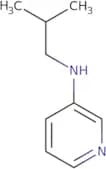
Produit arrêtéN-(2-Methylpropyl)pyridin-3-amine
CAS :Versatile small molecule scaffold
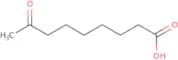
Formule :C9H14N2Degré de pureté :Min. 95%Masse moléculaire :150.22 g/mol8-Oxononanoic acid
CAS :8-Oxononanoic acid is a fatty acid that is found in the human body. It has been shown to have health effects such as decreasing the risk of cancer and lowering the rate of cardiovascular disease. 8-Oxononanoic acid is a coeluting compound, which means that it shares properties with other molecules. It has been shown to inhibit the growth of cancer cells by inhibiting tyrosinase, β-glucosidase, and lipid biosynthesis. 8-Oxononanoic acid also inhibits the production of lipids by blocking the enzyme acetyl-CoA carboxylase (ACCase). This enzyme catalyzes the conversion of acetyl-CoA into malonyl-CoA, which is then used in fatty acid synthesis.
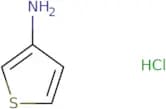
Formule :C9H16O3Degré de pureté :Min. 95%Masse moléculaire :172.22 g/molThiophen-3-amine hydrochloride
CAS :Thiophen-3-amine hydrochloride is a heterocyclic amine that is structurally related to quinaldine. It has shown nitro transfer and nitroso transfer, which are mechanisms for the formation of nitro and nitrosamines. Thiophen-3-amine hydrochloride has low energy, which makes it an excellent candidate for rechargeable batteries. The amines in this compound have affinity for functional groups on the backbones of polymers and monomers, making them useful in research and optimization.
Formule :C4H6ClNSDegré de pureté :Min. 95%Masse moléculaire :135.62 g/molRef: 3D-ABA47576
Produit arrêté2-Methylpyrazolo[1,5-a]quinazolin-5(4H)-one
CAS :Versatile small molecule scaffold
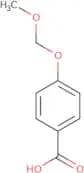
Formule :C11H9N3ODegré de pureté :Min. 95%Masse moléculaire :199.21 g/mol4-(Methoxymethoxy)benzoic acid
CAS :4-(Methoxymethoxy)benzoic acid (MMBA) is a synthetic compound that is used in the synthesis of allyl compounds. MMBA is not chemically reactive and does not undergo any reactions at room temperature. This substance can be activated by adding a nucleophile, such as an alcohol or water molecule, which will then react with the electrophilic carbon atom. This reaction produces epoxide and an alkene product. The most common reaction occurs with methanol, producing methoxypropane, which can then be converted to other organic compounds. Research has shown that MMBA has anticancer properties due to its ability to inhibit cell growth and induce apoptosis in humans.
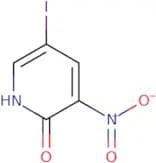
Formule :C9H10O4Degré de pureté :Min. 95%Masse moléculaire :182.17 g/mol2-Hydroxy-5-iodo-3-nitropyridine
CAS :Versatile small molecule scaffold
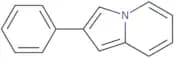
Formule :C5H3IN2O3Degré de pureté :Min. 95%Masse moléculaire :265.99 g/mol2-Phenylindolizine
CAS :2-Phenylindolizine is a chemical compound that can be used in the synthesis of other compounds. It has been shown to react with acrylonitrile to form a nitrile, which is an important intermediate in organic chemistry. 2-Phenylindolizine has also been shown to react with benzaldehyde, creating an acetal and a diazo compound. The reaction of 2-phenylindolizine with a chiral electrophile yields two different products. This reaction is highly efficient and can be screened for desirable products using fluorescence and yield measurements.
Formule :C14H11NDegré de pureté :Min. 95%Masse moléculaire :193.24 g/molRef: 3D-ABA37920
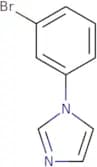
Produit arrêté1-(3-Bromophenyl)-1H-imidazole
CAS :Versatile small molecule scaffold
Formule :C9H7BrN2Degré de pureté :Min. 95%Masse moléculaire :223.07 g/molRef: 3D-ABA37202
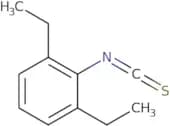
Produit arrêté2,6-Diethylphenylisothiocyanate
CAS :2,6-Diethylphenylisothiocyanate is an aliphatic anesthetic agent that binds to the acceptor site of the ligand-gated ion channels. It has a hydrophobic nature and can be used for research as a potential drug candidate for a variety of protein targets. This compound also has the ability to alter conformations of proteins such as apoferritin, which may lead to new insights into how these proteins function.
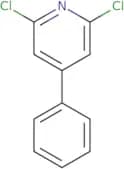
Formule :C11H13NSDegré de pureté :Min. 95%Masse moléculaire :191.29 g/mol2,6-Dichloro-4-phenylpyridine
CAS :2,6-Dichloro-4-phenylpyridine is a chemosensor that can be used to detect the presence of aromatic compounds. It has a modular structure consisting of an emission domain and a substrate binding domain. The fluorophore is reversibly bound to the substrate binding domain, which means that it can be detached from the substrate when the desired molecule is detected. This sensor has been shown to have high selectivity for aromatic molecules in both water and organic solvents. 2,6-Dichloro-4-phenylpyridine has also been studied structurally and found to react with a number of other chemical entities such as thiocyanate ion, nitrobenzene, and nitrophenol.
Formule :C11H7Cl2NDegré de pureté :Min. 95%Masse moléculaire :224.09 g/mol
![4-[1-(Morpholin-4-yl)ethyl]aniline](/_next/image/?url=https%3A%2Fstatic.cymitquimica.com%2Fproducts%2F3D%2Fthumb-webp%2FADB80406.webp&w=3840&q=75)

![2-Methylpyrazolo[1,5-a]quinazolin-5(4H)-one](/_next/image/?url=https%3A%2Fstatic.cymitquimica.com%2Fproducts%2F3D%2Fthumb-webp%2FABA46850.webp&w=3840&q=75)