Building Blocks
Sous-catégories appartenant à la catégorie "Building Blocks"
- Acides boroniques et dérivés de l'acide boronique(5.779 produits)
- Building Blocks Chiraux(1.238 produits)
- Building Blocks Hydrocarbonés(6.099 produits)
- Building Blocks organiques(60.997 produits)
205208 produits trouvés pour "Building Blocks"
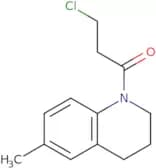
3-Chloro-1-(6-methyl-3,4-dihydro-2H-quinolin-1-yl)propan-1-one
CAS :Versatile small molecule scaffold
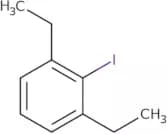
Formule :C13H16ClNODegré de pureté :Min. 95%Masse moléculaire :237.72 g/mol1,3-Diethyl-2-iodobenzene
CAS :Versatile small molecule scaffold
Formule :C10H13IDegré de pureté :Min. 95%Masse moléculaire :260.11 g/mol5,5-Dimethyl-hexahydro-1'H-spiro[1,3-dioxane-2,2'-pentalene]-5'-one
CAS :Versatile small molecule scaffold
Formule :C13H20O3Degré de pureté :Min. 95%Masse moléculaire :224.3 g/mol2-(Cyclopent-1-en-1-yl)propanoic acid
CAS :Versatile small molecule scaffold
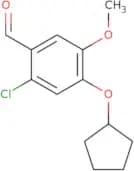
Formule :C8H12O2Degré de pureté :Min. 95%Masse moléculaire :140.18 g/mol2-Chloro-4-(cyclopentyloxy)-5-methoxybenzaldehyde
CAS :Versatile small molecule scaffold
Formule :C13H15ClO3Degré de pureté :Min. 95%Masse moléculaire :254.71 g/molRef: 3D-SCB28410
Produit arrêté2-Bromo-4-(cyclopentyloxy)-5-methoxybenzaldehyde
CAS :Versatile small molecule scaffoldFormule :C13H15BrO3Degré de pureté :Min. 95%Masse moléculaire :299.16 g/molRef: 3D-SCB28123
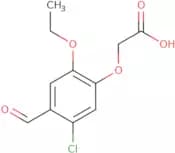
Produit arrêté2-(5-Chloro-2-ethoxy-4-formylphenoxy)acetic acid
CAS :Versatile small molecule scaffoldFormule :C11H11ClO5Degré de pureté :Min. 95%Masse moléculaire :258.65 g/molRef: 3D-SCB27986
Produit arrêté(1-Cyanocyclopentyl)methyl methanesulfonate
CAS :Versatile small molecule scaffoldFormule :C8H13NO3SDegré de pureté :Min. 95%Masse moléculaire :203.26 g/mol4-(Propan-2-yl)imidazolidin-2-one
CAS :Versatile small molecule scaffold
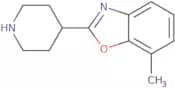
Formule :C6H12N2ODegré de pureté :Min. 95%Masse moléculaire :128.2 g/mol7-Methyl-2-(piperidin-4-yl)-1,3-benzoxazole
CAS :Versatile small molecule scaffold
Formule :C13H16N2ODegré de pureté :Min. 95%Masse moléculaire :216.28 g/molRef: 3D-SAC21663
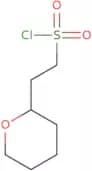
Produit arrêté2-(Oxan-2-yl)ethane-1-sulfonyl chloride
CAS :Versatile small molecule scaffold
Formule :C7H13ClO3SDegré de pureté :Min. 95%Masse moléculaire :212.7 g/mol1-(1-Butyl-1H-1,2,3,4-tetrazol-5-yl)methanamine
CAS :Versatile small molecule scaffold
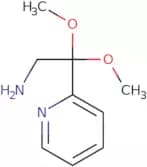
Formule :C6H13N5Degré de pureté :Min. 95%Masse moléculaire :155.2 g/mol2,2-Dimethoxy-2-(pyridin-2-yl)ethan-1-amine
CAS :Versatile small molecule scaffold
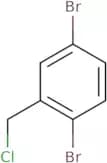
Formule :C9H14N2O2Degré de pureté :Min. 95%Masse moléculaire :182.22 g/mol1,4-Dibromo-2-(chloromethyl)benzene
CAS :1,4-Dibromo-2-(chloromethyl)benzene is a synthetic compound that has been used as an anti-hepatitis C virus (HCV) agent. It is effective against HCV genotype 1 and 2, but not 3. It has been shown to be active in inhibiting the replication of HCV RNA by binding to the viral enzyme RNA polymerase. This drug has also been found to inhibit the growth of Mycobacterium tuberculosis and is being investigated for use in treating tuberculosis. The drug is prepared by reacting bromobenzene with sodium hydroxide and chloromethyl chloride in aqueous solution at 0°C. Dibromoethane reacts with paraformaldehyde and cuprous cyanide to form 1,4-dibromo-2-(chloromethyl)benzene, which can then be treated with hydrochloric acid to form the desired product.
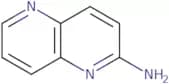
Formule :C7H5Br2ClDegré de pureté :Min. 95%Masse moléculaire :284.37 g/mol1,6-Naphthyridin-2-amine
CAS :A 1,6-Naphthyridin-2-amine is a chemical compound that can be synthesized in various yields by extracting it from coal tar. It has been used in the past to make n-substituted derivatives for use in combinatorial and screening studies. A 1,6-Naphthyridin-2-amine can be synthesized using a microwave irradiation technique that uses malononitrile as its starting material. The microwave irradiation technique is operational at low temperatures and can be tracked with a radiotracer. Microwave irradiation of malononitrile produces an intermediate that reacts with ammonia to produce the desired 1,6-naphthyridinone product. This product can then be converted into the desired 1,6-naphthyridin-2 amine via hydrogenation or nitration.
Formule :C8H7N3Degré de pureté :Min. 95%Masse moléculaire :145.16 g/molRef: 3D-SAA96581
Produit arrêté1,5-Naphthyridin-2-ylamine
CAS :1,5-Naphthyridin-2-ylamine is a monocyclic heterocycle that is derived from the amination of 1,5-naphthyridine. It has been used in the preparation of amides and carbocycles. The reaction also produces nitro compounds. The naphthyridinone reacts with a variety of alkyl groups to produce either alkenyl or alkynyl groups. This reaction can be carried out on an industrial scale by using Grignard reagents. The reaction proceeds via a tautomerization mechanism to produce the desired products. It has been shown that this chemical is toxic to cells and can produce DNA damage.
Formule :C8H7N3Degré de pureté :Min. 95%Masse moléculaire :145.16 g/mol5-bromo-1,7-naphthyridine
CAS :5-bromo-1,7-naphthyridine is a heterocyclic compound that can be derived from pyrrole by the introduction of an electron deficiency. This molecule has been shown to react with nucleophiles such as water and amide in order to yield unsaturated products. The molecule also has electron-donating groups on it, which can be used to optimize yields. 5-bromo-1,7-naphthyridine is often used as a reagent in organic synthesis.
Formule :C8H5BrN2Degré de pureté :Min. 95%Masse moléculaire :209 g/molRef: 3D-SAA96576
Produit arrêté4-(Furan-2-yl)-4-oxobutanenitrile
CAS :Versatile small molecule scaffold
Formule :C8H7NO2Degré de pureté :Min. 95%Masse moléculaire :149.15 g/mol2,6-Dimethyl-2H-1,4-benzoxazin-3(4H)-one
CAS :Versatile small molecule scaffold
Formule :C10H11NO2Degré de pureté :Min. 95%Masse moléculaire :177.2 g/molRef: 3D-SAA95990
Produit arrêté4-Amino-2,3,6-trimethylphenol
CAS :4-Amino-2,3,6-trimethylphenol (4ATMP) is a halogenated phenol that has been used as a developer in the production of silver halide photographic emulsions. It interacts with hydrogen chloride to form a gaseous product and can be used as an indicator for the presence of chlorine gas. 4ATMP is also known to react with formaldehyde and acetaldehyde to produce formic acid and acetic acid respectively. 4ATMP is most commonly prepared by reacting phenol with diethylaminopropyl chloride in the presence of hydrogen chloride gas.
Formule :C9H13NODegré de pureté :Min. 95%Masse moléculaire :151.21 g/mol

![5,5-Dimethyl-hexahydro-1'H-spiro[1,3-dioxane-2,2'-pentalene]-5'-one](/_next/image/?url=https%3A%2Fstatic.cymitquimica.com%2Fproducts%2F3D%2Fthumb-webp%2FSDA00737.webp&w=3840&q=75)