Building Blocks
Sous-catégories appartenant à la catégorie "Building Blocks"
- Acides boroniques et dérivés de l'acide boronique(5.778 produits)
- Building Blocks Chiraux(1.243 produits)
- Building Blocks Hydrocarbonés(6.099 produits)
- Building Blocks organiques(61.038 produits)
205376 produits trouvés pour "Building Blocks"
5-Isopropyl-4,5,6,7-tetrahydro-thiazolo[5,4-c]-pyridin-2-ylamine
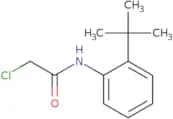
CAS :Versatile small molecule scaffoldFormule :C9H15N3SDegré de pureté :Min. 95%Masse moléculaire :197.3 g/molN-(2-tert-Butylphenyl)-2-chloroacetamide
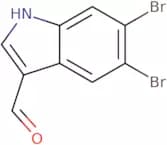
CAS :Versatile small molecule scaffoldFormule :C12H16ClNODegré de pureté :Min. 95%Masse moléculaire :225.71 g/mol5,6-Dibromo-1H-indole-3-carbaldehyde
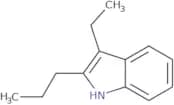
CAS :Versatile small molecule scaffoldFormule :C9H5Br2NODegré de pureté :Min. 95%Masse moléculaire :302.95 g/mol3-Ethyl-2-propyl-1H-indole
CAS :3-Ethyl-2-propyl-1H-indole is an indole that can be used as a synthetic intermediate. It can also be used in nucleophilic substitution reactions to produce functionalized indoles. 3-Ethyl-2-propyl-1H-indole is nontoxic and does not react with most functional groups. This chemical is a good nucleophile and reacts regioselectively with electron deficient or neutral substrates to generate substituted indoles.
Formule :C13H17NDegré de pureté :Min. 95%Masse moléculaire :187.28 g/mol[4-(Bromomethyl)phenyl]trimethylsilane
CAS :Versatile small molecule scaffold
Formule :C10H15BrSiDegré de pureté :Min. 95%Masse moléculaire :243.21 g/mol6,7,8,9-Tetrahydro-5H-benzo[7]annulen-5-amine
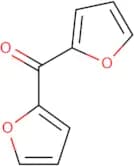
CAS :Versatile small molecule scaffoldFormule :C11H15NDegré de pureté :Min. 95%Masse moléculaire :161.25 g/molbis(furan-2-yl)methanone
CAS :Bis(furan-2-yl)methanone is a furyl compound that is activated by trifluoromethanesulfonic acid. It has been shown to be an effective dose for the treatment of bacterial infections that are resistant to erythromycin and other antibiotics. Bis(furan-2-yl)methanone is used in veterinary medicine to treat infections caused by bacteria such as Escherichia coli, Proteus mirabilis, Klebsiella pneumoniae, and Streptococcus agalactiae. This drug has been shown to be active against Gram-positive bacteria, including Bacillus cereus, Clostridium perfringens, Clostridium tetani, Staphylococcus aureus, Streptococcus pyogenes, and Streptococcus pneumoniae.Formule :C9H6O3Degré de pureté :Min. 95%Masse moléculaire :162.14 g/mol3-Methylenebicyclo[3.3.1]nonan-7-one
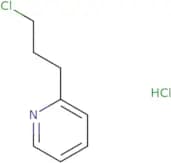
CAS :3-Methylenebicyclo[3.3.1]nonan-7-one is a chiral molecule that has been synthesized as a racemic mixture of two enantiomers. This compound is an amine with a hydroxy group and an isopropyl side chain. It has been shown to have anti-inflammatory properties, which may be due to its ability to inhibit cyclooxygenase and lipoxygenase activity. 3-Methylenebicyclo[3.3.1]nonan-7-one also has antiviral properties, which are due to its inhibition of protein synthesis in viruses by blocking the activity of ribonucleotide reductase, an enzyme required for nucleic acid synthesis. The reaction mechanism involves the formation of a covalent bond between the amantadine and the active site of ribonucleotide reductase through either radical or hydrogen atom transfer mechanisms.Formule :C10H14ODegré de pureté :Min. 95%Masse moléculaire :150.22 g/mol2-(3-Chloropropyl)pyridine hydrochloride
CAS :Versatile small molecule scaffoldFormule :C8H11Cl2NDegré de pureté :Min. 95%Masse moléculaire :192.08 g/mol4-Amino-2,3,6-trimethylphenol
CAS :4-Amino-2,3,6-trimethylphenol (4ATMP) is a halogenated phenol that has been used as a developer in the production of silver halide photographic emulsions. It interacts with hydrogen chloride to form a gaseous product and can be used as an indicator for the presence of chlorine gas. 4ATMP is also known to react with formaldehyde and acetaldehyde to produce formic acid and acetic acid respectively. 4ATMP is most commonly prepared by reacting phenol with diethylaminopropyl chloride in the presence of hydrogen chloride gas.
Formule :C9H13NODegré de pureté :Min. 95%Masse moléculaire :151.21 g/mol(2-Phenoxyethyl)amine hydrochloride
CAS :2-Phenoxyethyl)amine hydrochloride is a chlorinated, industrial, synthetic chemical used as a reaction solvent. It can be derived from cyclohexylamine and ethanolamine by reacting with phenol. The reaction product is then hydrolyzed to produce 2-phenoxyethyl)amine hydrochloride.Formule :C8H12ClNODegré de pureté :Min. 95%Masse moléculaire :173.64 g/mol2,6-Dimethyl-2H-1,4-benzoxazin-3(4H)-one
CAS :Versatile small molecule scaffold
Formule :C10H11NO2Degré de pureté :Min. 95%Masse moléculaire :177.2 g/mol4-(Furan-2-yl)-4-oxobutanenitrile
CAS :Versatile small molecule scaffold
Formule :C8H7NO2Degré de pureté :Min. 95%Masse moléculaire :149.15 g/mol4-[2-(Trimethylsilyl)ethyl]aniline
CAS :Versatile small molecule scaffold
Formule :C11H19NSiDegré de pureté :Min. 95%Masse moléculaire :193.36 g/mol3,7-Dibromo-1,5-naphthyridine
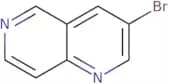
CAS :Versatile small molecule scaffoldFormule :C8H4Br2N2Degré de pureté :Min. 95%Masse moléculaire :287.94 g/mol3-Bromo-1,6-naphthyridine
CAS :Versatile small molecule scaffoldFormule :C8H5BrN2Degré de pureté :Min. 95%Masse moléculaire :209.04 g/mol3,8-Dibromo-[1,6]naphthyridine
CAS :Versatile small molecule scaffoldFormule :C8H4Br2N2Degré de pureté :Min. 95%Masse moléculaire :287.94 g/mol5-bromo-1,7-naphthyridine
CAS :5-bromo-1,7-naphthyridine is a heterocyclic compound that can be derived from pyrrole by the introduction of an electron deficiency. This molecule has been shown to react with nucleophiles such as water and amide in order to yield unsaturated products. The molecule also has electron-donating groups on it, which can be used to optimize yields. 5-bromo-1,7-naphthyridine is often used as a reagent in organic synthesis.
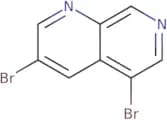
Formule :C8H5BrN2Degré de pureté :Min. 95%Masse moléculaire :209 g/mol3,5-Dibromo-1,7-naphthyridine
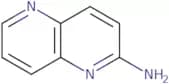
CAS :Versatile small molecule scaffoldFormule :C8H4Br2N2Degré de pureté :Min. 95%Masse moléculaire :287.94 g/mol1,5-Naphthyridin-2-ylamine
CAS :1,5-Naphthyridin-2-ylamine is a monocyclic heterocycle that is derived from the amination of 1,5-naphthyridine. It has been used in the preparation of amides and carbocycles. The reaction also produces nitro compounds. The naphthyridinone reacts with a variety of alkyl groups to produce either alkenyl or alkynyl groups. This reaction can be carried out on an industrial scale by using Grignard reagents. The reaction proceeds via a tautomerization mechanism to produce the desired products. It has been shown that this chemical is toxic to cells and can produce DNA damage.
Formule :C8H7N3Degré de pureté :Min. 95%Masse moléculaire :145.16 g/mol
![5-Isopropyl-4,5,6,7-tetrahydro-thiazolo[5,4-c]-pyridin-2-ylamine](/_next/image/?url=https%3A%2Fstatic.cymitquimica.com%2Fproducts%2F3D%2Fthumb-webp%2FSAA89951.webp&w=3840&q=75)

![[4-(Bromomethyl)phenyl]trimethylsilane](/_next/image/?url=https%3A%2Fstatic.cymitquimica.com%2Fproducts%2F3D%2Fthumb-webp%2FSAA90342.webp&w=3840&q=75)
![6,7,8,9-Tetrahydro-5H-benzo[7]annulen-5-amine](/_next/image/?url=https%3A%2Fstatic.cymitquimica.com%2Fproducts%2F3D%2Fthumb-webp%2FSAA91026.webp&w=3840&q=75)
![3-Methylenebicyclo[3.3.1]nonan-7-one](/_next/image/?url=https%3A%2Fstatic.cymitquimica.com%2Fproducts%2F3D%2Fthumb-webp%2FSAA93329.webp&w=3840&q=75)


![4-[2-(Trimethylsilyl)ethyl]aniline](/_next/image/?url=https%3A%2Fstatic.cymitquimica.com%2Fproducts%2F3D%2Fthumb-webp%2FSAA96195.webp&w=3840&q=75)

![3,8-Dibromo-[1,6]naphthyridine](/_next/image/?url=https%3A%2Fstatic.cymitquimica.com%2Fproducts%2F3D%2Fthumb-webp%2FSAA96575.webp&w=3840&q=75)