


Building Blocks
Sous-catégories appartenant à la catégorie "Building Blocks"
- Acides boroniques et dérivés de l'acide boronique(5.774 produits)
- Building Blocks Chiraux(1.237 produits)
- Building Blocks Hydrocarbonés(6.098 produits)
- Building Blocks organiques(60.970 produits)
205134 produits trouvés pour "Building Blocks"
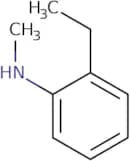
2-Ethyl-N-methylaniline
CAS :2-Ethyl-N-methylaniline is a colorless liquid that has a pyrrole ring and an indole group. It is used in the production of potassium and indoles, as well as in the synthesis of other organic compounds. 2-Ethyl-N-methylaniline also has pyrrole properties, which are similar to those of pyrrole. This chemical was first created by the German chemist Emil Fischer in 1887.
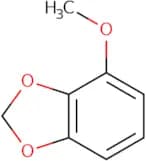
Formule :C9H13NDegré de pureté :Min. 95%Masse moléculaire :135.21 g/mol4-Methoxy-1,3-dioxaindane
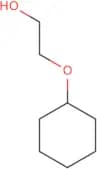
CAS :Produit contrôlé4-Methoxy-1,3-dioxaindane is an electrophilic brominating agent that has been used as a catalyst for the production of medicines. It is also used in the synthesis of formylating agents and nitration reagents. 4-Methoxy-1,3-dioxaindane is able to react with various chemical compounds. This property makes it a good candidate for use in various industrial processes such as chlorination, iodination, and bromination.Formule :C8H8O3Degré de pureté :Min. 95%Masse moléculaire :152.15 g/mol2-(Cyclohexyloxy)ethanol
CAS :2-(Cyclohexyloxy)ethanol is a synthetic, xylene-based glycol ether. It has been shown to have synergistic effects with boron trifluoride etherate, germanium trioxide, and alkyl substituents. 2-(Cyclohexyloxy)ethanol has an antibacterial activity against Gram-positive bacteria, including methicillin-resistant Staphylococcus aureus (MRSA). This compound also has a constant rate of degradation and can be used in peptide binding studies.
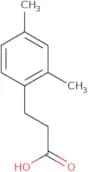
Formule :C8H16O2Degré de pureté :Min. 95%Masse moléculaire :144.21 g/mol3-(2,4-Dimethylphenyl)propionic acid
CAS :3-(2,4-Dimethylphenyl)propionic acid is an organic compound that belongs to the class of propionic acid derivatives. It is a chiral compound with two stereoisomers. The crystal structure of the racemic mixture has been determined by x-ray crystallography and the absolute configuration was assigned as (S) based on its enantiomeric excess. 3-(2,4-Dimethylphenyl)propionic acid can be synthesized from benzyloxymethyl chloride and propionic acid. This reaction is mediated by a base, such as sodium methoxide or potassium t-butoxide.
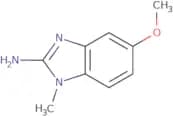
3-(2,4-Dimethylphenyl)propionic acid is used in the synthesis of other compounds, such as phenylethyl propionate and 2-methylbenzaldehyde.Formule :C11H14O2Degré de pureté :Min. 95%Masse moléculaire :178.23 g/mol2-Amino-5-methoxy-1-methylbenzimidazole
CAS :Versatile small molecule scaffold
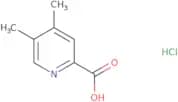
Formule :C9H11N3ODegré de pureté :Min. 95%Masse moléculaire :177.21 g/mol4,5-Dimethylpyridine-2-carboxylic acid hydrochloride
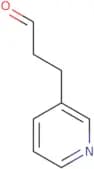
CAS :Versatile small molecule scaffoldFormule :C8H10ClNO2Degré de pureté :Min. 95%Masse moléculaire :187.62 g/mol3-(Pyridin-3-yl)propanal
CAS :3-(Pyridin-3-yl)propanal is a potential anticancer agent that has been shown to cause apoptosis in DU145 cells. 3-(Pyridin-3-yl)propanal inhibits the kinase activity of 3-kinase, leading to the phosphatidylinositol pathway and the activation of caspases. This compound also has potent anti-proliferative activities in cancer cells, and may be used as an anticancer agent. 3-(Pyridin-3-yl)propanal was found to inhibit the proliferation of U937 cells in vitro by inducing apoptosis and inhibiting cell cycle progression at G1 phase.
Formule :C8H9NODegré de pureté :Min. 95%Masse moléculaire :135.16 g/mol2-(2-Acetamidophenoxy)acetic acid
CAS :Versatile small molecule scaffold
Formule :C10H11NO4Degré de pureté :Min. 95%Masse moléculaire :209.2 g/molN3-Methylpyridine-3,4-diamine
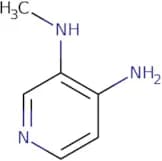
CAS :N3-Methylpyridine-3,4-diamine is an organic compound that is synthesized by the rearrangement of 3-methylpyridine. This heterocyclic compound reacts with diazomethane to form a cyclization product. The reaction occurs in the presence of a base and a heating process. The result of this reaction is a 5-membered ring heterocycle that contains nitrogen and three methyl groups.Formule :C6H9N3Degré de pureté :Min. 95%Masse moléculaire :123.16 g/molMethyl piperidine-1-carboxylate
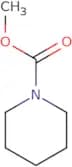
CAS :Methyl piperidine-1-carboxylate is a synthetic chemical that is used as a stabilizer. It inhibits the hyperproliferation of cancer cells by blocking the activation of protein kinase C. Methyl piperidine-1-carboxylate also inhibits the growth of bacteria, such as Staphylococcus aureus, by interfering with their metabolic pathways. This chemical has been synthesized in an organic reaction and is an analog to ansamycin.
Formule :C7H13NO2Degré de pureté :Min. 95%Masse moléculaire :143.18 g/mol8-Chlorooctanoic acid
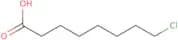
CAS :8-Chlorooctanoic acid is a fatty acid that is naturally found in the human body. It is also called octanoic acid, or octanoate. 8-Chlorooctanoic acid has been shown to inhibit the activity of enzymes such as citrate lyase and alkylating agent. 8-Chlorooctanoic acid has been shown to be biodegradable and it was hypothesized that it may be a functional theory. This compound also has preservative properties and can be used as an additive in food products. It can also be used as a preservative in pharmaceutical products because of its antimicrobial effects.Formule :C8H15ClO2Degré de pureté :Min. 95%Masse moléculaire :178.65 g/mol(3-Bromo-1-propyn-1-yl)-benzene
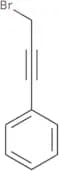
CAS :3-Bromo-1-propyn-1-yl)-benzene (3BP) is an organic compound that belongs to the class of organometallic compounds. It can be synthesized via a radical mechanism, protonation, and reaction time. 3BP is found as two tautomers. The first is an amine and the second is a radical. 3BP has been shown to react with nitrogen nucleophiles such as amines in the presence of radiation to form the corresponding trimethylsilylacetylene derivatives. These derivatives are then hydrolyzed in order to form the desired product, dimethyl fumarate.Formule :C9H7BrDegré de pureté :Min. 95%Masse moléculaire :195.06 g/molN-[3-(Trifluoromethyl)phenyl]prop-2-enamide
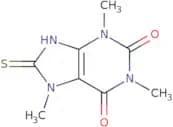
CAS :Versatile small molecule scaffoldFormule :C10H8F3NODegré de pureté :Min. 95%Masse moléculaire :215.17 g/mol1,3,7-Trimethyl-8-sulfanylidene-9H-purine-2,6-dione
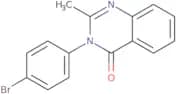
CAS :Produit contrôlé1,3,7-Trimethyl-8-sulfanylidene-9H-purine-2,6-dione is an odourless compound that can yield alkyl bromides with high efficiency. The advances in this field have been made possible by the use of thiourea as a new and efficient reagent for this transformation. The reaction parameters are very mild and allow for the preparation of bromides from a wide range of aromatic substrates.Formule :C8H10N4O2SDegré de pureté :Min. 95%Masse moléculaire :226.26 g/mol3-(4-Bromophenyl)-2-methyl-3,4-dihydroquinazolin-4-one
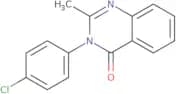
CAS :Produit contrôléVersatile small molecule scaffoldFormule :C15H11BrN2ODegré de pureté :Min. 95%Masse moléculaire :315.16 g/mol3-(4-Chlorophenyl)-2-methyl-3,4-dihydroquinazolin-4-one
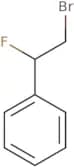
CAS :Produit contrôlé3-(4-Chlorophenyl)-2-methyl-3,4-dihydroquinazolin-4-one (CLQ) is a compound that has been shown to have a hypothermic effect in animals. CLQ also has pharmacological properties and has been used in experiments to study the correlation between maximal concentration and hypothermic effects. The drug was found to be active when administered at a dose of 0.5 mg/kg body weight. CLQ has not been tested for its effects on seizures or epilepsy, but it is thought that it may have antiseizure activity due to its inhibition of nitric oxide synthase.Formule :C15H11ClN2ODegré de pureté :Min. 95%Masse moléculaire :270.71 g/mol(2-Bromo-1-fluoroethyl)benzene
CAS :2-Bromo-1-fluoroethylbenzene is a reductive amination reagent that is used to synthesize carboxamides and other heterocycles. It has been shown to be highly regioselective for the formation of the desired products, with high yields and good selectivity. This compound can be used as a homochiral building block in asymmetric synthesis. 2-Bromo-1-fluoroethylbenzene is also an inhibitor of cyanide production from hydrolysis of cyanide salts and organic compounds containing nitro groups.
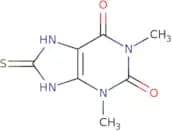
2-Bromo-1-fluoroethylbenzene is a crystallization reagent that can be used to purify active molecules by precipitation. It is also used as an enzyme cofactor in biosynthesis reactions.Formule :C8H8BrFDegré de pureté :Min. 95%Masse moléculaire :203.05 g/mol1,3-Dimethyl-8-sulfanyl-2,3,6,7-tetrahydro-1H-purine-2,6-dione
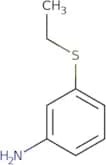
CAS :1,3-Dimethyl-8-sulfanyl-2,3,6,7-tetrahydro-1H-purine-2,6-dione is a cyclic compound that is used to synthesize copper complexes. It has four nitrogen atoms in the molecule and yields a polynuclear complex when reacted with copper ions. This ligand also has x-ray crystallographic data and can form coordination compounds with thiourea. 1,3-Dimethyl-8-sulfanyl-2,3,6,7-tetrahydro-1H-purine-2,6-dione is an ionizable anion that can be mononuclear or polynuclear depending on the solvent.Formule :C7H8N4O2SDegré de pureté :Min. 95%Masse moléculaire :212.23 g/mol3-(Ethylsulfanyl)aniline
CAS :Versatile small molecule scaffoldFormule :C8H11NSDegré de pureté :Min. 95%Masse moléculaire :153.25 g/molSpiro[5.5]undecan-1-one
CAS :Versatile small molecule scaffold
Formule :C11H18ODegré de pureté :Min. 95%Masse moléculaire :166.26 g/mol

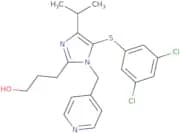
![N-[3-(Trifluoromethyl)phenyl]prop-2-enamide](/_next/image/?url=https%3A%2Fstatic.cymitquimica.com%2Fproducts%2F3D%2Fthumb-webp%2FBAA79420.webp&w=3840&q=75)
![Spiro[5.5]undecan-1-one](/_next/image/?url=https%3A%2Fstatic.cymitquimica.com%2Fproducts%2F3D%2Fthumb-webp%2FBAA78183.webp&w=3840&q=75)