


Building Blocks
Sous-catégories appartenant à la catégorie "Building Blocks"
- Acides boroniques et dérivés de l'acide boronique(5.778 produits)
- Building Blocks Chiraux(1.243 produits)
- Building Blocks Hydrocarbonés(6.099 produits)
- Building Blocks organiques(61.038 produits)
205376 produits trouvés pour "Building Blocks"
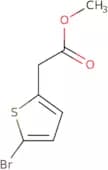
Methyl 2-(5-bromothiophen-2-yl)acetate
CAS :Versatile small molecule scaffold
Formule :C7H7BrO2SDegré de pureté :Min. 95%Masse moléculaire :235.1 g/mol6-Bromo-2-methoxyquinoline
CAS :6-Bromo-2-methoxyquinoline is a versatile compound with various applications. It is commonly used as a disinfectant in ceramic compositions and research chemicals. Additionally, it has been found to have potential therapeutic benefits. Studies have shown that 6-Bromo-2-methoxyquinoline exhibits antioxidant properties and can inhibit the production of inflammatory mediators such as arachidonic acid and prostaglandins. Furthermore, it has been found to modulate potassium channels, which play a crucial role in cellular function. This compound also shows promise in the development of copolymers and other materials due to its unique chemical structure. With its wide range of applications, 6-Bromo-2-methoxyquinoline is an essential compound for various industries.Formule :C10H8BrNODegré de pureté :Min. 95%Couleur et forme :PowderMasse moléculaire :238.08 g/mol2-(Chloromethyl)-4H,6H,7H-pyrano[4,3-d][1,3]thiazole
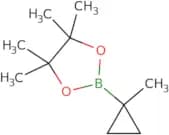
CAS :Versatile small molecule scaffoldFormule :C7H8ClNOSDegré de pureté :Min. 95%Masse moléculaire :189.66 g/mol4,4,5,5-Tetramethyl-2-(1-methylcyclopropyl)-1,3,2-dioxaborolane
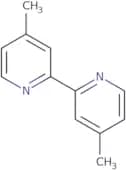
CAS :Versatile small molecule scaffoldFormule :C10H19BO2Degré de pureté :Min. 95%Masse moléculaire :182.07 g/mol4,4'-Dimethyl-2,2'-bipyridine
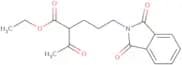
CAS :4,4'-Dimethyl-2,2'-bipyridine is a molecule that belongs to the group of p2 metal complexes. It has been shown to have synergistic effects with ruthenium complexes in analytical chemistry and electrochemical studies. Theoretical calculations have been performed for 4,4'-dimethyl-2,2'-bipyridine and its derivatives. These calculations show that the molecule is planar and that it can be considered as a diazonium salt. The photochemical properties of 4,4'-dimethyl-2,2'-bipyridine have also been studied in detail. This substance emits light when excited by ultraviolet light or visible light, which makes it an excellent candidate for use as a luminescent material in optical displays.Formule :C12H12N2Degré de pureté :Min. 98%Couleur et forme :Slightly Yellow PowderMasse moléculaire :184.24 g/molEthyl 2-(3-phthalimidopropyl)acetoacetate
CAS :Please enquire for more information about Ethyl 2-(3-phthalimidopropyl)acetoacetate including the price, delivery time and more detailed product information at the technical inquiry form on this pageFormule :C17H19NO5Degré de pureté :Min. 95%Masse moléculaire :317.34 g/mol6-Hydroxy-1-naphthoic acid
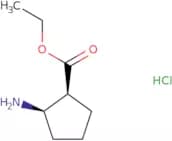
CAS :6-Hydroxy-1-naphthoic acid is a synthetic carboxylate compound with an analog structure that has been shown to be cytotoxic to cancer cells. It inhibits the activity of protein kinases by binding to ATP, which blocks the phosphorylation of tyrosine residues on proteins. 6-Hydroxy-1-naphthoic acid has been shown to inhibit growth factor receptors and induce apoptosis in tumor cells. The mechanism of action for this drug is believed to be through ring opening and hydrolysis of the naphthalene ring, followed by reaction with p-hydroxybenzoic acid. This results in inhibition of histone deacetylase activity, leading to decreased expression of genes involved in cell proliferation.Formule :C11H8O3Degré de pureté :Min. 95%Couleur et forme :PowderMasse moléculaire :188.18 g/mol(1R,2S)-rel-Ethyl 2-aminocyclopentanecarboxylate hydrochloride
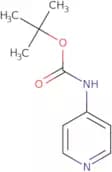
CAS :Versatile small molecule scaffoldFormule :C8H16ClNO2Degré de pureté :Min. 95%Masse moléculaire :193.67 g/mol4-(Boc-amino)pyridine
CAS :4-(Boc-amino)pyridine is a pyridine derivative that exhibits magnetic properties. It can be used to study the luminescence properties of pyridine rings. 4-(Boc-amino)pyridine inhibits cell proliferation and growth by binding to the kinase receptor in the cytoplasm, which blocks phosphorylation of proteins in the cell. This compound inhibits hCT-116 cells, which are human colorectal carcinoma cells, and has shown promising results in xenograft studies. 4-(Boc-amino)pyridine is an anionic molecule that can be used as a starting material for synthesis of other compounds. It was first synthesized by reacting 2-aminopyridine with boron trichloride in acetonitrile.Formule :C10H14N2O2Degré de pureté :Min. 95%Couleur et forme :White/Off-White SolidMasse moléculaire :194.23 g/mol2,6-Dichloro-4-methoxyaniline
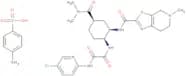
CAS :2,6-Dichloro-4-methoxyaniline is a chemical that belongs to the group of methyl derivatives. It is used as an industrial chemical and as a precursor to other chemicals in the production of pesticides, herbicides, and other products. 2,6-Dichloro-4-methoxyaniline can be found in brominated flame retardants and phenolic resins. It is also present in pentachlorophenol (PCP) and hydroxylated congeners. 2,6-Dichloro-4-methoxyaniline has been detected in humans at levels ranging from 10 to 100 parts per billion. The chemical structure of 2,6-dichloro-4-methoxyaniline is similar to that of triclosan, which has been shown to have antimicrobial activity against bacteria such as Staphylococcus aureus and EscherichFormule :C7H7Cl2NODegré de pureté :Min. 95%Masse moléculaire :192.04 g/molEdoxaban impurity G benzenesulfonate
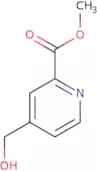
CAS :Please enquire for more information about Edoxaban impurity G benzenesulfonate including the price, delivery time and more detailed product information at the technical inquiry form on this pageFormule :C24H30ClN7O4S•C7H8O3SDegré de pureté :Min. 95%Masse moléculaire :720.26 g/molMethyl 4-(hydroxymethyl)pyridine-2-carboxylate
CAS :Versatile small molecule scaffoldFormule :C8H9NO3Degré de pureté :Min. 95%Masse moléculaire :167.16 g/molMonomethyl Glutarate
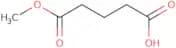
CAS :Monomethyl glutarate is a monomer for the synthesis of polymers. It has been used in the past as a precursor for the production of polyacrylic acid and its copolymers. Monomethyl glutarate is synthesized by the reaction of hydrochloric acid, high salt, and an expression plasmid containing glutarate dehydrogenase. This compound is also used as a reagent in kinetic studies of fatty acids and glutaric acid. Monomethyl glutarate is an acidic compound with a pKa value of 3.5 at 25°C. It is rapidly hydrolyzed in water to form monomethyl glutarate acid, which has a pKa value of 2.4 at 25°C. Monomethyl glutarate can be ingested orally or applied topically due to its low energy requirements for hydrolysis in water.
Formule :C6H10O4Degré de pureté :Min. 95%Masse moléculaire :146.14 g/mol3,3,5-Trimethylcyclohexanone
CAS :3,3,5-Trimethylcyclohexanone is an intermediate in the synthesis of polymers and polyesters. This compound is a reactive hydrogenation product which can be used to produce polymers with desired properties. The unsaturated side chain of 3,3,5-trimethylcyclohexanone reacts with borohydride to form a ketal. After being converted to the corresponding acid chloride, the 3,3,5-trimethylcyclohexanone can be used for the synthesis of polyesters. This compound has also been shown to be an effective catalyst for producing β-unsaturated ketones from aldehydes and dienes.Formule :C9H16ODegré de pureté :Min. 95%Couleur et forme :Clear LiquidMasse moléculaire :140.23 g/mol[Ir{dFCF3ppy}2(bpy)]PF6
CAS :Iridium(III) bis-(2-phenylpyridine) (Ir{dFCF3ppy}2(bpy)) is a monomeric amido ligand that can be used in polymerization processes. It has an average molecular weight of 185.8 and a transition temperature of -55°C. Ir{dFCF3ppy}2(bpy) is soluble in organic solvents such as chloroform and acetone and will react with amines, anionic sites, and cycloalkyl groups to form polymers. The yields of the polymerization process are dependent on the starting materials used.Formule :C34H18F16IrN4PDegré de pureté :Min. 95%Masse moléculaire :1,009.7 g/mol2,4-Dichloro-3-nitropyridine
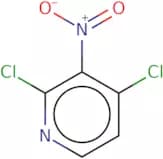
CAS :2,4-Dichloro-3-nitropyridine is a halogenated pyridinium salt that has been shown to inhibit the influenza virus in vitro. This compound is also reactive with nucleophilic groups such as amines, alcohols, and thiols. 2,4-Dichloro-3-nitropyridine has been used for the synthesis of quinoline derivatives that have potential applications in autoimmune diseases or cancer. 2,4-Dichloro-3-nitropyridine has also been found to be an inhibitor of tumor necrosis factor alpha (TNFα) production by LPS stimulated human monocytes.Formule :C5H2Cl2N2O2Degré de pureté :Min. 95%Couleur et forme :White PowderMasse moléculaire :192.99 g/mol1-tert-butyl 2-methyl (2R,4S)-4-aminopyrrolidine-1,2-dicarboxylate hydrochloride
CAS :Versatile small molecule scaffoldFormule :C11H21ClN2O4Degré de pureté :Min. 95%Masse moléculaire :280.7 g/molPentanimidamide hydrochloride
CAS :Pentanimidamide hydrochloride is a drug that belongs to the group of aromatic hydrocarbon drugs. It is a potent antihypertensive agent with a rapid onset and long duration of action. Pentanimidamide hydrochloride has been shown to inhibit the production of reactive oxygen species, which are generated by the respiratory chain in mitochondria, and to prevent the formation of pyrazinoic acid, an inhibitor of blood vessel relaxation. This drug also has been shown to reduce blood pressure in animal models by binding to specific receptors on cells in the cardiovascular system. The active form is bound to plasma proteins such as albumin and alpha-1-acid glycoprotein, which are found in high concentrations in erythrocytes. Pentanimidamide hydrochloride also binds to alkynyl groups and phenyl groups, which may be due to its ability to form covalent bonds with these functional groups.Formule :C5H13ClN2Degré de pureté :Min. 95%Masse moléculaire :136.62 g/moltert-Butyl 9-oxo-4,8-diazaspiro[4.4]nonane-4-carboxylate
CAS :Versatile small molecule scaffoldFormule :C12H20N2O3Degré de pureté :Min. 95%Masse moléculaire :240.3 g/molN-Fluorobenzenesulfonimide
CAS :N-Fluorobenzenesulfonimide is an organic compound with the molecular formula CHFNS. It is a fluorinating agent that can be used for the synthesis of organic compounds. N-Fluorobenzenesulfonimide has been shown to have anti-inflammatory properties and has shown promising results in animal studies for the treatment of hepatitis. The mechanism of action is not fully understood, but it may involve the formation of hydrogen bonds between N-fluorobenzenesulfonimide and amino acid residues in proteins, leading to inhibition of protein synthesis.
Formule :C12H10FNO4S2Degré de pureté :Min. 95%Couleur et forme :White PowderMasse moléculaire :315.34 g/mol

![2-(Chloromethyl)-4H,6H,7H-pyrano[4,3-d][1,3]thiazole](/_next/image/?url=https%3A%2Fstatic.cymitquimica.com%2Fproducts%2F3D%2Fthumb-webp%2FSDC46081.webp&w=3840&q=75)



![[Ir{dFCF3ppy}2(bpy)]PF6](/_next/image/?url=https%3A%2Fstatic.cymitquimica.com%2Fproducts%2F3D%2Fthumb-webp%2FSTB77562.webp&w=3840&q=75)


![tert-Butyl 9-oxo-4,8-diazaspiro[4.4]nonane-4-carboxylate](/_next/image/?url=https%3A%2Fstatic.cymitquimica.com%2Fproducts%2F3D%2Fthumb-webp%2FWYB81845.webp&w=3840&q=75)
