Building Blocks
Sous-catégories appartenant à la catégorie "Building Blocks"
- Acides boroniques et dérivés de l'acide boronique(5.778 produits)
- Building Blocks Chiraux(1.243 produits)
- Building Blocks Hydrocarbonés(6.099 produits)
- Building Blocks organiques(61.038 produits)
205376 produits trouvés pour "Building Blocks"
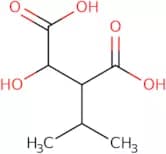
2-Hydroxy-3-(1-methylethyl)-butanedioic acid
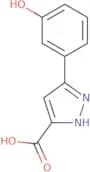
CAS :2-Hydroxy-3-(1-methylethyl)-butanedioic acid is an organic compound that is a metabolite of the amino acid methionine. It is formed by the oxidation of the methyl group on the 2 position in methionine. The protein subunits are expressed in liver cells and it has been shown to have antioxidant properties. The analytical methods used for this compound include LC-MS/MS, which separates it into its individual isomers. This method can be used to determine the purity of 2-hydroxy-3-(1-methylethyl)-butanedioic acid. The carbonyl group in this molecule makes it susceptible to steric interactions with other molecules, which may lead to it being oxidized or reduced. It has been found that 2-hydroxy-3-(1-methylethyl)-butanedioic acid shows thermophilic and enterocolitic properties.Formule :C7H12O5Degré de pureté :Min. 95%Masse moléculaire :176.17 g/mol5-(3-Hydroxyphenyl)-1H-pyrazole-3-carboxylic acid
CAS :Versatile small molecule scaffold
Formule :C10H8N2O3Degré de pureté :Min. 95%Masse moléculaire :204.18 g/mol(1R)-2-Chloro-1-(2,4-dichlorophenyl)ethan-1-ol
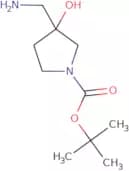
CAS :(1R)-2-Chloro-1-(2,4-dichlorophenyl)ethan-1-ol is a substrate for acetylation that is used in the synthesis of enantiopure alcohols. It has been shown to be an inhibitor of alcohol dehydrogenases and hydrophobic alcohols. (1R)-2-Chloro-1-(2,4-dichlorophenyl)ethan-1-ol has also been found to be active against fungi such as Penicillium chrysogenum and Cryptococcus neoformans. This compound is stereoselective when used as an antifungal agent, which means it will only inhibit one enantiomer of a molecule.Formule :C8H7OCl3Degré de pureté :Min. 95%Masse moléculaire :225.49 g/moltert-butyl 3-(aminomethyl)-3-hydroxypyrrolidine-1-carboxylate
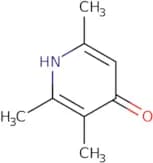
CAS :Versatile small molecule scaffoldFormule :C10H20N2O3Degré de pureté :Min. 95%Masse moléculaire :216.3 g/mol2,3,6-Trimethylpyridin-4(1H)-One
CAS :Versatile small molecule scaffoldFormule :C8H11NODegré de pureté :Min. 95%Masse moléculaire :137.18 g/mol[2'-(Amino-ºN)[1,1'-biphenyl]-2-yl-C][[3,6-dimethoxy-2',4',6'-tris(1-methylethyl)[1,1'-biphenyl]-2-yl]bis(1,1-dimethylethyl)phosphin e-ºP](methanesulfonato-ºO)palladium (tBuBrettPhos Pd G3)
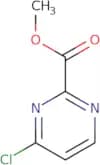
CAS :The chemical is a palladium-based complex that inhibits the activity of α4β7 integrin. It has been shown to be effective in prophylaxis and treatment of inflammatory diseases, such as autoimmune diseases, and other conditions, such as congenital disorders. The compound has been shown to inhibit the growth of plants by causing phytotoxic effects.Formule :C44H62NO5PPdSDegré de pureté :Min. 95%Masse moléculaire :854.43 g/molMethyl 4-chloropyrimidine-2-carboxylate
CAS :Versatile small molecule scaffoldFormule :C6H5ClN2O2Degré de pureté :Min. 95%Masse moléculaire :172.57 g/mol2-Cyano-5-fluorophenol
CAS :2-Cyano-5-fluorophenol is an organic compound that is used as a precursor to medicines and other chemicals. It reacts with calcium hydroxide in water to form 2-cyano-5-hydroxyfluorobenzene, which can be hydrolyzed to form 2-cyano-5-chlorofluorobenzene. This compound can also react with sodium hydroxide to produce sodium cyanate, which can be hydrolyzed to form sodium chloride and hydrogen cyanide gas. The alkali metal ions are needed for this reaction, which is why the product should not be exposed to water or moisture. 2-Cyano-5-fluorophenol has been shown to have liquid crystal properties and is used in the production of certain types of polymers. 2Cyano-5Fluorophenol crystals are also used in some medicines such as acetaminophen (paracetamol).
Formule :C7H4FNODegré de pureté :Min. 95%Masse moléculaire :137.11 g/mol4-(3-Aminopropyl)aniline
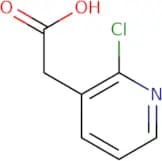
CAS :Versatile small molecule scaffoldFormule :C9H14N2Degré de pureté :Min. 95%Masse moléculaire :150.22 g/mol(2-Chloropyridin-3-yl)acetic acid
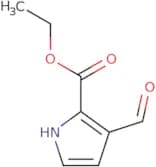
CAS :Versatile small molecule scaffoldFormule :C7H6ClNO2Degré de pureté :Min. 95%Masse moléculaire :171.6 g/molethyl 3-formyl-1H-pyrrole-2-carboxylate
CAS :Ethyl 3-formyl-1H-pyrrole-2-carboxylate is a formyl compound with the molecular formula C8H8O3. It is a colorless liquid that has a strong odor. The compound can be obtained by the reaction of ethyl acetoacetate and pyrrole in the presence of aluminum chloride. The compound has been studied for its nuclear magnetic resonance (NMR) properties. It has two conformers, which are distinguished by their different chemical shifts, and this difference can be used to study coupling between the carbonyl group and other groups in the molecule.
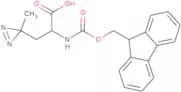
Formule :C8H9NO3Degré de pureté :Min. 95%Masse moléculaire :167.2 g/molFmoc-L-photo-leucine
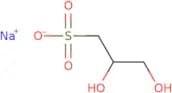
CAS :Versatile small molecule scaffoldFormule :C20H19N3O4Degré de pureté :Min. 95%Masse moléculaire :365.4 g/molSodium 2,3-dihydroxypropane-1-sulfonate
CAS :Sodium 2,3-dihydroxypropane-1-sulfonate is a granular detergent that can be used in the production of heavy duty liquid and solid granules. It is an anionic surfactant with a sulfonate group that has a granular consistency. This detergent is often used as a wetting agent in detergents and as a dispersing agent in paints, dyes, and pharmaceuticals. Sodium 2,3-dihydroxypropane-1-sulfonate has been shown to be effective at removing particulate matter from water and can also be used as a stabilizer for other surfactants during manufacturing.Formule :C3H7NaO5SDegré de pureté :Min. 95%Masse moléculaire :178.14 g/mol3-[5-(Aminomethyl)-1-oxo-2,3-dihydro-1H-isoindol-2-yl]piperidine-2,6-dione hydrochloride
CAS :Versatile small molecule scaffoldFormule :C14H16ClN3O3Degré de pureté :Min. 95%Masse moléculaire :309.75 g/moltert-Butyl 3-(4-aminophenyl)pyrrolidine-1-carboxylate
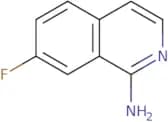
CAS :Versatile small molecule scaffoldFormule :C15H22N2O2Degré de pureté :Min. 95%Masse moléculaire :262.35 g/mol7-Fluoroisoquinolin-1-amine
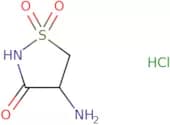
CAS :Versatile small molecule scaffoldFormule :C9H7FN2Degré de pureté :Min. 95%Masse moléculaire :162.16 g/mol4-Amino-3-isothiazolidinone 1,1-dioxide hydrochloride
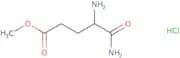
CAS :Versatile small molecule scaffoldFormule :C3H7ClN2O3SDegré de pureté :Min. 95%Masse moléculaire :186.62 g/molH-Glu(OMe)-NHdihydrochloride
CAS :Versatile small molecule scaffoldFormule :C6H13ClN2O3Degré de pureté :Min. 95%Masse moléculaire :196.63 g/mol1,4-Cubanedicarboxylic acid
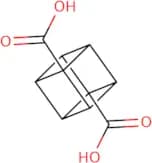
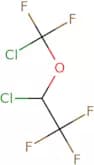
CAS :1,4-Cubanedicarboxylic acid is an organic compound that is a diacid. It has been shown to be an inhibitor of chloride secretion in the intestine, and can also decrease the rate at which hydrogen ions are released into the intestinal lumen. 1,4-Cubanedicarboxylic acid is also a cross-linking agent that can be used in organic solvents for large-scale synthesis. The optical properties of 1,4-cubanedicarboxylic acid have been studied using FTIR spectroscopy. This agent has been found to react with intramolecular hydrogen to form a six membered ring.Formule :C10H8O4Degré de pureté :Min. 95%Masse moléculaire :192.17 g/mol2-Chloro-2-(chlorodifluoromethoxy)-1,1,1-trifluoroethane
CAS :2-Chloro-2-(chlorodifluoromethoxy)-1,1,1-trifluoroethane (HFC-152a) is a chemical compound that belongs to the group of chlorofluorocarbons. It has been used as a refrigerant and aerosol propellant. HFC-152a is an azeotrope with methyl ethyl ketone and ethyl ketone. It has also been reported to have properties as an ether, acetone, and difluoromethyl.
Formule :C3HCl2F5ODegré de pureté :Min. 95%Masse moléculaire :218.94 g/mol


![[2'-(Amino-ºN)[1,1'-biphenyl]-2-yl-C][[3,6-dimethoxy-2',4',6'-tris(1-methylethyl)[1,1'-biphenyl]-2…](/_next/image/?url=https%3A%2Fstatic.cymitquimica.com%2Fproducts%2F3D%2Fthumb-webp%2FLLC47372.webp&w=3840&q=75)


![3-[5-(Aminomethyl)-1-oxo-2,3-dihydro-1H-isoindol-2-yl]piperidine-2,6-dione hydrochloride](/_next/image/?url=https%3A%2Fstatic.cymitquimica.com%2Fproducts%2F3D%2Fthumb-webp%2FIWB26469.webp&w=3840&q=75)