Building Blocks
Sous-catégories appartenant à la catégorie "Building Blocks"
- Acides boroniques et dérivés de l'acide boronique(5.778 produits)
- Building Blocks Chiraux(1.243 produits)
- Building Blocks Hydrocarbonés(6.098 produits)
- Building Blocks organiques(61.036 produits)
205240 produits trouvés pour "Building Blocks"
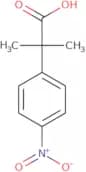
2-Methyl-2-(4-nitrophenyl)propanoic acid
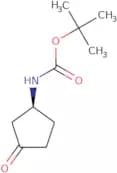
CAS :Versatile small molecule scaffoldFormule :C10H11NO4Degré de pureté :Min. 95%Masse moléculaire :209.2 g/mol(S)-tert-Butyl (3-oxocyclopentyl)carbamate
CAS :Versatile small molecule scaffoldFormule :C10H17NO3Degré de pureté :Min. 95%Masse moléculaire :199.25 g/molPotassium (cyclopropylmethyl)trifluoroborate
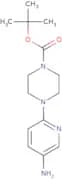
CAS :Versatile small molecule scaffoldFormule :C4H7BF3KDegré de pureté :Min. 95%Masse moléculaire :162 g/mol1-Boc-4-(5-Aminopyridin-2-yl)piperazine
CAS :Versatile small molecule scaffoldFormule :C14H22N4O2Degré de pureté :Min. 95%Masse moléculaire :278.35 g/mol2-Bromothieno[3,2-c]pyridin-4(5H)-one
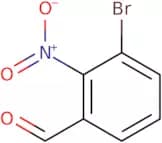
CAS :Versatile small molecule scaffoldFormule :C7H4BrNOSDegré de pureté :Min. 95%Masse moléculaire :230.08 g/mol3-Bromo-2-nitrobenzaldehyde
CAS :3-Bromo-2-nitrobenzaldehyde is an organic chemical compound used in the synthesis of other chemical compounds. It is a colorless liquid that can be easily synthesized using potassium permanganate, tetrahydrofuran, acetone and hydrochloric acid. The chemical reaction is carried out by reacting potassium permanganate with hydrochloric acid to form potassium chloride and manganese dioxide. The manganese dioxide then reacts with acetone to produce 3-bromo-2-nitrobenzaldehyde. This synthetic method for producing 3-bromo-2-nitrobenzaldehyde uses less hazardous chemicals than the traditional method.
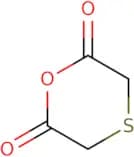
Formule :C7H4BrNO3Degré de pureté :Min. 95%Masse moléculaire :230.02 g/molThiodiglycolic Anhydride
CAS :Thiodiglycolic anhydride is a synthetic reagent that is used in the synthesis of erdosteine. It also has been used in the synthesis of other products, such as magnetic particles for imaging and therapeutic uses. Thiodiglycolic anhydride can be used to synthesize erdosteine, which is a substrate for the enzyme hydroxylase and contains a hydroxy group in its structure. The hydroxyl group on erdosteine reacts with thiodiglycolic anhydride to form acrylonitrile, which then reacts with benzyl groups to form benzylthio-esters. These benzylthio-esters are then converted into acid transporters.
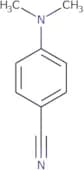
Formule :C4H4O3SDegré de pureté :Min. 95%Masse moléculaire :132.14 g/mol1-Cyano-4-(dimethylamino)benzene
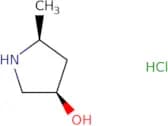
CAS :1-Cyano-4-(dimethylamino)benzene is a molecule that has been shown to inhibit the growth of hamster v79 cells. It also inhibits the synthesis of DNA and RNA. The binding constants for this molecule have been determined to be 1.0 x 10^9 M^-1, with an n-octanol/water partition coefficient (log P) of 5.5. This molecule is soluble in nonpolar solvents and may be used as a model system for hydrogen bonding interactions or reaction mechanisms in organic chemistry. This compound contains a deuterium isotope and can be used to study the effects of hydrogen bonding on reactions in organic chemistry at high temperatures, with the use of preparative hplc.Formule :C9H10N2Degré de pureté :Min. 95%Couleur et forme :Beige PowderMasse moléculaire :146.19 g/mol(3R,5S)-5-Methylpyrrolidin-3-ol HCl
CAS :Versatile small molecule scaffoldFormule :C5H12ClNODegré de pureté :Min. 95%Masse moléculaire :137.61 g/mol2-(2-Ethoxyphenoxy)acetic acid
CAS :Versatile small molecule scaffoldFormule :C10H12O4Degré de pureté :Min. 95%Masse moléculaire :196.2 g/mol(2S,3S)-2-Methylpyrrolidin-3-ol hydrochloride
CAS :Versatile small molecule scaffold
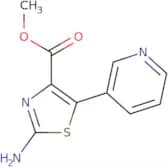
Formule :C5H12ClNODegré de pureté :Min. 95%Masse moléculaire :137.61 g/molMethyl 2-amino-5-pyridin-3-yl-1,3-thiazole-4-carboxylate
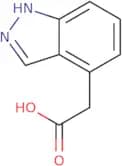
CAS :Versatile small molecule scaffoldFormule :C10H9N3O2SDegré de pureté :Min. 95%Masse moléculaire :235.26 g/mol(1H-Indazol-4-yl)acetic acid
CAS :(1H-Indazol-4-yl)acetic acid is a cation that has been shown to have pharmacological activity. It is hydrolyzable and is used as an anti-inflammatory agent. This compound also decarboxylates and hydrolyzes, which are processes that produce carboxyl and fluoro groups. (1H-Indazol-4-yl)acetic acid has been shown to be an anti-inflammatory agent, with effects against inflammation in the central nervous system. This drug also inhibits the production of inflammatory cytokines, including tumor necrosis factor alpha (TNFα), interleukin 1β (IL1β), and IL6.Formule :C9H8N2O2Degré de pureté :Min. 95%Masse moléculaire :176.17 g/molSpiro[3.3]heptane-2,6-dicarboxylic acid, 2,6-dimethyl ester
CAS :Versatile small molecule scaffoldFormule :C11H16O4Degré de pureté :Min. 95%Masse moléculaire :212.25 g/molN-(4-Aminophenyl)-N-methyl-2-(4-methylpiperazin-1-yl)acetamide
CAS :N-(4-Aminophenyl)-N-methyl-2-(4-methylpiperazin-1-yl)acetamide is an environmental and industrial chemical that is used as a formate, benzoate, and methyl benzoate intermediate. It reacts with nitric acid to form N-(4-aminophenyl)-N-methyl-2-(4-nitrophenoxy)acetamide (NPA). NPA has been shown to have antiangiogenic properties. NPA inhibits the proliferation of endothelial cells by interfering with the cell cycle and inducing apoptosis.Formule :C14H22N4ODegré de pureté :Min. 95%Masse moléculaire :262.35 g/mol5-Bromo-2,4-dimethoxypyridine
CAS :Versatile small molecule scaffold
Formule :C7H8BrNO2Degré de pureté :Min. 95%Masse moléculaire :218.05 g/molmethyl 4-bromo-3-formylbenzoate
CAS :Versatile small molecule scaffoldFormule :C9H7BrO3Degré de pureté :Min. 95%Masse moléculaire :243.1 g/mol3-(p-tolyl)propiolic acid
CAS :3-(p-tolyl)propiolic acid is a functional group that is used in organic chemistry. It is an alkynoic acid with a terminal triple bond. The compound can be synthesized by the reaction of propiolic acid with an alkyne, followed by oxidation. The 3-(p-tolyl)propiolic acid can be used as a surrogate for other functional groups in organic synthesis, and it has been shown to react as an oxidant in biomolecular systems.Formule :C10H8O2Degré de pureté :Min. 95%Masse moléculaire :160.17 g/moltert-Butyl 7-bromoheptanoate
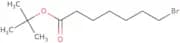
CAS :Versatile small molecule scaffold
Formule :C11H21BrO2Degré de pureté :Min. 95%Masse moléculaire :265.19 g/moln-Butyl methanesulfonate
CAS :N-butyl methanesulfonate is a genotoxic agent that inhibits the growth of bacteria by binding to the DNA. N-butyl methanesulfonate is effective against typhimurium and has shown carcinogenic effects in hamster cells. N-butyl methanesulfonate is also capable of inhibiting quinoline derivatives, which are carcinogens that are found in tobacco smoke. This chemical can be used as a natural compound for the treatment of diabetic neuropathy and cryptococcus neoformans. It may also be used as an antiviral agent for the treatment of influenza virus.Formule :C5H12O3SDegré de pureté :Min. 95%Masse moléculaire :152.21 g/mol


![2-Bromothieno[3,2-c]pyridin-4(5H)-one](/_next/image/?url=https%3A%2Fstatic.cymitquimica.com%2Fproducts%2F3D%2Fthumb-webp%2FDBA94860.webp&w=3840&q=75)


![Spiro[3.3]heptane-2,6-dicarboxylic acid, 2,6-dimethyl ester](/_next/image/?url=https%3A%2Fstatic.cymitquimica.com%2Fproducts%2F3D%2Fthumb-webp%2FMBA94279.webp&w=3840&q=75)