


Building Blocks
Sous-catégories appartenant à la catégorie "Building Blocks"
- Acides boroniques et dérivés de l'acide boronique(5.784 produits)
- Building Blocks Chiraux(1.242 produits)
- Building Blocks Hydrocarbonés(6.105 produits)
- Building Blocks organiques(61.061 produits)
205399 produits trouvés pour "Building Blocks"
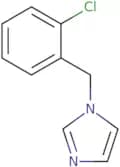
1-(2-Chlorobenzyl)imidazole
CAS :Versatile small molecule scaffold
Formule :C10H9ClN2Degré de pureté :Min. 95%Masse moléculaire :192.64 g/molRef: 3D-GCA64369
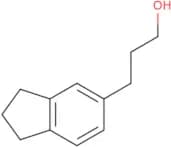
Produit arrêté3-(2,3-Dihydro-1H-inden-5-yl)propan-1-ol
CAS :Versatile small molecule scaffold
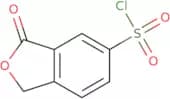
Formule :C12H16ODegré de pureté :Min. 95%Masse moléculaire :176.25 g/mol3-Oxo-1,3-dihydro-2-benzofuran-5-sulfonyl chloride
CAS :Versatile small molecule scaffold
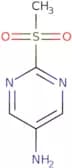
Formule :C8H5ClO4SDegré de pureté :Min. 95%Masse moléculaire :232.64 g/mol2-(Methylsulfonyl)pyrimidin-5-amine
CAS :Versatile small molecule scaffold
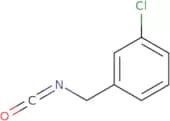
Formule :C5H7N3O2SDegré de pureté :Min. 95%Masse moléculaire :173.19 g/mol1-Chloro-3-(isocyanatomethyl)benzene
CAS :Versatile small molecule scaffold
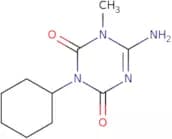
Formule :C8H6ClNODegré de pureté :Min. 95%Masse moléculaire :167.59 g/mol6-Amino-3-cyclohexyl-1-methyl-1,2,3,4-tetrahydro-1,3,5-triazine-2,4-dione
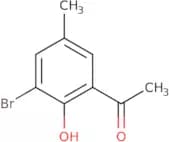
CAS :6-Amino-3-cyclohexyl-1-methyl-1,2,3,4-tetrahydro-1,3,5-triazine-2,4-dione is the metabolite of cyclophosphamide and is extracted using n-hexane and acetonitrile. It has been shown to be a potent inhibitor of DNA synthesis in vitro at concentrations as low as 10 μM. The average recoveries for this compound are 96.6% with an average recovery of 99.7%.Formule :C10H16N4O2Degré de pureté :Min. 95%Masse moléculaire :224.26 g/mol1-(3-Bromo-2-hydroxy-5-methylphenyl)ethan-1-one
CAS :Versatile small molecule scaffold
Formule :C9H9BrO2Degré de pureté :Min. 95%Masse moléculaire :229.07 g/molRef: 3D-GCA60915
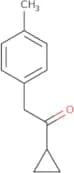
Produit arrêté1-Cyclopropyl-2-(4-methylphenyl)ethan-1-one
CAS :Versatile small molecule scaffold
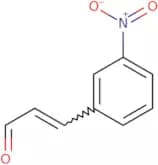
Formule :C12H14ODegré de pureté :Min. 95%Masse moléculaire :174.24 g/mol3-(3-Nitrophenyl)acrylaldehyde
CAS :3-(3-Nitrophenyl)acrylaldehyde is an organic compound that belongs to the class of aldehydes. It is used in the synthesis of halogenated compounds, such as dibromohexane, and in organic chemistry as a building block for the preparation of hydrophobic compounds. 3-(3-Nitrophenyl)acrylaldehyde reacts with benzene in an aldol condensation reaction to form 2,4-dinitrobenzaldehyde. This reaction may be catalyzed by acid or base. The efficiency of this reaction is increased when it is carried out at lower temperatures and higher pressures. The ring-opening reaction of 3-(3-nitrophenyl)acrylaldehyde with methanal also proceeds efficiently at lower temperatures and higher pressures.
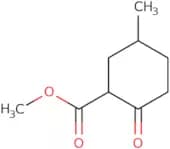
Formule :C9H7NO3Degré de pureté :Min. 95%Masse moléculaire :177.16 g/molMethyl 5-methyl-2-oxocyclohexane-1-carboxylate
CAS :Methyl 5-methyl-2-oxocyclohexane-1-carboxylate is a racemic compound with the chemical formula CH3(CH2)4CO2. The individual enantiomers are known as D and L methyl 5-methyl-2-oxocyclohexane-1-carboxylate. This compound is a sesquiterpenoid and has been found to inhibit the growth of certain bacteria, fungi, and parasites. The biological activity of this compound is due to its ability to interfere with protein synthesis by binding to the active site of enzymes that require a carboxyl group for their function. Methyl 5-methyl-2-oxocyclohexane-1-carboxylate can be found in nature as a mixture of two enantiomers, but it can also be synthesized in a racemic form.
Formule :C9H14O3Degré de pureté :Min. 95%Masse moléculaire :170.21 g/molRef: 3D-GCA57640
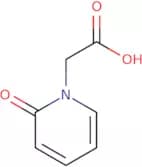
Produit arrêté(2-Oxopyridin-1(2H)-yl)acetic acid
CAS :2-Oxopyridin-1(2H)-yl)acetic acid is a colorless, crystalline solid that can be used as a reagent for organic synthesis. It has been shown to inhibit the growth of C. parapsilosis and T. tetracosane at low concentrations. 2-Oxopyridin-1(2H)-yl)acetic acid may have an inhibitory effect on the enzyme dehydrogenase, which catalyzes the conversion of hexadecanoic acid to hexadecenoic acid during lipid metabolism and is required for cell survival. This compound has also been shown to be effective against M. tuberculosis and M. avium complex, but not against other bacteria such as B. subtilis or S. aureus.
Formule :C7H7NO3Degré de pureté :Min. 95%Masse moléculaire :153.14 g/molRef: 3D-GCA54636
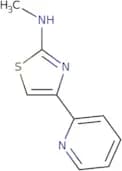
Produit arrêtéN-Methyl-4-(pyridin-2-yl)-1,3-thiazol-2-amine
CAS :Versatile small molecule scaffold
Formule :C9H9N3SDegré de pureté :Min. 95%Masse moléculaire :191.26 g/molRef: 3D-GCA54121
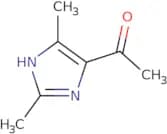
Produit arrêté1-(2,5-Dimethyl-1H-imidazol-4-yl)ethan-1-one
CAS :Versatile small molecule scaffold
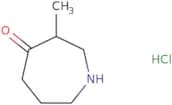
Formule :C7H10N2ODegré de pureté :Min. 95%Masse moléculaire :138.17 g/mol3-Methylazepan-4-one Hydrochloride
CAS :Versatile small molecule scaffold
Formule :C7H13NO·HClDegré de pureté :Min. 95%Masse moléculaire :163.64 g/mol2,6-Dimethylbenzene-1,4-diamine dihydrochloride
CAS :Versatile small molecule scaffold
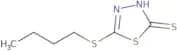
Formule :C8H14Cl2N2Degré de pureté :Min. 95%Masse moléculaire :209.11 g/mol5-(Butylsulfanyl)-1,3,4-thiadiazole-2-thiol
CAS :Versatile small molecule scaffoldFormule :C6H10N2S3Degré de pureté :Min. 95%Masse moléculaire :206.4 g/mol1-(4-Methoxyphenyl)-2-methylpropan-2-amine
CAS :Produit contrôléVersatile small molecule scaffold
Formule :C11H17NODegré de pureté :Min. 95%Masse moléculaire :179.26 g/molRef: 3D-GCA49094
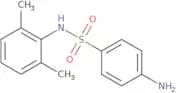
Produit arrêté4-Amino-N-(2,6-dimethylphenyl)benzenesulfonamide
CAS :Versatile small molecule scaffold
Formule :C14H16N2O2SDegré de pureté :Min. 95%Masse moléculaire :276.36 g/molRef: 3D-GAA97347
Produit arrêté6-Methyl-2-picolylmethylamine
CAS :6-Methyl-2-picolylmethylamine is a dimeric compound that contains two picolyl methyl groups per molecule. It can be prepared by the reaction of picolinic acid with an appropriate amine, such as methylamine. 6-Methyl-2-picolylmethylamine reacts with dioxane to form a yellow solid, which is a potentiometric indicator. The potentiometric titration of 6-methyl-2-picolylmethylamine has shown that it has a pK value of 7.3 and a color change at pH 7.8.
Formule :C8H12N2Degré de pureté :Min. 95%Masse moléculaire :136.19 g/mol1,2,4-Triazolo[4,3-a]pyridin-3(2H)-one
CAS :1,2,4-Triazolo[4,3-a]pyridin-3(2H)-one is a potent inhibitor of the enzyme c-glycosylase. This compound has been used in pharmaceutical preparations and as a feedstock in organic syntheses. It is used to produce the anti-inflammatory drug piroxicam, which inhibits the action of cyclooxygenase and blocks the synthesis of prostaglandins. 1,2,4-Triazolo[4,3-a]pyridin-3(2H)-one also has been shown to inhibit crystallization of the bovine liver enzyme phosphatidylcholine:cholesterol acyltransferase (PCAT). The inhibition was found to be competitive with respect to PCAT substrate and was not due to inhibition of PCAT by 1,2,4-triazolo[4,3-a]pyridin-3(
Formule :C6H5N3ODegré de pureté :Min. 95%Masse moléculaire :135.13 g/mol




![1,2,4-Triazolo[4,3-a]pyridin-3(2H)-one](/_next/image/?url=https%3A%2Fstatic.cymitquimica.com%2Fproducts%2F3D%2Fthumb-webp%2FGAA96971.webp&w=3840&q=75)