Building Blocks
Sous-catégories appartenant à la catégorie "Building Blocks"
- Acides boroniques et dérivés de l'acide boronique(5.784 produits)
- Building Blocks Chiraux(1.242 produits)
- Building Blocks Hydrocarbonés(6.105 produits)
- Building Blocks organiques(61.061 produits)
205399 produits trouvés pour "Building Blocks"
5,6-Dihydrobenzo[b]thiophen-7(4H)-one
CAS :5,6-Dihydrobenzo[b]thiophen-7(4H)-one is a sulfur-containing heterocycle that has been shown in studies to have cytotoxic activity. This compound has been found to induce apoptosis (programmed cell death) in cancer cells by binding to the protein kinase B (PKB/Akt), which is involved in the regulation of cell proliferation and survival. 5,6-Dihydrobenzo[b]thiophen-7(4H)-one also binds to DNA, preventing transcription and translation of proteins. The cytotoxic effects of this compound make it useful for treatment of ophthalmic conditions such as cataracts and glaucoma. This compound is being studied for use in the treatment of ovarian cancer and other types of cancer. It was recently shown that 5,6-dihydrobenzo[b]thiophen-7(4H)-one
Formule :C8H8OSDegré de pureté :Min. 95%Masse moléculaire :152.21 g/molRef: 3D-BAA46884
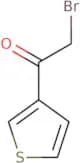
Produit arrêté3-(Bromoacetyl)thiophene
CAS :3-(Bromoacetyl)thiophene is a chromophore that can be used as an antibacterial agent. It has potent inhibitory effects on bacteria, which are caused by the ring-opening of the thiophene ring in the presence of irradiation. 3-(Bromoacetyl)thiophene can also be used in electrochemical polymerization and cyclic voltammetry. In addition, it has been shown to have an inhibitory effect on dehydrogenase enzymes, which are important for energy production in cells. This compound is fluorescent and can be detected using electrochemical impedance spectroscopy (EIS).
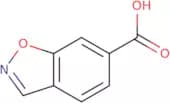
Formule :C6H5BrOSDegré de pureté :Min. 95%Masse moléculaire :205.07 g/mol1,2-Benzoxazole-6-carboxylic acid
CAS :1,2-Benzoxazole-6-carboxylic acid is a carboxamido diuretic. It is used as a drug to treat edema or high blood pressure. This compound has been shown to have benzyl and cyclohexyl groups.
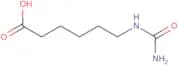
Formule :C8H5NO3Degré de pureté :Min. 95%Masse moléculaire :163.13 g/mol6-(Carbamoylamino)hexanoic acid
CAS :6-(Carbamoylamino)hexanoic acid (6ACA) is a synlett that has been shown to be a potent and selective inhibitor of Hsp70. It is functional as a modulator through the interaction with the zinc-binding site, which inhibits ATPase activity. This molecule also acts as a lead molecule for the development of therapeutic agents against various diseases such as cancer, diabetes, and neurodegenerative disorders. The compound has been shown to have catalytic activity in acidic conditions and shows high stereoselectivity in multicomponent reactions.
Formule :C7H14N2O3Degré de pureté :Min. 95%Masse moléculaire :174.2 g/molRef: 3D-BAA46842
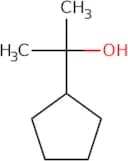
Produit arrêtéa,a-Dimethyl-cyclopentanemethanol
CAS :Versatile small molecule scaffold
Formule :C8H16ODegré de pureté :Min. 95%Masse moléculaire :128.21 g/molRef: 3D-BAA46206
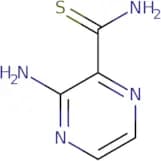
Produit arrêté3-Aminopyrazine-2-carbothioamide
CAS :Versatile small molecule scaffold
Formule :C5H6N4SDegré de pureté :Min. 95%Masse moléculaire :154.2 g/mol4-(4-Chlorophenyl)-5-(pyridin-3-yl)-4H-1,2,4-triazole-3-thiol
CAS :Versatile small molecule scaffold
Formule :C13H9ClN4SDegré de pureté :Min. 95%Masse moléculaire :288.76 g/mol(4-Nitrophenyl)acetaldehyde
CAS :4-Nitrophenylacetaldehyde is an organic compound that belongs to the group of reactive chemicals. It is synthetically derived from nitrobenzene and reacts with proton, covalent adducts, or other functional groups. 4-Nitrophenylacetaldehyde has been shown to be a target for cancer research because it can be used to produce cancer drugs by linking a variety of functional groups to the molecule. The nitrogen atom in the molecule is also a target for research because it can be converted into nitro groups and can help in the development of new drugs through dehydration reactions.
Formule :C8H7NO3Degré de pureté :Min. 95%Masse moléculaire :165.15 g/mol5-Methylbenzo[c][1,2,5]thiadiazole
CAS :5-Methylbenzo[c][1,2,5]thiadiazole is a chemical compound that belongs to the group of mixtures. It is a yellow solid that can be purified by recrystallization from water and ethanol. This compound is soluble in alcohol, chloroform and ether. 5-Methylbenzo[c][1,2,5]thiadiazole has been shown to be an oxidizing agent when mixed with potassium permanganate or potassium perchlorate. The reactivity of this substance can also be seen when it reacts with chlorine gas to form the corresponding thiocarbonyl chloride. 5-Methylbenzo[c][1,2,5]thiadiazole has not been found to have any commercial applications at this time.
Formule :C7H6N2SDegré de pureté :Min. 95%Masse moléculaire :150.2 g/molIsothiazole-3-carbonitrile
CAS :Isothiazole-3-carbonitrile is a chemical compound that contains a nitrile group with two isothiazole rings. It is used in the synthesis of urea and in the production of carbon tetrachloride. This chemical has been shown to cause hypotoxicity mediated by cyano, epithelioma, disulfide, pyridine, carbon disulfide, dichloro, industrial, cutaneum and cancer. Isothiazole-3-carbonitrile has been shown to act as a signal molecule that can inhibit chlorine and cyanide reactions by acting as a competitive inhibitor.
Formule :C2H2N2SDegré de pureté :Min. 95%Masse moléculaire :110.14 g/mol4-Bromopentanoic acid
CAS :Versatile small molecule scaffold
Formule :C5H9BrO2Degré de pureté :Min. 95%Masse moléculaire :181.03 g/molBenzyltriphenylphosphonium Bromide
CAS :Benzyltriphenylphosphonium Bromide is a quaternary ammonium compound that is used in the treatment of microbial infections. It is a white powder that has an unpleasant odor and is soluble in water. Benzyltriphenylphosphonium Bromide has been shown to be effective against bacterial species, such as those found in urine samples, and also exhibits physiological activities, such as sodium citrate. This chemical also has an analytical chemistry role in the determination of diamine tetraacetic acid (DTA) levels in cervical cancer cells. Benzyltriphenylphosphonium Bromide is known to form salts with fatty acids and hydroxyl groups.
Formule :C25H22BrPDegré de pureté :Min. 95%Masse moléculaire :433.33 g/molRef: 3D-BAA44946
Produit arrêté1-[3-(Methylsulfanyl)phenyl]ethan-1-one
CAS :Versatile small molecule scaffold
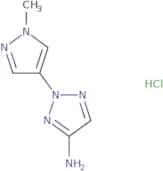
Formule :C9H10OSDegré de pureté :Min. 95%Masse moléculaire :166.24 g/mol2-(1-Methyl-1H-pyrazol-4-yl)-2H-1,2,3-triazol-4-amine hydrochloride
CAS :Versatile small molecule scaffold
Formule :C6H9ClN6Degré de pureté :Min. 95%Masse moléculaire :200.6 g/molN-Cyclohexyl-1,3-thiazol-2-amine
CAS :Versatile small molecule scaffold
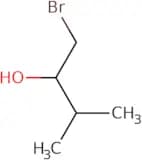
Formule :C9H14N2SDegré de pureté :Min. 95%Masse moléculaire :182.29 g/mol1-Bromo-3-methylbutan-2-ol
CAS :Versatile small molecule scaffold
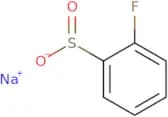
Formule :C5H11BrODegré de pureté :Min. 95%Masse moléculaire :167.04 g/molSodium 2-fluorobenzene-1-sulfinate
CAS :Sodium 2-fluorobenzene-1-sulfinate is an arylation agent that can be used to synthesize substituted phenols. It is a regioselective reagent, which means it only reacts at the para position of the aromatic ring. The carbonate group can be removed by treatment with tripotassium phosphate in acidic solution, yielding the corresponding n-oxide. Sodium 2-fluorobenzene-1-sulfinate can also be used for palladium-catalyzed arylating reactions. This reaction requires a stoichiometric amount of triphenylphosphine and yields excellent yields. It reacts with diphenylphosphine to form the corresponding oxide in high yield. Sodium 2-fluorobenzene-1-sulfinate is commercially available and synlett has been reported.
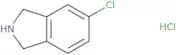
Formule :C6H4FNaO2SDegré de pureté :Min. 95%Masse moléculaire :182.15 g/mol5-Chloroisoindoline
CAS :5-Chloroisoindoline is a compound that can be synthesized from amines. It is a cyclic compound with a high yield. 5-Chloroisoindoline can be used to synthesize other compounds, including pharmaceuticals and dyestuffs.
Formule :C8H8ClNDegré de pureté :Min. 95%Masse moléculaire :153.61 g/mol2-{4H,5H,6H,7H-Thieno[3,2-c]pyridin-5-yl}ethan-1-amine
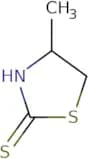
CAS :Versatile small molecule scaffoldFormule :C9H14N2SDegré de pureté :Min. 95%Masse moléculaire :182.29 g/mol4-Methyl-1,3-thiazolidine-2-thione
CAS :4-Methyl-1,3-thiazolidine-2-thione is a selective disulfide reductase with metal halide and cycloaddition activity. It catalyzes the reaction of alkali metal with carbon disulfide to form aziridine. The reaction proceeds through two steps: in the first step, alkali metal is reduced by carbon disulfide to form an alkyl radical; in the second step, the alkyl radical reacts with carbon disulfide to form aziridine. 4-Methyl-1,3-thiazolidine-2-thione has been shown to be an efficient catalyst for this reaction and can also catalyze cycloadditions between urethane and aziridine.
Formule :C4H7NS2Degré de pureté :Min. 95%Masse moléculaire :133.2 g/mol
![5,6-Dihydrobenzo[b]thiophen-7(4H)-one](/_next/image/?url=https%3A%2Fstatic.cymitquimica.com%2Fproducts%2F3D%2Fthumb-webp%2FBAA46884.webp&w=3840&q=75)



![5-Methylbenzo[c][1,2,5]thiadiazole](/_next/image/?url=https%3A%2Fstatic.cymitquimica.com%2Fproducts%2F3D%2Fthumb-webp%2FBAA45793.webp&w=3840&q=75)


![1-[3-(Methylsulfanyl)phenyl]ethan-1-one](/_next/image/?url=https%3A%2Fstatic.cymitquimica.com%2Fproducts%2F3D%2Fthumb-webp%2FBAA44199.webp&w=3840&q=75)

![2-{4H,5H,6H,7H-Thieno[3,2-c]pyridin-5-yl}ethan-1-amine](/_next/image/?url=https%3A%2Fstatic.cymitquimica.com%2Fproducts%2F3D%2Fthumb-webp%2FKGA44603.webp&w=3840&q=75)