Building Blocks
Sous-catégories appartenant à la catégorie "Building Blocks"
- Acides boroniques et dérivés de l'acide boronique(5.780 produits)
- Building Blocks Chiraux(1.241 produits)
- Building Blocks Hydrocarbonés(6.100 produits)
- Building Blocks organiques(61.023 produits)
205289 produits trouvés pour "Building Blocks"
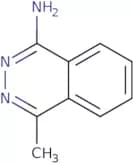
4-Methylphthalazin-1-amine
CAS :4-Methylphthalazin-1-amine is a heteroaromatic compound that can be synthesized by cyclization of phenacyl bromides and bromoacetates. It has been found in Australian plants and may have a role in the development of schizophrenia. 4-Methylphthalazin-1-amine is not soluble in water, but it can be dissolved in solvents such as acetone or ethanol. It is also insoluble in most organic solvents.
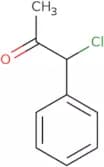
Formule :C9H9N3Degré de pureté :Min. 95%Masse moléculaire :159.19 g/mol1-Chloro-1-phenylpropan-2-one
CAS :1-Chloro-1-phenylpropan-2-one is an exploratory compound that has been deployed as a mechanistic probe to probe the radical mechanism of aldehydes. It has been shown that 1-chloro-1-phenylpropan-2-one can be used to generate fluorescent compounds and study the fluorescence, UV radiation, and radical mechanism of aldehydes. This molecule also has the ability to react with electron rich compounds such as aziridines to form chiral products. The substituent on this molecule will affect its biological activity.
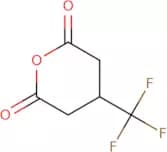
Formule :C9H9ClODegré de pureté :Min. 95%Masse moléculaire :168.62 g/mol4-(Trifluoromethyl)oxane-2,6-dione
CAS :Versatile small molecule scaffold
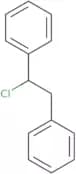
Formule :C6H5F3O3Degré de pureté :Min. 95%Masse moléculaire :182.1 g/mol(2-Chloro-2-phenylethyl)benzene
CAS :2-Chloro-2-phenylethylbenzene is an organic compound that is used in the synthesis of other compounds. It is produced by reacting a chlorinated benzene with an alkali, such as sodium hydroxide, potassium hydroxide, or lithium hydroxide. The reaction produces a mixture of 2-chloro-2-phenylethylbenzene and phenylhydroxyethane. This compound can be converted to 2-chloro-2-(piperidin-1-yl)ethanol by refluxing it with morpholine in methanol and then adding amides such as piperidine or pyrrolidine. The resulting product can be alkylated with carbon tetrachloride to produce 2-chloro-2-(4'-methylphenoxy)ethanol. This compound can also be reduced to give 2-(4'-methylphenoxy)ethanol by heating it with sodium bor
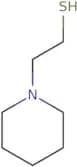
Formule :C14H13ClDegré de pureté :Min. 95%Masse moléculaire :216.7 g/mol2-(Piperidin-1-yl)ethane-1-thiol
CAS :Versatile small molecule scaffold
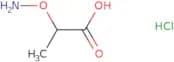
Formule :C7H15NSDegré de pureté :Min. 95%Masse moléculaire :145.27 g/mol2-(Aminooxy)propanoic acid hydrochloride
CAS :Versatile small molecule scaffold
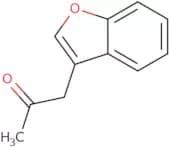
Formule :C3H8ClNO3Degré de pureté :Min. 95%Masse moléculaire :141.55 g/mol1-(1-Benzofuran-3-yl)propan-2-one
CAS :Versatile small molecule scaffold
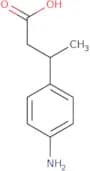
Formule :C11H10O2Degré de pureté :Min. 95%Masse moléculaire :174.2 g/mol3-(4-Aminophenyl)butanoic acid
CAS :Versatile small molecule scaffold
Formule :C10H13NO2Degré de pureté :Min. 95%Masse moléculaire :179.22 g/mol2-Iso-butylcyclopentanone
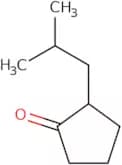
CAS :2-Iso-butylcyclopentanone is a ketone that has triplet and singlet states with rate constants of 8.9x10 M/s and 0.003 M/s, respectively. It has been shown to undergo photoelimination reactions in the presence of acyclic or cyclic triplet sensitizers. 2-Iso-butylcyclopentanone also undergoes a rate-limiting step in the formation of an excited state, which is called the S1 state or triplet. This reaction can be followed by measuring the fluorescence spectrum of the compound using a spectrofluorimeter, which shows that it emits light at wavelengths of 333 nm and 395 nm.
Formule :C9H16ODegré de pureté :Min. 95%Masse moléculaire :140.22 g/mol2-Hydrazinylacetamide hydrochloride
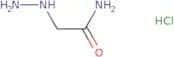
CAS :Versatile small molecule scaffold
Formule :C2H8ClN3ODegré de pureté :Min. 95%Masse moléculaire :125.56 g/mol1,3-Dimethyl-4-piperidone
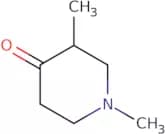
CAS :1,3-Dimethyl-4-piperidone is a colorless liquid at room temperature that is soluble in water and polar organic solvents. It is a protonated nucleophile that reacts with electrophiles to form alkylations. 1,3-Dimethyl-4-piperidone also reacts with chloride to form an imine, which can be hydrolyzed to yield piperidine. A Grignard reagent can be formed from 1,3-dimethyl-4-piperidone and potassium phosphate. The nature of the product obtained depends on the order of addition of reactants. 1,3-Dimethyl-4-piperidone has been shown to have a number of isomers.
Formule :C7H13NODegré de pureté :Min. 95%Masse moléculaire :127.19 g/molRef: 3D-EAA62980
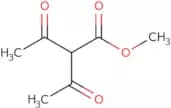
Produit arrêtéMethyl 2-acetyl-3-oxobutanoate
CAS :Methyl 2-acetyl-3-oxobutanoate (M2OB) is an acceptor molecule in the Michael reaction. The temperature of the reaction is usually between -20°C and 0°C. A primary amine, a trifluoroacetic acid, and vinylene are required for the reaction to occur. Methyl 2-acetyl-3-oxobutanoate can be converted to an amide or pyrazole derivatives by hydrogenolysis. M2OB has a carboxylate group that is hydrolyzed by acidic conditions. M2OB reacts with pentamethoxybenzene in a pyrimidine compound synthesis.
Formule :C7H10O4Degré de pureté :Min. 95%Masse moléculaire :158.15 g/mol2-prop-2-ynoxyisoindoline-1,3-dione
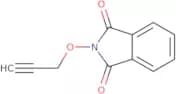
CAS :2-Prop-2-ynoxyisoindoline-1,3-dione is a multifunctional pyridine derivative with potential anticancer activity. It has been shown to inhibit HDAC and panobinostat, an inhibitor of histone deacetylase. 2-Prop-2-ynoxyisoindoline-1,3-dione has a solubility of less than 20 mg/mL in most solvents and is insoluble in water. This compound has been shown to have a low yield when synthesized from 2,6-dichloropyridine. These properties are advantageous for cell culture studies because they allow for the detection of changes in cellular morphology and the frequency of cell division. 2-Prop-2-ynoxyisoindoline-1,3-dione also has an activated aromatic ring that can be used as a prodrug to activate other compounds that need activation at this site (e.g., transition metals).
Formule :C11H7NO3Degré de pureté :Min. 95%Masse moléculaire :201.18 g/mol1-(Oxan-4-yl)piperidin-4-ol
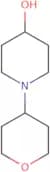
CAS :Versatile small molecule scaffold
Formule :C10H19NO2Degré de pureté :Min. 95%Masse moléculaire :185.26 g/mol(3R)-3-{[(tert-Butoxy)carbonyl]amino}-3-(4-phenylphenyl)propanoic acid
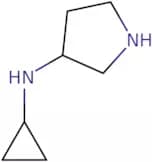
CAS :Versatile small molecule scaffoldFormule :C20H23NO4Degré de pureté :Min. 95%Masse moléculaire :341.4 g/molN-Cyclopropylpyrrolidin-3-amine
CAS :Versatile small molecule scaffold
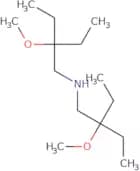
Formule :C7H14N2Degré de pureté :Min. 95%Masse moléculaire :126.2 g/molBis(2-ethyl-2-methoxybutyl)amine
CAS :Versatile small molecule scaffold
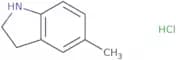
Formule :C14H31NO2Degré de pureté :Min. 95%Masse moléculaire :245.4 g/mol5-Methylindoline hydrochloride
CAS :Versatile small molecule scaffold
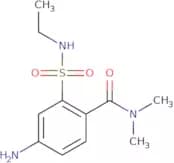
Formule :C9H12ClNDegré de pureté :Min. 95%Masse moléculaire :169.65 g/mol4-Amino-2-(ethylsulfamoyl)-N,N-dimethylbenzamide
CAS :Versatile small molecule scaffold
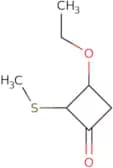
Formule :C11H17N3O3SDegré de pureté :Min. 95%Masse moléculaire :271.34 g/mol3-Ethoxy-2-(methylsulfanyl)cyclobutan-1-one
CAS :Versatile small molecule scaffold
Formule :C7H12O2SDegré de pureté :Min. 95%Masse moléculaire :160.24 g/mol

![(3R)-3-{[(tert-Butoxy)carbonyl]amino}-3-(4-phenylphenyl)propanoic acid](/_next/image/?url=https%3A%2Fstatic.cymitquimica.com%2Fproducts%2F3D%2Fthumb-webp%2FDZB54993.webp&w=3840&q=75)