Building Blocks
Sous-catégories appartenant à la catégorie "Building Blocks"
- Acides boroniques et dérivés de l'acide boronique(5.780 produits)
- Building Blocks Chiraux(1.240 produits)
- Building Blocks Hydrocarbonés(6.100 produits)
- Building Blocks organiques(61.009 produits)
205248 produits trouvés pour "Building Blocks"
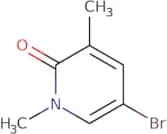
5-Bromo-1,3-dimethylpyridin-2(1H)-one
CAS :Benzyne is a reactive intermediate that is formed by the tautomerization of 5-bromo-1,3-dimethylpyridin-2(1H)-one. It is an adduct between a bromine atom and a benzene ring. This compound has been shown to react with electron-rich olefins to form bicyclic compounds called diels-alder adducts. These reactions are often catalyzed by metals, such as palladium or nickel. Benzyne also reacts with triple bonds or other electron rich centers to form benzyne adducts, which are highly reactive and can be used as chemical probes for electron density in molecules.
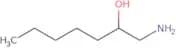
Formule :C7H8BrNODegré de pureté :Min. 95%Masse moléculaire :202.05 g/mol1-Aminoheptan-2-ol
CAS :Versatile small molecule scaffold
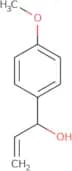
Formule :C7H17NODegré de pureté :Min. 95%Masse moléculaire :131.22 g/mol1-(4-Methoxyphenyl)prop-2-en-1-ol
CAS :1-(4-Methoxyphenyl)prop-2-en-1-ol (1MPE) is a model compound that has been shown to inhibit the growth of cancer cells in vitro and in vivo. 1MPE inhibits the activity of human liver enzymes, such as cytochrome P450, which are involved in metabolizing xenobiotics and drugs. 1MPE also binds to the DNA repair enzyme topoisomerase II alpha and inhibits its activity. The binding of 1MPE with this enzyme prevents the relaxation of DNA, leading to cell death by apoptosis. 1MPE has been shown to have toxic effects on rat primary hepatocytes and rat liver microsomes. It also inhibits the growth of CD-1 mice transplanted with human colon tumor cells. In addition, 1MPE is excreted unchanged in urine samples from rats dosed orally with high doses of this drug.
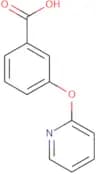
Formule :C10H12O2Degré de pureté :Min. 95%Masse moléculaire :164.2 g/mol3-(Pyridin-2-yloxy)benzoic acid
CAS :3-(Pyridin-2-yloxy)benzoic acid is an organic compound that belongs to the group of anilides. It has been shown to be toxic to plants by inhibiting their chlorophyll production and by causing phytotoxicity. 3-(Pyridin-2-yloxy)benzoic acid also inhibits the germination of seeds, primarily due to its inhibition of growth hormone activity. 3-(Pyridin-2-yloxy)benzoic acid can be used as a herbicide because it is highly effective against broadleaf plants, but not grasses. This compound is also relatively non-toxic to mammals and birds, but can cause skin irritation in humans.
Formule :C12H9NO3Degré de pureté :Min. 95%Masse moléculaire :215.2 g/molRef: 3D-BCA36230
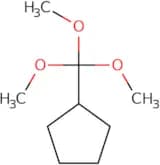
Produit arrêté(Trimethoxymethyl)cyclopentane
CAS :Versatile small molecule scaffold
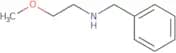
Formule :C9H18O3Degré de pureté :Min. 95%Masse moléculaire :174.24 g/molN-Benzyl-n-(2-methoxyethyl)amine
CAS :Versatile small molecule scaffold
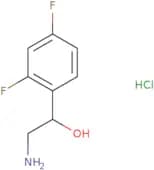
Formule :C10H15NODegré de pureté :Min. 95%Masse moléculaire :165.23 g/mol2-Amino-1-(2,4-difluorophenyl)ethan-1-ol hydrochloride
CAS :Versatile small molecule scaffold
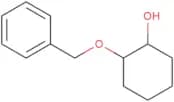
Formule :C8H10ClF2NODegré de pureté :Min. 95%Masse moléculaire :209.62 g/molrac-(1R,2R)-2-(Benzyloxy)cyclohexan-1-ol
CAS :Versatile small molecule scaffold
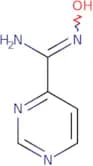
Formule :C13H18O2Degré de pureté :Min. 95%Masse moléculaire :206.28 g/molN'-Hydroxypyrimidine-4-carboximidamide
CAS :Versatile small molecule scaffold
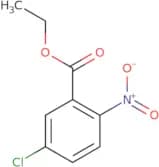
Formule :C5H6N4ODegré de pureté :Min. 95%Masse moléculaire :138.13 g/molEthyl 5-chloro-2-nitrobenzoate
CAS :Versatile small molecule scaffold
Formule :C9H8ClNO4Degré de pureté :Min. 95%Masse moléculaire :229.62 g/molRef: 3D-BCA28256
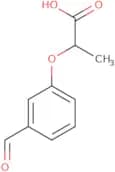
Produit arrêté2-(3-Formylphenoxy)propanoic acid
CAS :Versatile small molecule scaffold
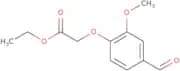
Formule :C10H10O4Degré de pureté :Min. 95%Masse moléculaire :194.18 g/mol4-Formyl-2-methoxy-phenoxy-acetic acid ethyl ester
CAS :Versatile small molecule scaffold
Formule :C12H14O5Degré de pureté :Min. 95%Masse moléculaire :238.24 g/molRef: 3D-BCA26470
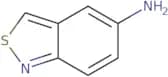
Produit arrêté2,1-Benzothiazol-5-amine
CAS :Versatile small molecule scaffold
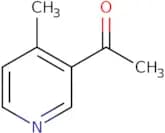
Formule :C7H6N2SDegré de pureté :Min. 95%Masse moléculaire :150.2 g/mol1-(4-Methyl-3-pyridinyl)ethanone
CAS :1-(4-Methyl-3-pyridinyl)ethanone is an organic compound that yields optical pyruvic acid on hydrolysis. It also has unselective dehydrogenase activity on a variety of substrates, including dioxane and 2,2,2-trichloroethanol. 1-(4-Methyl-3-pyridinyl)ethanone can be used as a reagent for the synthesis of chiral iminium salts or as a dehydrating agent in organic synthesis. It is also used to synthesize vitamin B6 and indole alkaloids. The chemical structure of 1-(4-methyl-3-pyridinyl)ethanone is similar to that of benzaldehyde (C6H5CH2CHO), which has benzylic hydroxyl group on the benzene ring. This compound can be oxidized to yield a dianion that can be used as a photocat
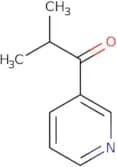
Formule :C8H9NODegré de pureté :Min. 95%Masse moléculaire :135.16 g/mol2-Methyl-1-(pyridin-3-yl)propan-1-one
CAS :Versatile small molecule scaffold
Formule :C9H11NODegré de pureté :Min. 95%Masse moléculaire :149.19 g/molRef: 3D-BCA22729
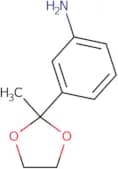
Produit arrêté3-(2-Methyl-1,3-dioxolan-2-yl)aniline
CAS :Versatile small molecule scaffold
Formule :C10H13NO2Degré de pureté :Min. 95%Masse moléculaire :179.22 g/molRef: 3D-BCA22614
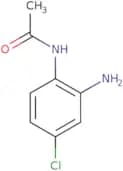
Produit arrêtéN-(2-Amino-4-chlorophenyl)acetamide
CAS :Versatile small molecule scaffold
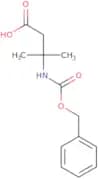
Formule :C8H9ClN2ODegré de pureté :Min. 95%Masse moléculaire :184.62 g/mol3-(((Benzyloxy)carbonyl)amino)-3-methylbutanoic acid
CAS :3-(((Benzyloxy)carbonyl)amino)-3-methylbutanoic acid (BMAA) is a quaternary ammonium compound that has antimicrobial activities. BMAA is active against Gram-positive and Gram-negative bacteria, including some strains of Staphylococcus aureus and Escherichia coli. It also has antimicrobial activity against yeast and fungi. BMAA exhibits stability in the presence of organic solvents, detergents, and water. This product is used as an antimicrobial agent in industrial processes such as wastewater treatment, oil exploration, pulp milling, and food processing. It can be used as a substitute for other quaternary ammonium compounds such as benzalkonium chloride or cetrimide, which are toxic to aquatic life. There are no known analogs to this chemical compound.
Formule :C13H17NO4Degré de pureté :Min. 95%Masse moléculaire :251.28 g/molRef: 3D-BCA21955
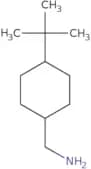
Produit arrêté(4-tert-Butylcyclohexyl)methanamine
CAS :Versatile small molecule scaffold
Formule :C11H23NDegré de pureté :Min. 95%Masse moléculaire :169.31 g/moltert-Butyl 3-bromopropionate
CAS :Tert-butyl 3-bromopropionate is a linker for the synthesis of pleuromutilin derivatives. It has been used as a model substrate for studying the effects of hypertrophy on cardiac muscle. Tert-butyl 3-bromopropionate has also been shown to inhibit the production of proinflammatory cytokines in response to bacterial infection, and can be used as an antibacterial agent. Tert-butyl 3-bromopropionate binds to RNA and inhibits protein synthesis, which leads to cell death by preventing the production of proteins vital for cell division. Tert-butyl 3-bromopropionate is also a potent inhibitor of chloride channels that are found in nerve cells and prevents the flow of chloride ions through these channels, leading to paralysis. This drug also inhibits hydrogen fluoride excretion in rats, which may be due to its ability to bind with chloride ions in the kidney tubules, preventing their
Formule :C7H13BrO2Degré de pureté :Min. 95%Couleur et forme :Colorless Clear LiquidMasse moléculaire :209.08 g/molRef: 3D-FB46790
Produit arrêté