Building Blocks
Sous-catégories appartenant à la catégorie "Building Blocks"
- Acides boroniques et dérivés de l'acide boronique(5.779 produits)
- Building Blocks Chiraux(1.238 produits)
- Building Blocks Hydrocarbonés(6.099 produits)
- Building Blocks organiques(60.997 produits)
205208 produits trouvés pour "Building Blocks"
6-Morpholinonicotinic acid
CAS :Versatile small molecule scaffold
Formule :C10H12N2O3Degré de pureté :Min. 95%Masse moléculaire :208.22 g/mol1-(5,6-Dichloropyridin-3-yl)ethan-1-one
CAS :The compound is soluble in water, methylmagnesium chloride and ether. It has a high yield of 71% at 50 degrees Celsius. The reaction is not affected by the presence of acid halides and decarboxylating agents. 1-(5,6-Dichloropyridin-3-yl)ethan-1-one reacts with pyridine to form 3,4-dichloro-N,N'-dimethylpyridine. This reactant is used as a diluent for medicines and as an efficiency reagent in the manufacturing of dyes.Formule :C7H5Cl2NODegré de pureté :Min. 95%Masse moléculaire :190.03 g/molRef: 3D-VEA80005
Produit arrêté2-Chloro-3,5-dimethoxyaniline
CAS :Versatile small molecule scaffold
Formule :C8H10ClNO2Degré de pureté :Min. 95%Masse moléculaire :187.62 g/molRef: 3D-VEA75803
Produit arrêté4,5-Dibromo-3-methoxythiophene-2-carboxylic acid
CAS :Versatile small molecule scaffoldFormule :C6H4Br2O3SDegré de pureté :Min. 95%Masse moléculaire :315.97 g/mol6-Amino-4,8-dimethylquinolin-2-ol
CAS :Versatile small molecule scaffold
Formule :C11H12N2ODegré de pureté :Min. 95%Masse moléculaire :188.23 g/moltert-Butyl N-[4-(2,5-dioxo-2,5-dihydro-1H-pyrrol-1-yl)phenyl]carbamate
CAS :Versatile small molecule scaffold
Formule :C15H16N2O4Degré de pureté :Min. 95%Masse moléculaire :288.3 g/molN-Carbobenzoxypropargylamine
CAS :N-Carbobenzoxypropargylamine (CBPA) is an isoxazole that has been shown to bind to the integrin receptor, which is a type of protein found on the surface of cells. CBPA binds to the ligand-binding site of the integrin receptor and inhibits its activation by connecting it with a peptide fragment. This results in a loss of cell adhesion and reduced proliferation. CBPA has a nanomolar range and can be used as a potential drug candidate for cancer treatment because it has high affinity for cells and high frequency of occurrence. The pharmacophore model for CBPA was generated using aspartic acid, which is one of the most abundant amino acids in proteins.
Formule :C11H11NO2Degré de pureté :Min. 95%Masse moléculaire :189.21 g/mol4-Fluoro-3,5-dimethylbenzoic acid
CAS :Versatile small molecule scaffold
Formule :C9H9FO2Degré de pureté :Min. 95%Masse moléculaire :168.17 g/mol(1R)-1-(3,4-Dimethoxyphenyl)ethan-1-ol
CAS :Versatile small molecule scaffold
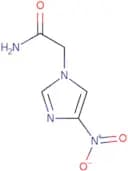
Formule :C10H14O3Degré de pureté :Min. 95%Masse moléculaire :182.22 g/mol2-(4-Nitro-1H-imidazol-1-yl)acetamide
CAS :Versatile small molecule scaffold
Formule :C5H6N4O3Degré de pureté :Min. 95%Masse moléculaire :170.13 g/molRef: 3D-VEA39900
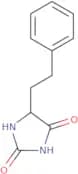
Produit arrêté5-(2-Phenylethyl)imidazolidine-2,4-dione
CAS :Versatile small molecule scaffold
Formule :C11H12N2O2Degré de pureté :Min. 95%Masse moléculaire :204.22 g/molRef: 3D-VEA37981
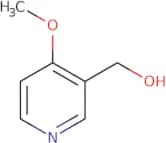
Produit arrêté3-Pyridinemethanol, 4-methoxy-
CAS :Versatile small molecule scaffold
Formule :C7H9NO2Degré de pureté :Min. 95%Masse moléculaire :139.15 g/molRef: 3D-VEA27747
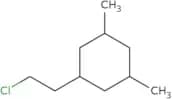
Produit arrêté1-(2-Chloroethyl)-3,5-dimethylcyclohexane
CAS :Versatile small molecule scaffold
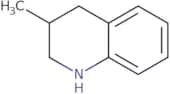
Formule :C10H19ClDegré de pureté :Min. 95%Masse moléculaire :174.71 g/mol3-Methyl-1,2,3,4-tetrahydroquinoline
CAS :3-Methyl-1,2,3,4-tetrahydroquinoline is a synthetic molecule that has been shown to have adjuvant activity in the treatment of cancer. 3-Methyl-1,2,3,4-tetrahydroquinoline inhibits bacterial growth by alkylating DNA and RNA. It binds to nucleic acids and prevents transcription and replication. The molecular structure of 3-methyl-1,2,3,4-tetrahydroquinoline was elucidated by FTIR spectroscopy and XRPD analysis. This compound has also been shown to inhibit the growth of Staphylococcus aureus strains.
Formule :C10H13NDegré de pureté :Min. 95%Masse moléculaire :147.21 g/molRef: 3D-VAA66820
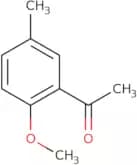
Produit arrêté1-(2-Methoxy-5-methylphenyl)ethanone
CAS :1-(2-Methoxy-5-methylphenyl)ethanone is a volatile, synthetic compound. It is used as a chemical intermediate in the production of picotamide and esterification products. Methoxyphenylacetic acid (1) is methylated with methanol in the presence of hydrochloric acid to form 2,5-dimethoxybenzoic acid (2). The latter is then esterified with methanol and acetic anhydride to yield picotamide (3).
Formule :C10H12O2Degré de pureté :Min. 95%Masse moléculaire :164.2 g/molRef: 3D-VAA62807
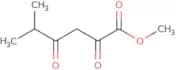
Produit arrêtéMethyl 5-methyl-2,4-dioxohexanoate
CAS :Versatile small molecule scaffold
Formule :C8H12O4Degré de pureté :Min. 95%Masse moléculaire :172.18 g/mol2-Phenylbutan-1-amine HCl
CAS :Versatile small molecule scaffold
Formule :C10H15N·HClDegré de pureté :Min. 95%Masse moléculaire :185.7 g/mol6-Methyl-3,4-dihydro-2H-pyrido[3,2-b][1,4]oxazine
CAS :Versatile small molecule scaffold
Formule :C8H10N2ODegré de pureté :Min. 95%Masse moléculaire :150.18 g/molRef: 3D-VAA56767
Produit arrêté5-Methoxy-benzo[b]thiophene
CAS :5-Methoxy-benzo[b]thiophene is a synthetic compound that has been shown to have antiestrogenic activity. It was synthesized using the acetonitrile technique and has been shown to inhibit the growth of mammary carcinomas in mice. 5-Methoxy-benzo[b]thiophene binds to estrogen receptor protein, which inhibits the binding of estrogen and prevents its effects on breast cancers. This agent also has been shown to be an effective therapy for some human breast cancer cells, which may be due to its ability to block estrogen receptor function.
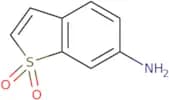
Formule :C9H8OSDegré de pureté :Min. 95%Masse moléculaire :164.22 g/mol1,1-Dioxido-1-benzothien-6-ylamine
CAS :1,1-Dioxido-1-benzothien-6-ylamine is a cytotoxic drug that inhibits the synthesis of DNA and RNA in cancer cells. It is synthesized from benzo[c]thiophene-2,5-dione by oxidation with nitric acid to give the corresponding dioxido compound. The synthesized product has high lipophilicity (log P = 2.2) and a reactive hydroxy group that can undergo modifications such as esterification or alkylation. 1,1-Dioxido-1-benzothien-6-ylamine shows potent antitumor activity against solid tumours and high lipophilicity that enables it to cross the blood brain barrier very easily. It also induces apoptosis in tumour cells by binding to nucleic acids and inhibiting their synthesis. This drug is cytotoxic at nanomolar concentrations and has been shown to be effective against lung
Formule :C8H7NO2SDegré de pureté :Min. 95%Masse moléculaire :181.21 g/mol


![tert-Butyl N-[4-(2,5-dioxo-2,5-dihydro-1H-pyrrol-1-yl)phenyl]carbamate](/_next/image/?url=https%3A%2Fstatic.cymitquimica.com%2Fproducts%2F3D%2Fthumb-webp%2FVEA64287.webp&w=3840&q=75)


![6-Methyl-3,4-dihydro-2H-pyrido[3,2-b][1,4]oxazine](/_next/image/?url=https%3A%2Fstatic.cymitquimica.com%2Fproducts%2F3D%2Fthumb-webp%2FVAA56767.webp&w=3840&q=75)
![5-Methoxy-benzo[b]thiophene](/_next/image/?url=https%3A%2Fstatic.cymitquimica.com%2Fproducts%2F3D%2Fthumb-webp%2FVAA53230.webp&w=3840&q=75)