Building Blocks
Sous-catégories appartenant à la catégorie "Building Blocks"
- Acides boroniques et dérivés de l'acide boronique(5.774 produits)
- Building Blocks Chiraux(1.237 produits)
- Building Blocks Hydrocarbonés(6.098 produits)
- Building Blocks organiques(60.980 produits)
205158 produits trouvés pour "Building Blocks"
ABX464
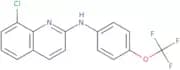
CAS :ABX464 is a monoclonal antibody that targets bacterial translocation. It has been shown to have clinical efficacy in preventing the recurrence of inflammatory bowel disease. ABX464 binds to the M2 phenotype of macrophages and blocks the binding of chemoattractant protein to its receptor, leading to decreased inflammation and less bacterial translocation. It also prevents HIV infection by blocking viral attachment to CD4 cells and inhibiting HIV-1 replication.
Formule :C16H10ClF3N2ODegré de pureté :Min. 95%Masse moléculaire :338.71 g/molRef: 3D-IAC45375
Produit arrêté2-(4-Amino-1h-pyrazol-1-yl)ethanol
CAS :Versatile small molecule scaffold
Formule :C5H9N3ODegré de pureté :Min. 95%Masse moléculaire :127.15 g/mol(S)-2-(N-Boc-aminomethyl)morpholine
CAS :Versatile small molecule scaffold
Formule :C10H20N2O3Degré de pureté :Min. 95%Masse moléculaire :216.27 g/molRef: 3D-AKB55159
Produit arrêté1-[4-(Propan-2-yl)phenyl]ethan-1-ol
CAS :Versatile small molecule scaffold
Formule :C11H16ODegré de pureté :Min. 95%Masse moléculaire :164.24 g/molRef: 3D-BAA47510
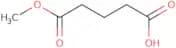
Produit arrêtéMonomethyl Glutarate
CAS :Monomethyl glutarate is a monomer for the synthesis of polymers. It has been used in the past as a precursor for the production of polyacrylic acid and its copolymers. Monomethyl glutarate is synthesized by the reaction of hydrochloric acid, high salt, and an expression plasmid containing glutarate dehydrogenase. This compound is also used as a reagent in kinetic studies of fatty acids and glutaric acid. Monomethyl glutarate is an acidic compound with a pKa value of 3.5 at 25°C. It is rapidly hydrolyzed in water to form monomethyl glutarate acid, which has a pKa value of 2.4 at 25°C. Monomethyl glutarate can be ingested orally or applied topically due to its low energy requirements for hydrolysis in water.
Formule :C6H10O4Degré de pureté :Min. 95%Masse moléculaire :146.14 g/molRef: 3D-BAA50127
Produit arrêté3,6-Dichloropicolinonitrile
CAS :3,6-Dichloropicolinonitrile is a peroxide that is used in the synthesis of organic compounds. It is produced by the reaction of sodium carbonate and hydrochloric acid with nitric acid as a catalyst. 3,6-Dichloropicolinonitrile has been shown to be more selective than other oxidizing agents such as hydrogen peroxide and potassium permanganate. The product can then be purified by adding diacetate, which selectively reacts with the chlorine to form acetyl chloride and glycolic acid. The resulting mixture can then be distilled to produce 3,6-dichloropicolinonitrile in high purity. 3,6-Dichloropicolinonitrile can also be used in electrochemical methods for the synthesis of cyanides or biochemically for virulent products such as pesticides and organic solvents.
Formule :C6H2Cl2N2Degré de pureté :Min. 95%Masse moléculaire :173 g/molRef: 3D-BAA70218
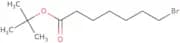
Produit arrêtétert-Butyl 7-bromoheptanoate
CAS :Versatile small molecule scaffold
Formule :C11H21BrO2Degré de pureté :Min. 95%Masse moléculaire :265.19 g/molMethyl 5-Hexynoate
CAS :Methyl 5-hexynoate is a synthetic product that can be synthesized from soybean lipoxygenase and hydrogenation reduction. This product has been shown to be a useful synthon for the synthesis of monoclonal antibodies with high binding affinity. The synthetic pathway, which involves cross-coupling and asymmetric synthesis, is outlined in the diagram below. The following are the steps involved in the production of methyl 5-hexynoate: 1) Addition of ethyl bromide to terminal alkynes 2) Addition of hydrochloric acid 3) Reaction with potassium tert-butoxide 4) Hydrogenation reduction 5) Cross-coupling reaction 6) Asymmetric synthesis
Formule :C7H10O2Degré de pureté :Min. 95%Masse moléculaire :126.15 g/molRef: 3D-CDA75851
Produit arrêté2-Bromo-5-fluoro-4-nitroaniline
CAS :2-Bromo-5-fluoro-4-nitroaniline can be synthesized in a reaction system of ammonium chloride, hydrochloric acid, and water vapor. The reaction is carried out at a temperature of 190°C under reflux. The efficiency of this synthesis is high, and the chemical yield is about 90%.
Formule :C6H4BrFN2O2Degré de pureté :Min. 95%Masse moléculaire :235.01 g/molRef: 3D-CNB66469
Produit arrêtéPotassium tert-butyl N-[3-(trifluoroboranuidyl)propyl]carbamate
CAS :Versatile small molecule scaffold
Formule :C8H16BF3KNO2Degré de pureté :Min. 95%Masse moléculaire :265.13 g/molRef: 3D-CNC28926
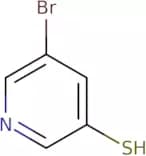
Produit arrêté5-Bromopyridine-3-thiol
CAS :Versatile small molecule scaffold
Formule :C5H4BrNSDegré de pureté :Min. 95%Masse moléculaire :190.06 g/molRef: 3D-CXA33185
Produit arrêtétert-Butyl (2,2-difluoro-3-hydroxypropyl)carbamate
CAS :Versatile small molecule scaffoldFormule :C10H13NO4Degré de pureté :Min. 95%Masse moléculaire :211.21 g/molRef: 3D-PCC39821
Produit arrêtéMethyl 4-chlorobenzenesulfonate
CAS :Versatile small molecule scaffold
Formule :C7H7ClO3SDegré de pureté :Min. 95%Masse moléculaire :206.65 g/molRef: 3D-QAA48145
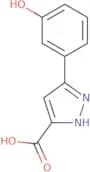
Produit arrêté5-(3-Hydroxyphenyl)-1H-pyrazole-3-carboxylic acid
CAS :Versatile small molecule scaffold
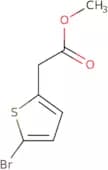
Formule :C10H8N2O3Degré de pureté :Min. 95%Masse moléculaire :204.18 g/molMethyl 2-(5-bromothiophen-2-yl)acetate
CAS :Versatile small molecule scaffold
Formule :C7H7BrO2SDegré de pureté :Min. 95%Masse moléculaire :235.1 g/molRef: 3D-SCA13756
Produit arrêté8-Bromo-2-methylimidazo[1,2-a]pyridine
CAS :Versatile small molecule scaffold
Formule :C8H7N2BrDegré de pureté :Min. 95%Masse moléculaire :211.05 g/mol3-(iodomethyl)oxetane
CAS :Versatile small molecule scaffold
Formule :C4H7IODegré de pureté :Min. 95%Masse moléculaire :198 g/molRef: 3D-DQB01377
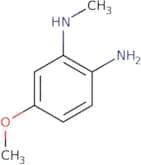
Produit arrêté5-Methoxy-N1-methylbenzene-1,2-diamine
CAS :Versatile small molecule scaffold
Formule :C8H12N2ODegré de pureté :Min. 95%Masse moléculaire :152.19 g/molRef: 3D-EFA13948
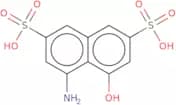
Produit arrêté4-Amino-5-hydroxy-2,7-naphthalenedisulfonic acid
CAS :4-Amino-5-hydroxy-2,7-naphthalenedisulfonic acid (4-AHNDS) is a hydroxyl group and nitrogen containing molecule. It is a reactive compound that can be used to extract anions from water. 4-AHNDS has been shown to react with sodium ions in the presence of water, forming a salt that is soluble in water. This chemical also reacts with organic molecules and forms stable complexes. The reaction mechanism of 4-AHNDS has been studied by kinetic analysis and surface methodology measurements.Formule :C10H9NO7S2Degré de pureté :Min. 95%Couleur et forme :PowderMasse moléculaire :319.31 g/molRef: 3D-FA40913
Produit arrêtéChlorpheniramine N-oxide
CAS :Please enquire for more information about Chlorpheniramine N-oxide including the price, delivery time and more detailed product information at the technical inquiry form on this page
Formule :C16H19ClN2ODegré de pureté :Min. 95%Masse moléculaire :290.79 g/mol


![1-[4-(Propan-2-yl)phenyl]ethan-1-ol](/_next/image/?url=https%3A%2Fstatic.cymitquimica.com%2Fproducts%2F3D%2Fthumb-webp%2FBAA47510.webp&w=3840&q=75)



![Potassium tert-butyl N-[3-(trifluoroboranuidyl)propyl]carbamate](/_next/image/?url=https%3A%2Fstatic.cymitquimica.com%2Fproducts%2F3D%2Fthumb-webp%2FCNC28926.webp&w=3840&q=75)


![8-Bromo-2-methylimidazo[1,2-a]pyridine](/_next/image/?url=https%3A%2Fstatic.cymitquimica.com%2Fproducts%2F3D%2Fthumb-webp%2FUXB37475.webp&w=3840&q=75)