Building Blocks
Sous-catégories appartenant à la catégorie "Building Blocks"
- Acides boroniques et dérivés de l'acide boronique(5.774 produits)
- Building Blocks Chiraux(1.237 produits)
- Building Blocks Hydrocarbonés(6.098 produits)
- Building Blocks organiques(60.970 produits)
205134 produits trouvés pour "Building Blocks"
4-(3-Chlorophenoxy)-benzoic acid
CAS :Versatile small molecule scaffold
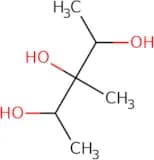
Formule :C13H9ClO3Degré de pureté :Min. 95%Masse moléculaire :248.66 g/mol3-Methylpentane-2,3,4-triol
CAS :Versatile small molecule scaffold
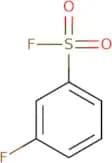
Formule :C6H14O3Degré de pureté :Min. 95%Masse moléculaire :134.17 g/mol3-Fluorobenzene-1-sulfonyl fluoride
CAS :3-Fluorobenzene-1-sulfonyl fluoride is a chemical compound that can be used as a catalyst to synthesize organic compounds. It is a colorless liquid, which is soluble in water and organic solvents. This catalyst has been shown to be more efficient than the traditional catalysts, such as tetraphenylphosphonium chloride, potassium fluoride or sodium borohydride. 3-Fluorobenzene-1-sulfonyl fluoride also reacts with nitro groups to produce dinitro compounds, which are valuable synthetic intermediates for the production of dyes and pharmaceuticals. The synthesis of this compound can be carried out in high yields with stoichiometric amounts of reactants.
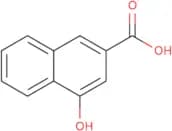
Formule :C6H4F2O2SDegré de pureté :Min. 95%Masse moléculaire :178.16 g/mol4-Hydroxy-2-naphthoic acid
CAS :4-Hydroxy-2-naphthoic acid is a hydrocarbon with a carboxylic acid group. It can act as an antagonist to the hydrocarbon receptor (HCR). 4-Hydroxy-2-naphthoic acid has been shown to be effective in treating colon cancer cells in vitro, and has been shown to inhibit the growth of cancer cells in vivo. This compound is also effective at inhibiting the proliferation of human colon cancer cells (Caco2) that have been exposed to benzo(a)pyrene, an aromatic hydrocarbon found in cigarette smoke. The mechanism by which this drug inhibits cell proliferation is not fully understood but may involve inhibition of cytochrome P450 1A1 (CYP1A1), which metabolizes benzo(a)pyrene into carcinogenic intermediates. 4-Hydroxy-2-naphthoic acid has also been shown to be anisotropic and microreactor, meaning
Formule :C11H8O3Degré de pureté :Min. 95%Masse moléculaire :188.17 g/molRef: 3D-BAA57391
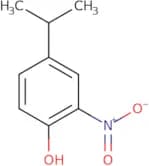
Produit arrêté2-Nitro-4-(propan-2-yl)phenol
CAS :Versatile small molecule scaffold
Formule :C9H11NO3Degré de pureté :Min. 95%Masse moléculaire :181.2 g/molRef: 3D-BAA57610
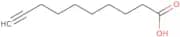
Produit arrêtéDec-9-ynoic acid
CAS :Dec-9-ynoic acid is a synthetic fatty acid that is a precursor to several biologically important substances. It is labile and easily oxidized by air, light, or heat. Dec-9-ynoic acid has been shown to be a central metabolic intermediate for the biosynthesis of polyunsaturated fatty acids. It can also be converted into linolenic acid, which is an essential fatty acid that cannot be synthesized by humans. Dec-9-ynoic acid exists in two geometric isomers: cis and trans. The cis form exhibits kinetic properties that are different from the trans form. Dec-9-ynoic acid has been studied as a potential treatment for human diseases such as diabetes mellitus type 2, Parkinson's disease, Alzheimer's disease, schizophrenia, and depression.
Formule :C10H16O2Degré de pureté :Min. 95%Masse moléculaire :168.23 g/molRef: 3D-BAA64249
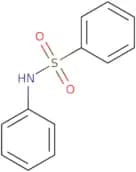
Produit arrêtéBenzenesulfonanilide
CAS :Benzenesulfonanilide is a compound that is soluble in water. It has potent antagonists against the chemokine receptor CXCR2 and the chemokine CCL5. The molecular weight of benzenesulfonanilide is 212.2 g/mol, and it has a fluorine atom at the 2-position on the benzene ring, a carbonyl group (-C=O) at the 2-position on the benzene ring, and a nitro group (-NO2) at the 3-position on the benzene ring. The structural formula for benzenesulfonanilide is shown below:
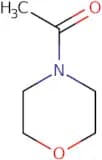
Formule :C12H11NO2SDegré de pureté :Min. 95%Masse moléculaire :233.29 g/mol4-Acetylmorpholine
CAS :4-Acetylmorpholine is a recycled amide that is synthesized from an alkanolamine and an acylation reaction. It has been used in the dehydrating of organic compounds, such as reaction solution, and for the preparation of acrylamide. 4-Acetylmorpholine is also used as a viscosity control agent in the extraction of aromatic hydrocarbons. Its chemical structure consists of a carbonyl group and an aromatic hydrocarbon. 4-Acetylmorpholine can be synthesized by reacting acetaldehyde with ammonia or thiourea with methyl chloride or ethylene oxide.
Formule :C6H3D8NO2Degré de pureté :Min. 95%Masse moléculaire :137.21 g/molRef: 3D-BAA69620
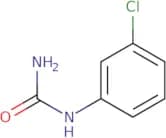
Produit arrêté3-Chlorophenylurea
CAS :3-Chlorophenylurea is a quinazolinone that inhibits the growth of candida glabrata. This compound has been shown to inhibit efflux pumps, which are proteins that pump out drugs from the cell. 3-Chlorophenylurea has been shown to inhibit the efflux of fluconazole, a drug used to treat fungal infections, and thiourea, a compound that is known for its cytotoxicity. The inhibition of these two compounds suggests that 3-chlorophenylurea could be an efflux pump inhibitor.
Formule :C7H7ClN2ODegré de pureté :Min. 95%Masse moléculaire :170.6 g/molRef: 3D-BAA96727
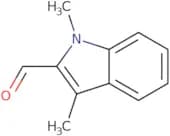
Produit arrêté1,3-Dimethyl-1H-indole-2-carbaldehyde
CAS :Diethyl succinate (DES) is a chemical compound that has reversible photochromic properties. It absorbs ultraviolet light and converts to 1,3-dimethyl-1H-indole-2-carbaldehyde (DMICA), which can be reverted back to DES by exposure to visible light. DMICA is chemically stable in the absence of oxygen and air, but it decomposes in the presence of strong oxidizing agents. The absorption spectrum of DMICA shows maxima at 230 nm and 270 nm with a peak at 254 nm. Diethyl succinate is an isomer of diethyl malonate, which has a similar structure. Diethyl succinate has no solubility in water, but it dissolves readily in organic solvents such as acetone or ethanol.
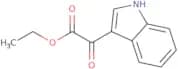
Formule :C11H11NODegré de pureté :Min. 95%Masse moléculaire :173.21 g/molEthyl 2-(indol-3-yl)-2-oxoacetate
CAS :Ethyl 2-(indol-3-yl)-2-oxoacetate is a hydroxy derivative of the amino acid tyrosine. It inhibits the enzyme tyrosine hydroxylase, which catalyzes the conversion of tyrosine to L-DOPA. This in turn affects dopamine synthesis and has an inhibitory effect on rat brain. Ethyl 2-(indol-3-yl)-2-oxoacetate also inhibits methylmagnesium borohydride in vitro, which is a reagent that breaks down esters, amides, and nitriles. Tyrosine hydroxylase is inhibited by the presence of two hydroxy groups on the ethyl side chain and one hydroxy group on the indole ring. It can be used as a structural analogue for other drugs that are used to treat Parkinson's disease or depression.
Formule :C12H11NO3Degré de pureté :Min. 95%Masse moléculaire :217.22 g/molRef: 3D-BCA07910
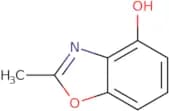
Produit arrêté2-Methyl-1,3-benzoxazol-4-ol
CAS :2-Methyl-1,3-benzoxazol-4-ol is a planar torsion with a chloride. The crystal structure of 2-Methyl-1,3-benzoxazol-4-ol has been solved by XRD and the molecular weight was found to be 253.2 g/mol. The chemical formula for 2-Methyl-1,3-benzoxazol-4-ol is C11H12ClNO2.
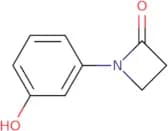
The benzoxazole ring in 2 methyl 1,3 benzoxazole 4 ol is planar and contains two methyl groups on the 4 position. This molecule can exist as either cis or trans form depending on the geometry of the molecule. The cis form has two hydrogen atoms on the opposite side of the molecule to each other whereas in trans it has only one hydrogen atom on opposite sides of the molecule. These two forms are not interchangeable and have different physical properties such asFormule :C8H7NO2Degré de pureté :Min. 95%Masse moléculaire :149.15 g/mol1-(3-Hydroxyphenyl)azetidin-2-one
CAS :Versatile small molecule scaffold
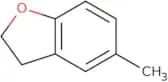
Formule :C9H9NO2Degré de pureté :Min. 95%Masse moléculaire :163.17 g/mol5-Methyl-2,3-dihydro-1-benzofuran
CAS :Versatile small molecule scaffold
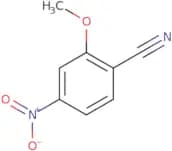
Formule :C9H10ODegré de pureté :Min. 95%Masse moléculaire :134.17 g/mol2-Methoxy-4-nitrobenzonitrile
CAS :2-Methoxy-4-nitrobenzonitrile is an acylsulfonamide that has been shown to inhibit the production of inflammatory cytokines and chemokines in a lung injury model. The compound has shown activity against cxcr2, which is a receptor for monocyte chemotactic protein 1 (MCP1) and macrophage inflammatory protein 1 alpha (MIP1α). 2-Methoxy-4-nitrobenzonitrile also inhibits carboxylic acid production and is orally bioavailable.
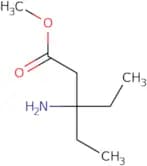
Formule :C8H6N2O3Degré de pureté :Min. 95%Masse moléculaire :178.14 g/molMethyl 3-amino-3-ethylpentanoate
CAS :Versatile small molecule scaffold
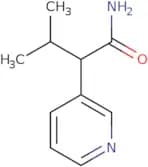
Formule :C8H17NO2Degré de pureté :Min. 95%Masse moléculaire :159.23 g/mol3-Methyl-2-(pyridin-3-yl)butanamide
CAS :Versatile small molecule scaffold
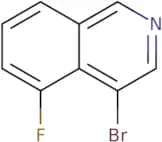
Formule :C10H14N2ODegré de pureté :Min. 95%Masse moléculaire :178.23 g/mol4-Bromo-5-fluoro-isoquinoline
CAS :Versatile small molecule scaffold
Formule :C9H5BrFNDegré de pureté :Min. 95%Masse moléculaire :226.04 g/mol1-Benzothiophene-5-carbonitrile
CAS :1-Benzothiophene-5-carbonitrile is a heterocyclic compound that is formed by condensation of ethyl azidoacetate with indole under catalysis. It can be used in the synthesis of heterocycles. The yield of 1-benzothiophene-5-carbonitrile is about 56%.
Formule :C9H5NSDegré de pureté :Min. 95%Masse moléculaire :159.21 g/molRef: 3D-CAA06063
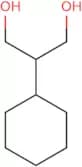
Produit arrêté2-Cyclohexylpropane-1,3-diol
CAS :2-Cyclohexylpropane-1,3-diol is a substrate for porcine pancreatic lipase. It is hydrolyzed by this enzyme, which is stereoselective and enantioselective. 2-Cyclohexylpropane-1,3-diol also has properties that are similar to angiotensin, a peptide that is secreted by the human body. This substance can be used as a solvent for other organic compounds in chemical reactions.
Formule :C9H18O2Degré de pureté :Min. 95%Masse moléculaire :158.24 g/molRef: 3D-CAA61232
Produit arrêté