Building Blocks
Cette section contient des produits fondamentaux pour la synthèse de composés organiques et biologiques. Building blocks sont les matériaux de départ essentiels utilisés pour construire des molécules complexes à travers diverses réactions chimiques. Ils jouent un rôle crucial dans la découverte de médicaments, la science des matériaux et la recherche chimique. Chez CymitQuimica, nous offrons une gamme diversifiée de building blocks de haute qualité pour soutenir vos recherches innovantes et projets industriels, en vous assurant de disposer des composants essentiels pour une synthèse réussie.
Sous-catégories appartenant à la catégorie "Building Blocks"
- Acides boroniques et dérivés de l'acide boronique(5.778 produits)
- Building Blocks Chiraux(1.243 produits)
- Building Blocks Hydrocarbonés(6.098 produits)
- Building Blocks organiques(61.057 produits)
200710 produits trouvés pour "Building Blocks"
Trier par
Degré de pureté (%)
0
100
|
0
|
50
|
90
|
95
|
100
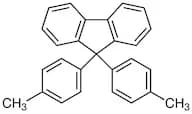
9,9-Di(p-tolyl)fluorene
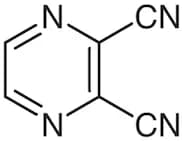
CAS :Formule :C27H22Degré de pureté :>98.0%(GC)Couleur et forme :White to Almost white powder to crystalMasse moléculaire :346.472,3-Dicyanopyrazine
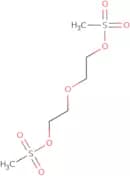
CAS :Formule :C6H2N4Degré de pureté :>99.0%(GC)Couleur et forme :White to Light yellow to Light orange powder to crystalMasse moléculaire :130.11Diethylene glycol dimethanesulfonate
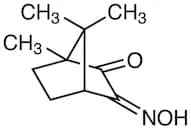
CAS :Diethylene glycol dimethanesulfonate is a functional group that is used in the synthesis of organic compounds. It is a white crystalline solid with a melting point of about 130°C. Diethylene glycol dimethanesulfonate reacts slowly with water and hydrochloric acid to produce diethyl ether and hydrogen chloride gas. The reaction time for this process can be affected by the concentration of reactants, temperature, and pH. Diethylene glycol dimethanesulfonate undergoes acidic hydrolysis in the presence of hydrochloric acid or sodium hydroxide. This reaction produces sodium chloride and ethylene glycol. Busulfan, an anti-cancer drug, is produced by the dehydration of diethylene glycol dimethanesulfonate with copper chloride or chlorine gas. Intramolecular hydrogen bonds are formed during this process to give grandis as an intermediate product. Grandis can be converted into busulfan byFormule :C6H14O7S2Degré de pureté :Min. 95%Couleur et forme :PowderMasse moléculaire :262.3 g/molanti-(1R)-(+)-Camphorquinone 3-Oxime
CAS :Formule :C10H15NO2Degré de pureté :>95.0%(GC)(N)Couleur et forme :White to Orange to Green powder to crystalMasse moléculaire :181.242,4,6-Tribromo-3-nitroaniline
CAS :<p>2,4,6-Tribromo-3-nitroaniline is a brominating agent that can produce hydrogen peroxide. It is prepared by the reaction of hydrochloric acid with 2,4,6-tribromoaniline. The bromination of 2,4,6-tribromo-3-nitroaniline produces 4 equivalents of hydrogen peroxide.</p>Formule :C6H3Br3N2O2Degré de pureté :Min. 95%Couleur et forme :Beige To Brown SolidMasse moléculaire :374.81 g/molOctadecylcyclohexane
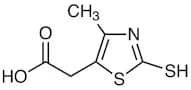
CAS :Formule :C24H48Degré de pureté :>98.0%(GC)Couleur et forme :White to Almost white powder to crystalMasse moléculaire :336.65(2-Mercapto-4-methyl-5-thiazolyl)acetic Acid
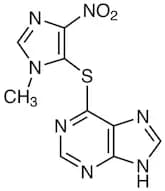
CAS :Formule :C6H7NO2S2Degré de pureté :>98.0%(T)(HPLC)Couleur et forme :White to Light yellow powder to crystalMasse moléculaire :189.25Azathioprine
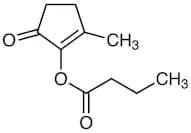
CAS :Formule :C9H7N7O2SDegré de pureté :>98.0%(T)(HPLC)Couleur et forme :Light yellow to Yellow to Green powder to crystalMasse moléculaire :277.262-Methyl-5-oxo-1-cyclopentenyl Butyrate
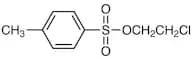
CAS :Formule :C10H14O3Degré de pureté :>98.0%(GC)Couleur et forme :Colorless to Light yellow to Light orange clear liquidMasse moléculaire :182.222-Chloroethyl p-Toluenesulfonate
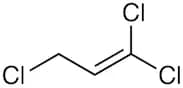
CAS :Formule :C9H11ClO3SDegré de pureté :>98.0%(GC)Couleur et forme :Colorless to Light yellow clear liquidMasse moléculaire :234.691,1,3-Trichloro-1-propene
CAS :Formule :C3H3Cl3Degré de pureté :>98.0%(GC)Couleur et forme :Colorless to Light yellow clear liquidMasse moléculaire :145.414,4'-Dinonyl-2,2'-bithiazole
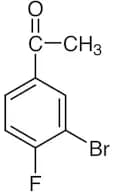
CAS :Formule :C24H40N2S2Degré de pureté :>98.0%(GC)Couleur et forme :White to Yellow to Green powder to crystalMasse moléculaire :420.723'-Bromo-4'-fluoroacetophenone
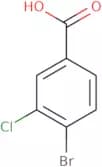
CAS :Formule :C8H6BrFODegré de pureté :>96.0%(GC)Couleur et forme :White to Orange to Green powder to crystalMasse moléculaire :217.044-Bromo-3-chlorobenzoic acid
CAS :<p>4-Bromo-3-chlorobenzoic acid is a molecule that belongs to the class of antimicrobial compounds and is used for the treatment of gram-negative pathogens. It inhibits the growth of these bacteria by blocking their ability to synthesize DNA, RNA, and proteins. 4-Bromo-3-chlorobenzoic acid has been shown to be effective against bacteria in mammalian cells and also has activity against multidrug resistant strains. This compound is biosynthesized in plant cells from carbon sources like glucose, and it can be found in plants like carrot tissue. The resistance of bacteria to this compound has been observed globally, with outbreaks occurring in Japan and India.</p>Formule :C7H4BrClO2Degré de pureté :Min. 95%Couleur et forme :White PowderMasse moléculaire :235.46 g/molHeptylnonyl Adipate (so called) [Plasticizer]
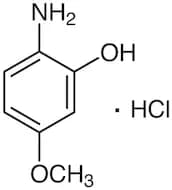
CAS :Degré de pureté :mixture of Heptylnonyl adipate, Diheptyl adipate, Dinonyl adipate(GC)Couleur et forme :Colorless to Almost colorless clear liquid2-Hydroxy-4-methoxyaniline Hydrochloride
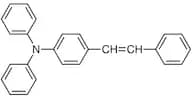
CAS :Formule :C7H9NO2·HClDegré de pureté :>98.0%(HPLC)(qNMR)Couleur et forme :White to Light red to Green powder to crystallineMasse moléculaire :175.614-Styryltriphenylamine
CAS :Formule :C26H21NDegré de pureté :>98.0%(GC)Couleur et forme :Light yellow to Yellow to Green powder to crystalMasse moléculaire :347.464-Benzoylpyridine
CAS :<p>4-Benzoylpyridine is a reactive molecule that can undergo electron reduction and protonation. The protonated form of 4-benzoylpyridine has been shown to inhibit the enzyme methionine aminopeptidase, which is involved in the degradation of amino acids. The crystallographic structure of 4-benzoylpyridine was determined by X-ray diffraction and was found to contain nitrogen atoms at the center of its ring. The electron density map showed that there are no hydrogen bonds or lone pairs in 4-benzoylpyridine. This molecule is an inhibitor of the transfer reactions in mitochondria, which are required for ATP synthesis. It has been shown to be cytotoxic to mammalian cells in culture and may have photochemical properties.</p>Formule :C12H9NODegré de pureté :Min. 95%Couleur et forme :White PowderMasse moléculaire :183.21 g/molL-Tryptophan benzyl ester
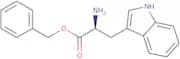
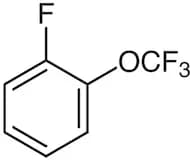
CAS :<p>L-Tryptophan benzyl ester is an angiotensin converting enzyme (ACE) inhibitor that is used as a deodorant. It inhibits the action of ACE, which leads to the formation of angiotensin II and a decrease in blood pressure. L-Tryptophan benzyl ester also prevents the formation of metastases and reduces the risk of cancer cells spreading to other parts of the body. This drug also has solvating properties, which may lead to its ability to inhibit enzymes such as catalase and isomerase. L-Tryptophan benzyl ester has been shown to have antithrombotic effects by inhibiting platelet aggregation and reducing blood clotting time. The geometric isomers of this compound have different plasma concentrations than the optical isomers because they are not metabolised in the same way in humans.</p>Formule :C18H18N2O2Degré de pureté :Min. 95%Couleur et forme :White To Off-White SolidMasse moléculaire :294.35 g/mol1-Fluoro-2-(trifluoromethoxy)benzene
CAS :Formule :C7H4F4ODegré de pureté :>98.0%(GC)Couleur et forme :Colorless to Almost colorless clear liquidMasse moléculaire :180.10





![Heptylnonyl Adipate (so called) [Plasticizer]](/_next/image/?url=https%3A%2Fstatic.cymitquimica.com%2Fproducts%2F3B%2Fthumb-webp%2FA1388.webp&w=3840&q=75)