Building Blocks
Sous-catégories appartenant à la catégorie "Building Blocks"
- Acides boroniques et dérivés de l'acide boronique(5.781 produits)
- Building Blocks Chiraux(1.242 produits)
- Building Blocks Hydrocarbonés(6.101 produits)
- Building Blocks organiques(61.038 produits)
205338 produits trouvés pour "Building Blocks"
(S)-1-(2-(Pyridin-3-yl)pyrrolidin-1-yl)ethanone
CAS :Nicotine is a potent alkaloid that is found in the leaves of Nicotiana tabacum and other tobacco plants. Nicotine acts on nicotinic acetylcholine receptors, which are located on the post-synaptic membrane of neurons. These receptors are stimulated by acetylcholinesterase, which breaks down acetylcholine. Nicotine inhibits the breakdown of acetylcholine and stimulates these receptors, leading to increased activity in these neurons. Nicotine also binds to monoamine oxidase (MAO) enzymes, preventing them from metabolizing norepinephrine and epinephrine, which leads to an increase in levels of these neurotransmitters. Nicotine also has been shown to stimulate lipolysis and fatty acid synthesis in cells.Formule :C11H14N2ODegré de pureté :Min. 95%Masse moléculaire :190.24 g/molFenabutene
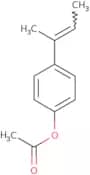
CAS :Fenabutene is a hydrophobic drug that has been reconstituted in an injectable or implantable form. It is used as an active compound for the treatment of cancer. Fenabutene binds to the target cell and creates a monolayer on the outer surface, which is then penetrated by the drug. This drug has been shown to be effective for treating breast cancer and prostate cancer, among other cancers. Fenabutene can also be used as a diagnostic tool as it can be used to measure cell membrane permeability in vitro. Fenabutene does not dissolve in water and must be mixed with solvents such as ethanol or acetone for use in iontophoresis devices.
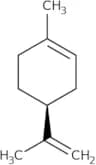
Formule :C12H14O2Degré de pureté :Min. 95%Masse moléculaire :190.24 g/mol(S)-(ˆ’)-Limonene
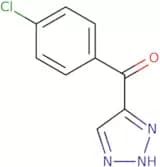
CAS :(S)-(ˆ’)-Limonene is a natural compound that has been found to have analgesic properties in animal models of pain. It also has the ability to inhibit microbial biotransformation, as well as oxidative DNA damage. Studies have shown that (S)-(ˆ’)-limonene can affect enzyme activities and the rat liver microsomes. The optimum concentration for (S)-(ˆ’)-limonene is between 0.5-2mg/mL, which causes an increase in locomotor activity and no carcinogenesis effects at doses up to 1000 mg/kg body weight.Formule :C10H16Degré de pureté :Min. 95%Masse moléculaire :136.23 g/mol4-(4-Chlorobenzoyl)-1H-1,2,3-triazole
CAS :Versatile small molecule scaffold
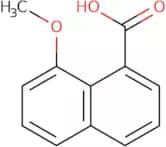
Formule :C9H6ClN3ODegré de pureté :Min. 95%Masse moléculaire :207.61 g/mol8-Methoxynaphthalene-1-carboxylic acid
CAS :Versatile small molecule scaffold
Formule :C12H10O3Degré de pureté :Min. 95%Masse moléculaire :202.21 g/molQuinazoline-2,4(1H,3H)-dithione
CAS :Versatile small molecule scaffoldFormule :C8H6N2S2Degré de pureté :Min. 95%Masse moléculaire :194.3 g/mol2H,3H,4H-Pyrido[1,2-a]pyrimidin-3-ol hydrochloride
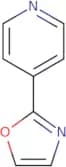
CAS :Versatile small molecule scaffoldFormule :C8H11ClN2ODegré de pureté :Min. 95%Masse moléculaire :186.64 g/mol-2(Pyridin-4-Yl)Oxazole
CAS :Versatile small molecule scaffold
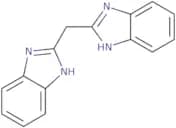
Formule :C8H6N2ODegré de pureté :Min. 95%Masse moléculaire :146.15 g/mol2-(1H-1,3-Benzodiazol-2-ylmethyl)-1H-1,3-benzodiazole
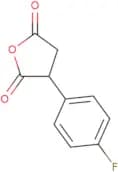
CAS :2-(1H-1,3-Benzodiazol-2-ylmethyl)-1H-1,3-benzodiazole is a solid with an orthorhombic crystal system. It has been shown to crystallize in the space group P2(1)/c. The anion is formed by the transfer of one proton from the cation to the oxygen atom of the nitro group. 2-(1H-1,3-Benzodiazol-2-ylmethyl)-1H-1,3 benzodiazole has been used as a catalyst for reactions in organic synthesis and electrochemistry. It also reacts with molecular oxygen to form a chloride ion and catalyzes reactions involving chloride ions. 2-(1H- 1,3 -Benzodiazol-2 -ylmethyl)- 1 H - 1,3 benzodiazole has been studied using x ray crystallography and diffraction techniques and was found to have a crystalFormule :C15H12N4Degré de pureté :Min. 95%Masse moléculaire :248.28 g/mol3-(4-Fluorophenyl)oxolane-2,5-dione
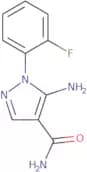
CAS :Versatile small molecule scaffoldFormule :C10H7FO3Degré de pureté :Min. 95%Masse moléculaire :194.16 g/mol5-Amino-1-(2-fluorophenyl)-1H-pyrazole-4-carboxamide
CAS :Versatile small molecule scaffoldFormule :C10H9FN4ODegré de pureté :Min. 95%Masse moléculaire :220.2 g/mol1-(2-Fluorophenyl)-1H,4H,5H-pyrazolo[3,4-d]pyrimidin-4-one
CAS :Versatile small molecule scaffoldFormule :C11H7FN4ODegré de pureté :Min. 95%Masse moléculaire :230.2 g/mol4-chloro-1-(2-fluorophenyl)-1h-pyrazolo[3,4-d]pyrimidine
CAS :Versatile small molecule scaffoldFormule :C11H6ClFN4Degré de pureté :Min. 95%Masse moléculaire :248.65 g/mol5-Amino-1-(pyrimidin-2-yl)-1H-pyrazole-4-carboxamide
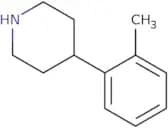
CAS :Versatile small molecule scaffoldFormule :C8H8N6ODegré de pureté :Min. 95%Masse moléculaire :204.19 g/mol4-(o-Tolyl)piperidine
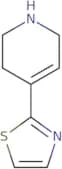
CAS :4-(o-Tolyl)piperidine is a competitive antagonist of acetylcholine at muscarinic receptor sites. It has been shown to be an orally active, nonselective, and selective inhibitor of the muscarinic receptors. 4-(o-Tolyl)piperidine interacts with the ligand binding domain of the muscarinic receptor, blocking its ability to bind acetylcholine. This drug has been shown to have anticholinergic effects in a number of animal studies.Formule :C12H17NDegré de pureté :Min. 95%Masse moléculaire :175.27 g/mol4-(1,3-Thiazol-2-yl)-1,2,3,6-tetrahydropyridine
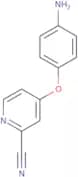
CAS :Versatile small molecule scaffoldFormule :C8H10N2SDegré de pureté :Min. 95%Masse moléculaire :166.25 g/mol4-(4-Aminophenoxy)pyridine-2-carbonitrile
CAS :Versatile small molecule scaffold
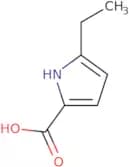
Formule :C12H9N3ODegré de pureté :Min. 95%Masse moléculaire :211.22 g/mol5-Ethyl-1H-pyrrole-2-carboxylic acid
CAS :Versatile small molecule scaffold
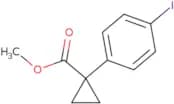
Formule :C7H9NO2Degré de pureté :Min. 95%Masse moléculaire :139.15 g/molMethyl 1-(4-iodophenyl)cyclopropanecarboxylate
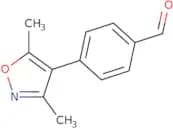
CAS :Versatile small molecule scaffoldFormule :C11H11IO2Degré de pureté :Min. 95%Masse moléculaire :302.11 g/mol4-(3,5-Dimethylisoxazol-4-yl)benzaldehyde
CAS :Versatile small molecule scaffoldFormule :C12H11NO2Degré de pureté :Min. 95%Masse moléculaire :201.22 g/mol


![2H,3H,4H-Pyrido[1,2-a]pyrimidin-3-ol hydrochloride](/_next/image/?url=https%3A%2Fstatic.cymitquimica.com%2Fproducts%2F3D%2Fthumb-webp%2FFAA99397.webp&w=3840&q=75)
![1-(2-Fluorophenyl)-1H,4H,5H-pyrazolo[3,4-d]pyrimidin-4-one](/_next/image/?url=https%3A%2Fstatic.cymitquimica.com%2Fproducts%2F3D%2Fthumb-webp%2FFAB10782.webp&w=3840&q=75)
![4-chloro-1-(2-fluorophenyl)-1h-pyrazolo[3,4-d]pyrimidine](/_next/image/?url=https%3A%2Fstatic.cymitquimica.com%2Fproducts%2F3D%2Fthumb-webp%2FFAB10783.webp&w=3840&q=75)