Building Blocks
Cette section contient des produits fondamentaux pour la synthèse de composés organiques et biologiques. Building blocks sont les matériaux de départ essentiels utilisés pour construire des molécules complexes à travers diverses réactions chimiques. Ils jouent un rôle crucial dans la découverte de médicaments, la science des matériaux et la recherche chimique. Chez CymitQuimica, nous offrons une gamme diversifiée de building blocks de haute qualité pour soutenir vos recherches innovantes et projets industriels, en vous assurant de disposer des composants essentiels pour une synthèse réussie.
Sous-catégories appartenant à la catégorie "Building Blocks"
- Acides boroniques et dérivés de l'acide boronique(5.778 produits)
- Building Blocks Chiraux(1.242 produits)
- Building Blocks Hydrocarbonés(6.098 produits)
- Building Blocks organiques(61.059 produits)
199580 produits trouvés pour "Building Blocks"
Trier par
Degré de pureté (%)
0
100
|
0
|
50
|
90
|
95
|
100
6-Methyl-3,4-dihydro-2H-pyrido[3,2-b][1,4]oxazine
CAS :<p>Versatile small molecule scaffold</p>Formule :C8H10N2ODegré de pureté :Min. 95%Masse moléculaire :150.18 g/mol2-Phenylbutan-1-amine HCl
CAS :<p>Versatile small molecule scaffold</p>Formule :C10H15N·HClDegré de pureté :Min. 95%Masse moléculaire :185.7 g/molSpiro[2.3]hexan-4-one
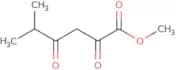
CAS :Spiro[2.3]hexan-4-one is a reactive, hydrophobic molecule that is synthesized by the reaction of an epoxide with an alcohol. This compound has been shown to undergo photooxidation and thermally induced reactions. It can be used in coatings to provide resistance to environmental effects such as hydrolysis, oxidation, or photooxidation. Spiro[2.3]hexan-4-one can also be used in the production of methylenecyclopropanes, which are used as chemical intermediates for pharmaceuticals and other organic compounds.Degré de pureté :Min. 95%Methyl 5-methyl-2,4-dioxohexanoate
CAS :<p>Versatile small molecule scaffold</p>Formule :C8H12O4Degré de pureté :Min. 95%Masse moléculaire :172.18 g/mol4-Methyl-1,5,6,7-tetrahydro-2H-cyclopenta[b]-pyridin-2-one
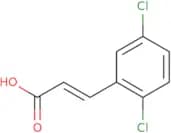
CAS :<p>4-Methyl-1,5,6,7-tetrahydro-2H-cyclopenta[b]-pyridin-2-one is a cycloalkane that has been shown to have antiinflammatory properties. It has been found to produce phosphoric acid and methanol when heated in the presence of phosphoric acid. 4-Methylcyclohexanone has also been shown to form hydrogen bonds with a variety of molecules including other cycloalkanes, nitro compounds, aromatic hydrocarbons, and heterocyclic compounds. Single crystal x-ray diffraction studies of this compound have revealed that it adopts an anisotropic molecular structure.</p>Formule :C9H11NODegré de pureté :Min. 95%Masse moléculaire :149.19 g/moltrans-2,5-Dichlorocinnamic acid
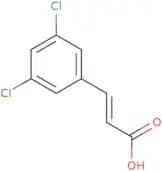
CAS :<p>Versatile small molecule scaffold</p>Formule :C9H6Cl2O2Degré de pureté :Min. 95%Masse moléculaire :217.05 g/mol3-(3,5-Dichlorophenyl)acrylic acid
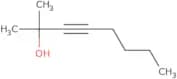
CAS :<p>Versatile small molecule scaffold</p>Formule :C9H6Cl2O2Degré de pureté :Min. 95%Masse moléculaire :217.5 g/mol2-Methyloct-3-yn-2-ol
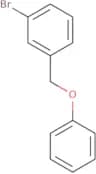
CAS :<p>2-Methyloct-3-yn-2-ol is a nucleophile that can be used to make an efficient method for the synthesis of olefinic bonds. This compound is also a ligand, which can form bidentate complexes with electrophilic metal centers. 2-Methyloct-3-yn-2-ol has been shown to react with heterocycles and alkenes in nucleophilic addition reactions. The reaction mechanism is thought to proceed through c–h bond cleavage, followed by dehydration of the resulting olefinic products. This process is reversible and can be driven by acid or base catalysis.</p>Formule :C9H16ODegré de pureté :Min. 95%Masse moléculaire :140.22 g/mol1-Bromo-3-(phenoxymethyl)benzene
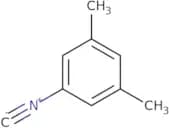
CAS :Versatile small molecule scaffoldFormule :C13H11BrODegré de pureté :Min. 95%Masse moléculaire :263.13 g/mol1-Isocyano-3,5-dimethylbenzene
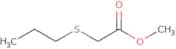
CAS :<p>Versatile small molecule scaffold</p>Formule :C9H9NDegré de pureté :Min. 95%Masse moléculaire :131.17 g/molMethyl 2-(propylsulfanyl)acetate
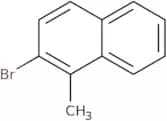
CAS :<p>Versatile small molecule scaffold</p>Formule :C6H12O2SDegré de pureté :Min. 95%Masse moléculaire :148.23 g/mol2-Bromo-1-methylnaphthalene
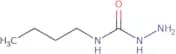
CAS :<p>2-Bromo-1-methylnaphthalene is the chemical compound with the formula C6H5BrCH2. It is a brominated derivative of naphthalene. This compound is an intermediate in the synthesis of arylboronic acids, which are used as coupling partners in Suzuki and Miyaura cross-coupling reactions. It also has been used as a catalyst for indole synthesis from chlorobenzene and ammonia. 2-Bromo-1-methylnaphthalene can be prepared by treating naphthalene with bromine and potassium t-butoxide at low temperature. The reaction can also be conducted using chloride or potassium instead of t-butoxide.<br>2-Bromo-1methyhnaphthalene is a useful chemical because it can react efficiently with aryl bromides to produce coupling products, such as benzofuran derivatives, in high yield.</p>Formule :C11H9BrDegré de pureté :Min. 95%Masse moléculaire :221.09 g/mol3-Amino-1-butylurea
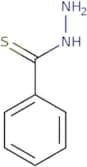
CAS :<p>Versatile small molecule scaffold</p>Formule :C5H13N3ODegré de pureté :Min. 95%Masse moléculaire :131.18 g/molN-Aminobenzenecarbothioamide
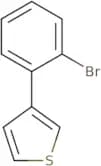
CAS :<p>N-Aminobenzenecarbothioamide is a chemical compound that is stable in hydrochloric acid and carbon disulphide. It has been shown to inhibit the growth of skin cells by binding to epidermal growth factor. It also inhibits the production of inflammatory bowel disease, which may be due to its ability to inhibit nitro and nitrite ion. The antimicrobial activity of N-aminobenzenecarbothioamide has not been studied.</p>Formule :C7H8N2SDegré de pureté :Min. 95%Masse moléculaire :152.22 g/mol3-(2-Bromo-phenyl)-thiophene
CAS :<p>Versatile small molecule scaffold</p>Formule :C10H7BrSDegré de pureté :Min. 95%Masse moléculaire :239.13 g/molRef: 3D-VAA60883
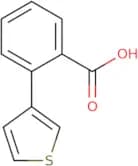
1gÀ demander5gÀ demander5mg192,00€50mg759,00€100mgÀ demander250mgÀ demander500mgÀ demander2-Thiophen-3-yl-benzoic acid
CAS :<p>Versatile small molecule scaffold</p>Formule :C11H8O2SDegré de pureté :Min. 95%Masse moléculaire :204.24 g/molRef: 3D-VAA60887
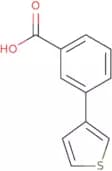
1gÀ demander5gÀ demander10gÀ demander10mg197,00€100mg705,00€250mgÀ demander500mgÀ demander3-Thiophen-3-yl-benzoic acid
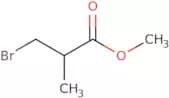
CAS :Versatile small molecule scaffoldFormule :C11H8O2SDegré de pureté :Min. 95%Masse moléculaire :204.24 g/molPropanoic acid, 3-bromo-2-methyl-, methyl ester
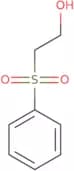
CAS :<p>3-Bromo-2-methylpropanoic acid is a colorimetric substrate that is used in the screening of enzymes with propionate as a cofactor. This substrate has been found to be selective for esterases, and can be used as an alternative to octanoate for enzymatic studies. The 3-bromo-2-methylpropanoic acid esters are also hydrophobic and have higher melting points than their corresponding acids, making them more suitable for thermophilic organisms. <br>The 3-bromo-2-methylpropanoic acid esters are chiral compounds that can be synthesized in two forms: (R)-3-bromo-2-methylpropanoic acid methyl ester and (S)-3-bromo-2-methylpropanoic acid methyl ester. The enantiomers of these compounds exhibit different biological activity. For example, the (S)-enantiomer</p>Formule :C5H9BrO2Degré de pureté :Min. 95%Masse moléculaire :181.03 g/molEthanol, 2-(phenylsulfonyl)-
CAS :<p>Ethanol, 2-(phenylsulfonyl)- is a synthetic chemical compound. It is used as an electron donor in the Suzuki coupling reaction and has shown significant cytotoxicity against tumour cell lines. This product also has been used in the synthesis of naphthalene and pulchella. The mechanism for its cytotoxicity involves the desulfurization of tyrosinase, which is an enzyme that catalyzes the conversion of dihydroxyphenylalanine to melanin. This product has also been shown to be effective against glandularia with structural studies showing that it reacts with sulfonic acid groups.</p>Formule :C8H10O3SDegré de pureté :Min. 95%Masse moléculaire :186.23 g/molRef: 3D-VAA61121
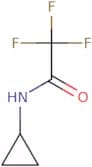
1g737,00€5gÀ demander10gÀ demander25gÀ demander50gÀ demander100gÀ demander100mg208,00€N-Cyclopropyl-2,2,2-trifluoroacetamide
CAS :<p>Versatile small molecule scaffold</p>Formule :C5H6F3NODegré de pureté :Min. 95%Masse moléculaire :153.1 g/mol
![6-Methyl-3,4-dihydro-2H-pyrido[3,2-b][1,4]oxazine](/_next/image/?url=https%3A%2Fstatic.cymitquimica.com%2Fproducts%2F3D%2Fthumb-webp%2FVAA56767.webp&w=3840&q=75)

![Spiro[2.3]hexan-4-one](/_next/image/?url=https%3A%2Fstatic.cymitquimica.com%2Fproducts%2F3D%2Fthumb-webp%2FVAA57115.webp&w=3840&q=75)
![4-Methyl-1,5,6,7-tetrahydro-2H-cyclopenta[b]-pyridin-2-one](/_next/image/?url=https%3A%2Fstatic.cymitquimica.com%2Fproducts%2F3D%2Fthumb-webp%2FVAA59430.webp&w=3840&q=75)