


Building Blocks
Cette section contient des produits fondamentaux pour la synthèse de composés organiques et biologiques. Building blocks sont les matériaux de départ essentiels utilisés pour construire des molécules complexes à travers diverses réactions chimiques. Ils jouent un rôle crucial dans la découverte de médicaments, la science des matériaux et la recherche chimique. Chez CymitQuimica, nous offrons une gamme diversifiée de building blocks de haute qualité pour soutenir vos recherches innovantes et projets industriels, en vous assurant de disposer des composants essentiels pour une synthèse réussie.
Sous-catégories appartenant à la catégorie "Building Blocks"
- Acides boroniques et dérivés de l'acide boronique(5.778 produits)
- Building Blocks Chiraux(1.243 produits)
- Building Blocks Hydrocarbonés(6.097 produits)
- Building Blocks organiques(61.048 produits)
203115 produits trouvés pour "Building Blocks"
Trier par
Degré de pureté (%)
0
100
|
0
|
50
|
90
|
95
|
100
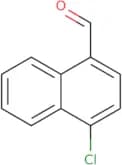
4-Chloronaphthalene-1-carbaldehyde
CAS :Versatile small molecule scaffoldFormule :C11H7ClODegré de pureté :Min. 95%Masse moléculaire :190.62 g/mol1-Cyclohexylpropan-2-amine hydrochloride
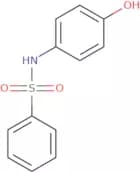
CAS :Versatile small molecule scaffoldFormule :C9H20ClNDegré de pureté :Min. 95%Masse moléculaire :177.71 g/molN-(4-Hydroxyphenyl)benzenesulfonamide
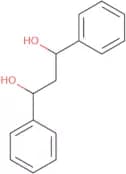
CAS :<p>N-(4-Hydroxyphenyl)benzenesulfonamide (NPSA) is a potentiator of chlorine that increases the activity of monooxygenases, such as epoxide hydrolase. NPSA also has the ability to inhibit glutathione synthesis in the liver and kidneys. This inhibition leads to liver cell necrosis. It is believed that NPSA may act by inhibiting the synthesis of an intermediate in the biosynthesis of cholesterol, 3-methylcholanthrene. The chlorobenzenesulfonamide moiety reacts with glutathione to form a reactive chloride ion, which then reacts with other cellular components to cause damage.</p>Formule :C12H11NO3SDegré de pureté :Min. 95%Masse moléculaire :249.29 g/mol1,3-Diphenylpropane-1,3-diol
CAS :<p>1,3-Diphenylpropane-1,3-diol is a synthetic compound that can be used as an intermediate in organic synthesis. It is a chiral molecule with the (R) configuration at the phenyl ring. 1,3-Diphenylpropane-1,3-diol has been studied for its effects on acidemia and aciduria in humans. This chemical also inhibits phosphine toxicity by inhibiting alcohol dehydrogenase and acetaldehyde dehydrogenase. Clinical studies have shown that 1,3-diphenylpropane-1,3-diol can alleviate methylmalonic acidemia and congenital methylmalonic aciduria.</p>Formule :C15H16O2Degré de pureté :Min. 95%Masse moléculaire :228.29 g/mol(Cyclohexylmethyl)urea
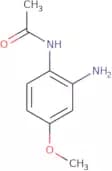
CAS :<p>Cyclohexylmethyl)urea is a protease inhibitor that inhibits the activity of the ns3 protease, which is involved in coagulation. Cyclohexylmethyl)urea binds to the active site of the ns3 protease and prevents it from cleaving proteins. It has been shown to be beneficial for patients who have had angioplasty or other procedures that involve opening a blocked artery. Cyclohexylmethyl)urea is also used for the treatment of restenosis after angioplasty and myocardial infarction. Cyclohexylmethyl)urea is administered intravenously and can be given as an injection or infusion. The drug must be given with a co-administered agent such as hydrochloric acid, which stabilizes cyclohexylmethyl)urea by converting it into its hydrochloride salt. This pharmaceutical preparation is not indicated for use in children under 6 years of age because of its potential to cause irreversible</p>Formule :C8H16N2ODegré de pureté :Min. 95%Masse moléculaire :156.23 g/molN-(2-Amino-4-methoxyphenyl)acetamide
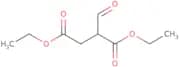
CAS :N-(2-Amino-4-methoxyphenyl)acetamide (ACAM) is a chemical compound that is used as a precursor in the synthesis of various organic compounds. It is an amide derivative of acetanilide and can be synthesized by the reaction of potassium cyanide with 2-methoxybenzaldehyde, followed by cyclization with potassium hydroxide and methanol. ACAM has been shown to result in unambiguous identification of potassium cyanide in environmental samples.Formule :C9H12N2O2Degré de pureté :Min. 95%Masse moléculaire :180.21 g/molDiethyl 2-formylsuccinate
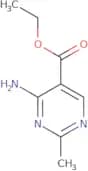
CAS :<p>Diethyl 2-formylsuccinate is an organic ester that is used in pharmaceutical preparations. It is a strong electrophile that reacts with nucleophiles, such as DNA, RNA, and proteins. Diethyl 2-formylsuccinate has been shown to induce basophilic leukemia in mice. This drug also induces the expression of crth2 which is a receptor for the inflammatory response. Diethyl 2-formylsuccinate also has anti-inflammatory properties and has been shown to inhibit bowel disease. Diethyl 2-formylsuccinate has also been shown to have some activity against congestive heart failure and cyhalothrin toxicity. The anti-inflammatory effects of diethyl 2-formylsuccinate may be due to its steric interactions with the nitro group or its ability to scavenge reactive oxygen species.</p>Formule :C9H14O5Degré de pureté :Min. 95%Masse moléculaire :202.21 g/molEthyl 4-Amino-2-methylpyrimidine-5-carboxylate
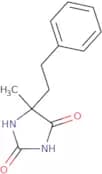
CAS :Ethyl 4-amino-2-methylpyrimidine-5-carboxylate is a synthetic, nonsteroidal androgen receptor antagonist. It binds to the androgen receptor in prostate cancer cells, which inhibits the function of this receptor and prevents testosterone from activating it. This drug has been shown to have anticancer activity in human lung cancer and human prostate cancer, as well as other cancers. Ethyl 4-amino-2-methylpyrimidine-5-carboxylate is also able to cross the blood brain barrier and inhibit tumor growth in the brain. Human lung tumors are sensitive to this drug at concentrations of 10 μM or higher. The mechanism of action for this drug involves binding to the DNA in tumor cells, inhibiting transcription of genes that regulate cell growth and proliferation. Ethyl 4-amino-2-methylpyrimidine-5 carboxylate has been shown to be effective against tautomeric forms of benzene includingFormule :C8H11N3O2Degré de pureté :Min. 95%Masse moléculaire :181.2 g/mol5-Methyl-5-(2-phenylethyl)imidazolidine-2,4-dione
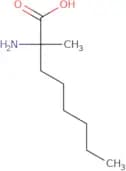
CAS :Versatile small molecule scaffoldFormule :C12H14N2O2Degré de pureté :Min. 95%Masse moléculaire :218.25 g/mol2-Amino-2-methyloctanoic acid
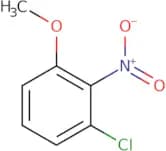
CAS :<p>2-Amino-2-methyloctanoic acid is an α-amino acid that has been shown to have a right-handed helical conformation. In the solid state, it appears as a dimer and in solution, it appears as a hexamer. The compound is chiral, which means that it can exist in two forms with different configurations of the groups around the central carbon atom. 2-Amino-2-methyloctanoic acid has been synthesized using techniques such as FTIR spectroscopy and NMR spectroscopy. It is also used to study stereoselectivity in peptides by probing their conformational preferences.</p>Formule :C9H19NO2Degré de pureté :Min. 95%Masse moléculaire :173.25 g/mol1-Chloro-3-methoxy-2-nitrobenzene
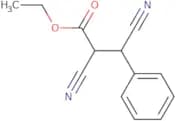
CAS :<p>1-Chloro-3-methoxy-2-nitrobenzene is an anomalous compound that reacts with water to produce hydrochloric acid and nitrous oxide. The reaction starts with cleavage of the C–C bond, followed by a rearrangement to form the methylenedioxy group. This leads to a nucleophilic attack on the aromatic ring, which causes it to become electrophilic and react with water. The temperature of this reaction is dependent on the concentration of hydrochloric acid.</p>Formule :C7H6ClNO3Degré de pureté :Min. 95%Masse moléculaire :187.58 g/molEthyl 2,3-dicyano-3-phenylpropanoate
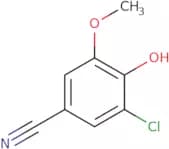
CAS :<p>Versatile small molecule scaffold</p>Formule :C13H12N2O2Degré de pureté :Min. 95%Masse moléculaire :228.25 g/mol3-Chloro-4-hydroxy-5-methoxybenzonitrile
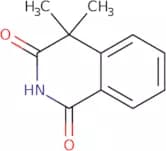
CAS :Versatile small molecule scaffoldFormule :C8H6ClNO2Degré de pureté :Min. 95%Masse moléculaire :183.59 g/mol4,4-dimethyl-1,2,3,4-tetrahydroisoquinoline-1,3-dione
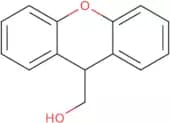
CAS :4,4-dimethyl-1,2,3,4-tetrahydroisoquinoline-1,3-dione is an antiplatelet agent that inhibits the activity of the platelet cyclooxygenase enzyme and prevents the production of thromboxane A2. It has been shown to be a potent compound that has antiplatelet effects in vitro and in vivo. 4,4-dimethyl-1,2,3,4-tetrahydroisoquinoline-1,3-dione is used for the treatment of patients with atherosclerosis or coronary artery disease who have had a recent stroke or heart attack. This drug also shows promise as an anticonvulsant and analgesic due to its ability to reduce neuronal excitability.Formule :C11H11NO2Degré de pureté :Min. 95%Masse moléculaire :189.21 g/mol9H-Xanthene-9-methanol
CAS :9H-Xanthene-9-methanol is an orthogonal protecting group for amines, carbanions, and other nucleophiles. It is a multistep process that yields a cationic intermediate, which can be used for the synthesis of amine-containing compounds. 9H-Xanthene-9-methanol is also used in the deprotection of photolabile groups such as sulfonyl chlorides and tosylates. The reactivity of this reagent is optimized when it is combined with acidic solvents, such as dichloromethane or chloroform.Formule :C14H12O2Degré de pureté :Min. 95%Masse moléculaire :212.25 g/mol1,4-diazabicyclo[3.2.1]octane 2hcl
CAS :<p>Versatile small molecule scaffold</p>Formule :C6H14Cl2N2Degré de pureté :Min. 95%Masse moléculaire :185.09 g/mol6-Methyl-1-(propan-2-yl)-1H,4H,5H-pyrazolo[3,4-d]pyrimidin-4-one
CAS :<p>Versatile small molecule scaffold</p>Formule :C9H12N4ODegré de pureté :Min. 95%Masse moléculaire :192.22 g/mol1-Azaspiro[4.5]decan-2-one
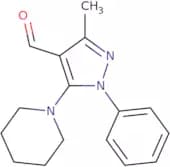
CAS :Versatile small molecule scaffoldFormule :C9H15NODegré de pureté :Min. 95%Masse moléculaire :153.22 g/mol3-Methyl-1-phenyl-5-(piperidin-1-yl)-1H-pyrazole-4-carbaldehyde
CAS :3-Methyl-1-phenyl-5-(piperidin-1-yl)-1H-pyrazole-4-carbaldehyde (MPPC) is a crosslinked polymer that spontaneously forms nanoparticles. The Langmuir isotherm was used to characterize the parameters of this polymer. A chitosan gel, magnetic nanoparticle and thermodynamic techniques were used to study the characteristics of MPPC. The kinetic and endothermic studies were carried out using magnetic nanoparticles. This polymer has been shown to desorb from chitosan gels and magnetic nanoparticles, which can be useful for drug delivery applications.Formule :C16H19N3ODegré de pureté :Min. 95%Masse moléculaire :269.34 g/mol2-[4-(Hydroxymethyl)cyclohex-3-en-1-yl]propan-2-ol
CAS :2-[4-(Hydroxymethyl)cyclohex-3-en-1-yl]propan-2-ol is an isomer of alpha-terpineol. It is the major component of the essential oil from Litsea cubeba, an evergreen tree native to China, Taiwan and Thailand. Alpha-terpineol has been shown to have a broad spectrum of antimicrobial activity against various strains of intestinal bacteria. The methyl group in alpha-terpineol interacts with bacterial 16S ribosomal RNA, inhibiting protein synthesis. Alpha-terpineol also has hydroxylase activity that binds preferentially to hydroxylases in the intestines, which may be responsible for its antimicrobial effects.Formule :C10H18O2Degré de pureté :Min. 95%Masse moléculaire :170.25 g/mol


![1,4-diazabicyclo[3.2.1]octane 2hcl](/_next/image/?url=https%3A%2Fstatic.cymitquimica.com%2Fproducts%2F3D%2Fthumb-webp%2FFAA49261.webp&w=3840&q=75)
![6-Methyl-1-(propan-2-yl)-1H,4H,5H-pyrazolo[3,4-d]pyrimidin-4-one](/_next/image/?url=https%3A%2Fstatic.cymitquimica.com%2Fproducts%2F3D%2Fthumb-webp%2FFAA49483.webp&w=3840&q=75)
![1-Azaspiro[4.5]decan-2-one](/_next/image/?url=https%3A%2Fstatic.cymitquimica.com%2Fproducts%2F3D%2Fthumb-webp%2FFAA49874.webp&w=3840&q=75)
![2-[4-(Hydroxymethyl)cyclohex-3-en-1-yl]propan-2-ol](/_next/image/?url=https%3A%2Fstatic.cymitquimica.com%2Fproducts%2F3D%2Fthumb-webp%2FFAA50274.webp&w=3840&q=75)