Building Blocks
Cette section contient des produits fondamentaux pour la synthèse de composés organiques et biologiques. Building blocks sont les matériaux de départ essentiels utilisés pour construire des molécules complexes à travers diverses réactions chimiques. Ils jouent un rôle crucial dans la découverte de médicaments, la science des matériaux et la recherche chimique. Chez CymitQuimica, nous offrons une gamme diversifiée de building blocks de haute qualité pour soutenir vos recherches innovantes et projets industriels, en vous assurant de disposer des composants essentiels pour une synthèse réussie.
Sous-catégories appartenant à la catégorie "Building Blocks"
- Acides boroniques et dérivés de l'acide boronique(5.756 produits)
- Building Blocks Chiraux(1.242 produits)
- Building Blocks Hydrocarbonés(6.095 produits)
- Building Blocks organiques(61.038 produits)
196817 produits trouvés pour "Building Blocks"
Trier par
Degré de pureté (%)
0
100
|
0
|
50
|
90
|
95
|
100
3-Azabicyclo[3.2.1]octane-2,4-dione
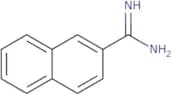
CAS :<p>Versatile small molecule scaffold</p>Formule :C7H9NO2Degré de pureté :Min. 95%Masse moléculaire :139.15 g/molNaphthalene-2-carboximidamide
CAS :<p>Naphthalene-2-carboximidamide is a benzamidine derivative that interacts with the active site of serine proteases. It was shown to have potent inhibitory potency against a number of proteinases, including urokinase-type plasminogen activator (uPA), matrix metalloproteinase-9 (MMP-9), and cathepsin G. The interaction of naphthalene-2-carboximidamide with uPA was specific and led to inhibition of its catalytic activity. Naphthalene-2-carboximidamide has been tested in clinical trials for the treatment of influenza.</p>Formule :C11H10N2Degré de pureté :Min. 95%Masse moléculaire :170.21 g/molRef: 3D-FAA65114
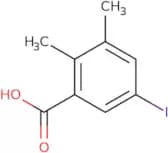
Produit arrêté5-Iodo-2,3-dimethylbenzoic acid
CAS :<p>Versatile small molecule scaffold</p>Formule :C9H9IO2Degré de pureté :Min. 95%Masse moléculaire :276.07 g/mol4,7-Dibromo-2,3-dihydro-1H-inden-1-one
CAS :<p>Versatile small molecule scaffold</p>Formule :C9H6Br2ODegré de pureté :Min. 95%Masse moléculaire :289.95 g/molRef: 3D-DEA51598
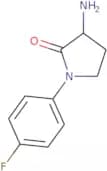
Produit arrêté3-Amino-1-(4-fluorophenyl)pyrrolidin-2-one
CAS :<p>Versatile small molecule scaffold</p>Formule :C10H11FN2ODegré de pureté :Min. 95%Masse moléculaire :194.21 g/mol2-[2-(Trimethylsilyl)ethynyl]benzenamine
CAS :<p>2-[2-(Trimethylsilyl)ethynyl]benzenamine is an aromatic compound that is used as a starting material for the synthesis of other chemicals. It is prepared by reaction of 2-bromobenzene with ethynylmagnesium bromide and p-toluenesulfonic acid in the presence of aluminum chloride. The yield of the reaction product depends on the time and temperature. Elemental analysis reveals that the compound contains an alkyne group, which facilitates its conversion to quinoline derivatives. The chemical has been shown to react with x-rays to produce diffraction patterns, which can be analyzed to determine the structure of the molecule. X-ray diffraction analysis also revealed that this compound contains a quinoline ring system, which may contribute to its anti-inflammatory effects.</p>Formule :C11H15NSiDegré de pureté :Min. 95%Masse moléculaire :189.33 g/molN-(4-Aminophenyl)-2-methoxyacetamide
CAS :<p>Versatile small molecule scaffold</p>Formule :C9H12N2O2Degré de pureté :Min. 95%Masse moléculaire :180.2 g/molRef: 3D-DIA73906
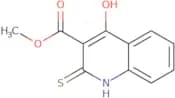
Produit arrêtéMethyl 4-hydroxy-2-sulfanylquinoline-3-carboxylate
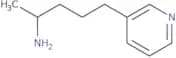
CAS :<p>Methyl 4-hydroxy-2-sulfanylquinoline-3-carboxylate (MSQ) is a synthetic molecule that has shown to have antiviral activity against the hepatitis B virus. This compound is a competitive inhibitor of the virus and prevents it from infecting cells. MSQ has also been shown to inhibit other viruses, such as herpes simplex virus, influenza A and C, rotavirus, and human immunodeficiency virus type 1 (HIV-1). The high inhibition of MSQ can be attributed to its ability to form hydrogen bonds with the amino acid residues in viral proteins. Additionally, MSQ interacts with anions in the active site of the enzymes that are necessary for viral replication through alkylation reactions.<br>MSQ has been found to be selective for influenza A and C by binding at different sites on the enzyme compared to other compounds like zanamivir and oseltamivir. The single-crystal x</p>Formule :C11H9NO3SDegré de pureté :Min. 95%Masse moléculaire :235.26 g/mol5-(Pyridin-3-yl)pentan-2-amine
CAS :<p>Versatile small molecule scaffold</p>Formule :C10H16N2Degré de pureté :Min. 95%Masse moléculaire :164.25 g/mol[(2-Bromo-5-chlorophenyl)methyl](2-methylpropyl)amine
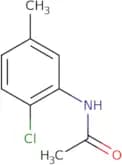
CAS :<p>Versatile small molecule scaffold</p>Formule :C11H15BrClNDegré de pureté :Min. 95%Masse moléculaire :276.6 g/molN-(2-Chloro-5-methylphenyl)acetamide
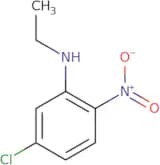
CAS :<p>Versatile small molecule scaffold</p>Formule :C9H10ClNODegré de pureté :Min. 95%Masse moléculaire :183.63 g/mol5-Chloro-N-ethyl-2-nitroaniline
CAS :<p>Versatile small molecule scaffold</p>Formule :C8H9ClN2O2Degré de pureté :Min. 95%Masse moléculaire :200.62 g/molRef: 3D-TFA21846
Produit arrêté3-[4-(2-Methylpropyl)-5-sulfanyl-4H-1,2,4-triazol-3-yl]propanamide
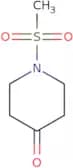
CAS :<p>Versatile small molecule scaffold</p>Formule :C9H16N4OSDegré de pureté :Min. 95%Masse moléculaire :228.32 g/mol1-N-(methylsulfonyl)-4-piperidinone
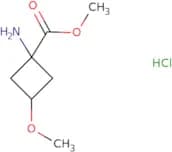
CAS :<p>1-N-(methylsulfonyl)-4-piperidinone is a compound that belongs to the group of secondary organic amines. It can be used as an intermediate in the synthesis of p-hydroxybenzoic acid and hydroxyl group compounds. 1-N-(methylsulfonyl)-4-piperidinone has been shown to inhibit protein synthesis in cultured cells by blocking the formation of aminoacyl-tRNA and preventing translocation of peptide chain from ribosomes to the site of peptide bond formation. This process is essential for the production of proteins, which are necessary for normal cell function. The inhibitory effect on protein synthesis was also observed when 1-N-(methylsulfonyl)-4-piperidinone was incubated with human erythrocytes, an enzyme isolated from calf thymus, and a monoclonal antibody (mAb). This mechanism is believed to be due</p>Formule :C6H11NO3SDegré de pureté :Min. 95%Masse moléculaire :177.22 g/molMethyl 1-amino-3-methoxycyclobutane-1-carboxylate hydrochloride
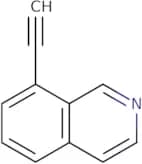
CAS :<p>Versatile small molecule scaffold</p>Formule :C7H14ClNO3Degré de pureté :Min. 95%Masse moléculaire :195.6 g/mol8-ethynylisoquinoline
CAS :<p>Versatile small molecule scaffold</p>Formule :C11H7NDegré de pureté :Min. 95%Masse moléculaire :153.18 g/molC-[1-(2-Chloro-phenyl)-cyclopropyl]-methylamine
CAS :<p>Versatile small molecule scaffold</p>Formule :C10H12ClNDegré de pureté :Min. 95%Masse moléculaire :181.66 g/molRef: 3D-LKB36568
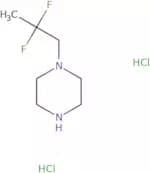
Produit arrêté1-(2,2-Difluoropropyl)piperazine dihydrochloride
CAS :<p>Versatile small molecule scaffold</p>Formule :C7H16Cl2F2N2Degré de pureté :Min. 95%Masse moléculaire :237.12 g/mol8-tert-Butyl 4-methyl 2,8-diazaspiro[4.5]decane-4,8-dicarboxylate
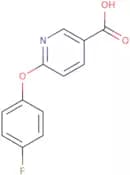
CAS :<p>Versatile small molecule scaffold</p>Formule :C15H26N2O4Degré de pureté :Min. 95%Masse moléculaire :298.38 g/mol6-(4-Fluorophenoxy)pyridine-3-carboxylic acid
CAS :<p>Versatile small molecule scaffold</p>Formule :C12H8FNO3Degré de pureté :Min. 95%Masse moléculaire :233.19 g/mol
![3-Azabicyclo[3.2.1]octane-2,4-dione](/_next/image/?url=https%3A%2Fstatic.cymitquimica.com%2Fproducts%2F3D%2Fthumb-webp%2FFAA76345.webp&w=3840&q=75)


![2-[2-(Trimethylsilyl)ethynyl]benzenamine](/_next/image/?url=https%3A%2Fstatic.cymitquimica.com%2Fproducts%2F3D%2Fthumb-webp%2FDEA52916.webp&w=3840&q=75)

amine](/_next/image/?url=https%3A%2Fstatic.cymitquimica.com%2Fproducts%2F3D%2Fthumb-webp%2FSJC31753.webp&w=3840&q=75)
![3-[4-(2-Methylpropyl)-5-sulfanyl-4H-1,2,4-triazol-3-yl]propanamide](/_next/image/?url=https%3A%2Fstatic.cymitquimica.com%2Fproducts%2F3D%2Fthumb-webp%2FDJB72392.webp&w=3840&q=75)
![C-[1-(2-Chloro-phenyl)-cyclopropyl]-methylamine](/_next/image/?url=https%3A%2Fstatic.cymitquimica.com%2Fproducts%2F3D%2Fthumb-webp%2FLKB36568.webp&w=3840&q=75)
![8-tert-Butyl 4-methyl 2,8-diazaspiro[4.5]decane-4,8-dicarboxylate](/_next/image/?url=https%3A%2Fstatic.cymitquimica.com%2Fproducts%2F3D%2Fthumb-webp%2FMKD58134.webp&w=3840&q=75)