Building Blocks
Cette section contient des produits fondamentaux pour la synthèse de composés organiques et biologiques. Building blocks sont les matériaux de départ essentiels utilisés pour construire des molécules complexes à travers diverses réactions chimiques. Ils jouent un rôle crucial dans la découverte de médicaments, la science des matériaux et la recherche chimique. Chez CymitQuimica, nous offrons une gamme diversifiée de building blocks de haute qualité pour soutenir vos recherches innovantes et projets industriels, en vous assurant de disposer des composants essentiels pour une synthèse réussie.
Sous-catégories appartenant à la catégorie "Building Blocks"
- Acides boroniques et dérivés de l'acide boronique(5.778 produits)
- Building Blocks Chiraux(1.243 produits)
- Building Blocks Hydrocarbonés(6.097 produits)
- Building Blocks organiques(61.052 produits)
201390 produits trouvés pour "Building Blocks"
Trier par
Degré de pureté (%)
0
100
|
0
|
50
|
90
|
95
|
100
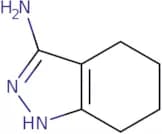
4,5,6,7-Tetrahydro-2H-indazol-3-amine
CAS :Versatile small molecule scaffoldFormule :C7H11N3Degré de pureté :Min. 95%Masse moléculaire :137.19 g/mol3-{[2-(Morpholin-4-yl)ethyl]amino}propanenitrile
CAS :3-{[2-(Morpholin-4-yl)ethyl]amino}propanenitrile is a prodrug that is metabolized to the active drug, 2-morpholinoethanol. It is used for the treatment of breast cancer and mastitis (inflammation of the breast). 3-{[2-(Morpholin-4-yl)ethyl]amino}propanenitrile has a high water solubility and high stability, which makes it an ideal candidate for injection as a sustained release drug. This drug can be injected into solid tumors that are difficult to treat with other drugs and may also be used in conjunction with chemotherapy. 3-{[2-(Morpholin-4-yl)ethyl]amino}propanenitrile inhibits the production of estrogen, which plays a role in the growth of some types of breast cancer cells.Formule :C9H17N3ODegré de pureté :Min. 95%Masse moléculaire :183.25 g/molMethyl 4-methyl-6-oxoheptanoate
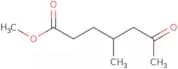
CAS :<p>Versatile small molecule scaffold</p>Formule :C9H16O3Degré de pureté :Min. 95%Masse moléculaire :172.22 g/mol2,6-Dimethyltetrahydro-2H-pyran-4-ol
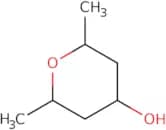
CAS :Versatile small molecule scaffoldFormule :C7H14O2Degré de pureté :Min. 95%Masse moléculaire :130.18 g/mol4-(Pyridin-2-yl)butan-2-ol
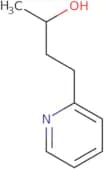
CAS :<p>Versatile small molecule scaffold</p>Formule :C9H13NODegré de pureté :Min. 95%Masse moléculaire :151.21 g/mol4'-N-Piperidinophenyl acetylene
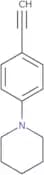
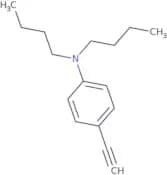
CAS :<p>Versatile small molecule scaffold</p>Formule :C13H15NDegré de pureté :Min. 95%Masse moléculaire :185.27 g/molN,N-Dibutyl-4-ethynylaniline
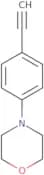
CAS :<p>Versatile small molecule scaffold</p>Formule :C16H23NDegré de pureté :Min. 95%Masse moléculaire :229.36 g/mol4-(4-Ethynylphenyl)morpholine
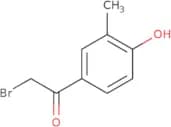
CAS :<p>Versatile small molecule scaffold</p>Formule :C12H13NODegré de pureté :Min. 95%Masse moléculaire :187.24 g/mol2-Bromo-1-(4-hydroxy-3-methylphenyl)ethan-1-one
CAS :Versatile small molecule scaffoldFormule :C9H9BrO2Degré de pureté :Min. 95%Masse moléculaire :229.07 g/mol6-Hydroxy-2-methylnicotinonitrile
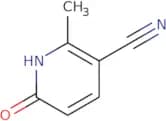
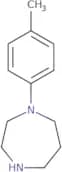
CAS :6-Hydroxy-2-methylnicotinonitrile is a reagent that is used for the condensation of aldehydes and amines. It can also be used to form enamines from primary amines with carbonyl compounds. Dimethyl acetal, dimethyl, methyl methacrylate, cyclized, methacrylate, acetal are some of the products that are made using 6-Hydroxy-2-methylnicotinonitrile.Formule :C7H6N2ODegré de pureté :Min. 95%Masse moléculaire :134.14 g/mol1-(4-Methylphenyl)-1,4-diazepane
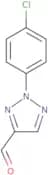
CAS :<p>Versatile small molecule scaffold</p>Formule :C12H18N2Degré de pureté :Min. 95%Masse moléculaire :190.28 g/mol2-(4-Chlorophenyl)-2H-1,2,3-triazole-4-carbaldehyde
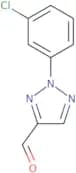
CAS :<p>Versatile small molecule scaffold</p>Formule :C9H6ClN3ODegré de pureté :Min. 95%Masse moléculaire :207.61 g/mol2-(3-Chlorophenyl)-2H-1,2,3-triazole-4-carbaldehyde
CAS :<p>Versatile small molecule scaffold</p>Formule :C9H6ClN3ODegré de pureté :Min. 95%Masse moléculaire :207.61 g/mol6-Methyl-2-oxopiperidine-3-carboxylic acids
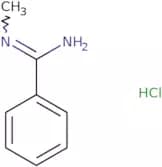
CAS :<p>Versatile small molecule scaffold</p>Formule :C7H11NO3Degré de pureté :Min. 95%Masse moléculaire :157.2 g/molN-Methylbenzenecarboximidamide hydrochloride
CAS :N-Methylbenzenecarboximidamide hydrochloride is a chemical substance that belongs to the class of benzamidine. It is used as an intermediate in the synthesis of other chemicals and drugs, such as 3-methylcholanthrene, which is used for the treatment of cancer. N-Methylbenzenecarboximidamide hydrochloride is synthesized by solid-phase synthesis on a silica gel support using benzamidine as a starting material. The final product can be purified by chromatography with a solvent system consisting of hexane and ethyl acetate. This reaction mechanism involves oxidation of the methyl group to form an epoxide, followed by nucleophilic attack by water on the epoxide to form an enol. The enol undergoes reductive elimination to produce the desired product. The optimal reaction conditions are achieved at 60 degrees Celsius and a pH between 5 and 7.Formule :C8H11ClN2Degré de pureté :Min. 95%Masse moléculaire :170.64 g/molEthyl 2-acetyl-4-oxopentanoate
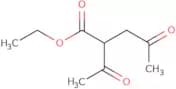
CAS :Ethyl 2-acetyl-4-oxopentanoate is a modification of the molecule pentanoic acid. It is a functional molecule that can be modified by substitutions and modifications. The pharmacokinetic properties of this compound have been studied in rats, which showed that it has a high absorption rate when administered orally. Pharmacokinetic studies also revealed that ethyl 2-acetyl-4-oxopentanoate is metabolized to carboxyethyl 2-acetyl-4-oxopentanoate and pyridazine ethyl 2-acetyl-4-oxopentanoate, which are both neuropathic pain drugs with similar pharmacodynamics. This drug has shown promise as a lead compound for the treatment of neuropathic pain due to its α2δ subunit binding activity.Formule :C9H14O4Degré de pureté :Min. 95%Masse moléculaire :186.21 g/molOctahydro-1H-inden-2-one
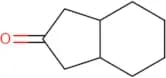
CAS :<p>Versatile small molecule scaffold</p>Formule :C9H14ODegré de pureté :Min. 95%Masse moléculaire :138.21 g/mol(3-Chlorophenyl)acetaldehyde
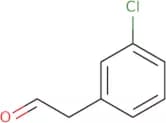
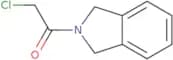
CAS :3-Chlorophenylacetaldehyde is a chemical compound with the molecular formula CHClO. It is a colorless solid that crystallizes in the form of its dimers, (3-chlorophenyl)acetaldehyde and (3-chloro-2-phenylethynyl) acetaldehyde. It is an intermediate in the synthesis of other compounds, such as phenylethenes and annulated polycyclic aromatic hydrocarbons. 3-Chlorophenylacetaldehyde can be synthesized by transforming naphthalene or phenylethenes with heat or light. In addition, it can be synthesized from photodimerization of 2-(3-chlorophenyl)ethanol and phenylethanone. The transformation of 3-chlorophenylacetaldehyde to 3-(2-phenylethynyl) acetaldehyde can take place through a series of reactions including alkene formation, dimerization, carbon atom rearrangement and annulationFormule :C8H7ClODegré de pureté :Min. 95%Masse moléculaire :154.59 g/mol2-Chloro-1-(2,3-dihydro-1H-isoindol-2-yl)ethan-1-one
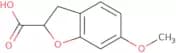
CAS :<p>Versatile small molecule scaffold</p>Formule :C10H10ClNODegré de pureté :Min. 95%Masse moléculaire :195.64 g/mol6-Methoxy-2,3-dihydro-1-benzofuran-2-carboxylic acid
CAS :Versatile small molecule scaffoldFormule :C10H10O4Degré de pureté :Min. 95%Masse moléculaire :194.18 g/mol

![3-{[2-(Morpholin-4-yl)ethyl]amino}propanenitrile](/_next/image/?url=https%3A%2Fstatic.cymitquimica.com%2Fproducts%2F3D%2Fthumb-webp%2FRBA83284.webp&w=3840&q=75)