Building Blocks
Cette section contient des produits fondamentaux pour la synthèse de composés organiques et biologiques. Building blocks sont les matériaux de départ essentiels utilisés pour construire des molécules complexes à travers diverses réactions chimiques. Ils jouent un rôle crucial dans la découverte de médicaments, la science des matériaux et la recherche chimique. Chez CymitQuimica, nous offrons une gamme diversifiée de building blocks de haute qualité pour soutenir vos recherches innovantes et projets industriels, en vous assurant de disposer des composants essentiels pour une synthèse réussie.
Sous-catégories appartenant à la catégorie "Building Blocks"
- Acides boroniques et dérivés de l'acide boronique(5.778 produits)
- Building Blocks Chiraux(1.243 produits)
- Building Blocks Hydrocarbonés(6.098 produits)
- Building Blocks organiques(61.057 produits)
200716 produits trouvés pour "Building Blocks"
Trier par
Degré de pureté (%)
0
100
|
0
|
50
|
90
|
95
|
100
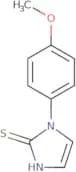
1-(4-Methoxyphenyl)-1H-imidazole-2(3H)-thione
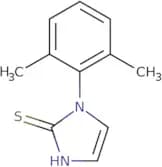
CAS :<p>Versatile small molecule scaffold</p>Formule :C10H10N2OSDegré de pureté :Min. 95%Masse moléculaire :206.26 g/mol1-(2,6-Dimethylphenyl)-2,3-dihydro-1H-imidazole-2-thione
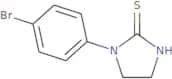
CAS :<p>Versatile small molecule scaffold</p>Formule :C11H12N2SDegré de pureté :Min. 95%Masse moléculaire :204.29 g/mol1-(4-Bromophenyl)imidazoline-2-thione
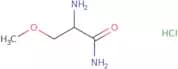
CAS :<p>Versatile small molecule scaffold</p>Formule :C9H7BrN2SDegré de pureté :Min. 95%Masse moléculaire :255.14 g/mol2-Amino-3-methoxypropanamide hydrochloride
CAS :<p>Versatile small molecule scaffold</p>Formule :C4H11ClN2O2Degré de pureté :Min. 95%Masse moléculaire :154.59 g/mol7-Chloro-3-phenyl-3H-[1,2,3]triazolo[4,5-d]pyrimidine
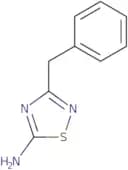
CAS :Versatile small molecule scaffoldFormule :C10H6ClN5Degré de pureté :Min. 95%Masse moléculaire :231.64 g/mol3-Benzyl-1,2,4-thiadiazol-5-amine
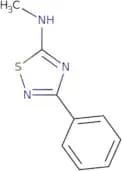
CAS :Versatile small molecule scaffoldFormule :C9H9N3SDegré de pureté :Min. 95%Masse moléculaire :191.26 g/molN-Methyl-3-phenyl-1,2,4-thiadiazol-5-amine
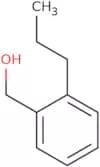
CAS :Versatile small molecule scaffoldFormule :C9H9N3SDegré de pureté :Min. 95%Masse moléculaire :191.26 g/mol(2-Propylphenyl)methanol
CAS :<p>2-Propylphenyl methy alcohol is a carboxylic acid that is used in the synthesis of esterification products. It reacts with an alcohol to form an ester. This reaction can be done by heating the carboxylic acid and the alcohol together, or by using a catalyst such as sulfuric acid. 2-Propylphenyl methy alcohol can also react with a reactive halogenated molecule to form an ether. This process is called hydrolysis, which is the breaking down of a compound through water molecules. 2-Propylphenyl methy alcohol will react with a chlorine atom to form a chloroalkoxide, which can then be used in another reaction.</p>Formule :C10H14ODegré de pureté :Min. 95%Masse moléculaire :150.22 g/molTranylcypromine Related Compound B
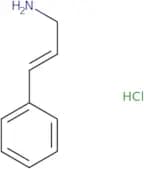
CAS :<p>Tranylcypromine Related Compound B (TCRB) is a fluorescent substrate for monoamine oxidase. It is used to measure the activity of this enzyme in biological samples, including plasma, urine, and cerebrospinal fluid. TCRB has been shown to be irreversibly fluorescent. TCRB is reversibly fluorescent when the pH of the sample is decreased by adding hydrochloric acid or sodium hydroxide. The fluorescence intensity decreases as pH increases from 2-6 and then increases as pH increases from 7-10 due to the accumulation of nonfluorescent products. Tranylcypromine also inhibits pepsin activity at low concentrations and can be used for measuring pepsin activity in vitro. This compound has been shown to have an operational half-life of about 18 hours in rats and about 27 hours in humans.</p>Formule :C9H11N·HClDegré de pureté :Min. 95%Masse moléculaire :169.65 g/mol1-Chloro-2,4-dimethanesulfonylbenzene
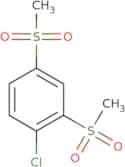
CAS :Versatile small molecule scaffoldFormule :C8H9ClO4S2Degré de pureté :Min. 95%Masse moléculaire :268.7 g/mol1,5-Diphenylpentan-3-ol
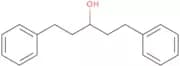
CAS :Flindersia laevicarpa is a small tree native to Australia. The leaves of the tree are used for medicinal purposes and contain 1,5-diphenylpentan-3-ol. Flindersia laevicarpa has been shown to have anti-inflammatory and antioxidant properties, as well as an ability to inhibit platelet aggregation.Formule :C17H20ODegré de pureté :Min. 95%Masse moléculaire :240.34 g/mol4-Bromo-5-chloro-1H-imidazole
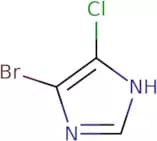
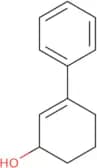
CAS :<p>Versatile small molecule scaffold</p>Formule :C3H2BrClN2Degré de pureté :Min. 95%Masse moléculaire :181.42 g/mol3-Phenylcyclohex-2-en-1-ol
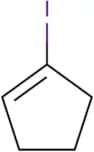
CAS :Versatile small molecule scaffoldFormule :C12H14ODegré de pureté :Min. 95%Masse moléculaire :174.24 g/mol1-Iodocyclopent-1-ene
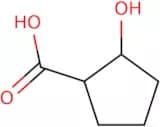
CAS :<p>Versatile small molecule scaffold</p>Formule :C5H7IDegré de pureté :Min. 95%Masse moléculaire :194.01 g/molCis-2-hydroxycyclopentanecarboxylic acid
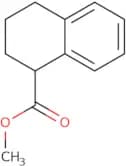
CAS :<p>Cis-2-hydroxycyclopentane-carboxylic acid is a tosyl ester that is used as an intramolecular nucleophile. It reacts with a variety of electrophiles, including dioxan, to form tosylates. Cis-2-hydroxycyclopentane carboxylic acid has been found to be a useful buffer in the analysis of its kinetics and spectroscopic studies. This compound also shows aqueous solubility that is dependent on the presence of carbon tetrachloride or borate.</p>Formule :C6H10O3Degré de pureté :Min. 95%Masse moléculaire :130.14 g/molMethyl 1,2,3,4-tetrahydronaphthalene-1-carboxylate
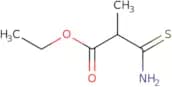
CAS :Versatile small molecule scaffoldFormule :C12H14O2Degré de pureté :Min. 95%Masse moléculaire :190.24 g/molethyl 2-carbamothioyl-2-methylacetate
CAS :Versatile small molecule scaffoldFormule :C6H11NO2SDegré de pureté :Min. 95%Masse moléculaire :161.22 g/molMethyl 4-hydroxy-[1,1'-biphenyl]-3-carboxylate
CAS :<p>Versatile small molecule scaffold</p>Formule :C14H12O3Degré de pureté :Min. 95%Masse moléculaire :228.24 g/mol5-(4-Methylphenyl)-3H,4H-thieno[2,3-d]pyrimidin-4-one
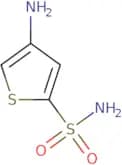
CAS :Versatile small molecule scaffoldFormule :C13H10N2OSDegré de pureté :Min. 95%Masse moléculaire :242.3 g/mol4-Aminothiophene-2-sulfonamide
CAS :<p>Versatile small molecule scaffold</p>Formule :C4H6N2O2S2Degré de pureté :Min. 95%Masse moléculaire :178.2 g/mol

![7-Chloro-3-phenyl-3H-[1,2,3]triazolo[4,5-d]pyrimidine](/_next/image/?url=https%3A%2Fstatic.cymitquimica.com%2Fproducts%2F3D%2Fthumb-webp%2FSAA46600.webp&w=3840&q=75)
![Methyl 4-hydroxy-[1,1'-biphenyl]-3-carboxylate](/_next/image/?url=https%3A%2Fstatic.cymitquimica.com%2Fproducts%2F3D%2Fthumb-webp%2FSAA50413.webp&w=3840&q=75)
![5-(4-Methylphenyl)-3H,4H-thieno[2,3-d]pyrimidin-4-one](/_next/image/?url=https%3A%2Fstatic.cymitquimica.com%2Fproducts%2F3D%2Fthumb-webp%2FSAA50921.webp&w=3840&q=75)