


Building Blocks
Cette section contient des produits fondamentaux pour la synthèse de composés organiques et biologiques. Building blocks sont les matériaux de départ essentiels utilisés pour construire des molécules complexes à travers diverses réactions chimiques. Ils jouent un rôle crucial dans la découverte de médicaments, la science des matériaux et la recherche chimique. Chez CymitQuimica, nous offrons une gamme diversifiée de building blocks de haute qualité pour soutenir vos recherches innovantes et projets industriels, en vous assurant de disposer des composants essentiels pour une synthèse réussie.
Sous-catégories appartenant à la catégorie "Building Blocks"
- Acides boroniques et dérivés de l'acide boronique(5.778 produits)
- Building Blocks Chiraux(1.243 produits)
- Building Blocks Hydrocarbonés(6.098 produits)
- Building Blocks organiques(61.057 produits)
200716 produits trouvés pour "Building Blocks"
Trier par
Degré de pureté (%)
0
100
|
0
|
50
|
90
|
95
|
100
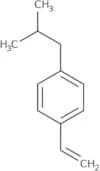
p-Isobutylstyrene-d7
CAS :<p>p-Isobutylstyrene-d7 is a solid catalyst that can be used in the synthesis of organic compounds. It has been shown to have good activity for the transfer of acid chloride groups to aromatic ring systems and for the synthesis of thiadiazoles. p-Isobutylstyrene-d7 has been shown to be an excellent catalyst for the conversion of hydrochloric acid into hydrogen chloride, which can then be recycled. The toxicity studies on this compound have shown that it is not toxic to bacterial strains, which may make it a good candidate for use as a catalyst in bioremediation or a growth substrate. This catalyst has also been shown to have photocatalytic activity and may be used in the purification of water contaminated with heavy metals.</p>Formule :C12H9D7Degré de pureté :Min. 95%Masse moléculaire :167.3 g/molBromo-PEG4-azide
CAS :<p>Bromo-PEG4-azide is a PEG compound with two different functional groups (also known as heterobifunctional). Unlike homobifunctional PEG compounds (same functional group on both ends), this type of compounds are more versatile as have two different anchor points. Bromo-PEG4-azide is used as a linker and spacer to add a PEG moiety, via pegylation (a bioconjugation technique) to proteins, peptides, oligonucleotides, small molecules and nanoparticles.</p>Formule :C10H20BrN3O4Degré de pureté :Min. 95%Masse moléculaire :326.19 g/moltert-Butyl 4-amino-4-(aminomethyl)piperidine-1-carboxylate
CAS :<p>Versatile small molecule scaffold</p>Formule :C11H23N3O2Degré de pureté :Min. 95%Masse moléculaire :229.32 g/mol1,2,3,4-Tetrahydro-1,7-naphthyridine
CAS :Versatile small molecule scaffoldFormule :C8H10N2Degré de pureté :Min. 95%Couleur et forme :Clear LiquidMasse moléculaire :134.18 g/mol2,5-Diazabicyclo[2.2.2]octane dihydrochloride
CAS :Versatile small molecule scaffoldFormule :C6H12N2·2HClDegré de pureté :Min. 95%Masse moléculaire :185.1 g/molPotassium (cyclopropylmethyl)trifluoroborate
CAS :<p>Versatile small molecule scaffold</p>Formule :C4H7BF3KDegré de pureté :Min. 95%Masse moléculaire :162 g/mol2-boc-5-oxo-2-azabicyclo[2.2.2]octane
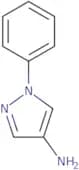
CAS :<p>Versatile small molecule scaffold</p>Formule :C12H19NO3Degré de pureté :Min. 95%Masse moléculaire :225.29 g/mol1-Phenyl-1H-pyrazol-4-amine
CAS :1-Phenyl-1H-pyrazol-4-amine is a white crystalline solid that can be used in organic synthesis. It is soluble in water and acetone, but insoluble in ether and chloroform. The chemical formula for 1-phenyl-1H-pyrazol-4-amine is C6H5N3O. It has a molecular weight of 147.17, an empirical formula of C6H5N3O and a density of 1.47g/mL at 20°C. 1-Phenyl-1H-pyrazol-4-amine reacts with the hydroxyl group on l -glutamic acid to form the corresponding ester, which can be hydrolyzed under alkaline conditions to produce ammonia and benzoic acid. This molecule also contains an anion that can be deprotonated by an alkali metal such as sodium or potassium to form the corresponding salt, whichFormule :C9H9N3Degré de pureté :Min. 95%Masse moléculaire :159.19 g/mol2-Methyl-1-(piperazin-1-yl)propan-1-one
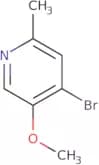
CAS :<p>Versatile small molecule scaffold</p>Formule :C8H16N2ODegré de pureté :Min. 95%Masse moléculaire :156.23 g/mol4-Bromo-5-methoxy-2-methylpyridine
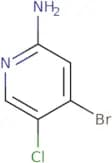
CAS :Versatile small molecule scaffoldFormule :C7H8BrNODegré de pureté :Min. 95%Masse moléculaire :202.05 g/mol4-Bromo-5-chloropyridin-2-amine
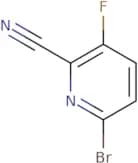
CAS :<p>Versatile small molecule scaffold</p>Formule :C5H4BrClN2Degré de pureté :Min. 95%Masse moléculaire :207.46 g/mol6-Bromo-3-fluoropyridine-2-carbonitrile
CAS :<p>Versatile small molecule scaffold</p>Formule :C6H2N2FBrDegré de pureté :Min. 95%Masse moléculaire :200.99 g/mol(R)-2-[(9H-Fluoren-9-ylmethoxycarbonylamino)-methyl]-butyric acid
CAS :Versatile small molecule scaffoldFormule :C20H21NO4Degré de pureté :Min. 95%Couleur et forme :PowderMasse moléculaire :339.4 g/mol2-Bromo-4-(4-fluorophenyl)-1,3-thiazole
CAS :Versatile small molecule scaffoldFormule :C9H5NFSBrDegré de pureté :Min. 95%Masse moléculaire :258.11 g/mol8-Bromo-6-chloroisoquinoline
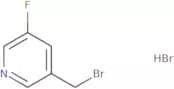
CAS :<p>Versatile small molecule scaffold</p>Formule :C9H5BrClNDegré de pureté :Min. 95%Masse moléculaire :242.5 g/mol3-(bromomethyl)-5-fluoropyridine hbr
CAS :Versatile small molecule scaffoldFormule :C6H6Br2FNDegré de pureté :Min. 95%Masse moléculaire :270.93 g/molImidazo[1,2-a]pyrazine-2-carbaldehyde
CAS :<p>Versatile small molecule scaffold</p>Formule :C7H5N3ODegré de pureté :Min. 95%Masse moléculaire :147.14 g/molMethyl 3-chloropropionate
CAS :<p>Methyl 3-chloropropionate is an alkyl ether that has been used in clinical studies as a liquid phase ion-pair extraction solvent. It was developed to replace the use of hexane, which is not environmentally friendly and can also cause irritation. Methyl 3-chloropropionate has been shown to have a higher viscosity than hexane at room temperature and is less likely to evaporate than hexane. Methyl 3-chloropropionate has also been used as a synthetic process solvent, with the reaction time being shorter than that of hexane. This compound can be used for chromatography without any effect on the solute or the stationary phase. Methyl 3-chloropropionate has also been shown to be effective in lipase and agarose gel assays, as well as chloride ion extraction from water samples.</p>Formule :C4H7ClO2Degré de pureté :Min. 95%Couleur et forme :Clear LiquidMasse moléculaire :122.55 g/molMethyl trans-4-bromo-2-butenoate
CAS :<p>Methyl trans-4-bromo-2-butenoate is a synthetic compound that contains a hydroxyl group and two bromine atoms. It is synthesized by the reaction of diethyl succinate, hydrogen, and piperazine in an aqueous solution. Methyl trans-4-bromo-2-butenoate has been shown to have antineoplastic activity in combination with epidermal growth factor (EGF) and carbohydrate conjugates. It also binds to cell surface receptors on the epidermal cells, inhibiting their growth. The structural formula of methyl trans-4-bromo-2-butenoate can be seen below: [[File:Methyltrans4bromobutanoate.png|thumb|300px|left|The structural formula of methyl trans-[4] -[bromo]-[2] -butenoate.]]</p>Formule :C5H7BrO2Degré de pureté :Min. 95%Couleur et forme :Clear LiquidMasse moléculaire :179.01 g/mol3-(3'-Trifluoromethylphenyl)propanol
CAS :3-(3'-Trifluoromethylphenyl)propanol is a trifluoroacetic acid derivative that is used in acylation reactions to form esters. It can be obtained by the reaction of aluminium chloride, isopropyl alcohol, and phosphine with 3-trifluoromethylaniline. Impurities may include chloride and zirconium. The trifluoromethyl group on this molecule can react with the carbonyl group of an organic acid to form a trifluoroacetate ester.Degré de pureté :Min. 95%


![2,5-Diazabicyclo[2.2.2]octane dihydrochloride](/_next/image/?url=https%3A%2Fstatic.cymitquimica.com%2Fproducts%2F3D%2Fthumb-webp%2FBAA19292.webp&w=3840&q=75)

![2-boc-5-oxo-2-azabicyclo[2.2.2]octane](/_next/image/?url=https%3A%2Fstatic.cymitquimica.com%2Fproducts%2F3D%2Fthumb-webp%2FSZA71422.webp&w=3840&q=75)

![(R)-2-[(9H-Fluoren-9-ylmethoxycarbonylamino)-methyl]-butyric acid](/_next/image/?url=https%3A%2Fstatic.cymitquimica.com%2Fproducts%2F3D%2Fthumb-webp%2FSYB71157.webp&w=3840&q=75)


![Imidazo[1,2-a]pyrazine-2-carbaldehyde](/_next/image/?url=https%3A%2Fstatic.cymitquimica.com%2Fproducts%2F3D%2Fthumb-webp%2FSQB78215.webp&w=3840&q=75)


