Building Blocks
Cette section contient des produits fondamentaux pour la synthèse de composés organiques et biologiques. Building blocks sont les matériaux de départ essentiels utilisés pour construire des molécules complexes à travers diverses réactions chimiques. Ils jouent un rôle crucial dans la découverte de médicaments, la science des matériaux et la recherche chimique. Chez CymitQuimica, nous offrons une gamme diversifiée de building blocks de haute qualité pour soutenir vos recherches innovantes et projets industriels, en vous assurant de disposer des composants essentiels pour une synthèse réussie.
Sous-catégories appartenant à la catégorie "Building Blocks"
- Acides boroniques et dérivés de l'acide boronique(5.778 produits)
- Building Blocks Chiraux(1.243 produits)
- Building Blocks Hydrocarbonés(6.098 produits)
- Building Blocks organiques(61.057 produits)
200716 produits trouvés pour "Building Blocks"
Trier par
Degré de pureté (%)
0
100
|
0
|
50
|
90
|
95
|
100
3-Bromo-2-hydroxy-5-iodopyridine
CAS :<p>Versatile small molecule scaffold</p>Formule :C5H3BrINODegré de pureté :Min. 95%Masse moléculaire :299.89 g/mol(S)-2-Methylpiperidine hydrochloride
CAS :<p>(S)-2-Methylpiperidine hydrochloride is a synthetic reagent that can be used in asymmetric synthesis. It is a homochiral amide that can be used as a reagent for the efficient preparation of β-unsaturated piperidines. (S)-2-Methylpiperidine hydrochloride can be synthesized from a Grignard reaction with an aldehyde, which is an important chemical reaction in organic chemistry.</p>Formule :C6H14ClNDegré de pureté :Min. 95%Masse moléculaire :135.64 g/mol4-Bromo-2-cyclopropylpyridine
CAS :<p>Versatile small molecule scaffold</p>Formule :C8H8NBrDegré de pureté :Min. 95%Masse moléculaire :198.05 g/moltert-Butyl 3,9-diazaspiro[5.5]undecane-3-carboxylate hydrochloride
CAS :<p>Versatile small molecule scaffold</p>Formule :C14H27ClN2O2Degré de pureté :Min. 95%Masse moléculaire :290.83 g/molPotassium (cyclopropylmethyl)trifluoroborate
CAS :<p>Versatile small molecule scaffold</p>Formule :C4H7BF3KDegré de pureté :Min. 95%Masse moléculaire :162 g/molBoc-Tyr(tBu)-OH
CAS :Boc-Tyr(tBu)-OH is a chemical compound that is part of the class of lactams. It has been shown to have antitumor activity in vitro and in vivo, but it has not yet been tested for its cytotoxicity. This compound is synthesized by solid-phase synthesis and contains a disulfide bond, which may contribute to its cytotoxicity. Boc-Tyr(tBu)-OH has also been shown to have high affinity for the alpha 2A adrenergic receptor subtype and other receptors with an isosteric carbonyl group.Formule :C18H27NO5Degré de pureté :Min. 95%Couleur et forme :PowderMasse moléculaire :337.41 g/mol2-(Bromomethyl)-6-nitro-benzoic acid methyl ester
CAS :Versatile small molecule scaffoldFormule :C9H8BrNO4Degré de pureté :Min. 95%Masse moléculaire :274.07 g/molCbznh-PEG3-OH
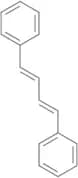
CAS :Cbznh-PEG3-OH is a pegylation product that belongs to the family of PEG products. It is a derivative of Cbz-NH-PEG5-OH and Cbz-N-PEG5-OH, which are carboxybenzyl amido PEG compounds. Pegylation is the process of attaching polyethylene glycol (PEG) chains to molecules, such as proteins or drugs, to enhance their stability, solubility, and bioavailability. Cbznh-PEG3-OH can be used in various applications, including drug delivery systems, diagnostics, and biotechnology. Its unique chemical structure allows for precise control over the size and properties of the PEG chains, making it a versatile tool in the field of biomedical research.Formule :C14H21NO5Degré de pureté :Min. 95%Masse moléculaire :283.32 g/moltrans,trans-1,4-Diphenyl-1,3-butadiene
CAS :<p>Used in the preparation of metal-diene reagents (e.g. for carbocyclization)</p>Formule :C16H14Degré de pureté :Min. 95%Masse moléculaire :206.28 g/mol2-(Bromomethyl)-6-fluorobenzonitrile
CAS :Versatile small molecule scaffoldFormule :C8H5BrFNDegré de pureté :Min. 95%Masse moléculaire :214.04 g/mol3-Hydroxy-5-methylpyridine
CAS :<p>3-Hydroxy-5-methylpyridine (3HMP) is a chemical substance that has been classified as an amine. It is a product of the metabolism of purines, which are nitrogenous bases found in DNA and RNA. 3HMP is produced by aerogenic bacteria (such as Enterobacter), and can be used to estimate the number of these bacteria present in water samples. 3HMP has been shown to have antiviral properties against influenza virus, and can be used as a biomarker for the presence of other viruses in animals. 3HMP also has mineralization properties, which have been studied extensively, particularly with regards to pancreatic disease.</p>Formule :C6H7NODegré de pureté :Min. 95%Couleur et forme :PowderMasse moléculaire :109.13 g/mol3-chloro-4-cyanobenzoic acid
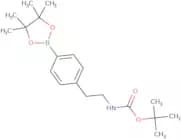
CAS :Versatile small molecule scaffoldFormule :C8H4ClNO2Degré de pureté :Min. 95%Masse moléculaire :181.58 g/moltert-butyl 4-(4,4,5,5-tetramethyl-1,3,2-dioxaborolan-2-yl)phenethylcarbamate
CAS :<p>Versatile small molecule scaffold</p>Formule :C19H30BNO4Degré de pureté :Min. 95%Masse moléculaire :347.26 g/mol1,3-Bis(diphenylphosphino)propane
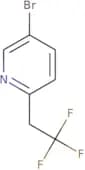
CAS :1,3-Bis(diphenylphosphino)propane is a chelate ligand that forms complexes with a wide range of transition metal ions. It has been shown to be an effective catalyst for the conversion of aryl halides to acid derivatives. The compound has been found to have an excellent stability in aqueous solutions and does not hydrolyze readily in human serum or water. 1,3-Bis(diphenylphosphino)propane is also used as an additive in many industrial processes, such as the production of nylon and polyester fibers.Formule :C27H26P2Degré de pureté :Min 96.0%Couleur et forme :White Off-White PowderMasse moléculaire :412.44 g/mol5-Bromo-2-(2,2,2-trifluoroethyl)pyridine
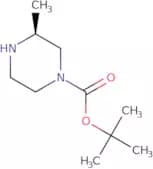
CAS :<p>Versatile small molecule scaffold</p>Formule :C7H5BrF3NDegré de pureté :Min. 95%Masse moléculaire :240.02 g/mol(S)-1-Boc-3-methylpiperazine
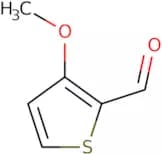
CAS :<p>(S)-1-Boc-3-methylpiperazine is a hydrophobic compound that is structurally modified from the tetracyclic family of drugs. It has been shown to inhibit tumor cell growth by binding to the oncogene, KRASG12C, and downregulating its expression. (S)-1-Boc-3-methylpiperazine also inhibits cancer cell growth through the inhibition of the PI3K/AKT signaling pathway. The pharmacological effects of (S)-1-Boc-3-methylpiperazine are dependent on its ability to bind with high affinity to KRASG12C and inhibit its activity.</p>Formule :C10H20N2O2Degré de pureté :Min. 95%Couleur et forme :White PowderMasse moléculaire :200.28 g/mol3-Methoxythiophene-2-carbaldehyde
CAS :<p>3-Methoxythiophene-2-carbaldehyde is a ligand that has been shown to form a stable complex with potassium chloride. This compound is also reactive, and can be stabilized in the reaction vessel. In the presence of sulfate ions, 3-methoxythiophene-2-carbaldehyde will react to form a phosphotungstic acid precipitate. The dehydrated salt can be recrystallized by adding phosphotungstic acid, which stabilizes the product.</p>Formule :C6H6O2SDegré de pureté :Min. 95%Masse moléculaire :142.18 g/molN-[5-(4-Bromophenyl)-6-(2-hydroxyethoxy)-4-pyrimidinyl]-N′-propylsulfamide
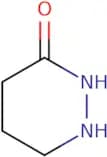
CAS :<p>Please enquire for more information about N-[5-(4-Bromophenyl)-6-(2-hydroxyethoxy)-4-pyrimidinyl]-N′-propylsulfamide including the price, delivery time and more detailed product information at the technical inquiry form on this page</p>Formule :C15H19BrN4O4SDegré de pureté :Min. 95%Masse moléculaire :431.31 g/mol1,2-Diazinan-3-one
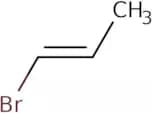
CAS :<p>Please enquire for more information about 1,2-Diazinan-3-one including the price, delivery time and more detailed product information at the technical inquiry form on this page</p>Formule :C4H8N2ODegré de pureté :Min. 95%Masse moléculaire :100.12 g/moltrans-1-Bromo-1-propene - stablised with Copper
CAS :Trans-1-bromo-1-propene is a compound that has been stabilized by copper. It is used in the synthesis of quinoline derivatives and alkanoic acids. Trans-1-bromo-1-propene is an antimicrobial agent, which kills bacteria by interfering with the fatty acid synthesis. This substance also has antioxidant properties.Formule :C3H5BrDegré de pureté :95%NmrCouleur et forme :Clear LiquidMasse moléculaire :120.98 g/mol


![tert-Butyl 3,9-diazaspiro[5.5]undecane-3-carboxylate hydrochloride](/_next/image/?url=https%3A%2Fstatic.cymitquimica.com%2Fproducts%2F3D%2Fthumb-webp%2FLJA40647.webp&w=3840&q=75)






![N-[5-(4-Bromophenyl)-6-(2-hydroxyethoxy)-4-pyrimidinyl]-N′-propylsulfamide](/_next/image/?url=https%3A%2Fstatic.cymitquimica.com%2Fproducts%2F3D%2Fthumb-webp%2FFB183879.webp&w=3840&q=75)