Building Blocks
Cette section contient des produits fondamentaux pour la synthèse de composés organiques et biologiques. Building blocks sont les matériaux de départ essentiels utilisés pour construire des molécules complexes à travers diverses réactions chimiques. Ils jouent un rôle crucial dans la découverte de médicaments, la science des matériaux et la recherche chimique. Chez CymitQuimica, nous offrons une gamme diversifiée de building blocks de haute qualité pour soutenir vos recherches innovantes et projets industriels, en vous assurant de disposer des composants essentiels pour une synthèse réussie.
Sous-catégories appartenant à la catégorie "Building Blocks"
- Acides boroniques et dérivés de l'acide boronique(5.778 produits)
- Building Blocks Chiraux(1.243 produits)
- Building Blocks Hydrocarbonés(6.098 produits)
- Building Blocks organiques(61.057 produits)
200716 produits trouvés pour "Building Blocks"
Trier par
Degré de pureté (%)
0
100
|
0
|
50
|
90
|
95
|
100
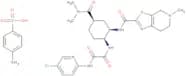
Edoxaban impurity G benzenesulfonate
CAS :Please enquire for more information about Edoxaban impurity G benzenesulfonate including the price, delivery time and more detailed product information at the technical inquiry form on this pageFormule :C24H30ClN7O4S•C7H8O3SDegré de pureté :Min. 95%Masse moléculaire :720.26 g/mol4-Bromopyridine-2,3-diamine
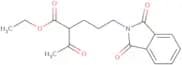
CAS :Versatile small molecule scaffoldFormule :C5H6N3BrDegré de pureté :Min. 95%Masse moléculaire :188.02 g/molEthyl 2-(3-phthalimidopropyl)acetoacetate
CAS :Please enquire for more information about Ethyl 2-(3-phthalimidopropyl)acetoacetate including the price, delivery time and more detailed product information at the technical inquiry form on this pageFormule :C17H19NO5Degré de pureté :Min. 95%Masse moléculaire :317.34 g/mol4-Chloro-2-hydroxy-6-methylphenylboronic acid
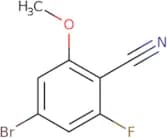
CAS :Versatile small molecule scaffoldFormule :C7H8BClO3Degré de pureté :Min. 95%Masse moléculaire :186.4 g/mol4-Bromo-2-fluoro-6-methoxybenzonitrile
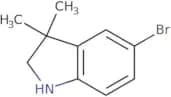
CAS :Versatile small molecule scaffoldFormule :C8H5NOFBrDegré de pureté :Min. 95%Masse moléculaire :230.03 g/mol5-bromo-3,3-dimethyl-2,3-dihydro-1H-indole
CAS :<p>5-bromo-3,3-dimethyl-2,3-dihydro-1H-indole is an activator that is used in palladium catalyzed reactions to form a phosphine ligand. 5-bromo-3,3-dimethyl-2,3-dihydro-1H-indole is also used as a vasotropic agent and reagent for organic synthesis. It is used to synthesize ethylesters and salts of 5-(5'-bromo)-2,2'-dihydroquinoline carboxylic acid. This compound can be hydrolyzed with alkaline solution to produce the corresponding amine.</p>Formule :C10H12BrNDegré de pureté :Min. 95%Masse moléculaire :226.1 g/molc3-Ethylbenzoic acid
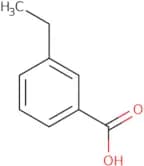
CAS :<p>C3-Ethylbenzoic acid is an organic compound that can be synthesized from the reactants ethyl bromide, propylene oxide, and acetic anhydride. The synthesis of C3-Ethylbenzoic acid is a stepwise process in which the starting materials are converted to intermediates and then reacted to form the desired product. The reaction mechanism involves bond cleavage, which generates a carboxylic acid group on one end of the molecule and a phenyl group on the other end. C3-Ethylbenzoic acid interacts with clausamine and isoprene during transport through cell membranes. This interaction may lead to increased permeability of cell membranes by c3-ethylbenzoic acid.</p>Formule :C9H10O2Degré de pureté :Min. 95%Masse moléculaire :150.17 g/mol2,2-Paracyclophane
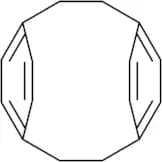
CAS :<p>2,2-Paracyclophane is a high-sensitivity c-reactive protein (hsCRP) that has been isolated from the fungus Cryptococcus neoformans. This compound has shown to have anti-cancer properties in animal studies. 2,2-Paracyclophane binds to fatty acids and is soluble in water, which may be due to its hydrogen bonding with the hydroxyl group at C1. The crystal structure of this compound reveals that it has a cyclohexane ring and two fatty acids. The thermal expansion coefficient of this molecule is also high, which suggests that it may be suitable for use as a solid lubricant.</p>Formule :C16H16Degré de pureté :Min. 98.5 Area-%Couleur et forme :White PowderMasse moléculaire :208.3 g/molPyridoxal-5-phosphate monohydrate
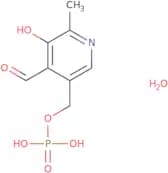
CAS :Bioavailable form of vitamin B6; coenzyme; food supplementFormule :C8H10NO6P·H2ODegré de pureté :Min. 98.5 Area-%Couleur et forme :Off-White Slightly Yellow PowderMasse moléculaire :265.16 g/mol1-(Difluoromethyl)-1H-pyrazole-4-carbaldehyde
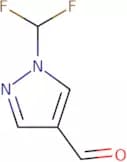
CAS :<p>Versatile small molecule scaffold</p>Formule :C5H4F2N2ODegré de pureté :Min. 95%Masse moléculaire :146.09 g/mol(1R,5S,6r)-rel-3-Oxabicyclo[3.1.0]hexane-6-carboxylic acid
CAS :Versatile small molecule scaffoldFormule :C6H8O3Degré de pureté :Min. 95%Masse moléculaire :128.13 g/mol2-Octyldecanoic acid
CAS :<p>2-Octyldecanoic acid is a fatty acid that is used as a stabilizer in detergent compositions. This stabilizer is also utilizable at high alkali metal concentrations, which makes it suitable for use in hard water conditions. 2-Octyldecanoic acid has a low viscosity at room temperature, and the nature of its hydrocarbon chain leads to increased stability against decomposition when heated or exposed to carbon tetrachloride. It can be synthesized from an aliphatic hydrocarbon, such as octane, to form a macrocyclic ring structure. 2-Octyldecanoic acid also has optical properties that depend on the configuration of the carbon atoms. The molecule has two chiral centers and can exist in four different forms: erythro (E), threo (T), dithreo (D) and meso (M). The optical activity of 2-octyldecanoic acid depends</p>Formule :C18H36O2Degré de pureté :Min. 95%Masse moléculaire :284.5 g/mol3-bromo-6,7-dihydro-5h-pyrrolo[3,4-b]pyridine hcl
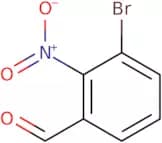
CAS :<p>Versatile small molecule scaffold</p>Formule :C7H8BrClN2Degré de pureté :Min. 95%Masse moléculaire :235.51 g/mol3-Bromo-2-nitrobenzaldehyde
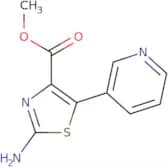
CAS :<p>3-Bromo-2-nitrobenzaldehyde is an organic chemical compound used in the synthesis of other chemical compounds. It is a colorless liquid that can be easily synthesized using potassium permanganate, tetrahydrofuran, acetone and hydrochloric acid. The chemical reaction is carried out by reacting potassium permanganate with hydrochloric acid to form potassium chloride and manganese dioxide. The manganese dioxide then reacts with acetone to produce 3-bromo-2-nitrobenzaldehyde. This synthetic method for producing 3-bromo-2-nitrobenzaldehyde uses less hazardous chemicals than the traditional method.</p>Formule :C7H4BrNO3Degré de pureté :Min. 95%Masse moléculaire :230.02 g/molMethyl 2-amino-5-pyridin-3-yl-1,3-thiazole-4-carboxylate
CAS :<p>Versatile small molecule scaffold</p>Formule :C10H9N3O2SDegré de pureté :Min. 95%Masse moléculaire :235.26 g/molIR-780 iodide
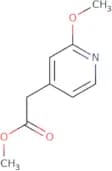
CAS :IR-780 iodide is a water-soluble drug that has been shown to have significant cytotoxicity against prostate cancer cells. It binds to the mitochondrial membrane potential, which is involved in energy production and the regulation of the cell cycle. IR-780 iodide is taken up by tumor cells, where it inhibits adriamycin uptake and induces apoptosis. In vitro assays have shown that IR-780 iodide can be used as a diagnostic tool for detecting bladder cancer by binding to the mitochondria of cells from patients with bladder cancer. In vivo studies have been done in mice to determine the effectiveness of IR-780 iodide in treating cervical cancer. These studies showed that IR-780 iodide was not significantly effective in vivo, due to its low bioavailability and lack of specificity for cervical cancer cells. Histological analysis showed that IR-780 iodide did not inhibit tumor growth or induce apoptosis in vivo.Formule :C36H44ClIN2Degré de pureté :Min. 95%Masse moléculaire :667.11 g/molMethyl 2-(2-methoxypyridin-4-yl)acetate
CAS :<p>Versatile small molecule scaffold</p>Formule :C9H11NO3Degré de pureté :Min. 95%Masse moléculaire :181.19 g/mol1-(Oxan-2-yl)-3-phenyl-5-(tetramethyl-1,3,2-dioxaborolan-2-yl)-1H-pyrazole
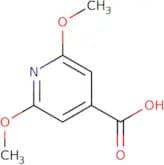
CAS :<p>Versatile small molecule scaffold</p>Formule :C20H27BN2O3Degré de pureté :Min. 95%Masse moléculaire :354.3 g/mol2,6-Dimethoxyisonicotinic acid
CAS :<p>2,6-Dimethoxyisonicotinic acid is a cytotoxic agent that is structurally related to colchicine and combretastatin A-4. It has been shown to induce apoptosis in cancer cells by inhibiting the polymerization of tubulin. This drug also inhibits the proliferation of cancer cells by binding to DNA and disrupting the synthesis of proteins necessary for cell division. The inhibitory effect on protein synthesis may be due to its ability to inhibit the activity of RNA polymerase II and III, which are essential for transcription. 2,6-Dimethoxyisonicotinic acid also induces an anticancer effect through its ability to bind to phenolic moieties and inhibit the growth of cancer cells.</p>Formule :C8H9NO4Degré de pureté :Min. 95%Masse moléculaire :183.16 g/molTert-Butyl 2-(Trifluoromethyl)Piperazine-1-Carboxylate
CAS :Versatile small molecule scaffoldFormule :C10H17N2O2F3Degré de pureté :Min. 95%Masse moléculaire :254.24 g/mol



![(1R,5S,6r)-rel-3-Oxabicyclo[3.1.0]hexane-6-carboxylic acid](/_next/image/?url=https%3A%2Fstatic.cymitquimica.com%2Fproducts%2F3D%2Fthumb-webp%2FFCA78088.webp&w=3840&q=75)

![3-bromo-6,7-dihydro-5h-pyrrolo[3,4-b]pyridine hcl](/_next/image/?url=https%3A%2Fstatic.cymitquimica.com%2Fproducts%2F3D%2Fthumb-webp%2FUFC11724.webp&w=3840&q=75)