Building Blocks
Sous-catégories appartenant à la catégorie "Building Blocks"
- Acides boroniques et dérivés de l'acide boronique(5.805 produits)
- Building Blocks Chiraux(1.248 produits)
- Building Blocks Hydrocarbonés(6.118 produits)
- Building Blocks organiques(61.447 produits)
208423 produits trouvés pour "Building Blocks"
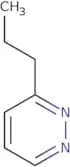
3-Propylpyridazine
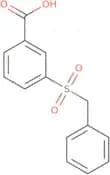
CAS :Versatile small molecule scaffoldFormule :C7H10N2Degré de pureté :Min. 95%Masse moléculaire :122.17 g/mol3-Phenylmethanesulfonylbenzoic acid
CAS :Versatile small molecule scaffoldFormule :C14H12O4SDegré de pureté :Min. 95%Masse moléculaire :276.31 g/mol4-Methyl-2-[(propan-2-yl)amino]benzonitrile
CAS :Versatile small molecule scaffold
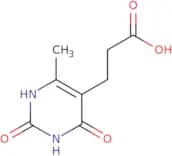
Formule :C11H14N2Degré de pureté :Min. 95%Masse moléculaire :174.24 g/mol3-(6-Methyl-2,4-dioxo-1,2,3,4-tetrahydropyrimidin-5-yl)propanoic acid
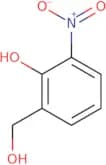
CAS :Versatile small molecule scaffoldFormule :C8H10N2O4Degré de pureté :Min. 95%Masse moléculaire :198.18 g/mol2-(Hydroxymethyl)-6-nitrophenol
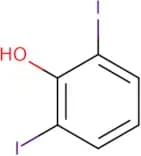
CAS :Salicylaldehyde is a colorless liquid with a spicy odor. It is used in the manufacture of many organic compounds and is found naturally in some plants, such as euglena gracilis and benzaldehyde. Salicylaldehyde can be biotransformed to other types of aldehydes. These include cinnamaldehyde, vanillin, 2-cyanobenzaldehyde, and 2-(hydroxymethyl)-6-nitrophenol (2NHP). 2NHP is an intermediate product of salicylic acid biosynthesis. It is also used to synthesize phenacetin and acetanilide. Acetanilide was once widely used as an analgesic but was withdrawn from clinical use because it caused fatal methemoglobinemia (a disorder in which the body does not have enough oxygen)Formule :C7H7NO4Degré de pureté :Min. 95%Masse moléculaire :169.13 g/mol2,6-Diiodophenol
CAS :2,6-Diiodophenol is a noncompetitive inhibitor that binds to the active site of carbonic anhydrase. It can be used as a pharmaceutical formulation or in sample preparation for gene sequence analysis. 2,6-Diiodophenol has been shown to have competitive inhibition against other inhibitors such as acetazolamide and dichlorphenamide. The marine sponge-derived enzyme carbonic anhydrase (CA) from the Gulf of Mexico was examined by chromatographic and spectroscopic methods. The CA activity was found to be inhibited by 2,6-diiodophenol in a concentration dependent manner with a KI value of 0.06 mM. 2,6-Diiodophenol also inhibits CA activity in rat liver microsomes at concentrations above 1 mM but does not inhibit peroxide production by the microsomal system at concentrations up to 10 mM. The crystal structure of 2,6-diiodophenol bound to CA has been determined using XFormule :C6H4I2ODegré de pureté :Min. 95%Masse moléculaire :345.9 g/mol2-[(4-Methoxyphenyl)formamido]-2-phenylacetic acid
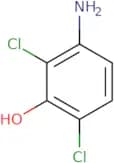
CAS :Versatile small molecule scaffoldFormule :C16H15NO4Degré de pureté :Min. 95%Masse moléculaire :285.29 g/mol3-Amino-2,6-dichlorophenol
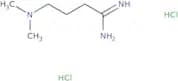
CAS :Versatile small molecule scaffoldFormule :C6H5Cl2NODegré de pureté :Min. 95%Masse moléculaire :178.01 g/mol4-(Dimethylamino)butanimidamide dihydrochloride
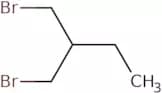
CAS :Versatile small molecule scaffoldFormule :C6H17Cl2N3Degré de pureté :Min. 95%Masse moléculaire :202.12 g/mol1-bromo-2-(bromomethyl)butane
CAS :1-bromo-2-(bromomethyl)butane is an aliphatic compound that is used as a propellant. It is also used in the synthesis of epoxy resins and plasticizers. 1-Bromo-2-(bromomethyl)butane can be synthesized by reacting bromine with butane. This reaction is catalyzed by acid or base, and can be conducted at low temperatures. The resulting product has been shown to have properties that are similar to those of other aliphatic compounds, such as being nonflammable and having low toxicity.
Formule :C5H10Br2Degré de pureté :Min. 95%Masse moléculaire :229.94 g/mol2-Mercapto-3-methyl-3H-purin-6(9H)-one
CAS :2-Mercapto-3-methyl-3H-purin-6(9H)one (2MMPD) is a purine analogue that has been used as a stabilizer in the synthesis of 3-methylxanthine. It has been shown to be useful for the fragmentation of large molecules in mass spectrometry and also has spectral properties similar to those of purines. The 2MMPD molecule can be used to identify other analogues, such as 3,7-dimethylxanthine, which are otherwise difficult to distinguish from one another. Spectral data for 2MMPD has been obtained from both gas chromatography and high performance liquid chromatography.Formule :C6H6N4OSDegré de pureté :Min. 95%Masse moléculaire :182.2 g/molBenzene, (1,1-dimethyl-2-propyn-1-yl)-
CAS :Versatile small molecule scaffold
Formule :C11H12Degré de pureté :Min. 95%Masse moléculaire :144.21 g/molrac-(1R,4R)-N-Methyl-4-phenylcyclohexan-1-amine hydrochloride
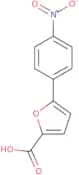
CAS :Versatile small molecule scaffoldFormule :C13H20ClNDegré de pureté :Min. 95%Masse moléculaire :225.76 g/mol5-(4-Nitrophenyl)-2-furoic acid
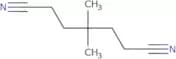
CAS :5-(4-Nitrophenyl)-2-furoic acid is a phenolic acid that has been shown to inhibit protein–protein interactions. It has been proposed as a corrosion inhibitor for metal surfaces, and it has also been used in the synthesis of vitamin B12. 5-(4-Nitrophenyl)-2-furoic acid can be detected using fluorescence resonance energy transfer (FRET) on a surface with a constant concentration, which is proportional to the intensity of fluorescence emission. This compound can also be used as an insulin resistance marker by measuring the time it takes for glucose to enter cells.Formule :C11H7NO5Degré de pureté :Min. 95%Masse moléculaire :233.18 g/mol4,4-Dimethylheptanedinitrile
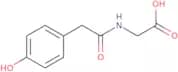
CAS :Versatile small molecule scaffoldFormule :C9H14N2Degré de pureté :Min. 95%Masse moléculaire :150.22 g/molp-Hydroxyphenylacetylglycine
CAS :p-Hydroxyphenylacetylglycine (PHPAG) is a metabolite of creatine, which is found in urine samples. It can be detected through chemical analysis of tissue and food composition. The detection sensitivity is determined by the type of sample and the analytical method used. PHPAG has been shown to have diagnostic value for the diagnosis of certain diseases, such as liver cirrhosis, kidney disease, and fatty acid metabolism disorders. PHPAG has also been shown to be an indicator for intracellular levels of fatty acids and polyunsaturated fatty acids (PUFA).
Formule :C10H11NO4Degré de pureté :Min. 95%Masse moléculaire :209.2 g/mol6-Cyanospiro[3.3]heptane-2-carboxylic acid
CAS :Versatile small molecule scaffold
Formule :C9H11NO2Degré de pureté :Min. 95%Masse moléculaire :165.19 g/mol6-Bromospiro[3.3]heptane-2-carboxylic acid
CAS :Versatile small molecule scaffold
Formule :C8H11BrO2Degré de pureté :Min. 95%Masse moléculaire :219.08 g/mol2-Hydroxy-3,6,7-trimethylquinoxaline
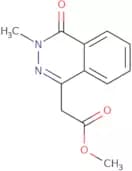
CAS :Versatile small molecule scaffoldFormule :C11H12N2ODegré de pureté :Min. 95%Masse moléculaire :188.23 g/molMethyl 2-(3-methyl-4-oxo-3,4-dihydrophthalazin-1-yl)acetate
CAS :Versatile small molecule scaffold
Formule :C12H12N2O3Degré de pureté :Min. 95%Masse moléculaire :232.23 g/mol

![4-Methyl-2-[(propan-2-yl)amino]benzonitrile](/_next/image/?url=https%3A%2Fstatic.cymitquimica.com%2Fproducts%2F3D%2Fthumb-webp%2FDBA19500.webp&w=3840&q=75)
![2-[(4-Methoxyphenyl)formamido]-2-phenylacetic acid](/_next/image/?url=https%3A%2Fstatic.cymitquimica.com%2Fproducts%2F3D%2Fthumb-webp%2FDBA17253.webp&w=3840&q=75)


![6-Cyanospiro[3.3]heptane-2-carboxylic acid](/_next/image/?url=https%3A%2Fstatic.cymitquimica.com%2Fproducts%2F3D%2Fthumb-webp%2FDBA11489.webp&w=3840&q=75)
![6-Bromospiro[3.3]heptane-2-carboxylic acid](/_next/image/?url=https%3A%2Fstatic.cymitquimica.com%2Fproducts%2F3D%2Fthumb-webp%2FDBA11488.webp&w=3840&q=75)