Alcools
Sous-catégories appartenant à la catégorie "Alcools"
5818 produits trouvés pour "Alcools"
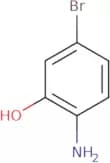
2-Amino-5-bromophenol
CAS :2-Amino-5-bromophenol is a chemical that is used as a substrate in the study of intracellular Ca2+ levels. 2-Amino-5-bromophenol can also be used to study the activity of microperoxidases, enzymes that are involved in the metabolism of hydrogen peroxide and organic hydroperoxides. 2-Amino-5-bromophenol has been shown to have anticancer activity against MCF7 cells, an estrogen receptor positive cell line. The anticancer activity may be due to the inhibition of protein synthesis by 2-amino-5-bromophenol binding to DNA. This binding prevents transcription and translation of genes that code for proteins involved in cancer cell proliferation and survival.Formule :C6H6BrNODegré de pureté :Min. 95%Couleur et forme :Off-White To Brown SolidMasse moléculaire :188.02 g/mol3,6-Dithia-1,8-octanediol
CAS :3,6-Dithia-1,8-octanediol is a coordination complex that contains four chloride ions and six water molecules. It is made up of two molecules of 3,6-dithia-1,8-octanediol coordinated with two diphenyl ethers. The molecule is planar with the two oxygen atoms of the hydroxyl group in one plane and the two carbon atoms in another plane. The hydrogen atom on the oxygen atom has an intramolecular bond to a hydrogen atom on the other oxygen atom. The molecule has a magnetic resonance spectrum that can be used for identification purposes because it is unique among other compounds. 3,6-Dithia-1,8-octanediol can react with sodium hydroxide solution to form a precipitate. This reaction can be used as an analytical chemistry technique to determine the concentration of chloride ions in plasma mass spectrometry samples.Formule :C6H14O2S2Degré de pureté :Min. 95%Couleur et forme :White PowderMasse moléculaire :182.31 g/mol4-Methylisoquinoline
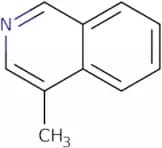
CAS :Isomeric 4-methylisoquinoline is a molecule that is structurally similar to protopine and berberine chloride. It has been shown to be an effective photosensitizer for the production of reactive oxygen species (ROS) in cells, which can lead to DNA damage and cell death. The functional groups on this molecule are the chloro group, which is a halogen, and the isoquinoline ring system with two methyl groups. The chemistry of this compound involves alkylation, yielding a new compound with one less methyl group than the original molecule. This process is called enamine formation.Formule :C10H9NDegré de pureté :Min. 95%Couleur et forme :Yellow PowderMasse moléculaire :143.19 g/mol4-Methylbenzyl Alcohol
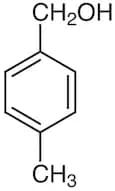
CAS :Formule :C8H10ODegré de pureté :>99.0%(GC)Couleur et forme :White to Almost white powder to crystalMasse moléculaire :122.17N-Boc-L-phenylalaninol
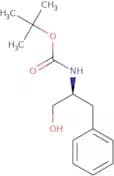
CAS :N-Boc-L-phenylalaninol is a monomer that has been shown to inhibit the activity of proteinases. It binds to the active site of the enzymes and inhibits their catalytic activity, thereby preventing them from cleaving peptide bonds. N-Boc-L-phenylalaninol also has hydroxyl groups that can be used for further derivatization to produce derivatives with different functional groups, such as sulfonic acids or isosteres. The carbonyl group in this compound can be used for conjugation reactions with other molecules, such as proteins or nucleic acids.
Formule :C14H21NO3Degré de pureté :Min. 95%Couleur et forme :White PowderMasse moléculaire :251.32 g/mol(1S,2R)-(+)-2-Amino-1,2-diphenylethanol
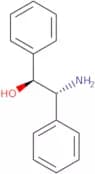
CAS :Produit contrôlé(1S,2R)-(+)-2-Amino-1,2-diphenylethanol is an enantiopure amine that has been used as a ligand in supramolecular chemistry. It can be prepared by reacting 2-chloropropane with thionyl chloride and primary alcohols. The chloride group facilitates the reaction rate and can be replaced by nitro groups to immobilize the product on a solid substrate. (1S,2R)-(+)-2-Amino-1,2-diphenylethanol has optical properties that are dependent on its environment. It can be used to label cells for studies of cell differentiation or cell migration. This compound also reacts with cyclohexane rings to form cyclic products with different optical properties than those of the reactants. The reaction yield is high in this process.Formule :C14H15NODegré de pureté :Min. 95%Couleur et forme :White To Beige SolidMasse moléculaire :213.28 g/mol1,2-O-Isopropylidene-sn-glycerol
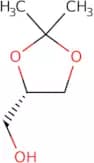
CAS :1,2-O-Isopropylidene-sn-glycerol (1,2-OIPG) is a synthetic molecule. It is synthesized from potassium thioacetate and chloride in an organic solvent with hexadecyl methanesulfonate as the catalyst. The product is obtained by intramolecular hydrogenation of the glyceride to produce 1,2-OIPG. This compound has been used as a strategy to generate hydrogen bonds in asymmetric synthesis, for example in the formation of d-mannitol with activated hydrogen bonds. The compound also has potential applications in the production of fatty acids.
Formule :C6H12O3Degré de pureté :Min. 98 Area-%Couleur et forme :Colorless Clear LiquidMasse moléculaire :132.15 g/molQuinoline-5-carboxylic acid
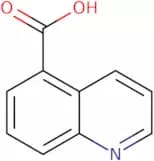
CAS :Quinoline-5-carboxylic acid is a peroxide that is produced by the oxidation of quinoline derivatives. Quinoline-5-carboxylic acid has been shown to have antibacterial activity, and it also has affinity values for chloride ions. The chemical isomers of quinoline-5-carboxylic acid are called quninolines, which are produced by the hydrolysis of quinoline-5-carboxylic acid. Quinolines can be obtained by the oxidation of aniline. Quinolines have been shown to catalyze reactions with carbonyl groups in organic molecules, such as the reaction between an alkoxycarbonyl group and a hydroxyl group to form an aldehyde or ketone. Kinetic data for this reaction was obtained using titration calorimetry.
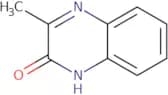
Formule :C10H7NO2Degré de pureté :Min. 95%Couleur et forme :White To Beige To Light Brown To Grey SolidMasse moléculaire :173.17 g/mol3-Methylquinoxalin-2-ol
CAS :3-Methylquinoxalin-2-ol is an antimicrobial agent that exhibits a broad spectrum of activity against bacteria, fungi, and viruses. It is effective against both Gram-positive and Gram-negative bacteria, as well as yeast and mycobacteria. 3-Methylquinoxalin-2-ol has been shown to be efficacious in animal models of diabetic ulcers and also reduces the incidence of infection after surgery. The substance has been shown to have excellent bactericidal activity against streptococcus faecalis in the presence of dehydroascorbic acid. 3-Methylquinoxalin-2-ol inhibits protein synthesis by binding to amino groups on proteins and blocking their access to ATP or other amino acids. This mechanism may be exploited as a drug target for the treatment of bacterial infections.Formule :C9H8N2ODegré de pureté :Min. 95%Masse moléculaire :160.063664-(Hydroxymethyl)cyclohexanol
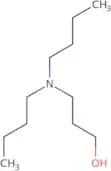
CAS :4-(Hydroxymethyl)cyclohexanol is a versatile building block that can be used in the synthesis of complex compounds. This chemical has been shown to have a high degree of purity and is a useful intermediate or reaction component for many different reactions. It is also an excellent scaffold for synthesizing other organic molecules.Formule :C7H14O2Degré de pureté :Min. 95%Couleur et forme :Clear To White To Off-White SolidMasse moléculaire :130.18 g/mol3-(Dibutylamino)propan-1-ol
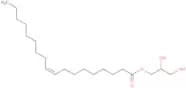
CAS :3-(Dibutylamino)propan-1-ol is an intermediate that is used in the synthesis of procainamide and procaine. It can be prepared by reaction of dibutylamine with propanol. 3-(Dibutylamino)propan-1-ol has a high stability in organic solvents, such as chloroform, as well as in bioreactors and automated synthesizers. This product is also an efficient catalyst for reactions involving esters. 3-(Dibutylamino)propan-1-ol has been shown to be effective at inhibiting the growth of Mycobacterium smegmatis and Mycobacterium tuberculosis.Formule :C11H25NODegré de pureté :Min. 95%Couleur et forme :Clear LiquidMasse moléculaire :187.32 g/mol1-Oleoyl-rac-glycerol - 50%
CAS :1-Oleoyl-rac-glycerol is a lipid that has been used in experimental studies to replace the use of animal-derived lipids for pharmaceutical applications. It can be synthesized by combining oleic acid with glycerol. 1-Oleoyl-rac-glycerol is soluble in water and has been shown to have a Langmuir adsorption isotherm, which means it can be used as a monoolein substitute. The basic protein in 1-Oleoyl-rac-glycerol has been determined using XRD data and found to be chitosan polymer. The experimental model for 1-Oleoyl-rac-glycerol was tested on rats and found not to cause toxicity, making it an ideal biocompatible polymer that can be used as an alternative to chitosan polymer.
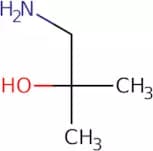
Formule :C21H40O4Degré de pureté :Min. 95%Couleur et forme :Slightly Yellow Clear LiquidMasse moléculaire :356.54 g/mol1-Amino-2-methyl-propan-2-ol
CAS :1-Amino-2-methyl-propan-2-ol is a cytotoxic molecule that has been shown to inhibit the growth of cancer cells. It is synthesized by converting 1,4-benzenediamine and cyclopentanol into the corresponding amines. The amines are then condensed with an alkanolamine in a kinetic reaction to form 1-amino-2-methylpropan-2-ol. This product's anticancer activity may be due to its ability to induce nucleophilic attack on DNA, leading to DNA strand breakage. 1AMPP has also been shown to have antiviral properties against HIV infection.Formule :C4H11NODegré de pureté :Min. 95%Couleur et forme :Colorless Clear LiquidMasse moléculaire :89.14 g/mol3,4-Dimethyl-1-pentyn-3-ol
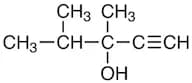
CAS :Formule :C7H12ODegré de pureté :>96.0%(GC)Couleur et forme :Colorless to Light orange to Yellow clear liquidMasse moléculaire :112.172-Pyrimidinol
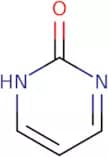
CAS :2-Pyrimidinol is a sodium salt that is used as an antimicrobial agent. It has significant cytotoxicity against skin cancer cells and is also used to treat HIV infection. 2-Pyrimidinol inhibits the activity of inhibitor molecules, which are small molecules that inhibit the activity of important enzymes in cells. This inhibition results in increased production of ATP, which leads to cell death. 2-Pyrimidinol also binds to dna duplexes and prevents them from being opened by helicase, thus inhibiting cellular replication. The molecular structure of 2-pyrimidinol was determined using X-ray crystallography and molecular docking analysis. This compound has been shown to have a potential use in treating metabolic disorders due to its ability to inhibit glycolysis, or the breakdown of glucose, through competitive inhibition with phosphofructokinase (PFK).
Formule :C4H4N2ODegré de pureté :(%) Min. 98%Couleur et forme :PowderMasse moléculaire :96.09 g/mol1-Cyclopropyl-6,7-difluoro-1,4-dihydro-8-methoxy-4-oxo-3-quinolinecarboxylic acid
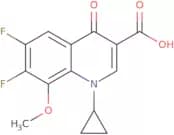
CAS :Moxifloxacin is an analog of the antibiotic quinolone. It is a prodrug that is hydrolyzed in vivo to its active form, moxifloxacin. Moxifloxacin has been shown to be effective against a variety of bacteria, including methicillin-resistant Staphylococcus aureus (MRSA), Mycobacterium tuberculosis and Mycobacterium avium complex. The reaction yield for the synthesis of moxifloxacin is very high, with an industrial production capacity in excess of 500 tons per year. Impurities are not usually found in the final product due to the use of methyl alcohol as a solvent during the reaction process. The drug has discoloring properties and deuterium atoms are often substituted for hydrogen atoms on the molecule to make it more stable. Deuterium atoms can be easily identified by mass spectrometry analysis. MoxifloxacFormule :C14H11F2NO4Degré de pureté :Min. 95%Couleur et forme :PowderMasse moléculaire :295.24 g/molSodium 3,5,6-trichloro-2-pyridinol
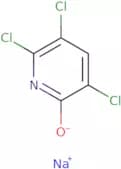
CAS :Sodium 3,5,6-trichloro-2-pyridinol is an inorganic compound that has been shown to be an effective biocide for the removal of hydrogen chloride and hydroxide solution. The optimal reaction was found to be at pH 10.3 with a reaction vessel containing 1% sodium hydroxide solution and a concentration of 0.2 grams per liter of hydrogen chloride. This compound reacts with hydrogen chloride to form hydrochloric acid (HCl) and sodium 3,5,6-trichloro-2-pyridinol hydrochloride (NCTP), which can then be removed by wastewater treatment or precipitation as sodium chloride. NCTP is also used for the treatment of skin conditions such as acne and eczema.Formule :C5HCl3NONaDegré de pureté :Min. 95%Couleur et forme :Off-White SolidMasse moléculaire :220.42 g/mol(1S,2R,3S,5R)-2-((Benzyloxy)methyl)-6-oxabicyclo[3.1.0]hexan-3-ol
CAS :(1S,2R,3S,5R)-2-((Benzyloxy)methyl)-6-oxabicyclo[3.1.0]hexan-3-ol is a fine chemical with a CAS No. of 117641-39-1. It has been used as a versatile building block in the synthesis of complex compounds, and has also been used as a useful intermediate in the production of specialty chemicals. This compound is useful for research purposes and can be used as a reaction component in the synthesis of new compounds.Formule :C13H16O3Degré de pureté :Min. 95%Couleur et forme :Clear LiquidMasse moléculaire :220.26 g/molPhloroglucinol dihydrate
CAS :Phloroglucinol dihydrate is a chemical substance that can be used as a denaturant, conditioner and deodorant. It is soluble in water and has been shown to have enzyme-inhibiting properties. Phloroglucinol dihydrate has been shown to have anti-inflammatory properties by inhibiting the production of prostaglandins. This compound also has optical properties, which are determined by its chromene structure. There is no phase transition temperature for this compound because it does not melt or freeze.
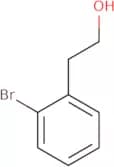
Formule :C6H6O3•(H2O)2Degré de pureté :Min. 95%Couleur et forme :PowderMasse moléculaire :162.14 g/mol2-(2-Bromophenyl)ethanol
CAS :2-(2-Bromophenyl)ethanol is a functional group that contains a bromine atom and an ethoxy group. This compound is used to synthesize condensation products, such as the crystal x-ray diffraction of crystallized palladium complexes with acetaldehyde. The 2-(2-bromophenyl)ethanol analog was synthesized in order to study the synthesis and reactivity of a chelate ring. The hydroxyl group on this compound is useful for forming a magnesium salt or for using it as a synthetic reagent.
Formule :C8H9BrODegré de pureté :Min. 95%Couleur et forme :Colorless Clear LiquidMasse moléculaire :201.06 g/mol




![(1S,2R,3S,5R)-2-((Benzyloxy)methyl)-6-oxabicyclo[3.1.0]hexan-3-ol](/_next/image/?url=https%3A%2Fstatic.cymitquimica.com%2Fproducts%2F3D%2Fthumb-webp%2FFB167338.webp&w=3840&q=75)