Alcools
Les alcools sont une large gamme de molécules organiques dérivées des hydrocarbures et contenant un ou plusieurs groupes hydroxyle (groupe OH). Ces composés sont essentiels dans diverses réactions chimiques et sont largement utilisés en laboratoire pour la synthèse, comme solvants et en chimie analytique. Chez CymitQuimica, nous proposons des alcools de haute qualité préparés pour une utilisation en laboratoire, soutenant vos recherches et applications industrielles avec des produits fiables et efficaces. Notre sélection garantit que vous disposez des alcools adaptés à vos besoins spécifiques, que ce soit pour des travaux de laboratoire de routine ou des projets de recherche spécialisés.
Sous-catégories appartenant à la catégorie "Alcools"
5814 produits trouvés pour "Alcools"
Trier par
Degré de pureté (%)
0
100
|
0
|
50
|
90
|
95
|
100
8-Bromo-2-methylquinoline
CAS :8-Bromo-2-methylquinoline is a naphthalene derivative that has an oxidant function. It can be used as a solvent for chlorobenzene and as a catalyst for the production of bipyridines and piperazine. 8-Bromo-2-methylquinoline is also used as a ligand in the preparation of metal complexes. This compound reacts with methyl groups, chlorine, and halides to form methyl quinolines and dichloromethanes. 8-Bromo-2-methylquinoline may react with fatty acids to form polyunsaturated acid esters or with polyunsaturated fatty acids to form polyethers.Formule :C10H8BrNDegré de pureté :Min. 95%Masse moléculaire :222.08 g/molα-(2,4-Dichlorophenyl)-1H-imidazole-1-ethanol
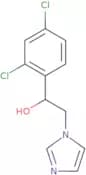
CAS :<p>a-(2,4-Dichlorophenyl)-1H-imidazole-1-ethanol is an analytical reagent that is used to identify the presence of methylbenzene in a sample. It has been used as a drug target in schistosomiasis and interacting with imprinting genes. The synthetic method for this reagent includes sodium carbonate and methylbenzene, which are heated together at low energy to produce a-(2,4-Dichlorophenyl)-1H-imidazole-1-ethanol. The analytical method for this compound involves efficient methods such as high performance liquid chromatography and gas chromatography. Methylbenzene is dissolved in trifluoroacetic acid before being mixed with anhydrous potassium carbonate. This mixture is then heated to produce a-(2,4-Dichlorophenyl)-1H-imidazole-1-ethanol.</p>Formule :C11H10Cl2N2ODegré de pureté :Min. 95%Couleur et forme :White To Beige SolidMasse moléculaire :257.12 g/mol(1-Chloroisoquinolin-4-yl)boronic acid
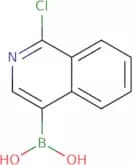
CAS :Please enquire for more information about (1-Chloroisoquinolin-4-yl)boronic acid including the price, delivery time and more detailed product information at the technical inquiry form on this pageFormule :C9H7BClNO2Degré de pureté :Min. 95%Masse moléculaire :207.42 g/molT2 toxin triol
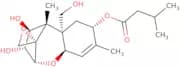
CAS :Produit contrôlé<p>T2 toxin triol is a bacterial strain that is used as a model system for the study of zearalenone. It has been shown to inhibit the growth of trifluoroacetic acid-treated cells and prevent the formation of glucuronide conjugates. T2 toxin triol has also been shown to be toxic to rat liver microsomes in vitro, but not to tissue culture or monoclonal antibody-transfected cells. The toxicity was found to be due to its basic structure, which causes an increase in intracellular levels of reactive oxygen species and lipid peroxidation.</p>Formule :C20H30O7Degré de pureté :Min. 95%Masse moléculaire :382.45 g/mol(+)-cis-Abienol
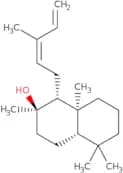
CAS :<p>(+)-Cis-abienol is a diterpene that is found in the leaves of the tobacco plant. It has been suggested to be involved in the synthesis of abscisic acid, which is an important hormone related to plant responses to water and salt stress. (+)-Cis-abienol may also have insecticidal properties and may play a role in resistance to insects. (+)-Cis-abienol has shown activity as an analytical reagent for the detection of hydroxyl groups, due to its UV absorption at 275 nm. The signal peptide sequence for this compound has been determined by analysis of tobacco sequences. This molecule's phase behavior can be predicted from its X-ray crystal structures and it is soluble in organic solvents such as benzyl alcohols or ethers. The mechanism for the reaction between (+)-cis-abienol and dehydroabietic acid has not yet been elucidated but it is thought that benzyl</p>Formule :C20H34ODegré de pureté :Min. 95%Couleur et forme :PowderMasse moléculaire :290.48 g/mol4-Aminobicyclo[2.2.2]octan-1-ol hydrochloride
CAS :<p>Please enquire for more information about 4-Aminobicyclo[2.2.2]octan-1-ol hydrochloride including the price, delivery time and more detailed product information at the technical inquiry form on this page</p>Formule :C8H15NO•HClDegré de pureté :Min. 95%Masse moléculaire :177.67 g/mol1-(3',4'-Dimethoxyphenyl)-1-propanol
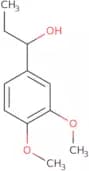
CAS :1-(3’,4’-Dimethoxyphenyl)-1-propanol is a naturally occurring chemical with the molecular formula C10H14O2. It has been found in the bark of Pinus pinaster and the rhizome of Piper auritum. This compound has been shown to have an antiinflammatory effect by inhibiting prostaglandin synthesis. It also inhibits nitrosation reactions and is being studied for its potential as a cancer chemopreventive agent. 1-(3’,4’-Dimethoxyphenyl)-1-propanol is an enantiomer of 2-(3',4'-dimethoxyphenyl)propane-1,3-diol.Formule :C11H16O3Degré de pureté :Min. 95%Masse moléculaire :196.24 g/molRITA
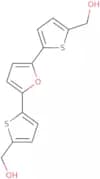
CAS :<p>RITA is a novel compound that has been shown to have anticancer activity in vivo in a rat model. RITA is a small molecule with high potency and low toxicity. It binds selectively to the α subunit of the enzyme topoisomerase II, which is involved in DNA replication and repair. RITA has been shown to induce apoptosis in cancer cells by pro-apoptotic proteins such as Bax and Bak. These proteins are known for their ability to induce apoptosis by increasing mitochondrial membrane permeability, inhibiting mitochondrial functions, or destabilizing the mitochondrial membrane potential. The compound class of RITA is not yet known, but it has been shown to be chemically stable at physiological pH levels and does not require metabolic activation for its cytotoxicity. The pharmacokinetics of this drug have also been studied in human liver cells and humans, indicating that this drug may be able to cross the blood-brain barrier.</p>Formule :C14H12O3S2Degré de pureté :Min. 95%Masse moléculaire :292.38 g/mol{1-[2-(4-Methylphenoxy)ethyl]-1H-benzimidazol-2-yl}methanol
CAS :Produit contrôlé<p>Please enquire for more information about {1-[2-(4-Methylphenoxy)ethyl]-1H-benzimidazol-2-yl}methanol including the price, delivery time and more detailed product information at the technical inquiry form on this page</p>Formule :C17H18N2O2Degré de pureté :Min. 95%Masse moléculaire :282.34 g/mol3-Methyl-1-pentyn-3-ol
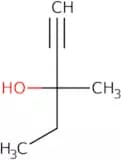
CAS :Produit contrôlé<p>3-Methyl-1-pentyn-3-ol is a chemical that has been shown to have interactive effects on the metabolism of urea nitrogen and low light. 3-Methyl-1-pentyn-3-ol has been shown to produce a depressant effect in animals, which may be due to its ability to inhibit the production of acetylcholine by blocking the enzyme cholinesterase. This chemical has also been shown to react with hydroxyl groups, producing a pharmacological agent. The reaction mechanism for 3-methyl pentynol is via hydrolysis by hydrochloric acid or pentobarbital sodium.</p>Formule :C6H10ODegré de pureté :Min. 95%Masse moléculaire :98.14 g/mol2-Heptanol
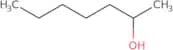
CAS :<p>2-Heptanol is a colorless liquid with a pungent odor. It is soluble in water and has a high boiling point. 2-Heptanol is an intermediate in the synthesis of fatty acids, which are used for the production of soaps, lubricants, and waxes. 2-Heptanol reacts with potassium hydroxide to produce potassium 2-heptoxide, which is soluble in water. The reaction products are caproic acid and hydroxy group. The transport properties of this compound are not well known.</p>Formule :C7H16ODegré de pureté :Min. 95%Couleur et forme :Clear LiquidMasse moléculaire :116.2 g/mol3-Phenyl-1-propanol
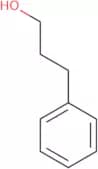
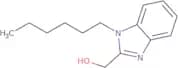
CAS :<p>3-Phenyl-1-propanol is an organic compound that belongs to the class of trifluoroacetic acids. It has a molecular weight of 134.24 and a molecular formula of C8H12O2F3. 3-Phenyl-1-propanol is a reactive compound that reacts with germinating seeds, causing them to stop growing. The reaction products are fatty acid esters, which may be responsible for the inhibition of seed germination. 3-Phenyl-1-propanol can be prepared by reacting phenylacetaldehyde with trifluoroacetic acid in the presence of potassium hydroxide at high temperature and pressure. This method also produces 4-vinylbenzyl alcohol as a side product, which is used in the production of polymers and plastics.</p>Formule :C9H12ODegré de pureté :Min. 95%Masse moléculaire :136.19 g/mol(1-Hexyl-1H-benzimidazol-2-yl)methanol
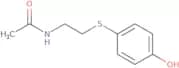
CAS :Produit contrôléPlease enquire for more information about (1-Hexyl-1H-benzimidazol-2-yl)methanol including the price, delivery time and more detailed product information at the technical inquiry form on this pageFormule :C14H20N2ODegré de pureté :Min. 95%Masse moléculaire :232.32 g/molN-Acetyl-4-S-cysteaminylphenol
CAS :<p>N-Acetyl-4-S-cysteaminylphenol is a tyrosinase inhibitor that is used in the treatment of skin disorders such as melasma and vitiligo. It slows the production of melanin by inhibiting tyrosinase activity and may be useful for treating some types of skin cancer. N-Acetyl-4-S-cysteaminylphenol also inhibits the growth of tumor cells, but not normal cells, which may be due to its ability to inhibit protein synthesis. This compound has been shown to inhibit cyclic nucleotide phosphodiesterases and cellular processes associated with the proliferation of cancer cells.</p>Formule :C10H13NO2SDegré de pureté :Min. 95%Couleur et forme :White PowderMasse moléculaire :211.28 g/mol3-[(4-Aminopiperidin-1-yl)methyl]phenol
CAS :<p>Please enquire for more information about 3-[(4-Aminopiperidin-1-yl)methyl]phenol including the price, delivery time and more detailed product information at the technical inquiry form on this page</p>Formule :C12H18N2ODegré de pureté :Min. 95%Masse moléculaire :206.28 g/mol11-Heneicosanol
CAS :<p>Please enquire for more information about 11-Heneicosanol including the price, delivery time and more detailed product information at the technical inquiry form on this page</p>Formule :C21H44ODegré de pureté :Min. 95%Masse moléculaire :312.57 g/mol2'-[(1H-Tetrazol-5-yl)biphenyl-4-yl]methanol
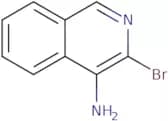
CAS :<p>Please enquire for more information about 2'-[(1H-Tetrazol-5-yl)biphenyl-4-yl]methanol including the price, delivery time and more detailed product information at the technical inquiry form on this page</p>Formule :C14H12N4ODegré de pureté :Min. 95%Masse moléculaire :252.27 g/mol4-Amino-3-bromoisoquinoline
CAS :4-Amino-3-bromoisoquinoline is an isocyanide that reacts with nucleophilic heteroatoms such as the amino group. It also reacts with bromine to form a bromopyridine. The nitrile group of 4-amino-3-bromoisoquinoline can be reduced with sodium borohydride to produce 4-aminoquinoline. This compound has shown potential for use in chemotherapy and treating bacterial infections.Degré de pureté :Min. 95%3-Methylether-estradiol
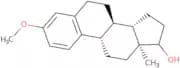
CAS :Produit contrôlé3-Methylether-estradiol is a naturally occurring estrogen that is found in humans and other mammals. It binds to estrogen receptors on the plasma membrane, which stimulates cell growth, protein synthesis, and modulates the immune system. 3-Methylether-estradiol has been shown to inhibit taurocholic acid induced hypertension in rats by blocking the conversion of angiotensin I to angiotensin II. In addition, this compound has been shown to have anti-inflammatory properties and can be used as an antihypertensive agent. 3-Methylether-estradiol has also been shown to increase blood pressure in pregnant rats when given at bolus doses. This drug should not be prescribed for use during pregnancy because it can cause fetal death.Formule :C19H26O2Degré de pureté :Min. 95%Masse moléculaire :286.41 g/molD-Tryptophanol
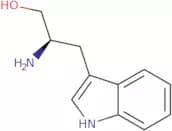
CAS :Produit contrôlé<p>D-Tryptophanol is a synthetic, enantiopure, hydroxymethylated tryptamine. It is a maltobionic molecule and it can be prepared by the hydrolysis of L-tryptophan with sodium hydroxide in water. D-Tryptophanol can also be synthesized from 3,4-diaminopyridine in the presence of a base and catalytic amount of copper(II) chloride. The chemical stability of D-tryptophanol has been studied using HPLC methods. Molecular modeling studies have shown that the compound forms hydrogen bonds with its neighboring molecules and has a high affinity for binding to human liver cells. D-Tryptophanol has been found to inhibit cancer cell growth at nanomolar concentrations, making it an attractive candidate for chemotherapeutic drugs. Calixarenes are used as chiral synthons to produce racemic mixtures of D-tryptophanol that could be</p>Formule :C11H14N2ODegré de pureté :Min. 95%Masse moléculaire :190.24 g/mol


![4-Aminobicyclo[2.2.2]octan-1-ol hydrochloride](/_next/image/?url=https%3A%2Fstatic.cymitquimica.com%2Fproducts%2F3D%2Fthumb-webp%2FFA63102.webp&w=3840&q=75)
![{1-[2-(4-Methylphenoxy)ethyl]-1H-benzimidazol-2-yl}methanol](/_next/image/?url=https%3A%2Fstatic.cymitquimica.com%2Fproducts%2F3D%2Fthumb-webp%2FFM135811.webp&w=3840&q=75)
![3-[(4-Aminopiperidin-1-yl)methyl]phenol](/_next/image/?url=https%3A%2Fstatic.cymitquimica.com%2Fproducts%2F3D%2Fthumb-webp%2FFA116167.webp&w=3840&q=75)

![2'-[(1H-Tetrazol-5-yl)biphenyl-4-yl]methanol](/_next/image/?url=https%3A%2Fstatic.cymitquimica.com%2Fproducts%2F3D%2Fthumb-webp%2FFT28188.webp&w=3840&q=75)