Alcools
Les alcools sont une large gamme de molécules organiques dérivées des hydrocarbures et contenant un ou plusieurs groupes hydroxyle (groupe OH). Ces composés sont essentiels dans diverses réactions chimiques et sont largement utilisés en laboratoire pour la synthèse, comme solvants et en chimie analytique. Chez CymitQuimica, nous proposons des alcools de haute qualité préparés pour une utilisation en laboratoire, soutenant vos recherches et applications industrielles avec des produits fiables et efficaces. Notre sélection garantit que vous disposez des alcools adaptés à vos besoins spécifiques, que ce soit pour des travaux de laboratoire de routine ou des projets de recherche spécialisés.
Sous-catégories appartenant à la catégorie "Alcools"
5814 produits trouvés pour "Alcools"
Trier par
Degré de pureté (%)
0
100
|
0
|
50
|
90
|
95
|
100
Methallyl alcohol
CAS :<p>Methallyl alcohol is a reactive hydroxide solution that is used as an intermediate in the industrial synthesis of polycarboxylic acids, glycol ethers, and other compounds. It reacts with hydrogen chloride to form methallyl chloride, which can be used to produce polymers. Methallyl alcohol can also be used as a reagent for the synthesis of various esters, amides, and other organic compounds. The enzyme inhibitors it produces inhibit reactions involving fatty acid and aliphatic hydrocarbon oxidation. Methallyl alcohol is produced by the reaction of methanol with allyl chloride. This reaction occurs in vivo under acidic conditions.</p>Formule :C4H8ODegré de pureté :Min. 98 Area-%Couleur et forme :Colorless Clear LiquidMasse moléculaire :72.11 g/mol6,6-Dimethyl-1-heptene-4-yn-3-ol
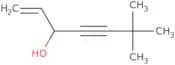
CAS :<p>6,6-Dimethyl-1-heptene-4-yn-3-ol is a chlorinating agent that is used in the production of epidermophyton. It also has antifungal properties and can be used as an antimycotic. 6,6-Dimethyl-1-heptene-4-yn-3-ol can be added to hydrochloric acid or magnesium chloride to form an acetylide. This agent has been shown to have selective chlorination activity at temperatures below 10°C. It is also capable of minimizing organometallic chloride catalysts and has been shown to reduce microsporum gypseum and microsporum titinium at pH 2.5.</p>Formule :C9H14ODegré de pureté :Min. 95%Couleur et forme :Colourless To Yellow LiquidMasse moléculaire :138.21 g/mol(1R,2R)-1,2-Cyclohexanedimethanol
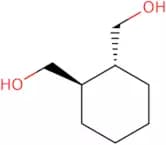
CAS :<p>(1R,2R)-1,2-Cyclohexanedimethanol is an isomer of the more common (1S,2S)-1,2-cyclohexanedimethanol. It is a synthetic compound that is used as an analytical reagent in chromatographic and spectroscopic analyses. The two enantiomers of this compound have different stability and reactivity properties. (1R,2R)-1,2-Cyclohexanedimethanol has been shown to be a good photocatalyst for the decomposition of organic compounds. It also has some hydrophobic properties because it can dissolve in organic solvents such as ethers and chlorinated hydrocarbons.</p>Formule :C8H16O2Degré de pureté :Min. 95%Masse moléculaire :144.21 g/molConjugated linoleic acid - liquid
CAS :<p>Conjugated linoleic acid (CLA) is a fatty acid found in beef and dairy products. It is a conjugated form of linoleic acid, which means it has two or more double bonds in its chemical structure. CLA may help to regulate energy metabolism by inhibiting the activity of enzymes involved in fat and carbohydrate metabolism. CLA has also been shown to have inhibitory properties against polymerase chain reaction (PCR), an enzyme that copies DNA during cell division. CLA has also been shown to reduce the symptoms of bowel disease, including reducing inflammation and improving insulin sensitivity. CLA may suppress body weight gain and fat accumulation in humans, as well as reduce the development of type 2 diabetes mellitus. In addition, CLA may be effective against infectious diseases such as tuberculosis and HIV/AIDS because it can lower levels of pro-inflammatory cytokines like tumor necrosis factor-α (TNF-α)</p>Formule :C18H32O2Degré de pureté :Min. 95%Couleur et forme :Slightly Yellow Clear LiquidMasse moléculaire :280.45 g/mol4-Chloro-2-iodo-phenol
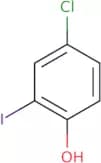
CAS :Please enquire for more information about 4-Chloro-2-iodo-phenol including the price, delivery time and more detailed product information at the technical inquiry form on this pageFormule :C6H4ClIODegré de pureté :Min. 95%Masse moléculaire :254.45 g/mol6-Chloro-1,7-naphthyridin-4-ol
CAS :<p>Please enquire for more information about 6-Chloro-1,7-naphthyridin-4-ol including the price, delivery time and more detailed product information at the technical inquiry form on this page</p>Degré de pureté :Min. 95%2-[2-[2-(2-Azidoethoxy)ethoxy]ethoxy]ethanol
CAS :<p>2-[2-[2-(2-Azidoethoxy)ethoxy]ethoxy]ethanol is a PEG polymer categorised as monofunctional (OH-PEG-X). Used as a linker, 2-[2-[2-(2-azidoethoxy)ethoxy]ethoxy]ethanol is used to attached PEG to proteins, peptides, oligonucleotides, nanoparticles and small molecules via pegylation, a bioconjugation technique.</p>Formule :C8H17N3O4Degré de pureté :Min. 95%Couleur et forme :Colorless PowderMasse moléculaire :219.24 g/molGlycerol formal
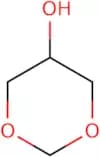
CAS :Glycerol formal is a glycol ether that contains two hydroxyl groups. It is a non-polymeric pharmacological agent with inhibitory properties against group P2 bacteria. The reaction mechanism of glycerol formal is the same as that of other glycol ethers and it is an antimicrobial agent. Glycerol formal has been shown to be effective against Escherichia coli, Staphylococcus aureus, and Salmonella typhi. This compound has also been used in injection solutions and as a solvent for fatty acids.Formule :C4H8O3Degré de pureté :Min. 95%Couleur et forme :Clear LiquidMasse moléculaire :104.1 g/mol3-Keto petromyzonol-24-hemisuccinate
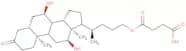
CAS :Produit contrôléPlease enquire for more information about 3-Keto petromyzonol-24-hemisuccinate including the price, delivery time and more detailed product information at the technical inquiry form on this pageFormule :C28H44O7Degré de pureté :Min. 95%Couleur et forme :PowderMasse moléculaire :492.65 g/mol17β-Estradiol-d2
CAS :Produit contrôlé<p>17-Estradiol-3,17-diol (17-E2) is the most potent estrogen found in humans. It has been shown to be able to stimulate the growth of breast cancer cells and is a known carcinogen in animals. 17-E2 is metabolized by cytochrome P450 enzymes into catechol estrogens, which are reactive and can bind to DNA. These metabolites can cause mutations that lead to cancer. Analysis of human breast tissue has revealed that 17-E2 is synthesized from estradiol by aromatase and then converted into catechol estrogens by 17β-hydroxysteroid dehydrogenase type 1. 17-E2 also binds to estrogen receptors, which may be linked with the development of certain cancers. The presence of 17-E2 in the environment has been linked with an increased risk for cancer in humans, as it can enter the body through water or food contaminated with waste products.</p>Formule :C18H22D2O2Degré de pureté :Min. 95%Couleur et forme :PowderMasse moléculaire :274.39 g/molPolyglycerine - Polyglycerol-2,3,4
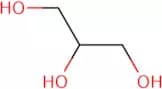
CAS :Naturally-derived multifunctional moisturizer; used in cosmetic formulationsFormule :(C3H8O3)nDegré de pureté :Min. 85%Couleur et forme :Colorless Powder2-Bromoethane-1-thiol
CAS :2-Bromoethane-1-thiol (2BET) is a hydrogen bond sensitive sensor that can be used in the detection of reactive oxygen species. 2BET has been shown to have a high sensitivity and selectivity to hydrogen peroxide, with an observed response time of less than 1 second. This sensor has been found to be useful for detecting short-term changes in hydrogen peroxide concentrations and can also detect long term changes due to its stability in the membrane. 2BET is also highly selective for hydrogen peroxide and does not react with other compounds, such as nitric oxide or sulfur dioxide. 2BET is a cavity type sensor that consists of two gold electrodes with a polyelectrolyte membrane between them. When exposed to reactive oxygen species, the polyelectrolyte membrane becomes crosslinked and this change in permeability can be detected by measuring the current across the electrodes. 2BET sensors are able to distinguish between isotopomersFormule :C2H5BrSDegré de pureté :Min. 95%Couleur et forme :Clear LiquidMasse moléculaire :141.03 g/molNaphthalene-1,8-diol
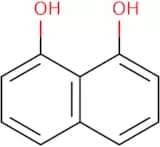
CAS :Naphthalene-1,8-diol is a compound that belongs to the class of polycyclic aromatic hydrocarbons. It has been shown to inhibit polymerase chain reactions (PCR) in a nuclear DNA template. Naphthalene-1,8-diol also inhibits the production of melanin and reduces the number of skin lesions in the wild-type strain of Galleria mellonella. Naphthalene-1,8-diol is an antioxidant compound that has been shown to protect against radiation and dermatitis. This molecule contains a hydroxyl group that can form hydrogen bonds with other molecules. This property may account for its anti-inflammatory effects.Formule :C10H8O2Degré de pureté :Min. 95%Couleur et forme :Slightly Brown PowderMasse moléculaire :160.17 g/molPhenethyl glucosinolate potassium salt
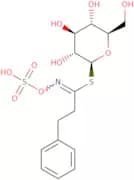
CAS :Phenethyl glucosinolate potassium salt is a compound found in plants belonging to the Brassicaceae family. It has been shown to be highly toxic to larvae of the cabbage butterfly and other insects that feed on brassica plants. Phenethyl glucosinolate potassium salt has been shown to inhibit the development of these insects, probably by inhibiting protein synthesis in the insect's gut. The major sulfur-containing compound in this product is gluconasturtiin, which has been shown to inhibit growth of pekinensis at high temperatures. This compound also inhibits radiation-induced DNA damage and does not show significant effects on nonsignificant organisms such as yeast and mold.Formule :C15H20NO9S2KDegré de pureté :Min. 95%Couleur et forme :PowderMasse moléculaire :461.55 g/mol6,7-Dihydro-5H-quinolin-8-one
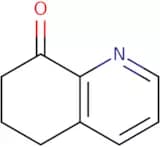
CAS :<p>6,7-Dihydro-5H-quinolin-8-one is a quinoline derivative that can be used to treat cancer. It is an inhibitor of topoisomerase II, which is an enzyme that catalyzes the formation of single stranded breaks in DNA and then reseals them. The inhibition of topoisomerase II leads to the accumulation of single strand breaks, which causes cell death. 6,7-Dihydro-5H-quinolin-8-one has been shown to have inhibitory activity against cancer cells in laboratory tests and also inhibits the growth of breast cancer cells in mice. This compound also has a number of other biological effects including being a ligand for some receptors and amine oxidases as well as having antihistamine properties.</p>Formule :C9H9NODegré de pureté :Min. 95%Couleur et forme :White PowderMasse moléculaire :147.17 g/molPigment Yellow 138;3,4,5,6-Tetrachloro-N-[2-(4,5,6,7-tetrachloro-2,3-dihydro-1,3-dioxo-1H-inden-2-yl)-8-Quinolyl]phthalimide
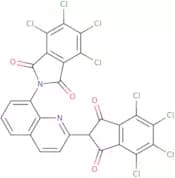
CAS :<p>Pigment Yellow 138 is a polycarboxylic acid with the chemical formula C8H6Cl4O2. Pigment Yellow 138 has a molecular weight of 434.07 and can be used as a yellow pigment in paint, plastics, and textiles. Pigment Yellow 138 has an acidic pH and can be prepared by reacting phthalic anhydride with sodium hydroxide in aqueous solution to produce the sodium salt of pigment yellow 138. Pigment Yellow 138 is also soluble in hydroxide solutions, which makes it an excellent cross-linking agent for polymers. The color of pigments depends on the size of their particles; pigments with larger particle sizes are more opaque than those with smaller particle sizes.</p>Formule :C26H6Cl8N2O4Degré de pureté :Strengh Min 95%.Masse moléculaire :693.96 g/molBoc-Thionoleu-1-(6-nitro)benzotriazolide
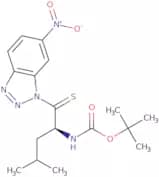
CAS :Please enquire for more information about Boc-Thionoleu-1-(6-nitro)benzotriazolide including the price, delivery time and more detailed product information at the technical inquiry form on this pageFormule :C17H23N5O4SDegré de pureté :Min. 95%Masse moléculaire :393.46 g/mol1-[(3,3-Diphenylpropyl)methylamino]-2-methyl-2-propanol
CAS :1-[(3,3-Diphenylpropyl)methylamino]-2-methyl-2-propanol is an epoxy that can be synthesized from benzene and lercanidipine. It has been used in the production of cinnamic acid and other molecules. This molecule can be prepared by reacting cinnamic acid with chloromethyl methyl ether in a ring-opening reaction. The chloride ion is utilized as a nucleophile to react with the amide nitrogen atom of the cinnamic acid molecule to form the amide bond. The large-scale production of 1-[(3,3-diphenylpropyl)methylamino]-2-methyl-2-propanol utilizes refluxing to remove water and other byproducts that are formed during the process.Formule :C20H27NODegré de pureté :Min. 95%Masse moléculaire :297.43 g/molPhenyl ethyl alcohol
CAS :Produit contrôlé<p>Phenyl ethyl alcohol is a chemical compound that is used as an antiseptic. It is also known for its ability to reduce the surface tension of water, which makes it useful for cleaning and degreasing. Phenyl ethyl alcohol has been shown to be up-regulated in genes that are responsible for transcriptional regulation, as well as in genes that encode proteins involved in cellular metabolism. This compound has been used as a model system to study hydrogen bonds and biological samples. The structural biology of phenyl ethyl alcohol has been studied using detergent compositions and fatty acid models.</p>Formule :C8H10ODegré de pureté :Min. 80%Couleur et forme :Clear LiquidMasse moléculaire :122.16 g/molSodium 2,2,2-trifluoroethanolate
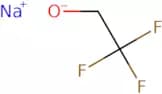
CAS :Sodium 2,2,2-trifluoroethanolate is a fluorinated alcohol. It is used as an animal health drug and has been shown to have a significant inhibitory effect on the growth of bacteria. The reaction intermediate for this compound is trifluoroacetic acid, which can be formed from sodium and hydrogen fluoride in the presence of ethylene glycol. This molecule also reacts with nitrosyl chloride to form a nitrogen-containing product. Sodium 2,2,2-trifluoroethanolate has been shown to be active against both Gram-positive and Gram-negative bacteria. The FTIR spectra for this compound shows that it has two sets of absorption bands at 3,200 cm−1 (due to C–H stretching) and 3,000 cm−1 (due to C=C stretching).Formule :C2H2F3NaODegré de pureté :Min. 95%Couleur et forme :PowderMasse moléculaire :122.02 g/mol




![2-[2-[2-(2-Azidoethoxy)ethoxy]ethoxy]ethanol](/_next/image/?url=https%3A%2Fstatic.cymitquimica.com%2Fproducts%2F3D%2Fthumb-webp%2FFA09300.webp&w=3840&q=75)


![1-[(3,3-Diphenylpropyl)methylamino]-2-methyl-2-propanol](/_next/image/?url=https%3A%2Fstatic.cymitquimica.com%2Fproducts%2F3D%2Fthumb-webp%2FFD22513.webp&w=3840&q=75)