Alcools
Les alcools sont une large gamme de molécules organiques dérivées des hydrocarbures et contenant un ou plusieurs groupes hydroxyle (groupe OH). Ces composés sont essentiels dans diverses réactions chimiques et sont largement utilisés en laboratoire pour la synthèse, comme solvants et en chimie analytique. Chez CymitQuimica, nous proposons des alcools de haute qualité préparés pour une utilisation en laboratoire, soutenant vos recherches et applications industrielles avec des produits fiables et efficaces. Notre sélection garantit que vous disposez des alcools adaptés à vos besoins spécifiques, que ce soit pour des travaux de laboratoire de routine ou des projets de recherche spécialisés.
Sous-catégories appartenant à la catégorie "Alcools"
5814 produits trouvés pour "Alcools"
Trier par
Degré de pureté (%)
0
100
|
0
|
50
|
90
|
95
|
100
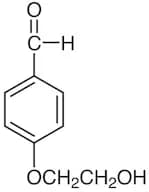
4-(2-Hydroxyethoxy)benzaldehyde
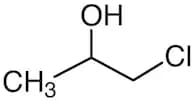
CAS :Formule :C9H10O3Degré de pureté :>98.0%(GC)Couleur et forme :White to Light yellow to Light orange powder to crystalMasse moléculaire :166.181-Chloro-2-propanol (contains ca. 25% 2-Chloro-1-propanol)
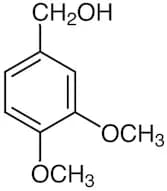
CAS :Formule :C3H7ClODegré de pureté :>70.0%(GC)Couleur et forme :Colorless to Light yellow clear liquidMasse moléculaire :94.54Veratryl Alcohol
CAS :Formule :C9H12O3Degré de pureté :>98.0%(GC)Couleur et forme :Colorless to Light yellow clear liquidMasse moléculaire :168.192,2-Dimethyl-1-propanol
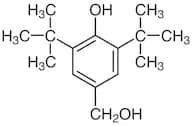
CAS :Formule :C5H12ODegré de pureté :>98.0%(GC)Couleur et forme :White to Almost white powder to lumpMasse moléculaire :88.152,6-Di-tert-butyl-4-hydroxymethylphenol
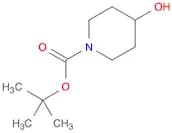
CAS :Formule :C15H24O2Degré de pureté :>97.0%(GC)Couleur et forme :White to Yellow to Orange powder to crystalMasse moléculaire :236.36N-BOC-4-Hydroxypiperidine
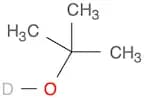
CAS :Formule :C10H19NO3Degré de pureté :98%Couleur et forme :SolidMasse moléculaire :201.26282-METHYL-2-PROPAN(OL-D)
CAS :Formule :C4H9DODegré de pureté :%Couleur et forme :SolidMasse moléculaire :75.12789H-Fluoren-9-ol
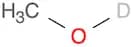
CAS :Formule :C13H10ODegré de pureté :98%Couleur et forme :SolidMasse moléculaire :182.2179Methanol-d (6CI,8CI,9CI)
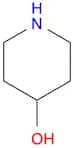
CAS :Formule :CH3DODegré de pureté :98%Couleur et forme :LiquidMasse moléculaire :33.04804-Hydroxypiperidine
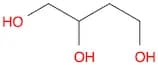
CAS :Formule :C5H11NODegré de pureté :98%Couleur et forme :SolidMasse moléculaire :101.14691,2,4-Butanetriol
CAS :Formule :C4H10O3Degré de pureté :98%Couleur et forme :LiquidMasse moléculaire :106.12043-Hydroxy-1-methylpiperidine
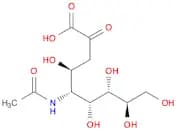
CAS :Formule :C6H13NODegré de pureté :95%+Couleur et forme :LiquidMasse moléculaire :115.1735N-Acetylneuraminicacid
CAS :Formule :C11H19NO9Degré de pureté :98%Couleur et forme :SolidMasse moléculaire :309.2699Ref: IN-DA000VAA
Produit arrêtéN-METHYLBARBITURIC ACID
CAS :Formule :C5H6N2O3Degré de pureté :95%Couleur et forme :SolidMasse moléculaire :142.11271-Propanol, 3-azido-
CAS :Formule :C3H7N3ODegré de pureté :98%;RGCouleur et forme :LiquidMasse moléculaire :101.10721,3-Propanediol
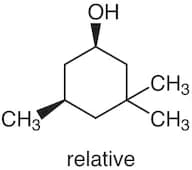
CAS :Formule :C3H8O2Degré de pureté :98%Couleur et forme :LiquidMasse moléculaire :76.0944cis-3,3,5-Trimethylcyclohexanol
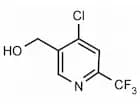
CAS :Formule :C9H18ODegré de pureté :>96.0%(GC)Couleur et forme :White or Colorless to Almost white or Almost colorless powder to lump to clear liquidMasse moléculaire :142.24(4-Chloro-6-(trifluoromethyl)pyridin-3-yl)methanol
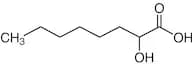
CAS :Degré de pureté :>95%Masse moléculaire :211.5692-Hydroxy-n-octanoic Acid
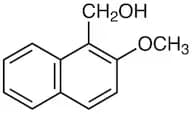
CAS :Formule :C8H16O3Degré de pureté :>98.0%(T)Couleur et forme :White to Almost white powder to crystalMasse moléculaire :160.212-Methoxy-1-naphthalenemethanol
CAS :Formule :C12H12O2Degré de pureté :>98.0%(GC)Couleur et forme :White to Light yellow to Dark green powder to crystalMasse moléculaire :188.23cis-2-Nonen-1-ol
CAS :Formule :C9H18ODegré de pureté :>95.0%(GC)Couleur et forme :Colorless to Light yellow clear liquidMasse moléculaire :142.24Arotinolol hydrochloride
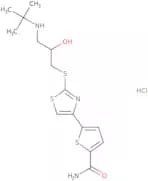
CAS :<p>Arotinolol hydrochloride is a beta-blocker that, in contrast to propranolol, has a higher selectivity for the β1 receptor. It is used to treat hypertension and angina pectoris. Arotinolol hydrochloride lowers blood pressure by inhibiting the activity of α-adrenergic receptors, which are found in the heart and vascular smooth muscle. This inhibition reduces the release of norepinephrine and causes vasodilation. Arotinolol hydrochloride also has a positive effect on cardiac function as it decreases myocardial oxygen demand and increases coronary flow. Arotinolol hydrochloride has been shown to lower systolic pressure in anesthetized dogs with an intravenous dose of sodium citrate. The drug also lowers diastolic pressure in conscious dogs at doses of 0.5 mg/kg (0.2 mg/lb) or greater when given intravenously or subcutaneously.</p>Formule :C15H22ClN3O2S3Degré de pureté :Min. 98%Couleur et forme :PowderMasse moléculaire :408 g/mol(3β,22E)-29-Fluorostigmasta-5,22-dien-3-ol
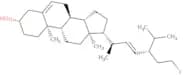
CAS :Produit contrôlé<p>3β,22E)-29-Fluorostigmasta-5,22-dien-3-ol is a plant growth regulator that belongs to the group of fatty alcohols. It is found in the horticultural and tissue culture industries and is used as an additive in bioassays. 3β,22E)-29-Fluorostigmasta-5,22-dien-3-ol enhances the growth rate of nematodes and has been shown to be a potent inhibitor of benzoate degradation. This compound also has hormone effects that are similar to those of furostanols or steroids.</p>Formule :C29H47FODegré de pureté :Min. 95%Masse moléculaire :430.68 g/molSodium O-ethyl isopropylphosphonothiolate
CAS :Produit contrôlé<p>Please enquire for more information about Sodium O-ethyl isopropylphosphonothiolate including the price, delivery time and more detailed product information at the technical inquiry form on this page</p>Formule :C5H12O2PS·NaDegré de pureté :Min. 95%2-Mercaptoethanol
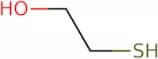
CAS :<p>2-Mercaptoethanol, also known as β-mercaptoethanol or β-ME, is a disulfide reducing agent used in the reduction of disulfide bridges in proteins. β-ME is conveniently inexpensive, water-soluble and must be used in excess in order to drive the reduction to completion.</p>Formule :C2H6SODegré de pureté :Min. 98 Area-%Couleur et forme :Clear LiquidMasse moléculaire :78.13 g/mol4-(1-Adamantyl)-2-nitrophenol
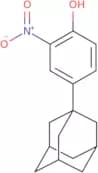
CAS :<p>4-(1-Adamantyl)-2-nitrophenol is a versatile building block that can be used to construct complex compounds. It is a research chemical that can be used as a reagent, as well as in the synthesis of pharmaceuticals and other chemicals. 4-(1-Adamantyl)-2-nitrophenol is soluble in water and ethanol, and has an odorless and colorless appearance. This chemical can be found under the CAS number 32599-84-1.</p>Formule :C16H19NO3Degré de pureté :Min. 95%Masse moléculaire :273.33 g/molPhosphoenolpyruvate monosodium salt hydrate
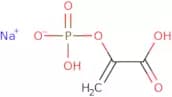
CAS :<p>PEP is a "high-energy phosphate" compound playing a vital role in enzymatic phosphate-transfer reactions involved in ATP synthesis. It is used in conjunction with pyruvate kinase as a phosphorylating agent for ATP generation. Substrate for phosphoenolpyruvate carboxylase. Reagent for determination of glycerol.</p>Formule :C3H4NaO6P·xH2ODegré de pureté :Min. 95%Couleur et forme :PowderMasse moléculaire :190.02 g/molRanolazine
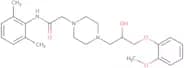
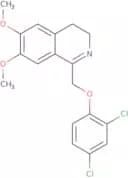
CAS :<p>Anti-anginal; anti-arrhythmic; anti-ischemic; pFOX inhibitor</p>Formule :C24H33N3O4Degré de pureté :Min. 95%Couleur et forme :White SolidMasse moléculaire :427.54 g/mol1-((6,7-dimethoxy(3,4-dihydroisoquinolyl))methoxy)-2,4-dichlorobenzene
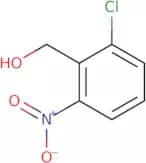
CAS :<p>Please enquire for more information about 1-((6,7-dimethoxy(3,4-dihydroisoquinolyl))methoxy)-2,4-dichlorobenzene including the price, delivery time and more detailed product information at the technical inquiry form on this page</p>Degré de pureté :Min. 95%2-Chloro-6-nitrobenzyl alcohol
CAS :<p>2-Chloro-6-nitrobenzyl alcohol is a versatile building block that is used as a reactant in chemical synthesis. It is used to synthesize other compounds, such as pharmaceuticals and pesticides. This compound can also be used as an intermediate or scaffold in the synthesis of more complex compounds. 2-Chloro-6-nitrobenzyl alcohol has been shown to have a high quality and is useful for research purposes. It can be used in the production of fine chemicals, useful building blocks, and reagents.</p>Formule :C7H6ClNO3Degré de pureté :Min. 95%Couleur et forme :PowderMasse moléculaire :187.58 g/molPhenol red
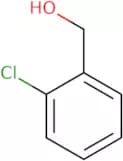
CAS :<p>Phenol red is a pH indicator that finds broad applications from chemistry to microbiology. Colour varies from yellow at pH<6.8 (lmax 443nm) through to light red/pink at 6.8<pH<8.2 (lmax 570 nm) to vivid purple/red at pH>8.2. It is widely used in cell culture to monitor pH and for colorimetric titration. For example, phenol red can be used to quantify Br- content in sea or fresh water. It is added to VTM as pH indicator, at the concentration of 10mg/ml, maintaining a pink colour at neutral pH.</p>Formule :C19H14O5SCouleur et forme :PowderMasse moléculaire :354.38 g/mol2-Chlorobenzyl alcohol
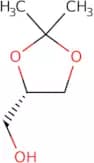
CAS :<p>2-Chlorobenzyl alcohol is a chemical compound that is used to synthesize other compounds. It is produced by the reaction of ethyl formate and hydrogen chloride in a reaction vessel. It reacts with benzoates to produce 2-chlorobenzoates, which are used as intermediates in the synthesis of pharmaceuticals. Hydroxyl groups can react with hydrogen fluoride to produce hydrofluoric acid, which is used as an industrial solvent. 2-Chlorobenzyl alcohol also reacts with hydroxide ions to produce ethylene glycol, which is used in making polyester fibers and plastics. This chemical compound has structural studies that show it has a proton and two hydroxyl groups that can react with hydrogen bond. Hydrogen bonds are important for the stability of DNA structures. The molecular structures of velvetleaf plants contain 2-chlorobenzyl alcohol, which may be due to its role in transferring oxygen from leaves to roots for respiration during</p>Formule :C7H7ClODegré de pureté :Min. 95%Couleur et forme :PowderMasse moléculaire :142.58 g/mol1,2-O-Isopropylidene-sn-glycerol
CAS :<p>1,2-O-Isopropylidene-sn-glycerol (1,2-OIPG) is a synthetic molecule. It is synthesized from potassium thioacetate and chloride in an organic solvent with hexadecyl methanesulfonate as the catalyst. The product is obtained by intramolecular hydrogenation of the glyceride to produce 1,2-OIPG. This compound has been used as a strategy to generate hydrogen bonds in asymmetric synthesis, for example in the formation of d-mannitol with activated hydrogen bonds. The compound also has potential applications in the production of fatty acids.</p>Formule :C6H12O3Degré de pureté :Min. 98 Area-%Couleur et forme :Colorless Clear LiquidMasse moléculaire :132.15 g/mol