Alcools
Les alcools sont une large gamme de molécules organiques dérivées des hydrocarbures et contenant un ou plusieurs groupes hydroxyle (groupe OH). Ces composés sont essentiels dans diverses réactions chimiques et sont largement utilisés en laboratoire pour la synthèse, comme solvants et en chimie analytique. Chez CymitQuimica, nous proposons des alcools de haute qualité préparés pour une utilisation en laboratoire, soutenant vos recherches et applications industrielles avec des produits fiables et efficaces. Notre sélection garantit que vous disposez des alcools adaptés à vos besoins spécifiques, que ce soit pour des travaux de laboratoire de routine ou des projets de recherche spécialisés.
Sous-catégories appartenant à la catégorie "Alcools"
5814 produits trouvés pour "Alcools"
Trier par
Degré de pureté (%)
0
100
|
0
|
50
|
90
|
95
|
100
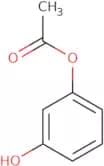
3-Acetoxyphenol
CAS :<p>3-Acetoxyphenol is a cholinergic. It can be used in analytical chemistry to measure the concentration of an alkanoic acid, such as hydrochloric acid, in a sample. It is also used in detergent compositions as an agent that helps break down fatty acids and proteins. 3-Acetoxyphenol has also been shown to have anti-inflammatory properties and can be used to treat skin cells for inflammatory diseases or other skin conditions.</p>Formule :C8H8O3Degré de pureté :Min. 95%Couleur et forme :Red Clear LiquidMasse moléculaire :152.15 g/mol2,3-Dimercapto-1-propanol
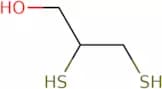
CAS :2,3-Dimercapto-1-propanol (DMPC) is an antibiotic that has been shown to have a potent synergistic effect when used in combination with other antibiotics. DMPC inhibits the enzyme fatty acid synthase and prevents the synthesis of long-chain fatty acids. It also inhibits the uptake of long-chain fatty acids by tissues such as liver, muscle, and fat cells. DMPC is also a reactive chemical that reacts with oxygen from the air to form 2,3-dimercapto-1-propanol peroxyl radicals and hydrogen peroxide. These reactive species are toxic to cells exposed to DMPC in tissue culture or in vivo. This chemical is also a potent inducer of all-trans retinoic acid and dehydroascorbic acid production.Formule :C3H8OS2Degré de pureté :Min. 95%Couleur et forme :Clear LiquidMasse moléculaire :124.23 g/mol4-Bromo-1-butanol
CAS :4-Bromo-1-butanol is a synthetic fatty acid used as a reagent in the synthesis of glycyrrhetinic acid. It is a colorless liquid with a strong odor. This substance has impurities that are not specified. It reacts with n-hexane and thionyl chloride to form bromobutanoic acid, which can be used as an intermediate in the production of other substances. 4-Bromo-1-butanol is also used in the synthesis of polyvinyl pyrrolidone, which is an organic polymer that is soluble in water and polar solvents such as alcohols and acetone. The molecular weight of this compound ranges from 300 to 3,000 g/mol, with a melting point below 100 °C. Formamide is another substance that can be synthesized using 4-bromo-1 butanol. Formamide is a colorless liquid with a pungent odor and it hasFormule :C4H9BrODegré de pureté :80%MinCouleur et forme :Colorless Clear LiquidMasse moléculaire :153.02 g/mol(1-Methyl-1H-benzimidazol-2-yl)methanol
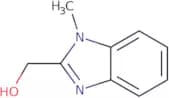
CAS :Produit contrôlé1-Methyl-1H-benzimidazol-2-yl)methanol is a mononuclear, ligand anion with a sulfate group. The compound has a molecular weight of 180.07 and its chemical formula is C6H5NOSO3S. It is soluble in water and alcohols, but insoluble in ethers and chloroform. 1-Methyl-1H-benzimidazol-2-yl)methanol reacts with oxygen to form the corresponding peroxide, which has a boiling point of 228°C at 760 mm Hg pressure. This compound also reacts with nitric acid to form the corresponding nitrate salt, which can be precipitated by adding sodium chloride or ammonium chloride.Formule :C9H10N2ODegré de pureté :Min. 95%Masse moléculaire :162.19 g/mol2-Oxo-1,2,5,6,7,8-hexahydroquinoline-3-carboxylic acid
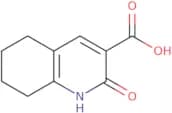
CAS :<p>Please enquire for more information about 2-Oxo-1,2,5,6,7,8-hexahydroquinoline-3-carboxylic acid including the price, delivery time and more detailed product information at the technical inquiry form on this page</p>Formule :C10H11NO3Degré de pureté :Min. 95%Masse moléculaire :193.2 g/mol(R,R)-(-)-2,3-Butanediol
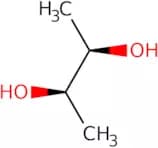
CAS :(R,R)-(-)-2,3-Butanediol is a chiral hydroxy alcohol that is a process optimization for the synthesis of β-hydroxy esters. It has been shown to have antimicrobial activity against Gram-positive bacteria and can inhibit the growth of Gram-negative bacteria in low concentrations. (R,R)-(-)-2,3-Butanediol also inhibits the production of phospolipase A2 by wild-type strains of Escherichia coli. This compound also has an effect on energy metabolism by inhibiting the formation of acetaldehyde from pyruvate.Formule :C4H10O2Degré de pureté :Min. 95%Masse moléculaire :90.12 g/molButynediol sulfopropyl ethersodium
CAS :Produit contrôlé<p>Please enquire for more information about Butynediol sulfopropyl ethersodium including the price, delivery time and more detailed product information at the technical inquiry form on this page</p>Formule :C7H11NaO5SDegré de pureté :Min. 95%Masse moléculaire :230.22 g/mol4-Aminobicyclo[2.2.2]octan-1-ol hydrochloride
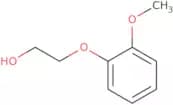
CAS :<p>Please enquire for more information about 4-Aminobicyclo[2.2.2]octan-1-ol hydrochloride including the price, delivery time and more detailed product information at the technical inquiry form on this page</p>Formule :C8H15NO•HClDegré de pureté :Min. 95%Masse moléculaire :177.67 g/mol2-(2-Methoxyphenoxy)ethanol
CAS :<p>2-(2-Methoxyphenoxy)ethanol (2-MPE) is a metabolite of propanediol, which is a precursor in the synthesis of polyurethanes. 2-MPE can be oxidized by monooxygenases to form syringyl and other reactive metabolites. Basic hydrolysis may also produce monomers such as phenols, alcohols, and carboxylic acids. Syringyl is one of the metabolic products of 2-MPE, which has been shown to be resistant to degradation by basidiomycete fungi.</p>Formule :C9H12O3Degré de pureté :Min. 95%Masse moléculaire :168.19 g/molSodium methanethiolate - 15% aqueous solution
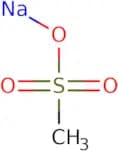
CAS :<p>Sodium methanethiolate is an antimicrobial agent that is a white, crystalline solid. It reacts with trifluoroacetic acid and water to produce the active form of sodium trifluoroacetate. The reaction mechanism is likely due to the formation of a bicyclic heterocycle that has been shown to be effective against a number of bacteria. Sodium methanethiolate has been used for the treatment of infectious diseases, such as respiratory infections and skin infections, as well as autoimmune diseases and cardiovascular disorders. The oxidation catalyst in this compound may also have physiological effects on the body's cells and tissues.</p>Formule :CH3NaSDegré de pureté :Min. 95%Couleur et forme :Clear LiquidMasse moléculaire :70.09 g/mol1,4-Pentanediol
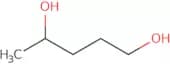
CAS :<p>1,4-Pentanediol is a diol that is used in the manufacture of polyurethanes and other organic compounds. It is produced by the oxidation of benzene with oxygen in the presence of a catalyst such as manganese dioxide. 1,4-Pentanediol can also be prepared from levulinic acid or glycol ethers. 1,4-Pentanediol reacts with an aromatic hydrocarbon in the presence of a homogeneous catalyst to produce viscosity and polycarboxylic acids. The reaction mechanism for this process begins with the addition of water to form hydrogen peroxide and acetaldehyde. Hydrogen peroxide then reacts with an aromatic hydrocarbon to produce glycol ether and hydroxy group. The hydroxyl group then reacts with another aromatic hydrocarbon to produce viscosity and polycarboxylic acid. The reaction products are isolated by distillation or vacuum evaporation, after which they are purified by recrystall</p>Formule :C5H12O2Degré de pureté :Min. 95%Couleur et forme :Colorless Clear LiquidMasse moléculaire :104.15 g/molBromadiolone
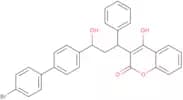
CAS :<p>Bromadiolone NA is a rodenticide that is used in the treatment of rodents in wastewater treatment. Bromadiolone NA has been shown to inhibit the mitochondrial membrane potential, which leads to the release of cytochrome C and activation of caspase 3. Bromadiolone NA also has antioxidative properties that protect against oxidative injury and its metabolites have been found to inhibit human serum albumin. This compound has been used as an antimicrobial agent to control biofilm formation and prevent microbial growth. The mode of action for bromadiolone is through the inhibition of chitosan polymerization, which prevents bacterial attachment and biofilm formation on surfaces. Bromadiolone NA was also shown to bind with DNA, inhibiting replication and transcription.</p>Formule :C30H23BrO4Degré de pureté :Min. 95%Couleur et forme :PowderMasse moléculaire :527.41 g/molDodecane-1-thiol
CAS :Dodecane-1-thiol is a chemical that is used as an ingredient in the production of nanoparticles. It has been shown to have high resistance to sodium salts and is chemically stable. Dodecane-1-thiol can be synthesized by reacting dodecane with hydroxylamine and mercaptan, which are both highly reactive compounds. Dodecane-1-thiol has a hydroxyl group on the thiol group and a dimethyl fumarate molecule attached to it. The hydroxyl group reacts with mercaptan, while the dimethyl fumarate molecule attaches to the thiol group to provide stability. Dodecane-1-thiol can also be synthesized using polymerization reactions.Formule :C12H26SDegré de pureté :95%MinMasse moléculaire :202.4 g/molEltrombopag olamine
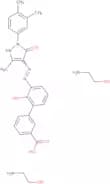
CAS :Eltrombopag olamine is an orally active drug that belongs to the class of thiazolidinones. It has been used for the treatment of thrombocytopenia in patients with chronic liver disease and myelodysplastic syndrome. Eltrombopag olamine inhibits platelet aggregation by binding to glycoprotein IIb/IIIa receptors on the surface of platelets. The drug is a prodrug that is metabolized in vivo to its active form, eltrombopag. This conversion is catalysed by CYP3A4 and CYP2D6 enzymes and can be inhibited by drugs that inhibit these enzymes, such as trifluoroacetic acid and hydroxyl group-containing compounds. Eltrombopag olamine binds to erythrocytes, which may be due to its ability to form intramolecular hydrogen bonds with nitrogen atoms. The synthesis of eltFormule :C25H22N4O4•(C2H7NO)2Degré de pureté :Min. 95%Couleur et forme :PowderMasse moléculaire :564.63 g/mola,a-Diphenyl-2-pyridinemethanol hydrochloride
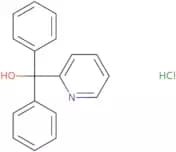
CAS :Produit contrôléPlease enquire for more information about a,a-Diphenyl-2-pyridinemethanol hydrochloride including the price, delivery time and more detailed product information at the technical inquiry form on this pageFormule :C18H16ClNODegré de pureté :Min. 95%Masse moléculaire :297.78 g/mol3-Isoquinolinecarboxylic acid
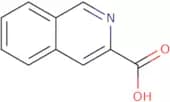
CAS :3-Isoquinolinecarboxylic acid is a molecule with a reactive group that can form cyclic structures. It has been shown that 3-Isoquinolinecarboxylic acid is an apoptotic agent in human macrophages and induces the release of picolinic acid from these cells. This molecule also has a high affinity for α7 nicotinic acetylcholine receptors, which are present on the surface of nerve cells. 3-Isoquinolinecarboxylic acid can be synthesized by condensing picolinic acid, an aromatic aminoacid, with an appropriate amine. The synthesis of this heterocycle is catalyzed by an enzyme called quinolinate synthase. The product of this reaction is oxidized to form 3-isoquinolyl carboxylic acid. The final step in the synthesis involves the oxidative cleavage of a disulfide bond using hydrogen peroxide, yielding 3-isoquinolyFormule :C10H7NO2Degré de pureté :Min. 95%Masse moléculaire :173.17 g/mol2-[(4-Phenylpiperazin-1-yl)carbonyl]phenol
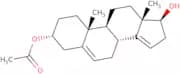
CAS :Produit contrôléPlease enquire for more information about 2-[(4-Phenylpiperazin-1-yl)carbonyl]phenol including the price, delivery time and more detailed product information at the technical inquiry form on this pageFormule :C17H18N2O2Degré de pureté :Min. 95%Masse moléculaire :282.34 g/mol3-O-Acetyl 5,14-androstadiene-3b,17b-diol
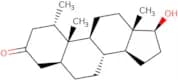
CAS :Produit contrôléPlease enquire for more information about 3-O-Acetyl 5,14-androstadiene-3b,17b-diol including the price, delivery time and more detailed product information at the technical inquiry form on this pageFormule :C21H30O3Degré de pureté :Min. 95%Masse moléculaire :330.46 g/mol11α-Methylandrostan-17β-ol-3-one
CAS :Produit contrôlé11alpha-Methylandrostan-17beta-ol-3-one is a pharmacological agent that belongs to the group of androgens. It is an oral preparation and has been used in the treatment of infectious diseases, autoimmune diseases, and metabolic disorders. It has also been used as a matrix effect control in biological samples. The biological effects of 11alpha-Methylandrostan-17beta-ol-3-one are mediated by its direct action on cells or through conversion to testosterone or dihydrotestosterone (DHT). These effects include increasing protein synthesis, promoting bone formation, lowering cholesterol levels, stimulating the production of red blood cells, and decreasing fat deposition. The main side effects are acne vulgaris, male pattern baldness, prostate enlargement, increased risk for prostate cancer, and increased risk for developing breast cancer.Formule :C20H32O2Degré de pureté :Min. 95%Couleur et forme :PowderMasse moléculaire :304.47 g/mol2-Carboxy mestanolone methyl ester
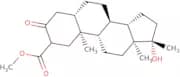
CAS :Produit contrôlé<p>Please enquire for more information about 2-Carboxy mestanolone methyl ester including the price, delivery time and more detailed product information at the technical inquiry form on this page</p>Formule :C22H34O4Degré de pureté :Min. 95%Masse moléculaire :362.5 g/mol



![4-Aminobicyclo[2.2.2]octan-1-ol hydrochloride](/_next/image/?url=https%3A%2Fstatic.cymitquimica.com%2Fproducts%2F3D%2Fthumb-webp%2FFA63102.webp&w=3840&q=75)

![2-[(4-Phenylpiperazin-1-yl)carbonyl]phenol](/_next/image/?url=https%3A%2Fstatic.cymitquimica.com%2Fproducts%2F3D%2Fthumb-webp%2FFP131062.webp&w=3840&q=75)