Alcools
Les alcools sont une large gamme de molécules organiques dérivées des hydrocarbures et contenant un ou plusieurs groupes hydroxyle (groupe OH). Ces composés sont essentiels dans diverses réactions chimiques et sont largement utilisés en laboratoire pour la synthèse, comme solvants et en chimie analytique. Chez CymitQuimica, nous proposons des alcools de haute qualité préparés pour une utilisation en laboratoire, soutenant vos recherches et applications industrielles avec des produits fiables et efficaces. Notre sélection garantit que vous disposez des alcools adaptés à vos besoins spécifiques, que ce soit pour des travaux de laboratoire de routine ou des projets de recherche spécialisés.
Sous-catégories appartenant à la catégorie "Alcools"
5814 produits trouvés pour "Alcools"
Trier par
Degré de pureté (%)
0
100
|
0
|
50
|
90
|
95
|
100
4-Chlorophenethyl alcohol
CAS :<p>4-Chlorophenethyl alcohol is a synthetic, primary alcohol. It can be synthesized by reacting 2,4-dichlorobenzoic acid with a Grignard reagent. The reaction produces 4-chlorophenethyl alcohol, which is insoluble in water and reacts with chloride to form chloroform. This procedure can be used to produce other chlorinated alcohols. 4-Chlorophenethyl alcohol has been shown to have acute toxicities that are similar to those of trifluoroacetic acid and it is believed that the toxicity is due to its ability to react with proteins and nucleic acids.</p>Formule :C8H9ClODegré de pureté :Min. 95%Couleur et forme :PowderMasse moléculaire :156.61 g/molCyclopent-2-en-1-ol
CAS :Cyclopent-2-en-1-ol is a reactive monomer that can react with chloride and hydroxyl groups. It can also undergo reaction with sodium carbonate to form a cyclic ester. Cyclopent-2-en-1-ol can be converted to an epoxide by the use of acid catalyst. This compound also has the ability to polymerize, forming polymers that are used in rayon production.Formule :C5H8ODegré de pureté :Min. 95%Couleur et forme :Clear LiquidMasse moléculaire :84.12 g/mol9,11b-Epoxidetriamcinolone
CAS :<p>Please enquire for more information about 9,11b-Epoxidetriamcinolone including the price, delivery time and more detailed product information at the technical inquiry form on this page</p>Formule :C21H26O6Degré de pureté :Min. 95%Masse moléculaire :374.43 g/mol3-(3'-Trifluoromethylphenyl)propanol
CAS :<p>3-(3'-Trifluoromethylphenyl)propanol is a trifluoroacetic acid derivative that is used in acylation reactions to form esters. It can be obtained by the reaction of aluminium chloride, isopropyl alcohol, and phosphine with 3-trifluoromethylaniline. Impurities may include chloride and zirconium. The trifluoromethyl group on this molecule can react with the carbonyl group of an organic acid to form a trifluoroacetate ester.</p>Degré de pureté :Min. 95%6,6-Dimethyl-1-heptene-4-yn-3-ol
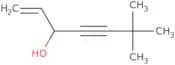
CAS :<p>6,6-Dimethyl-1-heptene-4-yn-3-ol is a chlorinating agent that is used in the production of epidermophyton. It also has antifungal properties and can be used as an antimycotic. 6,6-Dimethyl-1-heptene-4-yn-3-ol can be added to hydrochloric acid or magnesium chloride to form an acetylide. This agent has been shown to have selective chlorination activity at temperatures below 10°C. It is also capable of minimizing organometallic chloride catalysts and has been shown to reduce microsporum gypseum and microsporum titinium at pH 2.5.</p>Formule :C9H14ODegré de pureté :Min. 95%Couleur et forme :Colourless To Yellow LiquidMasse moléculaire :138.21 g/mol(S)-3-Pyrrolidinol
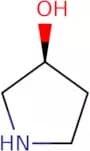
CAS :<p>3-Pyrrolidinol is a synthetic chemical that binds to the nicotinic acetylcholine receptor. It has been shown to inhibit cell growth in vitro, and may be used as an anti-cancer drug. 3-Pyrrolidinol has also been shown to have inhibitory effects on the replication of DNA in cells. The chemical reacts with hydrochloric acid to form a hydrogen bond, which enhances its ability to bind to the receptor. This reaction can be reversed by adding an acetate extract, which removes the hydrogen bond and causes the chemical to dissociate from the receptor. 3-Pyrrolidinol has a lactam ring with three functional groups (an amine group, a hydroxyl group, and a ketone group), which makes it more soluble in water than other compounds with only two functional groups. Its potential use is mainly for treating cancer or inhibiting bacterial growth.</p>Formule :C4H9NODegré de pureté :Min. 95%Masse moléculaire :87.12 g/mol2,2'-Azanediylbis(propan-1-ol)
CAS :<p>Please enquire for more information about 2,2'-Azanediylbis(propan-1-ol) including the price, delivery time and more detailed product information at the technical inquiry form on this page</p>Formule :C6H15NO2Degré de pureté :Min. 95%Masse moléculaire :133.19 g/mol4-Bromobenzene-1,2-diol
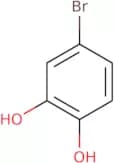
CAS :<p>4-Bromobenzene-1,2-diol is a reactive substance that has been shown to have receptor binding and reaction intermediates. It has been shown to inhibit the formation of reactive oxygen species in rat liver microsomes. The formation rate of 4-bromobenzene-1,2-diol is increased by carbon source such as bromobenzene. This substance has also been shown to be an inhibitor of the reaction mechanism. 4-Bromobenzene-1,2-diol is used as a reactant in organic synthesis reactions and can be found in dry weight measurements.</p>Formule :C6H5BrO2Degré de pureté :Min. 95%Masse moléculaire :189.01 g/molQuinoline-4-carboxylic acid
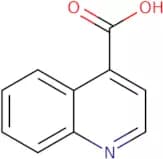
CAS :<p>Quinoline-4-carboxylic acid is a natural compound that is derived from the amino acid tryptophan. It has been shown to have antiinflammatory activity and to be an inhibitor of prostaglandin synthesis. Quinoline-4-carboxylic acid inhibits the growth of carcinoma cells in culture by inducing apoptosis, which is mediated by inhibition of protein synthesis. Quinoline-4-carboxylic acid also has pharmacokinetic properties, including a low volume of distribution, low clearance rate and high bioavailability.</p>Formule :C10H7NO2Degré de pureté :Min. 97 Area-%Masse moléculaire :173.17 g/mol(R)-(+)-3-Chloro-1-phenyl-1-propanol
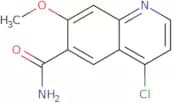
CAS :<p>(R)-(+)-3-Chloro-1-phenyl-1-propanol is a substrate for the lactamase of bacteria. The immobilized lipase catalyzes the hydrolysis reaction in which the lactam ring is broken, yielding a propiophenone intermediate. This intermediate can be converted to (S)-(+)-3-chloro-1-phenylpropanol by treatment with an alcohol oxidase or by hydrolysis with hydrogen peroxide. The product has been shown to have antidepressant activity and may modulate the dry weight of bacteria. In vivo studies show that this compound has a high concentration in rats and mice, but it is not active in humans.</p>Formule :C9H11ClODegré de pureté :Min. 95%Couleur et forme :White To Yellow SolidMasse moléculaire :170.64 g/mol4-Chloro-7-methoxyquinoline-6-carboxamide
CAS :<p>Intermediate in the synthesis of lenvatinib</p>Formule :C11H9ClN2O2Degré de pureté :Min. 95%Masse moléculaire :236.65 g/molConjugated linoleic acid - liquid
CAS :<p>Conjugated linoleic acid (CLA) is a fatty acid found in beef and dairy products. It is a conjugated form of linoleic acid, which means it has two or more double bonds in its chemical structure. CLA may help to regulate energy metabolism by inhibiting the activity of enzymes involved in fat and carbohydrate metabolism. CLA has also been shown to have inhibitory properties against polymerase chain reaction (PCR), an enzyme that copies DNA during cell division. CLA has also been shown to reduce the symptoms of bowel disease, including reducing inflammation and improving insulin sensitivity. CLA may suppress body weight gain and fat accumulation in humans, as well as reduce the development of type 2 diabetes mellitus. In addition, CLA may be effective against infectious diseases such as tuberculosis and HIV/AIDS because it can lower levels of pro-inflammatory cytokines like tumor necrosis factor-α (TNF-α)</p>Formule :C18H32O2Degré de pureté :Min. 95%Couleur et forme :Slightly Yellow Clear LiquidMasse moléculaire :280.45 g/molOctreotide trifluoroacetate salt (Dimer, Antiparallel) (
Please enquire for more information about Octreotide trifluoroacetate salt (Dimer, Antiparallel) ( including the price, delivery time and more detailed product information at the technical inquiry form on this pageFormule :C98H132N20O20S4Degré de pureté :Min. 95%Masse moléculaire :2,038.48 g/mol14-Azido-3,6,9,12-tetraoxatetradecanol
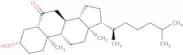
CAS :Please enquire for more information about 14-Azido-3,6,9,12-tetraoxatetradecanol including the price, delivery time and more detailed product information at the technical inquiry form on this pageFormule :C10H21N3O5Degré de pureté :Min. 95%Masse moléculaire :263.29 g/mol6-Keto cholestanol
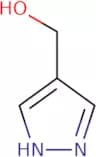
CAS :Produit contrôlé<p>6-Keto cholestanol is a chemical compound that is structurally similar to cholesterol. It has a phase transition temperature of -65°C, and the hydroxyl group on the side chain can be replaced with other functional groups to alter its properties. 6-Keto cholestanol has been shown to induce autophagy in cells by binding to mitochondria and increasing mitochondrial membrane potential. This compound also increases the level of fatty acid oxidation and decreases levels of glycerolipids in the cell, which may be due to its ability to bind fatty acids. 6-Keto cholestanol binds to the styryl dye, benzalkonium chloride, and inhibits its fluorescence emission. This compound also binds to adenine nucleotide, which may lead to decreased ATP production in cells.</p>Formule :C27H46O2Degré de pureté :Min. 95%Masse moléculaire :402.65 g/mol1H-Pyrazol-4-ylmethanol
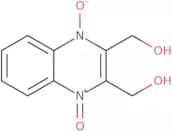
CAS :1H-Pyrazol-4-ylmethanol is a dehydrogenase inhibitor that binds to the heme group of the enzyme and inhibits oxidative metabolism. It has been shown to be an effective inhibitor of human liver alcohol dehydrogenase (ADH) and also reduces the absorption rate constant of pyrazole derivatives. The catalytic mechanism is not yet known, but it has been found to inhibit other enzymes with a similar catalytic mechanism. Techniques such as kinetic studies and model systems have been used to study this enzyme's catalytic mechanism.Formule :C4H6N2ODegré de pureté :Min. 95%Masse moléculaire :98.1 g/mol(1,4-Dioxidoquinoxaline-2,3-diyl)dimethanol
CAS :Polymyxin B is a cationic peptide antibiotic that is effective in the treatment of infectious diseases. It has been shown to inhibit growth of Gram-negative bacteria by binding to the outer membrane and disrupting osmotic balance. Polymyxin B has been shown to be toxic to liver cells, but it can be used as an antimicrobial agent in combination with ethylene diamine and clastogenic agents such as hydrochloric acid and hydrogen peroxide. This drug also has genotoxic effects. Polymyxin B has high resistance to hydrolysis by hydroxyl group-containing enzymes, making it a broad-spectrum antimicrobial agent that is active against Gram-positive bacteria, Gram-negative bacteria, and mycobacteria.Formule :C10H10N2O4Degré de pureté :Min. 95%Couleur et forme :PowderMasse moléculaire :222.2 g/mol5alpha-Pregnan-3beta,17alpha-diol-20-one
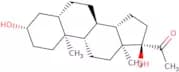
CAS :Produit contrôlé<p>5alpha-Pregnan-3beta,17alpha-diol-20-one is a versatile building block that can be used in the synthesis of a wide range of chemical compounds. It has CAS number 570-54-7 and is useful as a reagent in organic chemistry. This compound is also an intermediate for the synthesis of other chemicals, such as steroids and hormones. 5alpha-Pregnan-3beta,17alpha-diol-20-one can be used to produce high quality products with diverse biological activities and molecular structures. The compound is also useful in the production of pharmaceuticals, pesticides, and herbicides.</p>Formule :C21H34O3Degré de pureté :Min. 95%Couleur et forme :PowderMasse moléculaire :334.49 g/mol(3-Methyl-2-nitro-3H-imidazol-4-yl)methanol
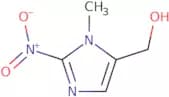
CAS :<p>3-Methyl-2-nitro-3H-imidazol-4-yl)methanol is a fluorescent probe that can be used to detect hypoxic tumor cells. It has been shown to selectively react with the methylethyl group in Trichomonas vaginalis. 3-Methyl-2-nitro-3H-imidazol-4-yl)methanol is bioreductive and can be activated by nitro groups in proteins, which are found in the active site of enzymes such as bacterial dna gyrase. This probe has been shown to bind to the sn38 position of bacterial DNA, but not mammalian DNA.</p>Formule :C5H7N3O3Degré de pureté :Min. 95%Masse moléculaire :157.13 g/mol(3,5-Diiodo-Tyr1,D-Ala2,N-Me-Phe4,glycinol5)-Enkephalin acetate salt
CAS :Produit contrôlé<p>Please enquire for more information about (3,5-Diiodo-Tyr1,D-Ala2,N-Me-Phe4,glycinol5)-Enkephalin acetate salt including the price, delivery time and more detailed product information at the technical inquiry form on this page</p>Formule :C26H33I2N5O6Degré de pureté :Min. 95%Masse moléculaire :765.38 g/mol